
Florida's Roof Age Law — roof age isn't roof condition.
Mike McGilvary Roofing is a Florida roof-age inspection resource and roof-condition preservation specialist — helping Palm Beach County homeowners understand the law, document the real condition of the roof, and make an informed decision before assuming full replacement is the only option.
Mike’s articles on §627.7011: a Sun Sentinel op-ed and sponsored articles in the South Florida, Orlando, Tampa Bay and Jacksonville Business Journals.
When an insurer raises roof age, condition can matter more than age.
Florida Statute §627.7011 addresses how roof age is handled in property insurance. Age alone is not necessarily the deciding factor — the roof's actual condition and remaining useful life can matter too.
Inspection before age-based replacement
If a roof is 15 years or older, a qualifying homeowner must be allowed to obtain an inspection by an insurer-approved authorized inspector before roof replacement is required solely because of the roof's age.
Five years of remaining useful life
If that inspection shows at least five years of remaining useful life, the insurer cannot refuse or nonrenew the policy solely because of the roof's age.
Condition, documented
When appropriate, MMR can inspect the roof, identify repairable deficiencies, and provide documentation for the homeowner and insurance agent to review.
Not a guarantee of coverage
Inspection results do not guarantee coverage, and the insurer may still apply other lawful underwriting and property-condition requirements.
The key point: roof age is not the same thing as roof condition. Florida's roof-age law gives qualifying homeowners a chance to have the roof's actual condition and remaining useful life considered before replacement is required on age alone — it does not guarantee that any particular roof can be repaired, certified, or kept, and it does not require an insurer to accept a repair in place of replacement. MMR helps you document the real condition so you can make an informed decision.
2026: What Changed and What Didn’t
Short answer: Florida’s roof-age law did not change in 2026. Every 2026 bill that would have amended Florida Statute §627.7011 died on March 13, 2026, when the regular session ended. The protections described on this page are the ones in effect today.
What didn’t change: current law, in effect now
- Roofs under 15 years old. “An insurer may not refuse to issue or refuse to renew a homeowner’s policy insuring a residential structure with a roof that is less than 15 years old solely because of the age of the roof.” (§627.7011(5)(b))
- Roofs 15 years or older. The insurer “must allow a homeowner to have a roof inspection performed by an authorized inspector at the homeowner’s expense before requiring the replacement of the roof,” and “may not refuse to issue or refuse to renew a homeowner’s insurance policy solely because of roof age if an inspection of the roof of the residential structure performed by an authorized inspector indicates that the roof has 5 years or more of useful life remaining.” (§627.7011(5)(c))
- How roof age is counted. Roof age is calculated using “the last date on which 100 percent of the roof’s surface area was built or replaced in accordance with the building code in effect at that time or the initial date of a partial roof replacement when subsequent partial roof builds or replacements were completed that resulted in 100 percent of the roof’s surface area being built or replaced.” (§627.7011(5)(d))
- Who can inspect. An “authorized inspector” must be approved by the insurer and includes licensed home inspectors, certified building code inspectors, licensed general, building or residential contractors, roofing contractors, professional engineers and architects. (§627.7011(5)(a))
- Which policies. These rules apply to homeowners’ insurance policies issued or renewed on or after July 1, 2022. The statute’s history line shows its most recent amendment was in 2024. (§627.7011(5)(e) and History)
What was proposed in 2026 but did not become law
| Bill | What it would have done | Final action |
|---|---|---|
| HB 815 | Extended roof-age protections from homeowners’ policies to “property insurance” policies; added IIBEC-certified Registered Roof Consultants and Registered Roof Observers as authorized inspectors; treated low-slope and steep-slope roofs separately, including a pathway for low-slope roofs that could be restored with a roof coating system to 5 or more years of useful life. | Died in House Insurance & Banking Subcommittee, March 13, 2026 |
| SB 808 | Senate companion to HB 815 with the same changes. | Temporarily postponed in Senate Banking and Insurance, January 28, 2026; died in Banking and Insurance, March 13, 2026 |
| SB 128 | Required insurers to reimburse up to $300 for a roof inspection when an authorized inspector finds 5 or more years of useful life remaining, and to notify homeowners of that right at issue or renewal. | Died in Senate Banking and Insurance, March 13, 2026 |
Why some articles say a new roof law took effect July 1, 2026
Each of these bills carried a proposed effective date of July 1, 2026. A proposed date means nothing unless the bill passes both chambers and becomes law, and none of these did. To check any article, look at the bill’s Last Action on flsenate.gov.
What this means for your roof
- The inspection and 5-year remaining-useful-life pathway already exists under current law. No new law was needed for it.
- The statute has no inspection-cost reimbursement requirement. The inspection is at the homeowner’s expense.
- The statute has no roof-coating pathway for low-slope (flat) roofs.
- The expanded “authorized inspector” list was not adopted.
- Coverage and underwriting decisions remain with each insurer.
Looking ahead
As of October 6, 2026, no bill amending §627.7011 has been filed for the 2027 session on flsenate.gov. We will update this section if one is filed.
Read the full breakdown: HB 815, SB 808 & SB 128: None Became Law →
Florida Roofing Update, Fall 2026: the new building code and what to do before December 31 →
Sources: §627.7011 (2026) · HB 815 · SB 808 (filed text) · SB 128 (filed text) · 2027 Senate bills
Mike McGilvary Roofing is a licensed roofing contractor, not a public adjuster or attorney. We document roof condition and the repair scope the roof requires; we do not interpret policies, advise on coverage, or adjust claims.
"It's 20 years old" is not a roof assessment.
Many age-related issues on a Florida tile roof can be repaired when inspection shows the failure is localized — they don't require tearing off a sound system. The common ones we see:
Chimney flashing
Counter-flashings pull away from masonry through thermal-expansion cycles — repairable with proper reinstallation.
Localized underlayment
Small sections deteriorate from trapped moisture — addressable through targeted valley or section rebuilds.
Ridge-cap mortar
Mortar-set caps crack and loosen over time — re-settable or replaceable with modern attachment systems.
Individual tile breakage
A few tiles crack from impact or foot traffic — easily replaced with matching tiles.
When full replacement is genuinely warranted: widespread underlayment failure across the whole roof, significant structural or decking issues, tiles themselves deteriorating (spalling, wholesale cracking), or a deficient original installation that can't be corrected. Being told a roof needs replacement because of its age — without a condition-based evaluation — is not a sufficient technical assessment.
The 5-Year Roof Certification — documenting a roof's condition.
A 5-Year Roof Certification & Remaining Useful Life Assessment documents a roof's condition at the time of inspection. Some Florida property insurers will consider one when evaluating an older roof — but it does not obligate any insurer to accept it in place of replacement, and each carrier applies its own requirements.
Comprehensive inspection
A licensed, condition-based inspection of the entire roofing system.
Repairs to certifiable condition
Any necessary repairs that bring the roof up to a certifiable standard.
Written certification
Documentation of the roof's inspected condition and an estimated remaining useful life of five or more years.
Submitted to your carrier
Certification documentation provided for policy maintenance and review.
What a certification does — and doesn't — mean: a certification reflects the specific conditions we inspect and document at the time — weather-tight protection, no active leaks, serviceable underlayment, and remaining useful life. It does not by itself prove current wind-code or building-code compliance unless those items are specifically inspected and documented, and whether it helps in your situation is up to your insurer. See exactly what a certification looks like, page by page →
For a tile roof, the choice often isn't binary.
For a tile roof 15–30 years old, a strategic rebuild is the middle path — replacing failed components while keeping the sound parts of the system intact. Common rebuilds: valley rebuilds, section rebuilds, flashing replacements, and ridge/hip-cap restoration.
Repair only what failed
Valley rebuilds and section work replace the components that failed while the tiles themselves remain serviceable.
Replace what failed, not what didn't
Why replace tiles that can last 50 years or longer when only the metal components have failed? Preservation keeps original tile colors and your home's character.
Inspect before you replace
Get the roof's actual condition documented before deciding, and work with a contractor who explains both options honestly.
Six questions to ask any roofing contractor.
If you're facing roof-age insurance questions, these surface whether a contractor is assessing your roof — or just selling a replacement.
- "What is the actual condition of my tiles themselves?"Are they deteriorating, or serviceable?
- "Can this roof be repaired and certified, or is replacement mandatory?"Understand whether preservation is viable.
- "What specific components have failed or are failing?"Get a detailed assessment, not age-based generalizations.
- "What would a valley or section rebuild cost versus full replacement?"Understand your financial options.
- "Can you provide a 5-Year Roof Certification after repairs?"Confirm the contractor actually offers certification.
- "Do you offer both repair/rebuild and complete replacement?"Make sure they aren't biased toward the higher-revenue option.
Got a roof-age notice from your insurer? Here's the path.
- Read the noticeYour insurer flags roof age or requests an inspection.
- Know your optionsFlorida law lets qualifying homeowners obtain an inspection before replacement is required on age alone — not an automatic replacement mandate.
- Get a real inspectionEngage a Florida-licensed contractor for a technical evaluation — not a sales estimate.
- Review the findingsUnderstand what has actually failed versus what remains serviceable. Get it in writing.
- Weigh your optionsCompare repair/rebuild cost and timeline against full replacement, and consider certification.
- Complete the workExecute the repairs or rebuilds that address the identified deficiencies.
- Obtain certificationIf certifying, ensure the documentation meets your insurer's requirements.
- Submit to your insurerProvide the inspection or certification documentation for your insurer to review.
When to get a second opinion.
- Replacement is recommended without a detailed explanation of what actually failed.
- You're told "it's 20 years old, so it needs replacing" with no condition-based justification.
- The contractor doesn't offer or discuss repair / rebuild options at all.
- The "inspection" was under 30 minutes with no detailed component examination.
- You're pressured to sign immediately without time to evaluate.
- They can't provide references for similar preservation / rebuild projects.
Mike's articles on §627.7011 in Florida's press.
A Sun Sentinel op-ed and sponsored articles in Florida's Business Journals in which Mike explains the Roof Age Law and what it means for property owners.
Resources & related services.
5-Year Roof Certifications
The certification process, shown page by page — and how to schedule a free inspection.
View certifications →Roof Rebuild Services
How valley and section rebuilds preserve a serviceable roof instead of replacing it.
Explore rebuilds →Tile Roof Repair
Tile-specific repair and preservation for South Florida's clay and concrete tile roofs.
Tile roof repair →The Statute — §627.7011
Read the full text of Florida Statute §627.7011 directly from the Florida Legislature.
leg.state.fl.us →Palm Beach County City Guides
Local guidance by city — typical roof ages, HOA considerations, and recent projects near you.
Find your city →Free Roof Inspections
A documented, condition-based inspection — the first step in every roof-age question.
Schedule an inspection →Florida Roof Age Law, answered.
Did Florida’s roof-age law change in 2026?
Can my insurer drop me just because my roof is old?
What is a 5-Year Roof Certification?
Does an aerial photo count as a roof inspection?
Is a rebuild really cheaper than a full replacement?
Do you serve my area?
Disclaimer: This page provides general educational information about Florida Statute §627.7011 and tile roof preservation. It does not constitute legal advice, insurance guidance, or a specific recommendation for your property or policy. Statutes and insurer requirements change — confirm the current statutory text with the Florida Legislature, and consult your insurer or a qualified attorney regarding your specific situation. Whether any roof qualifies for repair or certification depends on its actual condition as determined by inspection; no outcome is guaranteed.
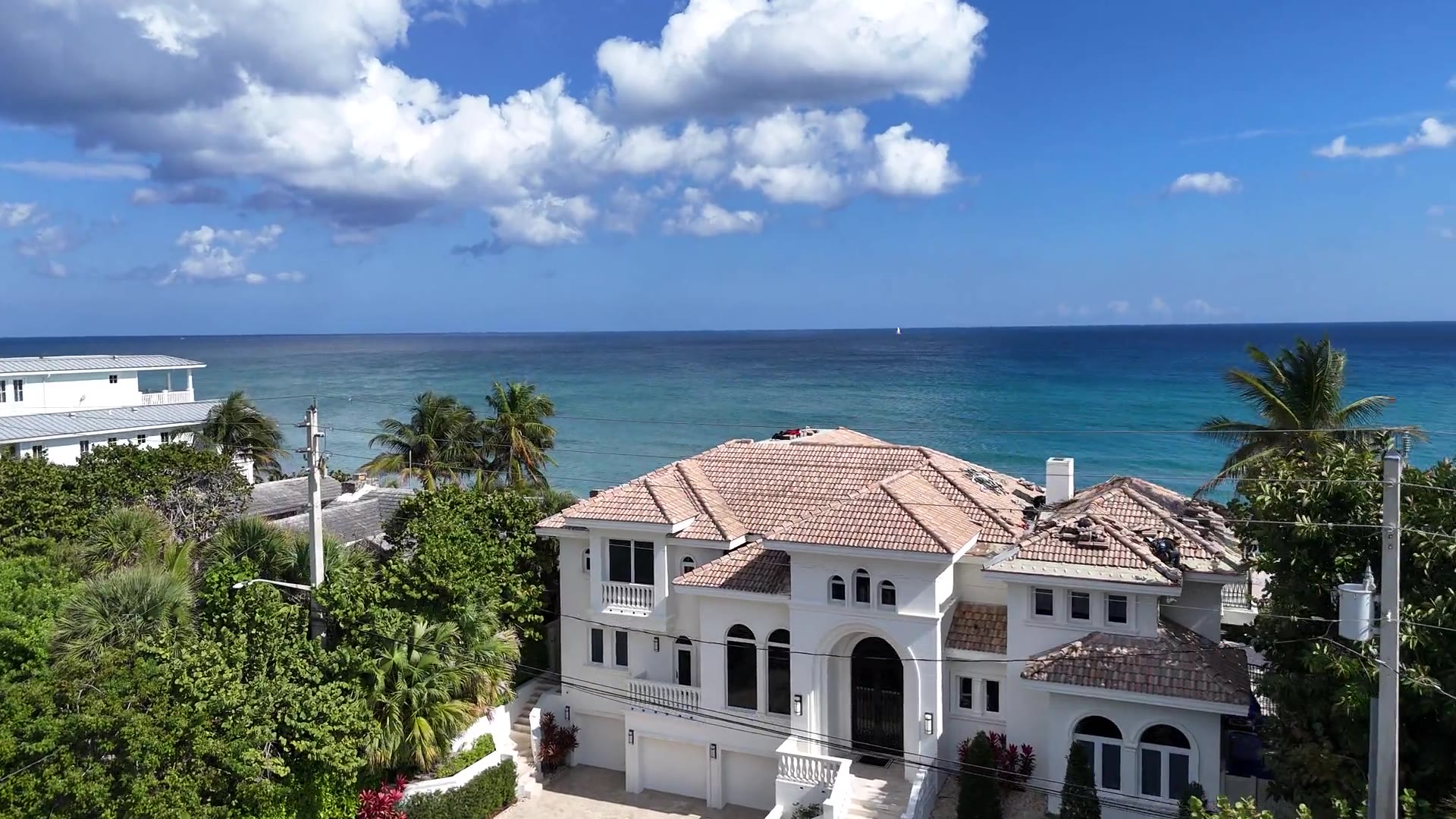
Get your roof read before anyone tells you to replace it.
A free, documented inspection from a family-owned Palm Beach County roofing craftsman — we'll show you exactly what we find, and whether a certification may apply.
Send a Message