Family Roofing Roots Since 1974 · Palm Beach County & South FloridaFL Certified Roofing Contractor CCC1331721 · (561) 856-5060
Florida Roof Age Law · Statute §627.7011

Florida's Roof Age Law — your statutory advocate.

Most contractors only know how to sell you a replacement. Mike McGilvary Roofing is the recognized voice on Florida Statute §627.7011 — and your advocate for every option the law provides. When an insurer raises roof age, the law gives you rights: a real inspection, a condition-based assessment, and the chance to repair and certify instead of replace.

Cited on §627.7011 in the Sun Sentinel & the South Florida, Orlando, Tampa Bay and Jacksonville Business Journals.

Your Rights Under Florida Law

When an insurer raises roof age, the law is on your side.

Florida Statute §627.7011 establishes a specific process and clear homeowner rights around roof age and inspection. Age alone is not the deciding factor — actual condition is.

01

Licensed inspection

Your roof must be inspected by a Florida-licensed roofing contractor or qualified professional — not judged by age alone or by aerial photos.

02

Condition-based assessment

The inspection evaluates the roof's actual current condition and whether it meets the Florida Building Code for weather and wind protection.

03

Documented findings

The inspector provides written documentation of findings — identifying specific deficiencies, if any, and whether repairs can address them.

04

Opportunity to cure

If deficiencies are found, you have the right to complete repairs and certify the roof meets requirements before a policy is non-renewed.

The key point: insurance companies cannot require replacement if a roof can be repaired to meet current building-code standards and has remaining useful life. The statute explicitly recognizes repair and certification as alternatives to replacement.

Setting the record straight

What the law actually says — and what you have probably been told.

Roof-age rules are among the most misreported subjects in Florida homeownership, and the misreporting almost always points the same direction: toward replacing a roof that may not need replacing. These are the two corrections that matter most right now.

2026 bills

HB 815 and SB 808 never became law

Both bills died in committee on March 13, 2026. The confusion is understandable — each bill's own text proposed a July 1, 2026 effective date, and that date has been republished widely as though it took effect. It did not, and the roof provisions of Florida law are unchanged. Read the full breakdown, with citations to the Florida Senate's own records.

The 25% rule

Repairing more than 25% does not automatically mean a new roof

Under Florida Statute §553.844, if your roofing system was built, repaired, or replaced in compliance with the 2007 Florida Building Code or any later edition, and 25% or more of it is repaired, replaced, or recovered, only the repaired portion must be brought to current code — not the entire roof. Roofs predating that standard can still face broader requirements. This single distinction is one of the most expensive misunderstandings in Florida roofing — a point also featured in Boca Magazine.

The 25% Rule, in full

Florida's 25% roof rule — what it is, and when it does not force a new roof.

The “25% rule” is one of the most misunderstood provisions in Florida roofing, and the misunderstanding is expensive. Here is what the Building Code actually says, what changed in 2022, and why a documented inspection — not an assumption — should decide what your roof really needs.

The Building Code provision. The Florida Building Code has long provided that not more than 25 percent of the total roof area or roof section of an existing building may be repaired, replaced, or recovered in any 12-month period unless the entire roofing system or roof section is brought into conformance with the requirements of the code. In plain terms: once work on a given roof or roof section reaches 25% within a rolling 12-month window, the code can require that system to be brought up to current standards.

What changed in 2022 (Senate Bill 4-D). Section 553.844(5), Florida Statutes — added by Senate Bill 4-D (chapter 2022-269) — created an important exception. It provides that if an existing roofing system or roof section was built, repaired, or replaced in compliance with the requirements of the 2007 Florida Building Code, or any subsequent editions, and 25 percent or more of that system or section is being repaired, replaced, or recovered, only the repaired, replaced, or recovered portion must be constructed to the Florida Building Code in effect. For roofs built to the 2007 code or later, exceeding 25% no longer automatically means a full replacement.

Total roof or roof section

The threshold is applied to the total roof area or to an individual roof section — not always to the whole structure at once. How a section is defined affects the calculation, which is a documentation question rather than a guess.

A rolling 12 months

The 25% is cumulative within any 12-month period, so separate smaller repairs can add up toward the threshold rather than each being counted on its own. An accurate record of what was done, and when, matters.

The 2007-code / 2009 permit line

The 2007 Florida Building Code took effect March 1, 2009. Roofs built or last replaced to that code — broadly, those permitted from 2009 onward — can qualify for the §553.844(5) exception; roofs built to older codes may still face the broader requirement. That is why permit history matters.

Building code is not insurance

Building-code requirements and an insurance company's underwriting rules are two separate frameworks. Meeting the code does not bind a carrier, and a carrier's roof-age preferences do not change the code. The two should not be conflated.

Why this is an inspection question, first. Whether the 25% threshold even applies to your roof — and whether the 2007-code exception is available — depends on the roof's construction, its permit and code history, and how much has actually been repaired. Those are documented facts, established by a comprehensive inspection, not assumptions made from the ground or from a roof's age alone. Our approach is repair-first and condition-based: we inspect, we document, and we recommend the least-invasive path that properly protects the home — targeted repairs and preservation where the roof allows, and replacement only when it is truly warranted.

Age vs. Condition

"It's 20 years old" is not a roof assessment.

Most age-related issues on a Florida tile roof are repairable — they don't require tearing off a sound system. The common ones we see:

Chimney flashing

Counter-flashings pull away from masonry through thermal-expansion cycles — repairable with proper reinstallation.

Localized underlayment

Small sections deteriorate from trapped moisture — addressable through targeted valley or section rebuilds.

Ridge-cap mortar

Mortar-set caps crack and loosen over time — re-settable or replaceable with modern attachment systems.

Individual tile breakage

A few tiles crack from impact or foot traffic — easily replaced with matching tiles.

When full replacement is genuinely warranted: widespread underlayment failure across the whole roof, significant structural or decking issues, tiles themselves deteriorating (spalling, wholesale cracking), or a deficient original installation that can't be corrected. Being told a roof needs replacement because of its age — without a condition-based evaluation — is not a sufficient technical assessment.

The Certification Pathway

The 5-Year Roof Certification — an alternative to replacement.

Many Florida property insurers now accept (or require) a 5-Year Roof Certification & Remaining Useful Life Assessment in lieu of replacement for older roofs. It lets a serviceable tile roof be preserved through targeted repairs instead of forced wholesale replacement.

Comprehensive inspection

A licensed, condition-based inspection of the entire roofing system.

Repairs to certifiable condition

Any necessary repairs that bring the roof up to a certifiable standard.

Written certification

Documentation that the roof meets the Florida Building Code and has at least 5 years of remaining useful life.

Submitted to your carrier

Certification documentation provided for policy maintenance and review.

What qualifies as certifiable? A roof that provides weather-tight protection with no active leaks, meets current wind-resistance requirements, has serviceable underlayment (or will after rebuilds), shows no structural deficiencies, and can reasonably perform for at least five more years. See exactly what a certification looks like, page by page →

Preservation vs. Replacement

For most tile roofs, the choice isn't binary.

For a tile roof 15–30 years old, a strategic rebuild is the middle path — replacing failed components while keeping the sound parts of the system intact. Common rebuilds: valley rebuilds, section rebuilds, flashing replacements, and ridge/hip-cap restoration.

Cost

30–50% of a full replacement

Valley rebuilds and section work typically cost a fraction of a complete tear-off — preservation is financially attractive when the tiles themselves remain serviceable.

Logic

Replace what failed, not what didn't

Why replace tiles that last 40–50 years when only the 15–20 year metal components have failed? Preservation keeps original tile colors and your home's character.

Reality

The industry leans to replacement

Full replacement generates far higher revenue, so the industry's incentives favor it. The right move is to seek a contractor who offers — and is honest about — both options.

Protect Yourself

Six questions to ask any roofing contractor.

If you're facing roof-age insurance questions, these surface whether a contractor is assessing your roof — or just selling a replacement.

  • "What is the actual condition of my tiles themselves?"Are they deteriorating, or serviceable?
  • "Can this roof be repaired and certified, or is replacement mandatory?"Understand whether preservation is viable.
  • "What specific components have failed or are failing?"Get a detailed assessment, not age-based generalizations.
  • "What would a valley or section rebuild cost versus full replacement?"Understand your financial options.
  • "Can you provide a 5-Year Roof Certification after repairs?"Confirm the contractor actually offers certification.
  • "Do you offer both repair/rebuild and complete replacement?"Make sure they aren't biased toward the higher-revenue option.
What To Do

Got a roof-age notice from your insurer? Here's the path.

  1. Read the noticeYour insurer flags roof age or requests an inspection.
  2. Know your rightsFlorida law requires a condition-based assessment — not an automatic replacement mandate.
  3. Get a real inspectionEngage a Florida-licensed contractor for a technical evaluation — not a sales estimate.
  4. Review the findingsUnderstand what has actually failed versus what remains serviceable. Get it in writing.
  5. Weigh your optionsCompare repair/rebuild cost and timeline against full replacement, and consider certification.
  6. Complete the workExecute the repairs or rebuilds that address the identified deficiencies.
  7. Obtain certificationIf certifying, ensure the documentation meets your insurer's requirements.
  8. Submit to your carrierProvide the certification or inspection documentation demonstrating compliance.
Red Flags

When to get a second opinion.

  • Replacement is recommended without a detailed explanation of what actually failed.
  • You're told "it's 20 years old, so it needs replacing" with no condition-based justification.
  • The contractor doesn't offer or discuss repair / rebuild options at all.
  • The "inspection" was under 30 minutes with no detailed component examination.
  • You're pressured to sign immediately without time to evaluate.
  • They can't provide references for similar preservation / rebuild projects.
Common Questions

Florida Roof Age Law, answered.

What is Florida’s Roof Age Law?
Florida Statute §627.7011 protects homeowners by preventing insurance companies from denying, canceling, or non-renewing your policy based solely on the age of your roof. For roofs under 15 years old, insurers generally cannot refuse coverage due to age alone. For roofs 15 years and older, you have the right to an independent inspection to prove your roof’s actual condition and remaining useful life.
How does the law actually work for roofs 15 years and older?
If your roof is 15+ years old, your insurer may request an inspection. You can hire a licensed roofing contractor (like our team) to perform a thorough evaluation, including visual inspection, thermal imaging, and documentation. If the inspection shows your roof has 5 or more years of useful life remaining, the insurer cannot deny or non-renew your policy based only on age. Condition matters — not just the calendar.
Why do so many homeowners still face roof replacement demands?
Many insurance carriers push for full replacements as the easy default, especially on older tile roofs common in South Florida. But the law requires evaluation based on actual condition — not arbitrary age cutoffs. We specialize in finding the real failure points (valleys, flashings, underlayment) so you can often preserve the majority of your existing roof with targeted repairs instead of a costly $35,000–$75,000 full replacement.
Can a repair-first approach help me stay insurable?
Yes. Proper documentation of targeted repairs and roof condition is one of the best ways to demonstrate your roof’s remaining useful life. Our detailed inspection reports, thermal imaging, and 5-Year Certifications provide the evidence insurers need — helping you avoid unnecessary tear-offs while keeping your home protected and insurable.
What should I do if my insurance company is questioning my roof?
Take a measured, documented approach:
  1. Don’t panic — you have rights under §627.7011.
  2. Schedule a professional inspection focused on condition, not just age.
  3. Get proper documentation and photos.
  4. Consider targeted repairs on weak areas instead of full replacement.
Call us at (561) 856-5060 — Mike answers personally. We’ll give you an honest assessment and the documentation you need.
Do tile roofs in Florida really last longer than 15 years?
Absolutely. South Florida’s concrete tile roofs are built tough and can last 30–50+ years with proper maintenance and timely repairs. Salt air, hurricanes, and thermal cycling affect different roof sections at different rates — that’s why our “section rebuild” and preservation approach works so well. We fix what’s failing and preserve what’s still sound.
How can Mike McGilvary Roofing help with Roof Age Law issues?
As Palm Beach County’s repair-first roofing experts (family roofing roots since 1974), we provide:
  • Comprehensive condition inspections with drone, thermal, and moisture mapping
  • Detailed reports tailored for insurance purposes
  • Targeted repair solutions that extend roof life and support insurability
  • 5-Year Certifications on qualified repairs
  • Honest guidance: repair when possible, replace only when truly necessary
We’ve helped thousands of South Florida homeowners navigate this exact situation while saving them tens of thousands of dollars.
How is the 25% measured — against my whole roof or an individual section?
The Florida Building Code applies the 25% threshold to the total roof area or to an individual roof section, and it is measured by the area of roofing repaired, replaced, or recovered — not by cost. Because the definition of a “section” and the measurement itself depend on the specifics of your roof, this is best settled by a professional inspection and documentation rather than an estimate from the ground.
What is the rolling 12-month period?
Under the Building Code, the 25% is cumulative within any 12-month period — so several smaller repairs performed within a year can add up toward the threshold rather than each being treated on its own. Keeping an accurate record of what was repaired, and when, is part of an honest, condition-based assessment.
Does exceeding 25% always mean I need a full roof replacement?
No. Since Senate Bill 4-D in 2022, Section 553.844(5) of the Florida Statutes provides that if a roofing system or roof section was built, repaired, or replaced in compliance with the 2007 Florida Building Code or any later edition, then when 25% or more is repaired, replaced, or recovered, only the repaired portion must meet the current code — not the entire roof. Roofs built to older codes may still face broader requirements. Whether the exception applies to your roof depends on its construction and code history.
Why does my roof's permit history matter?
The 2007 Florida Building Code took effect on March 1, 2009, so a roof's permit and code history is how you establish whether it was built or last replaced to the 2007 code or later — which is what determines eligibility for the Section 553.844(5) exception. Permit records help document when the roof was installed and to which code, which is why we review that history as part of a comprehensive evaluation.
Is the Building Code the same as my insurance company's requirements?
No — they are two separate frameworks. The Florida Building Code governs what a permitted repair or replacement must bring up to code. An insurance company's underwriting rules are its own criteria for issuing or renewing a policy. Meeting the Building Code does not bind a carrier, and a carrier's roof-age preferences do not change the Building Code. Each is decided by a different authority, so it is important not to confuse the two.
Do I need an inspection before deciding whether the whole roof must be replaced?
Yes. Whether the 25% threshold applies, whether the 2007-code exception is available, and how much of the roof actually needs work are all documented facts established by a comprehensive inspection — not assumptions made from a roof's age or from the ground. Our approach is repair-first and condition-based: we inspect, document, and recommend the least-invasive path that properly protects the home, with replacement only when it is truly warranted.
Reviewed by Mike McGilvaryFlorida Certified Roofing Contractor · License CCC1331721 · Family roofing roots since 1974

Disclaimer: This page provides general educational information about Florida Statute §627.7011 and tile roof preservation. It does not constitute legal advice, insurance guidance, or a specific recommendation for your property or policy. Statutes and insurer requirements change — confirm the current statutory text with the Florida Legislature, and consult your insurer or a qualified attorney regarding your specific situation. Whether any roof qualifies for repair or certification depends on its actual condition as determined by inspection; no outcome — including any building-code interpretation, permitting decision, or insurance determination — is guaranteed.

Watch

Watch: Florida’s Roof Age Law, explained

Mike McGilvary breaks down Florida Statute §627.7011 — what the roof-age law actually says, how insurers are applying it, and why an older roof in sound condition often qualifies for repair or certification instead of a full replacement.

Mike McGilvary explaining Florida's Roof Age Law (Statute 627.7011)
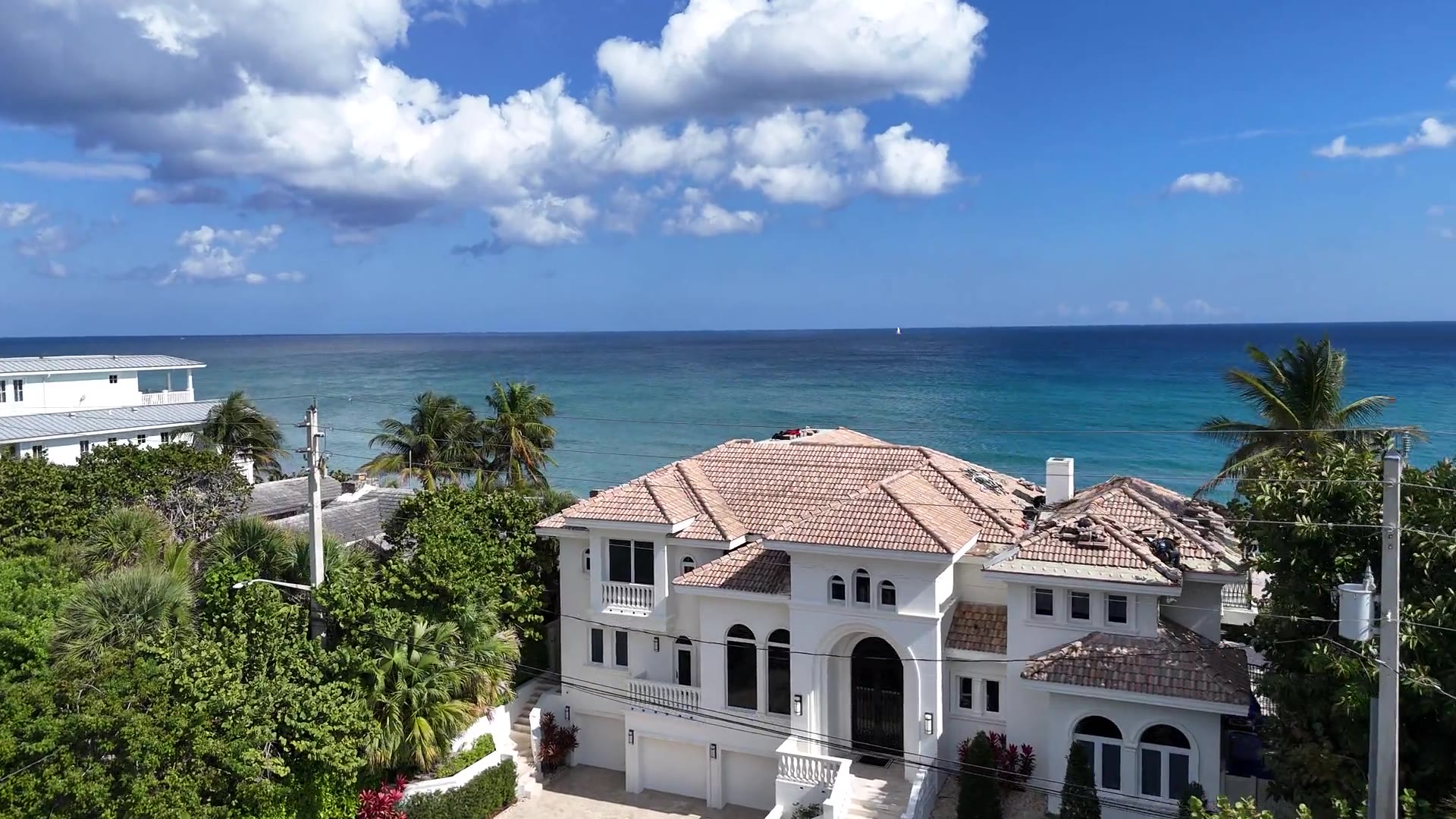
Aerial view of a Palm Beach County estate home with a tile roof
Free Inspection · No Obligation

Get your roof read before anyone tells you to replace it.

A free, documented inspection from a family-owned Palm Beach County roofing craftsman — we'll show you exactly what we find, and whether a certification may apply.

Mike McGilvary, Florida Certified Roofing Contractor CCC1331721
Reviewed by Mike McGilvary, CCC1331721. Last updated July 21, 2026.
Call Mike · (561) 856-5060