The short answer
Often, but not automatically. A new roof can lower your premium in two ways. It resets your roof’s age, which can widen your carrier options and pricing. It can also earn wind mitigation credits on the windstorm portion of your premium. Neither one happens on its own. Your insurer prices what it can verify, so the savings depend on how the roof was installed, how well it was documented, and whether you send your agent a new wind mitigation inspection after the final inspection passes.
And if your roof still has useful life left, replacing it may not be the least expensive way to stay insured. More on that below.
Two different ways your roof affects your premium
1. Roof age: whether you can get or keep a policy
Florida Statute 627.7011(5) says an insurer may not refuse to issue or renew a homeowner’s policy on a home with a roof less than 15 years old solely because of the roof’s age. For a roof that is at least 15 years old, the insurer must let the homeowner have the roof inspected by an authorized inspector before requiring replacement, and it may not refuse to issue or renew solely because of roof age if the inspection shows at least five years of useful life remaining.
The law also defines roof age: it runs from the last date 100 percent of the roof’s surface was built or replaced under the building code in effect at the time.
What this law protects is eligibility. It limits refusing or non-renewing a policy over roof age alone. It does not set your price.
2. Wind mitigation credits: what you pay for the windstorm portion
Florida Statute 627.0629 requires residential property insurance rate filings to include actuarially reasonable discounts, credits or deductible reductions for construction features shown to reduce windstorm losses, including roof strength, roof covering performance and roof-to-wall strength.
Those features are verified on the state’s Uniform Mitigation Verification Inspection Form, OIR-B1-1802. A revised version of the form took effect April 1, 2026, and inspections performed on or after that date must use it. The credits apply to the windstorm portion of your premium, not the whole bill.
What a new roof can change on your wind mitigation form
Roof covering. The form asks for a permit application date or product approval number, plus the year of installation, for every roof covering on the house. A new permitted roof with approved products can qualify. An undocumented roof covering earns nothing.
Roof deck attachment. This is how the plywood or OSB deck is fastened to the trusses or rafters: nail size and spacing. The only time that can be seen and improved is when the old roof is off. Ask your contractor what the deck will be fastened with, and ask for photos before the deck is covered.
Sealed roof deck (formerly called secondary water resistance). This is a backup barrier that helps keep water out if the tile or shingles are lost in a storm. The 2026 form recognizes specific methods, including fully adhered polymer-modified bitumen underlayment meeting ASTM D1970, taped deck seams, a double layer of felt or synthetic underlayment, and qualifying spray-foam products. Standard underlayment by itself does not qualify. Citizens’ own wind mitigation guide calls for photos, permits or other supporting documentation to validate this feature.

What a new roof does not change
A new roof does not change your location or wind zone, your coverage amount, your deductible, your carrier’s filed rates, your claims history, your windows and doors, or your roof shape. A hip roof is still a hip roof and a gable roof is still a gable roof. That is why two neighbors with the same new roof can see two different renewals.
The costly mistake: replacing a roof only to chase a lower premium
If your roof is under 15 years old, roof age alone cannot be the reason your insurer refuses to issue or renew your homeowner’s policy. If it is 15 or older, an inspection showing five or more years of remaining useful life protects you on eligibility. For many tile roofs, a targeted repair and a documented roof certification cost far less than a full replacement.
Do the math before you decide. Ask your agent for two quotes: one with your current roof and one with a new roof and an updated wind mitigation report. Compare the yearly difference to the cost of replacement. When a roof truly has reached the end of its life, replacing it is the right call, and then you want every credit you paid for.
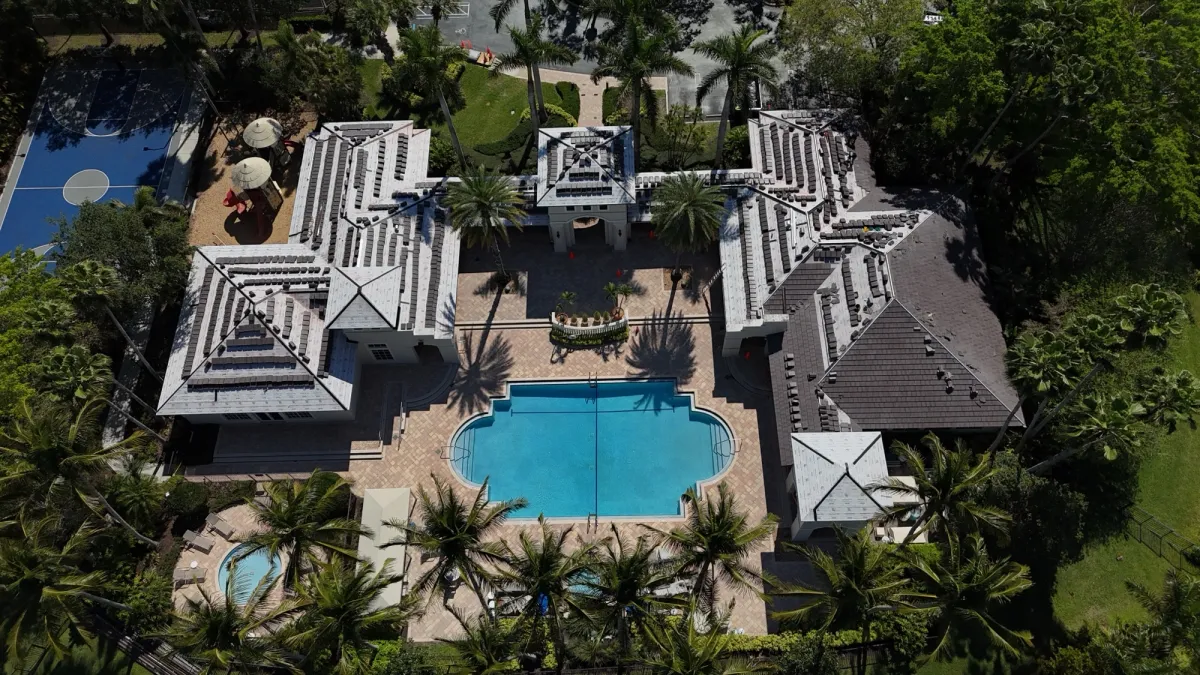
A real example: an HOA clubhouse reroof
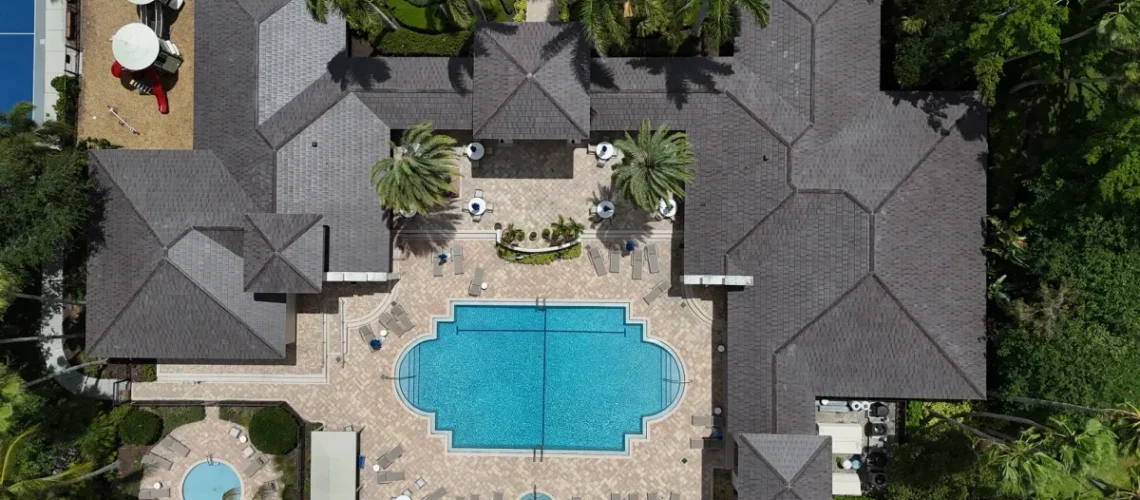
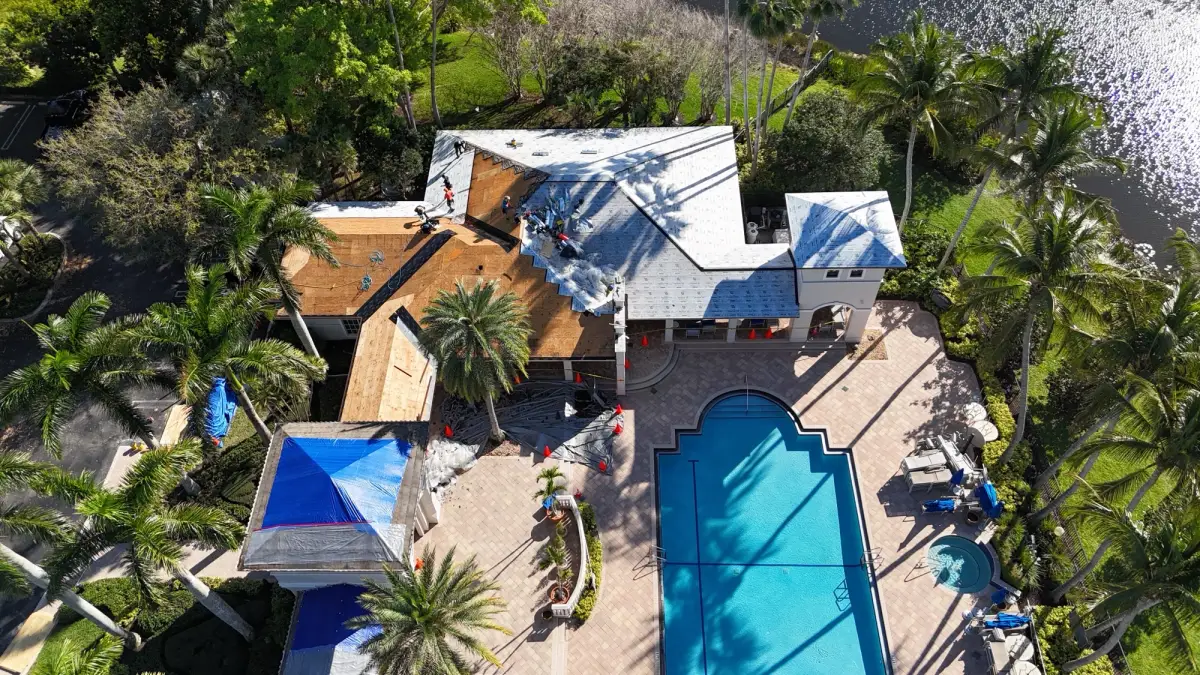
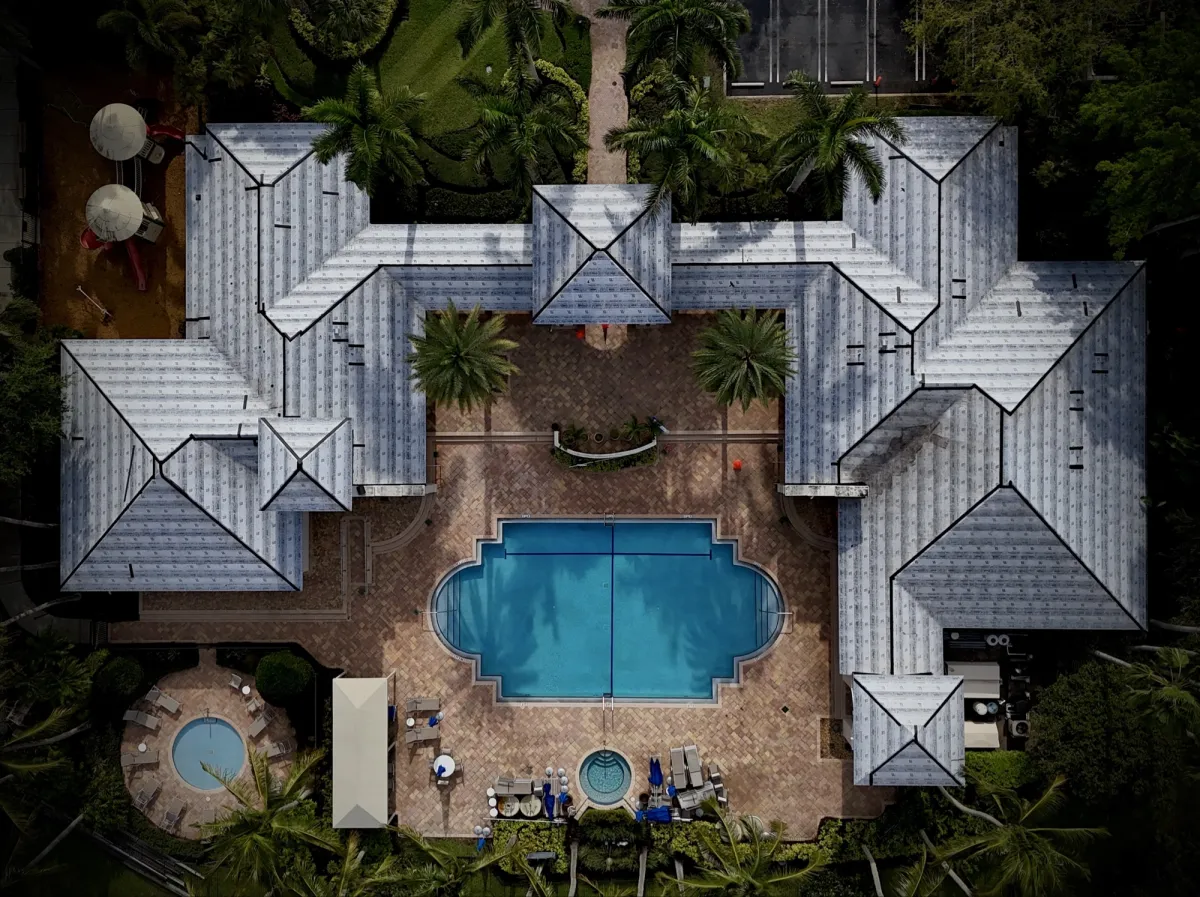
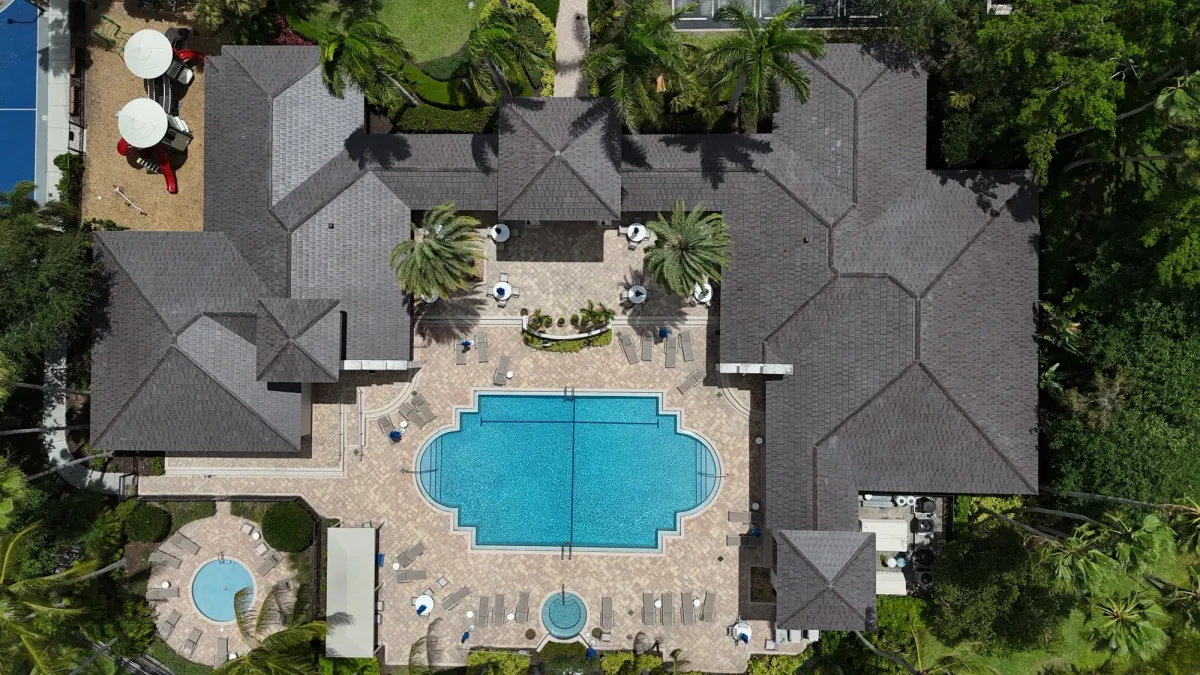
This spring we reroofed the clubhouse at a homeowners association in Palm Beach County. The photos on this page follow the job from tear-off in March to the finished roof in April 2026, after it passed final inspection.
We are not publishing the association’s insurance figures. The point of these photos is what the record shows: every stage of a permitted reroof photographed and dated, so the association’s insurance agent, a wind mitigation inspector or a future buyer’s inspector can see what is under the tile without taking it apart.
For HOA and condo boards
Clubhouses and other common buildings are insured under the association’s policy, not individual homeowners’ policies. The roof-age protections in 627.7011 are written for homeowners’ policies, so a board should not assume they control the association’s coverage. Ask your agent what that carrier requires on roof age and condition, and which mitigation credits it applies.
Before the job starts, ask your roofer for a closeout package: the permit and final inspection, product approval numbers, photos of the deck attachment and underlayment, and dated before, during and after photos. That is the record a mitigation inspector and the carrier will ask for. If you can, time the reroof and the new mitigation inspection ahead of the association’s renewal.
How to get the credit after a new roof
- Before you sign: pull your current declarations page and any existing wind mitigation report, and ask your agent for a quote that assumes a new roof and an updated report.
- In the contract: ask what underlayment will be installed, whether it qualifies as a sealed roof deck on the current OIR-B1-1802 form, how the deck will be fastened, and which product approval numbers will be used.
- During the job: get dated photos of the deck attachment and underlayment before the tile or shingles cover them.
- After final inspection: schedule a new wind mitigation inspection. Your old report will not show your new roof. The state says a completed form is valid for up to five years as long as no material changes are made to the home.
- Send it to your agent: ask them to re-rate the policy and confirm in writing when the credit takes effect.
Frequently asked questions
Will a new roof automatically lower my insurance?
No. Your insurer needs proof. The savings come through roof-age eligibility and wind mitigation credits, and the credits require a new wind mitigation inspection that documents the new roof.
How much can a new roof save on insurance in Florida?
It depends on your carrier, your home and what the new roof actually adds. The most reliable number is a side-by-side quote from your agent: current roof versus new roof with an updated wind mitigation report.
Do I need a new wind mitigation inspection after a new roof?
Yes, if you want credit for the new roof. A report done before the reroof will not show the new covering, deck attachment or sealed roof deck. Inspections on or after April 1, 2026 must use the revised OIR-B1-1802 form.
Do I have to replace my roof if it is over 15 years old?
Not automatically. For homeowner’s policies, Florida law requires the insurer to allow an inspection first, and it may not refuse to issue or renew solely because of age if the inspection shows at least five years of useful life remaining.
Does a roof certification lower my premium?
A roof certification is not a wind mitigation credit. It documents the roof’s condition and remaining useful life, which speaks to eligibility. A wind mitigation inspection is what documents the features that earn credits.
Does this apply to HOA and condo association buildings?
The mitigation-credit idea applies broadly, but association buildings are insured under the association’s policy, and the roof-age protections in 627.7011 are written for homeowners’ policies. Boards should confirm the carrier’s requirements with their agent.
Not sure whether your roof needs replacement or just the right repair and documentation? Schedule a free roof inspection. We will tell you honestly what your roof needs, document it, and give you what your agent and inspector will ask for. Call or text 561-856-5060.