
Barletta Winds Point: repair the failures, keep the roof.
A documented residential roof inspection in Delray Beach, Florida. Instead of defaulting to a full tear-off, Mike McGilvary Roofing inspected the concrete tile roof section by section, removed a representative tile to check the underlayment, and found the general roof field still serviceable — with failure concentrated in the high-water-flow areas. This is the documented case for targeted rebuilding over automatic replacement.
A Delray Beach tile roof, judged on condition — not age.
This residence on Barletta Winds Point in Delray Beach carries the concrete barrel-tile roof common across the community. As on many tile roofs in Palm Beach County, the tile itself was largely intact — but the roof showed the localized symptoms that so often trigger a premature replacement recommendation: cracked stucco, water staining on the fascia, and slipped tiles.
Roof age and roof condition are not the same thing. Before assuming the whole roof had to go, the homeowner asked for a real, documented roof inspection — the kind that opens the roof and examines the layer that actually fails, rather than judging the roof by the calendar. That principle is the foundation of Florida’s roof-age law and a remaining-useful-life evaluation — the same condition-over-age principle featured in Boca Magazine.
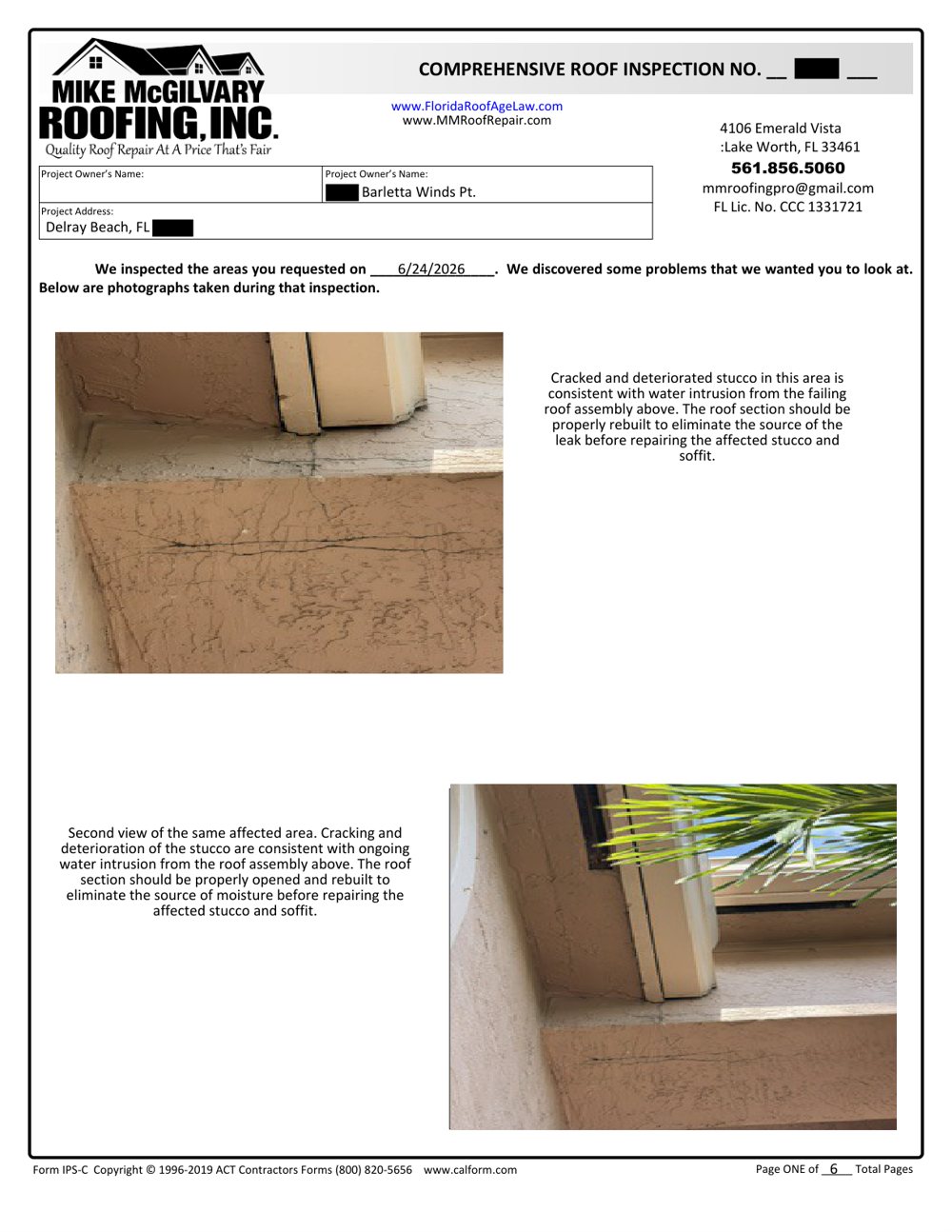
We inspected the whole roof — and opened it to be sure.
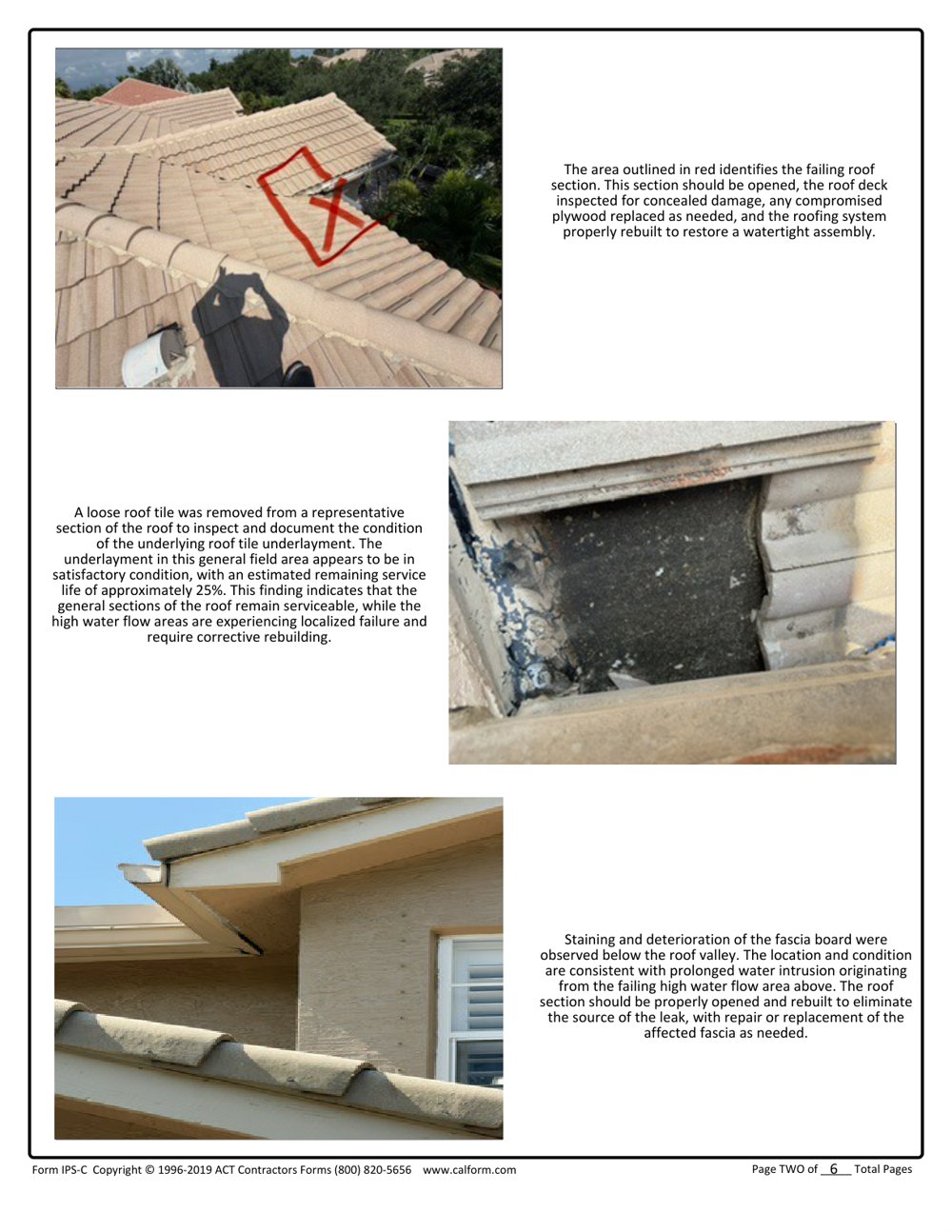
Rather than assess the roof from the ground, Mike walked and documented it section by section. A representative field tile was carefully removed to inspect the underlayment beneath — the actual waterproof layer — and the high-water-flow areas were examined for the localized failures that valleys and transitions develop first. Every finding was photographed and recorded.
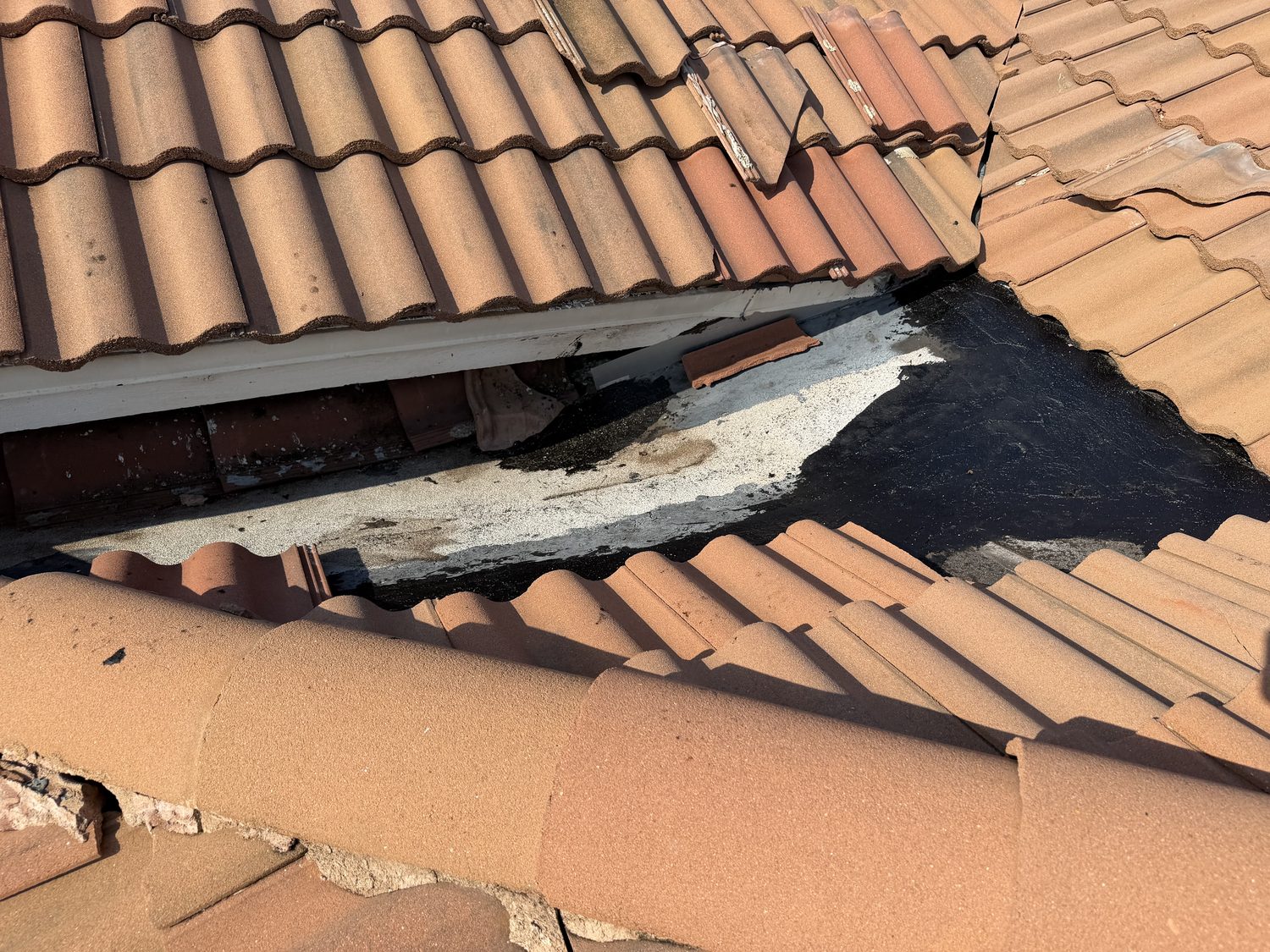
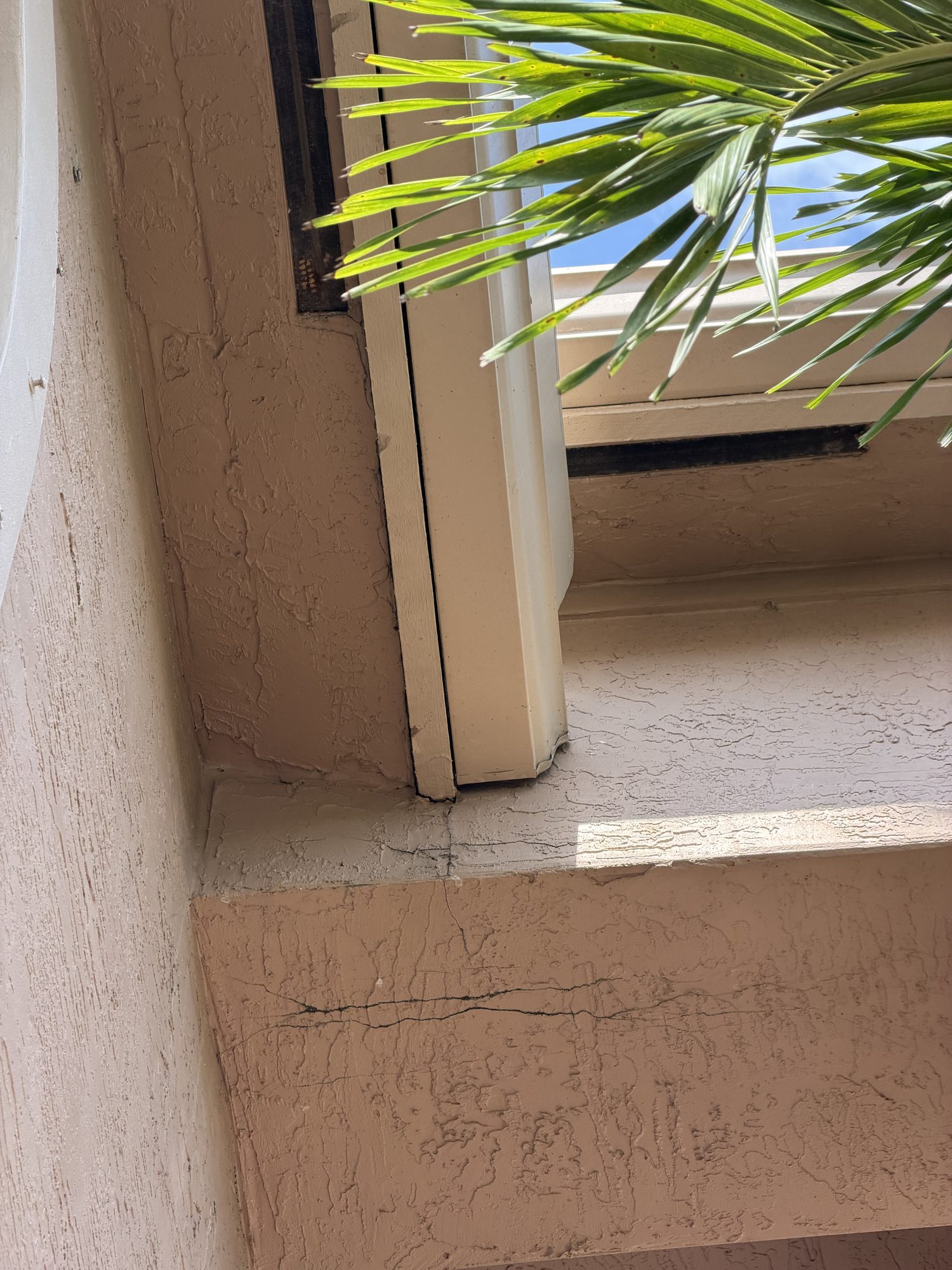
A serviceable roof with isolated failures.
The documented finding was the opposite of what a tear-off assumes. The general roof field — tile and underlayment — was in serviceable condition, while the damage was concentrated in specific, correctable areas.
General roof field
The underlayment under the representative removed tile was found in satisfactory condition, and the general sections of the roof remained serviceable — not candidates for replacement.
High-water-flow areas
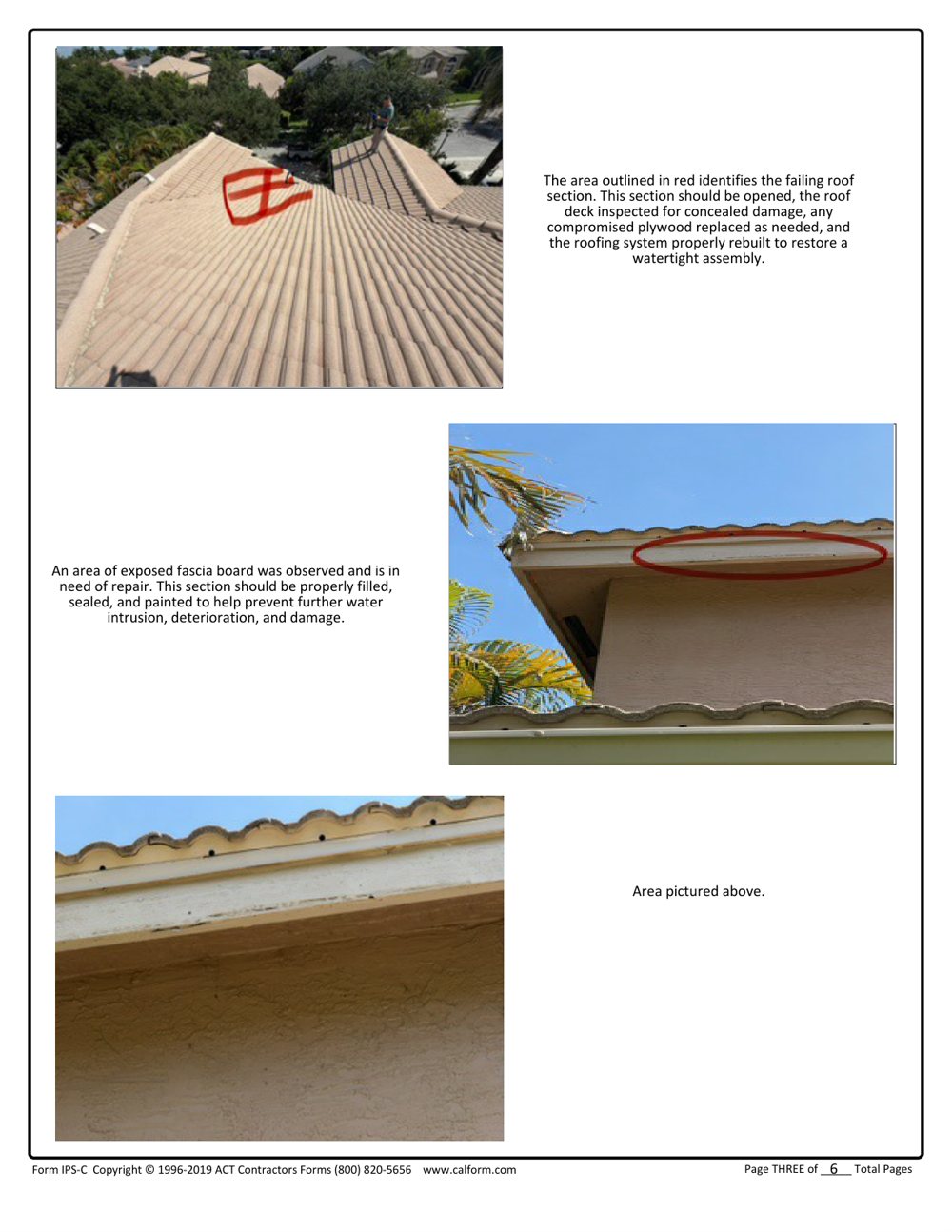
The high-water-flow sections were experiencing localized failure and require corrective rebuilding — opened, the deck inspected and any compromised plywood replaced, then rebuilt to a watertight assembly.
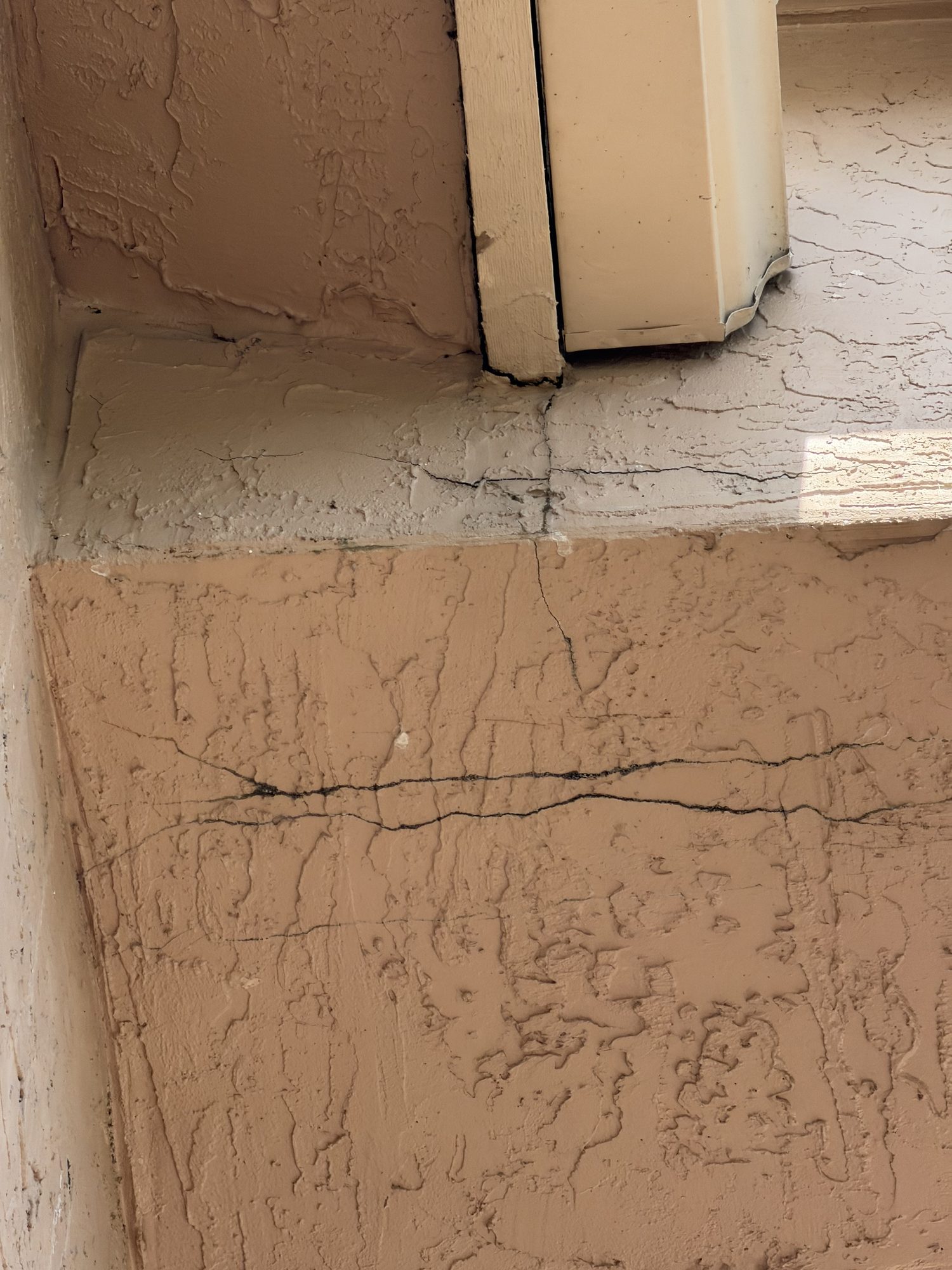
Stucco, soffit & fascia
Cracked, deteriorated stucco and staining on the fascia below the roof valley were consistent with water intrusion from the failing section above — the source is opened and rebuilt first, then the stucco and fascia are repaired, sealed, and painted.
Loose & slipped tiles
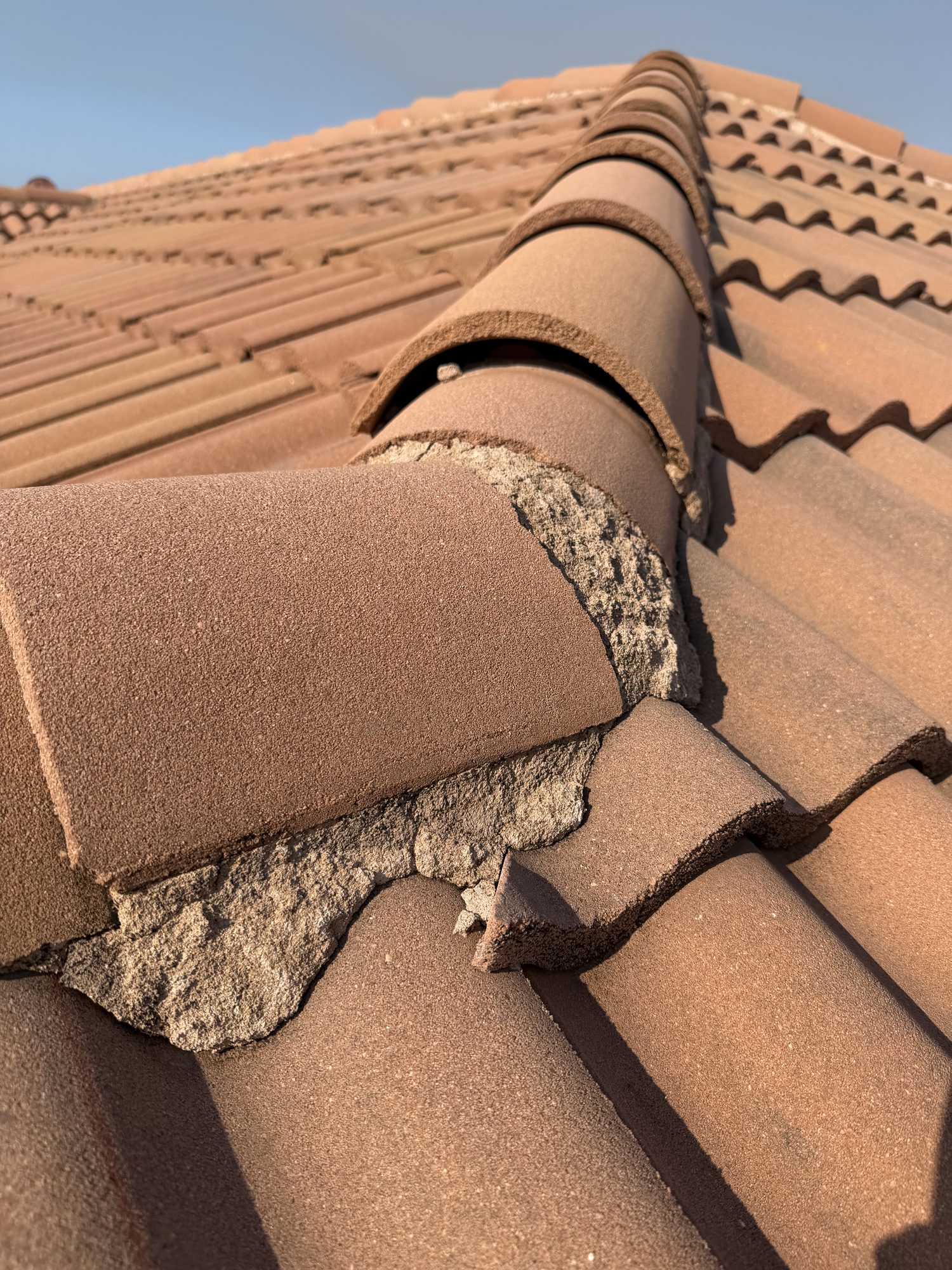
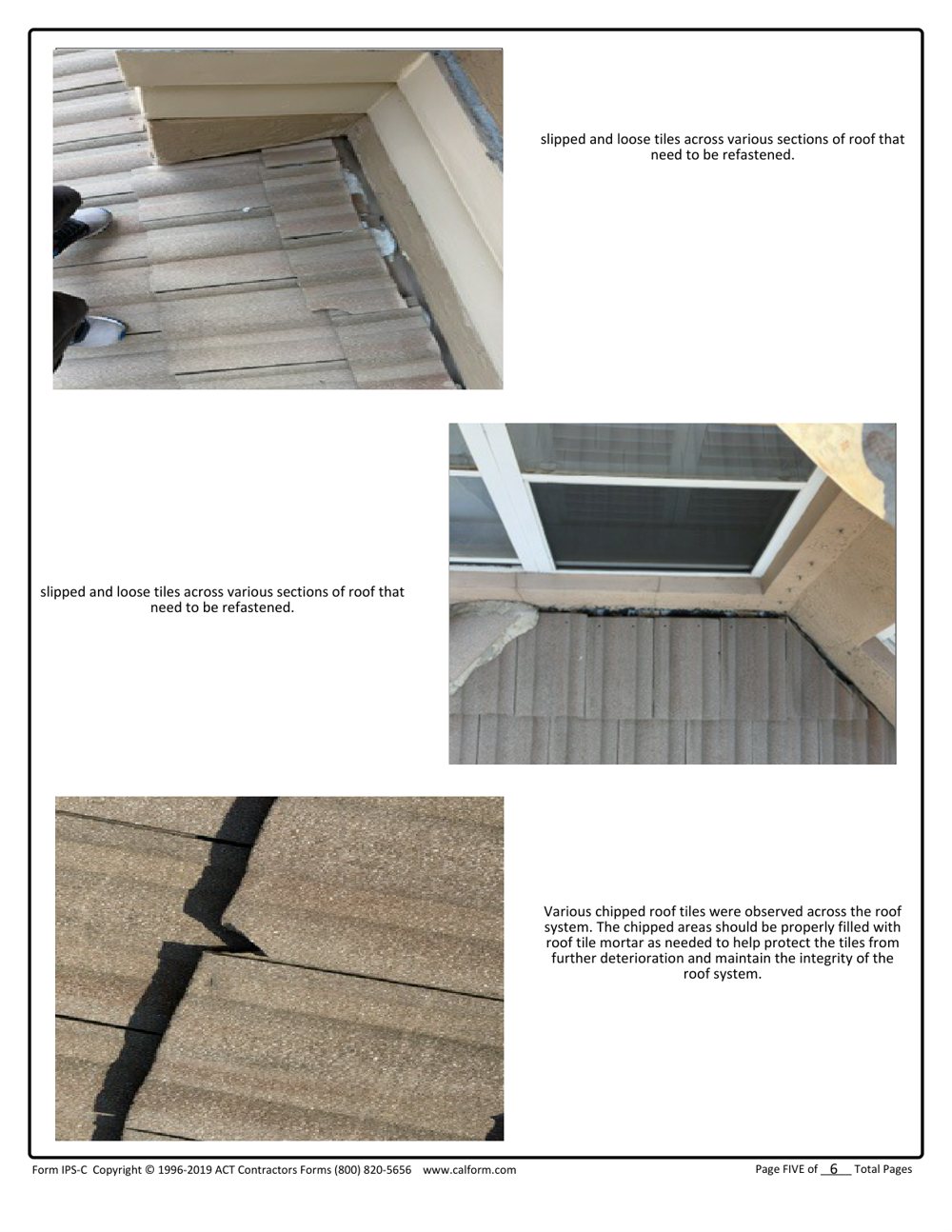
Loose and slipped tiles across various sections of the roof need to be refastened before wind or water works them further out of place.
Chipped tiles & mortar
Chipped tiles and mortar deficiencies were observed across the roof; the affected tiles should be properly filled with roof-tile mortar to protect them and maintain the integrity of the system.
Vents
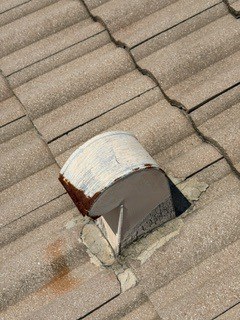
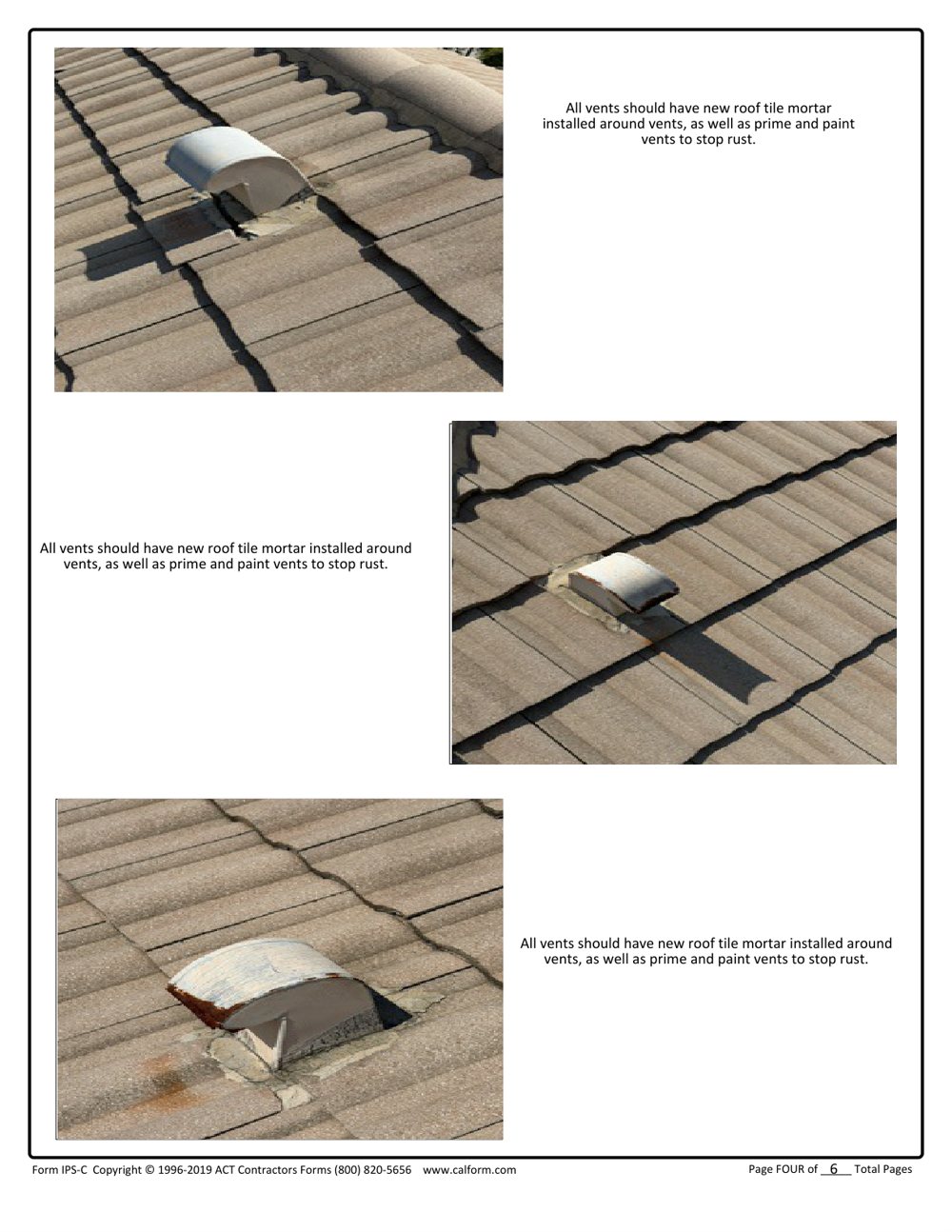
Vents need new roof-tile mortar installed around them and should be primed and painted to stop rust — simple maintenance that prevents corrosion and future leaks.
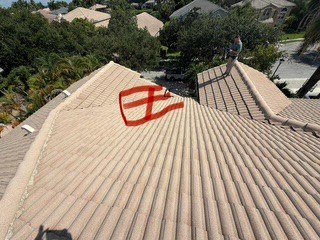
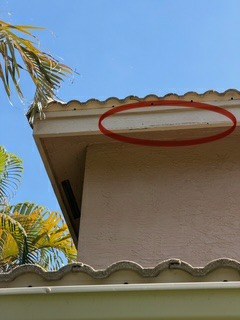
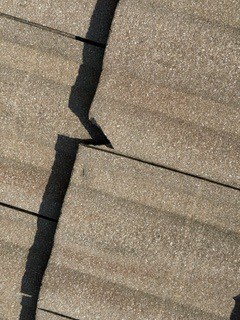
Targeted rebuilding — not automatic replacement.
Because the failures were isolated and the general roof was sound, the documented recommendation was to rebuild only what had failed — not to tear off a serviceable roof.
Open only what failed
Open the high-water-flow sections, inspect the deck for concealed damage, replace compromised plywood, and rebuild each area to a watertight assembly.
Then stucco & fascia
Eliminate the water source above before repairing the affected stucco, soffit, and fascia — so the cosmetic repair actually lasts.
Repair & maintain
Refasten loose tiles, fill chipped tiles with mortar, and re-mortar and treat the vents — preserving the serviceable majority of the roof.
Most of this roof did not need to be replaced — it needed the failed high-water-flow areas rebuilt and the rest maintained. That is tile roof preservation: repair-first, condition-based, and documented. When a roof does need replacement, we say so — but the roof, not the calendar, makes that call.
Every finding, photographed and on the record.
The full inspection is a documented, photographed condition report — the kind of evidence a homeowner can hand to an insurer, an adjuster, or a future buyer, and the standard behind a 5-Year Roof Certification. Homeowner-identifying details have been redacted.
Published July 17, 2026 · Reviewed by Mike McGilvary, Florida Certified Roofing Contractor · License CCC1331721 · McGilvary family roofing legacy since 1974
Learn more about condition-based roofing.
Roof leak detection & repair →
Finding the true source of a leak — often a high-water-flow area — before water reaches the stucco, soffit, and interior.
Roof certification for insurance →
Documented condition and remaining useful life — the evidence carriers and adjusters ask for.
Delray Beach roof repair →
Repair-first tile, flat, and leak roofing across Delray Beach — and our other documented Delray inspections.
Request a Free Roof Inspection
No obligation — a documented, repair-first inspection from Mike McGilvary Roofing. Prefer to talk now? Call (561) 856-5060.