
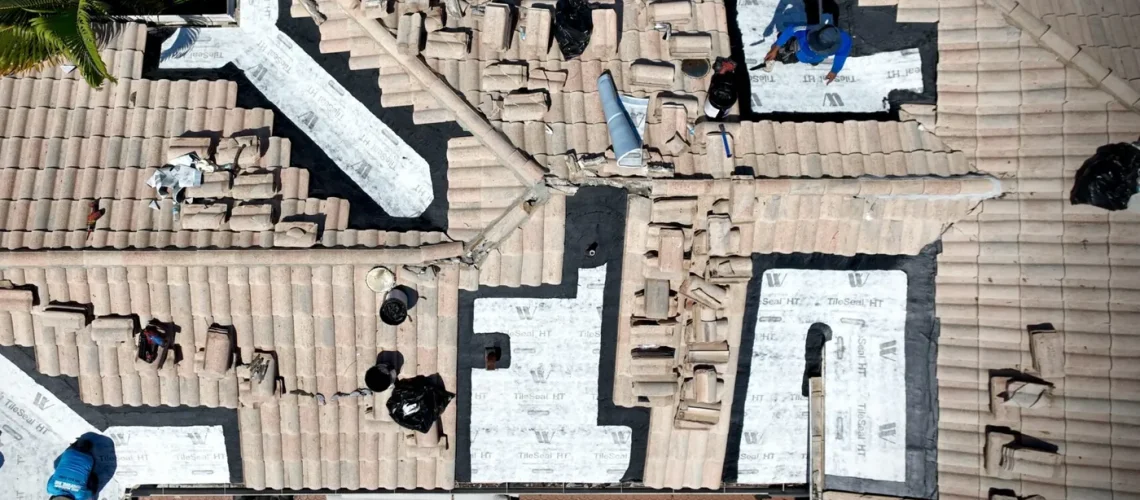
Many Florida homeowners reach the same point with an older roof:
“The roof is getting older. I may replace the entire roof next year. But I have an active leak right now. Can we do something temporary so water stops coming in?”
That is a fair question.
At Mike McGilvary Roofing, we hear this often, especially on tile roofs throughout Palm Beach County and South Florida. A homeowner may be thinking about a full roof replacement in 2027, but a leak shows up today around a vent, chimney, valley, wall flashing, or flat roof tie-in.
The mistake is assuming there are only two choices: do nothing or replace the entire roof immediately.
There is usually a smarter middle ground.
The right answer depends on the actual condition of the roof, the source of the leak, the condition of the plywood, the underlayment, the flashing, and how long the homeowner needs the repair to perform.
Temporary Repair Has a Place, But It Needs to Be Honest
A temporary roof repair can make sense when the goal is simple: stop active water intrusion and buy time before a planned roof replacement.
Temporary repair may be appropriate when:
- The leak is localized to one or two areas.
- The roof replacement is already being planned in the near future.
- There is no evidence of widespread structural failure.
- The homeowner understands that the repair is meant to buy time, not renew the whole roof.
- The repair can be done without hiding a larger problem.
But a temporary repair is not magic.
If the underlayment is deteriorated, the flashing has failed, or the plywood underneath is rotted, simply smearing sealant over the surface may slow the leak, but it does not rebuild the failed roof system.
That is why the first step should always be inspection and documentation.
Do Not Let Water Keep Entering Just Because You Plan to Replace Later
If you are replacing the roof next year, it may feel wasteful to repair part of it now.
But active water intrusion can create a much bigger problem if it is ignored.
A small roof leak can damage:
- Plywood sheathing
- Fascia and soffit
- Attic insulation
- Drywall and ceilings
- Interior paint
- Electrical areas
- Flooring and cabinetry
- Indoor air quality
In South Florida, repeated rain and humidity can turn a manageable leak into a much more expensive interior repair.
The goal is not to spend money twice. The goal is to stop the water before the damage spreads.
Vent Leaks Are Usually Detail Failures, Not Whole-Roof Failures
One of the most common leak areas we inspect is around roof vents and penetrations.
On a tile roof, the tile is not the waterproofing layer. The tile sheds water. The underlayment underneath is what protects the roof deck.
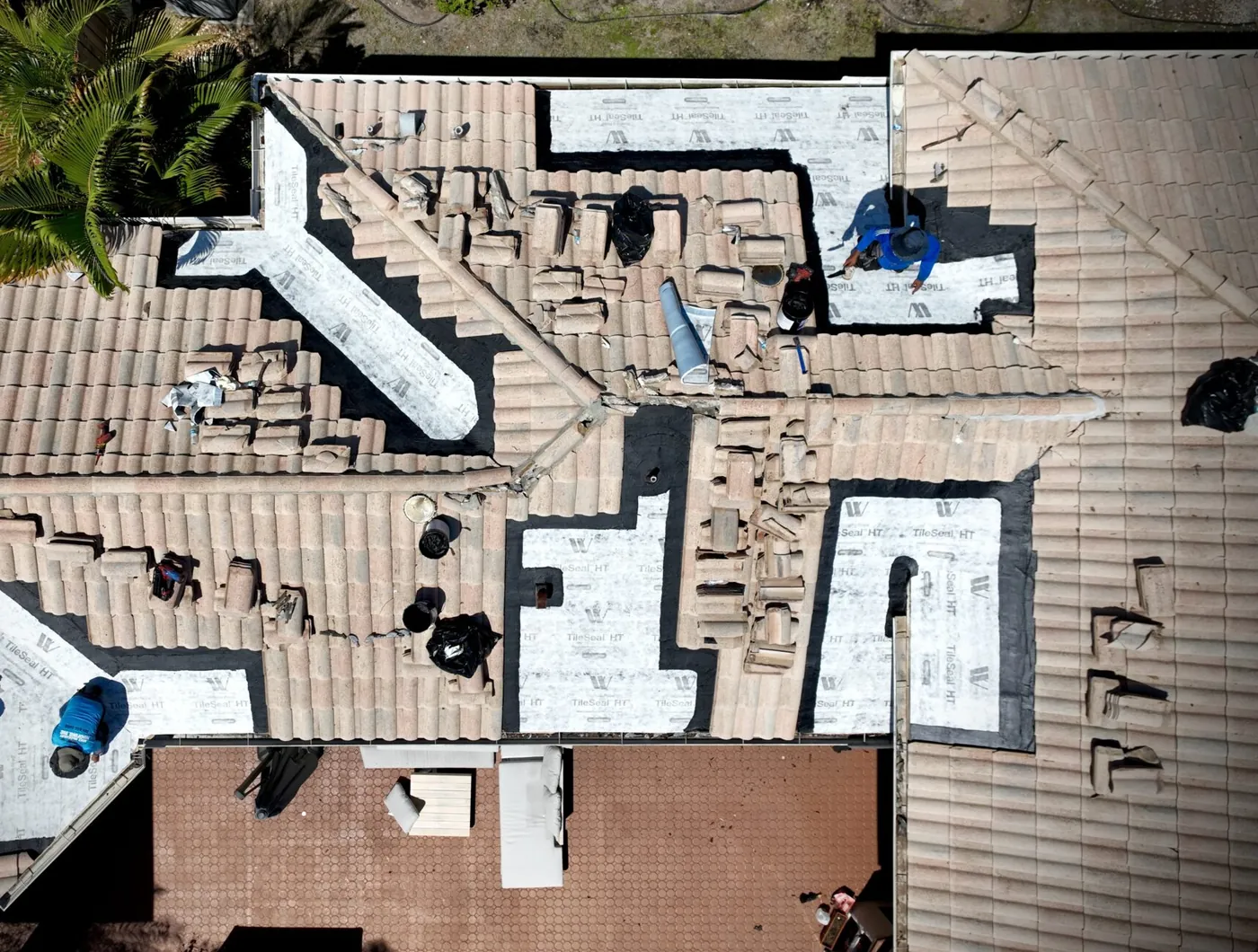
That means a roof can look acceptable from the ground while the real failure is happening underneath the tile around a vent, valley, chimney, wall transition, or high-water-flow area.
Around vents, several things can fail:
- Mortar can crack or separate.
- Flashing can loosen or corrode.
- Underlayment can dry out, split, or deteriorate.
- Water can travel under the tile before showing up inside.
- Plywood can become compromised if the leak has been active long enough.
That does not automatically mean the entire roof needs to be replaced.
It means the leak area needs to be evaluated correctly.
The Three Real Options
Once the roof is inspected, most homeowners fall into one of three categories.
1. Temporary Seal Repair
This is the most limited option.
A temporary repair may include cleaning and prepping the affected area, sealing visible deficiencies, applying commercial-grade roof sealant or silicone, and reducing the immediate path of water entry.
This can be appropriate when the homeowner is definitely replacing the roof soon and only needs short-term water control.
The homeowner should understand that this is not the same as opening up the roof, inspecting plywood, replacing underlayment, and rebuilding the failed area.
2. Proper Roof Repair or Section Rebuild
This is the correct option when the leak area needs to be repaired properly.
On a tile roof, that often means:
- Remove tiles in the affected area.
- Inspect sheathing plywood.
- Remove and replace compromised plywood as needed.
- Install new roof tile underlayment papers to the deck.
- Seal roof deck and flashings.
- Reinstall existing tiles back to original placement.
- Replace broken tiles as needed.
- Install new roof tile mortar around vents or details as needed.
- Provide completion photos.
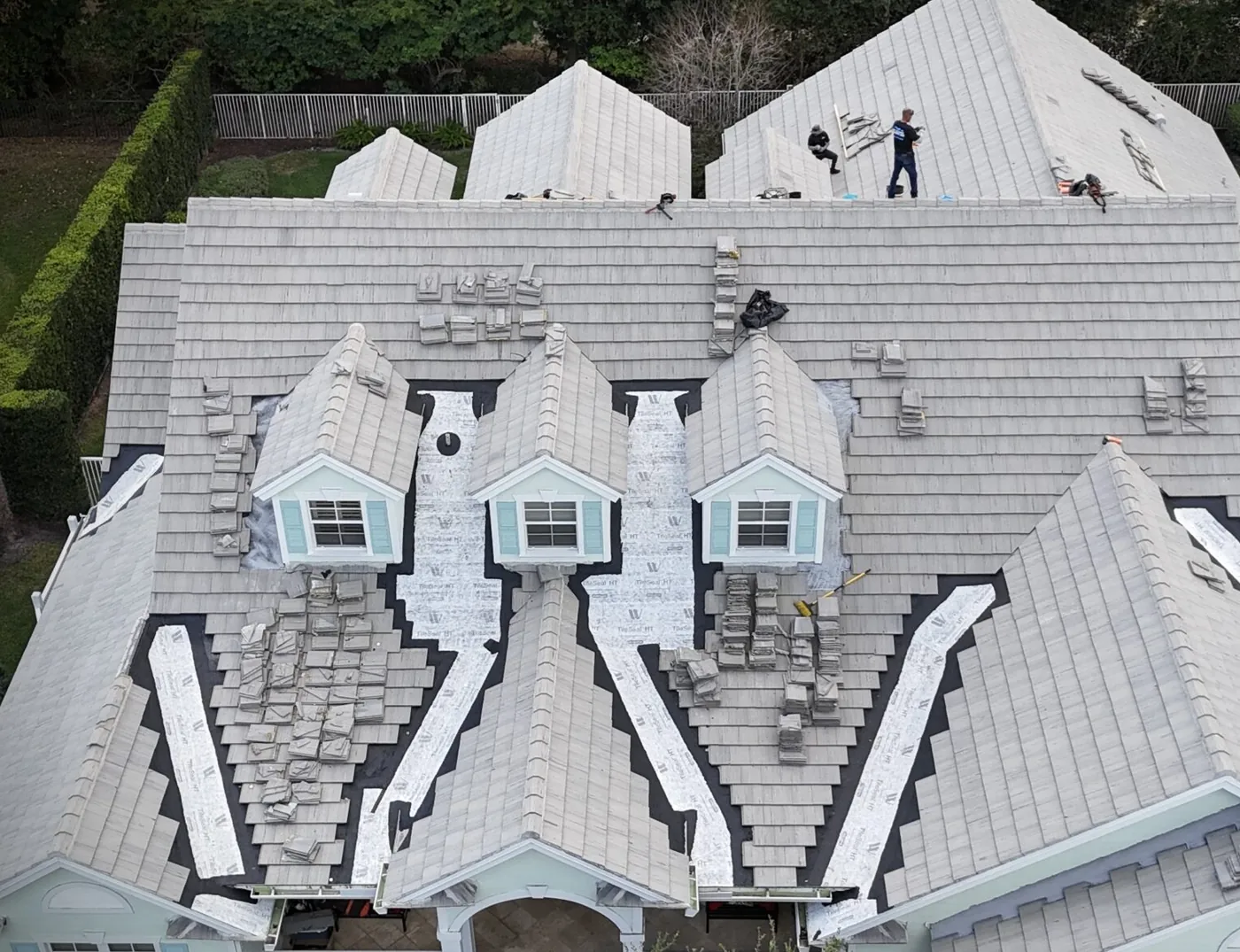
This is the repair-first approach Mike McGilvary Roofing is known for. We fix the part of the roof that has actually failed and preserve the roof areas that are still serviceable.
3. Full Roof Replacement
Sometimes replacement is the honest recommendation.
A full replacement may be needed when the roof has widespread underlayment failure, recurring leaks in multiple unrelated areas, extensive deck damage, deteriorated tile, structural movement, or conditions that cannot be corrected through targeted repair.
Mike McGilvary Roofing does complete roof replacements, but replacement should not be the automatic answer before the roof is properly inspected. If you want a deeper look at how we weigh the decision, see our guide to roof repair vs. replacement.
The roof should decide the recommendation, not fear, age, or sales pressure.
“Will I Pay for Plywood Twice?”
This is a common and reasonable concern.
If the roof is being replaced next year, many homeowners ask whether it makes sense to replace plywood now.
The honest answer is: we do not know the condition of the plywood until the affected area is opened.
If the plywood is sound, there may be no need to replace it.
If the plywood is compromised, leaving it in place can allow the leak to continue damaging the home. In that case, replacing the compromised plywood now may be the right move, even if a full replacement is planned later.
If the homeowner only wants a temporary seal and understands the limitation, that can sometimes be done. But it should be clearly explained as a limited water-control repair, not a full rebuild of the failed section.
Florida Roof Age Law Makes Documentation Even More Important
Florida roof decisions should not be based on age alone.
Under Florida Statute §627.7011, roof age alone is not always enough to force replacement for homeowners insurance purposes. For roofs 15 years or older, the statute creates an inspection pathway, and if an authorized inspection shows the roof has five years or more of useful life remaining, the insurer may not refuse to issue or renew a homeowners policy solely because of roof age.
That does not mean every older roof automatically qualifies.
It also does not override every underwriting issue, roof condition issue, or policy requirement.
But it does mean documentation matters.
A real roof inspection, photo documentation, repair history, and remaining useful life evaluation can make a major difference when a homeowner is dealing with insurance, a home sale, refinancing, or a roof-age question. We cover the law in depth on our Florida Roof Age Law page, and how a 5-Year Roof Certification documents remaining useful life.
This is why Mike McGilvary Roofing focuses on condition-based roofing decisions.
Roof age does not establish roof condition. Documentation does.
What Mike McGilvary Roofing Recommends
If you have an older roof and an active leak, the first step is not panic.
The first step is a proper inspection.
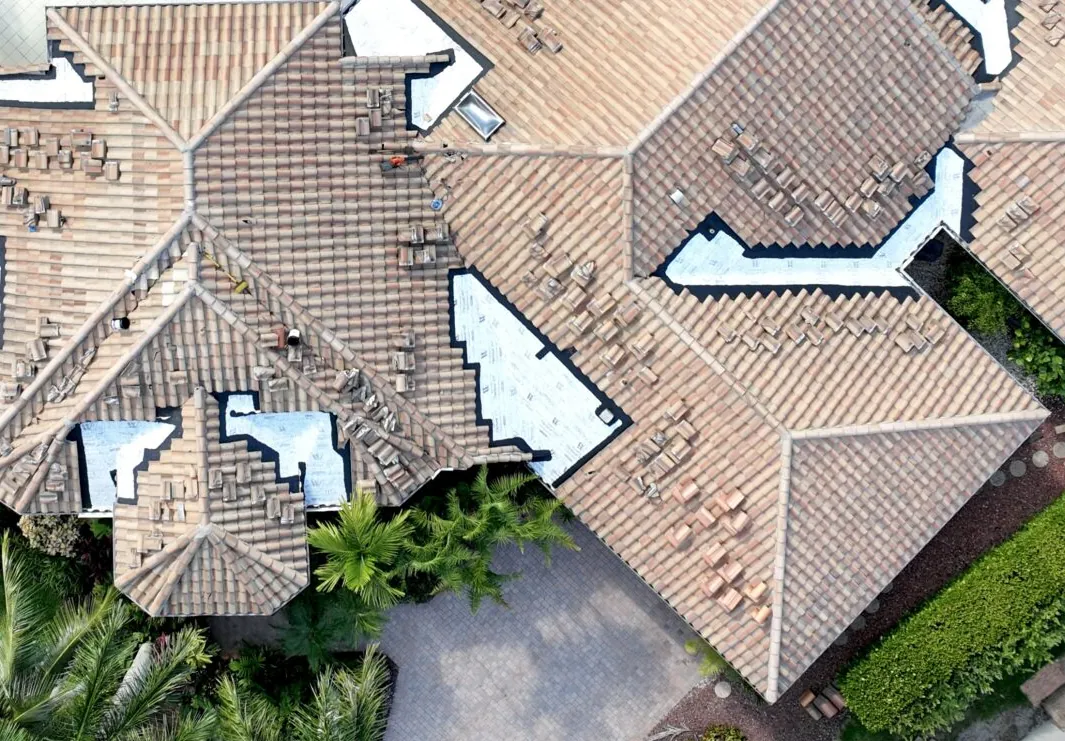
From there, the recommendation should be simple and honest:
- If a temporary repair can safely buy time, we will tell you.
- If the area needs to be opened up and rebuilt properly, we will show you why.
- If the roof truly needs replacement, we will tell you that too.
- If the roof can be preserved, repaired, and documented, we will protect that option.
Our repair-first approach is built around one principle: preserve what is still sound and correct what has actually failed.
Signs You Should Not Wait
Call for an inspection if you see:
- Ceiling stains after rain
- Water marks in the attic
- Damp or clumped insulation
- Rotted fascia or soffit
- Cracked, loose, or displaced roof tiles
- Failed mortar around vents or ridge areas
- Leaks around vents, chimneys, skylights, or valleys
- Multiple previous patch areas
- Water entering around windows or exterior walls
- A roof-age notice from your insurance company
These signs do not always mean the whole roof needs replacement, but they do mean the roof should be evaluated before the damage spreads.
The Bottom Line
If you are planning to replace your roof next year, you still need to stop active water intrusion now.
A temporary repair may be enough in some cases. In other cases, the roof needs a proper opened-up repair or section rebuild. And sometimes, full replacement is the right answer.
The only honest way to know is through inspection, documentation, and a condition-based recommendation.
Mike McGilvary Roofing provides free roof inspections across Palm Beach County and South Florida — including Boca Raton, Delray Beach, and Palm Beach. We document the condition, identify the actual leak source, explain your options, and recommend replacement only when it is truly necessary.
If your roof is leaking now, do not wait for the next storm to make the decision for you.
Request a free roof inspection or call Mike McGilvary Roofing at (561) 856-5060.