
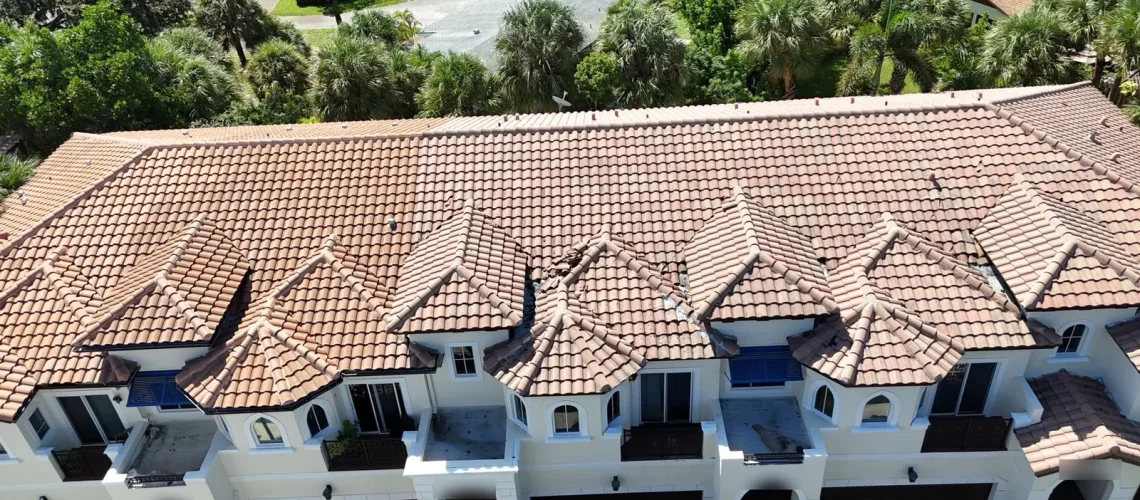
From the street this row of townhomes looks fine. The problems are up where the lower roofs meet the main roof.
From the street, this row of South Florida townhomes looks fine. Clean stucco, matching tile, nothing that would make an owner think twice.
Then we put a drone up.
What we found at the highest points of the roof, right where the lower roofs tie into the main roof, was a repair that never should have been left that way: tile slid out of place, open gaps with black patching material on the surface, piles of broken tile sitting loose on the roof, mortar smeared across the hips, and empty adhesive tubes left behind.
This was not our job, and we’re not naming who did it. We’re sharing it because it shows exactly what we explain on our Why Cheap Roof Repairs Fail page: a low price isn’t the problem by itself. An incomplete repair is.
The higher the roof, the less care it gets
The McGilvary family has been licensed roofing contractors in Palm Beach County since 1974, and here’s a hard truth about our industry: the higher up the roof, the less care some crews give it, because they assume nobody will ever get up there to check.
A homeowner can see a sloppy gutter or a stained driveway. Nobody walks a two-story tile roof. So the hardest, most important part of the job — the junction where one roof meets another — is exactly where corners get cut.
That’s backwards. Those junctions are where water from an entire upper slope collects and flows. They need the most care, not the least.
What’s wrong in these photos
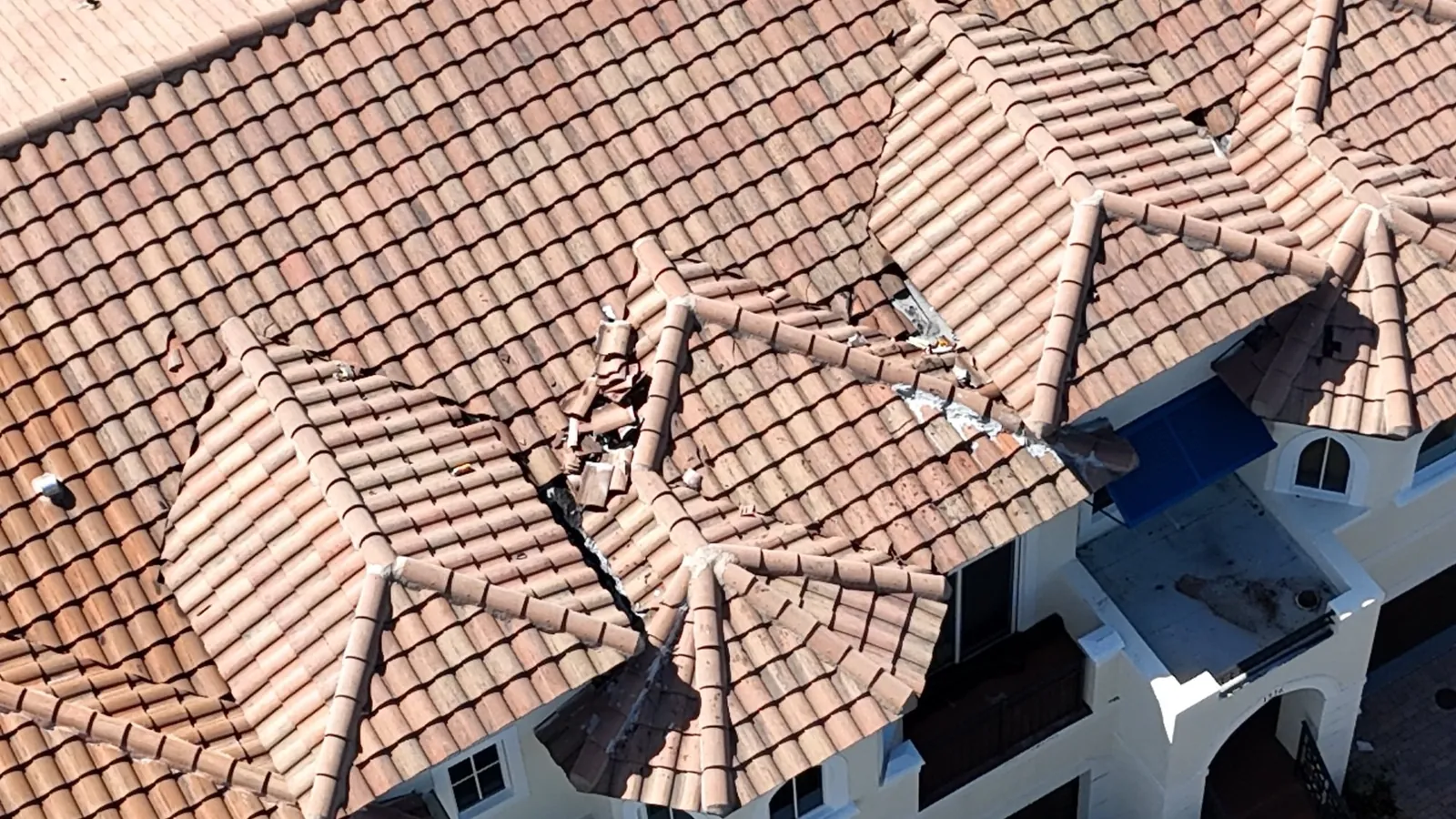
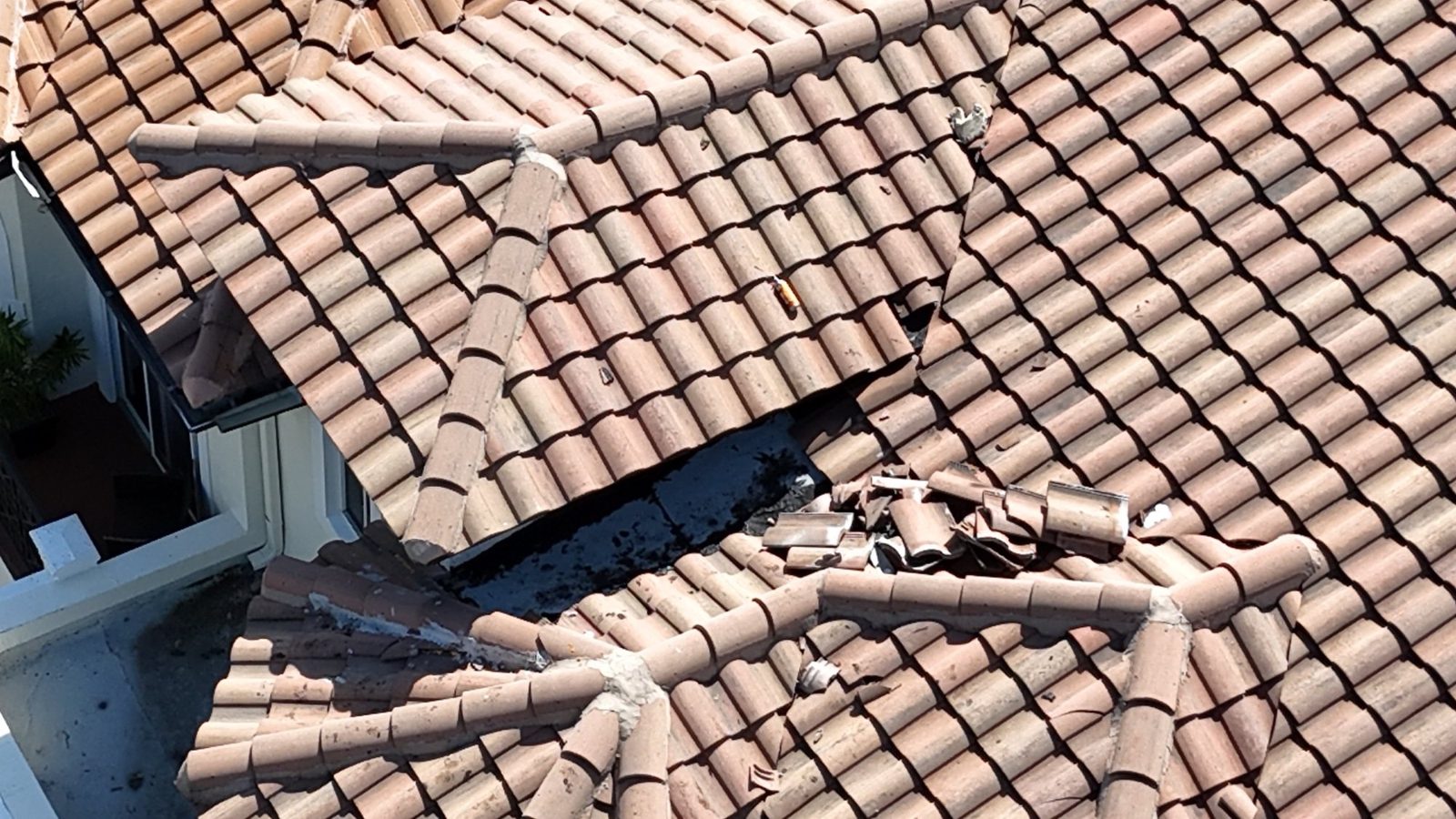
Open junctions. Where the lower roofs meet the main roof, sections of tile are missing or pushed aside, leaving open strips. What’s visible underneath is black patching material on the surface, not a rebuilt, integrated detail. A junction like this has to be opened far enough to reach sound material, rebuilt with new underlayment and flashing, and tied back into the surrounding roof. A surface patch does not do that.
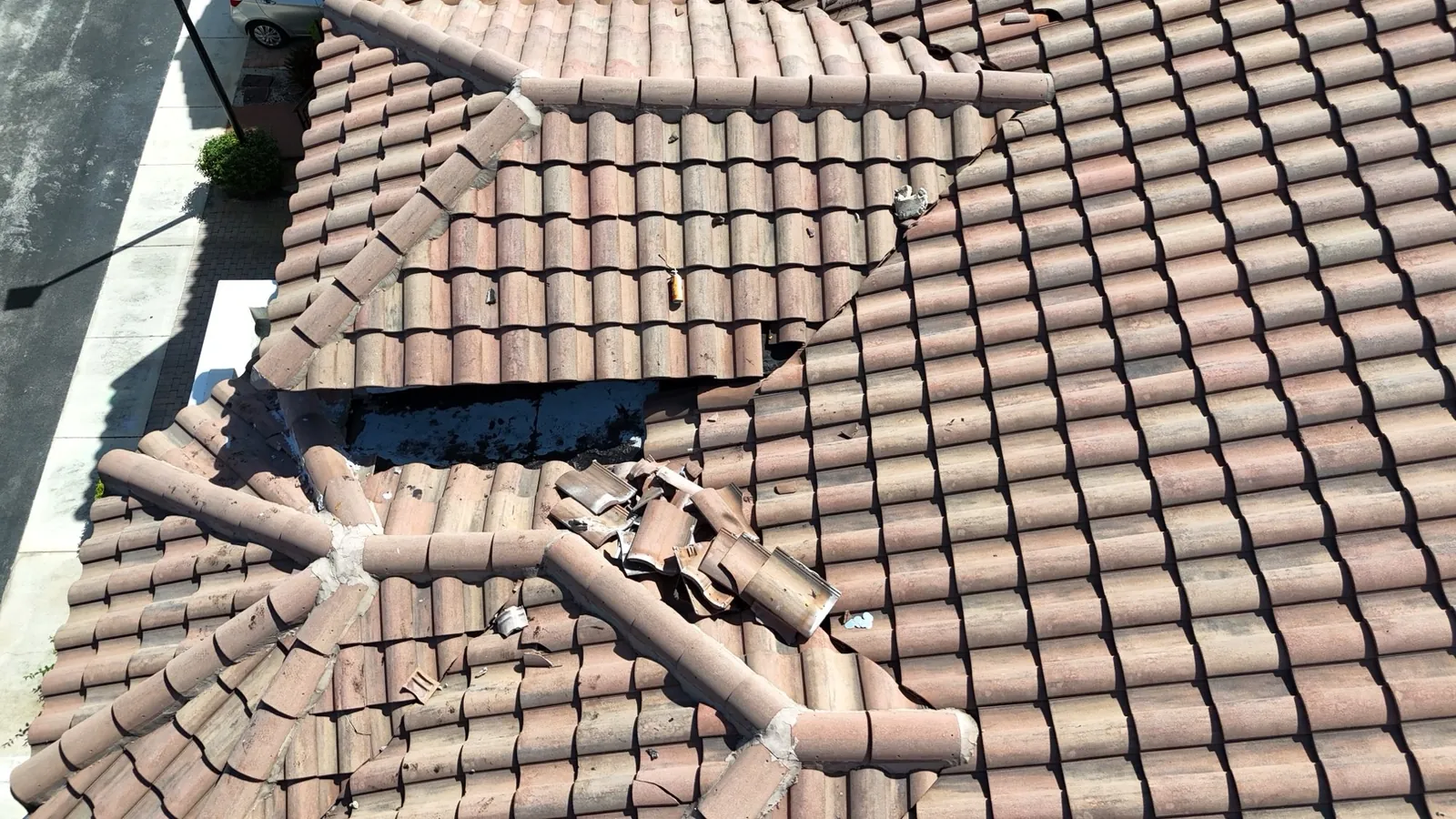
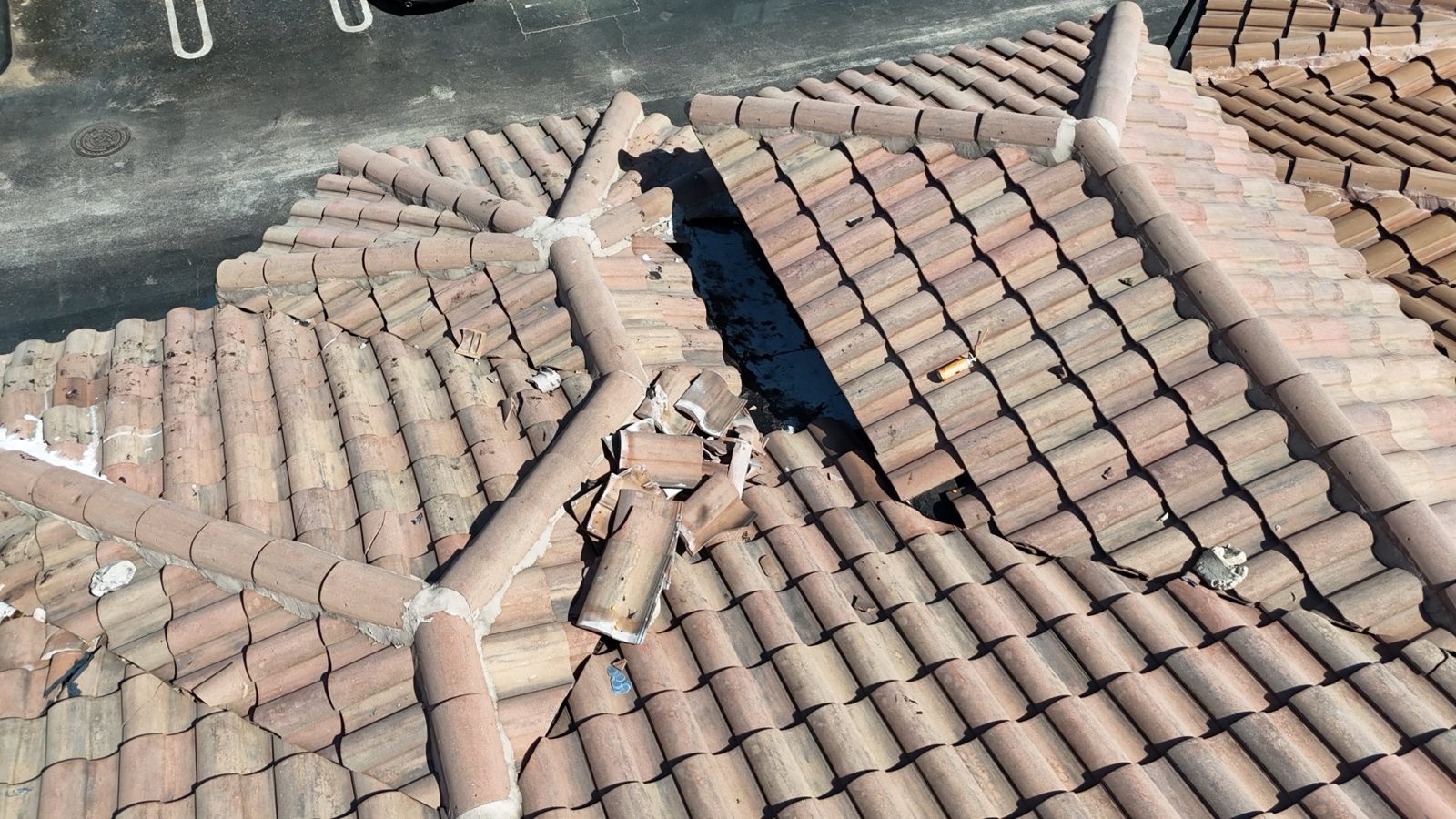
Loose, broken tile left on the roof. Piles of broken tile are sitting on top of the roof, not fastened to anything. That’s a housekeeping problem today and a safety problem in a storm. FloridaDisaster.org’s Hurricane Retrofit Guide notes that roof tiles are likely to become wind-borne at wind speeds starting at 120 to 130 mph, and that all tiles, especially those on ridges and edges, should be fastened down tightly. FEMA’s guidance on tile roofs in high-wind areas adds that debris from a single broken tile can strike other tiles and lead to a progressive cascading failure. Loose tile left on a roof is a head start on that kind of damage.
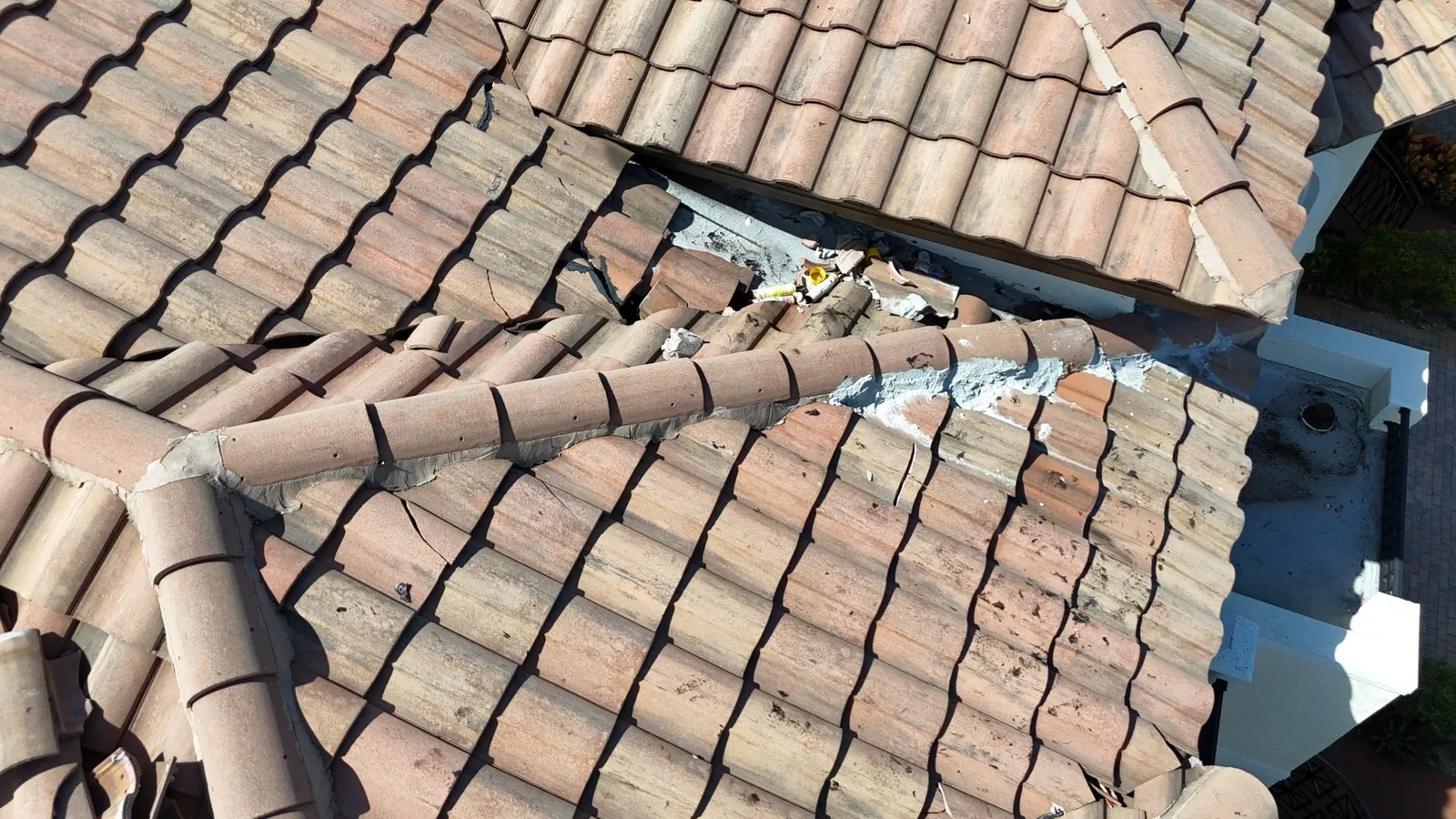
Smeared mortar and debris. Mortar is smeared across the hips and over the field tile, and empty tubes and debris are left in the gaps. FEMA’s same guidance reports that storm damage investigations found hip and ridge tiles attached with mortar are very susceptible to blow-off. The same FEMA guidance recommends attaching hip and ridge tile to a ridge board with screws instead of setting it in mortar.
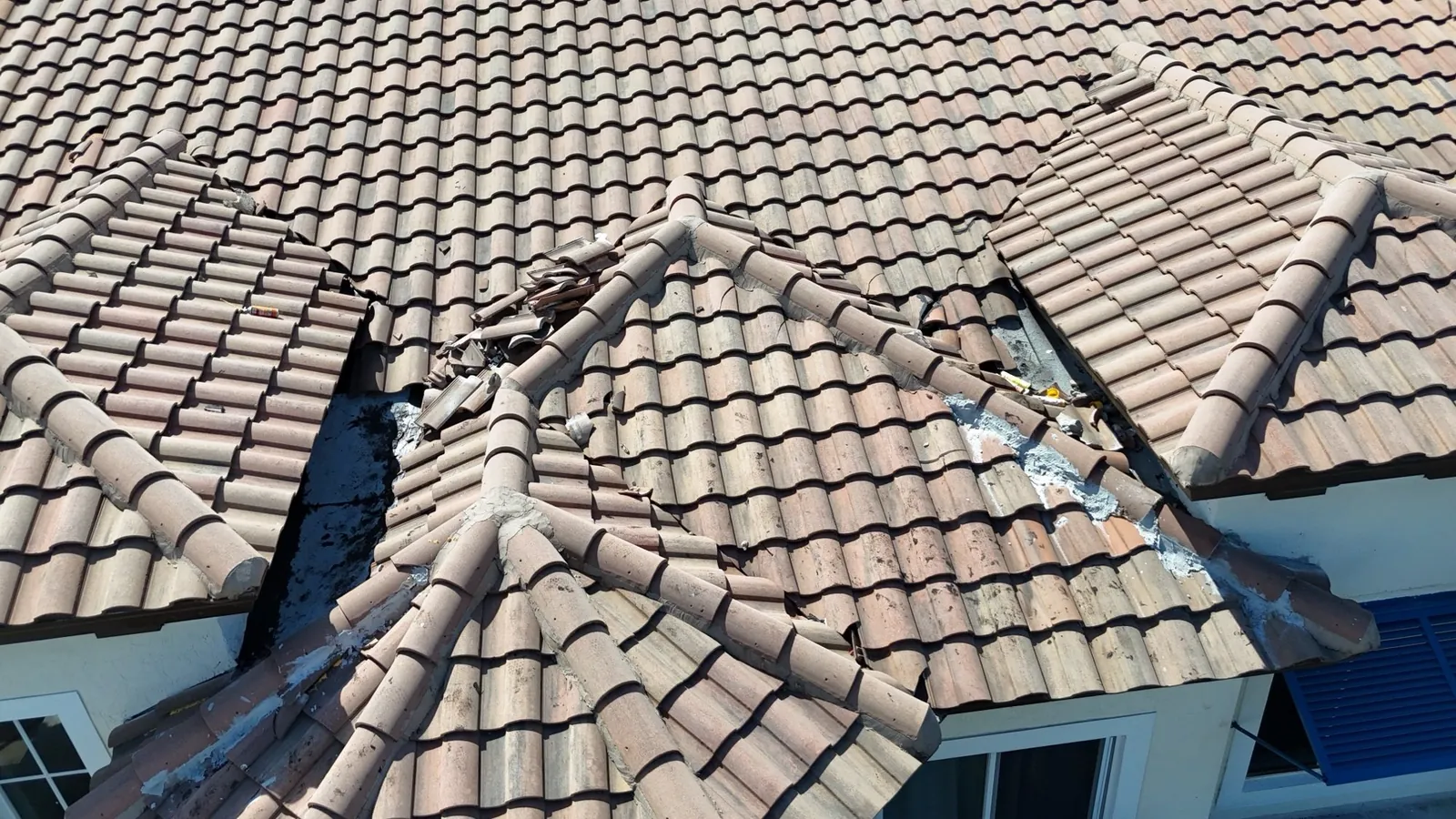
The same problems, more than once. Two separate junctions on the same roof show the same pattern. That’s not bad luck on one spot. It’s a way of working.
Why “we can do it cheaper” often costs more
When a roofer can come in far below everyone else, ask what’s being left out. Usually it’s the parts you can’t see:
- Opening enough of the roof to find where the water is really getting in
- Rebuilding the underlayment and flashing at junctions, valleys and walls instead of patching over them
- Securing every tile and hauling away broken pieces
- Photographing the work so you can see what was done
- Pulling a permit when the work requires one
Skip those, and the price drops. So does the repair. The water keeps coming in, the underlayment and decking keep deteriorating, and you pay for the roof again — sometimes more than once. The lowest invoice is not always the lowest total cost.
How to choose the right roofing contractor
Before you hire anyone to work on your roof, the Florida Department of Business and Professional Regulation (DBPR) recommends that you:
- Ask to see the state-issued license, then verify the license number with DBPR and check for complaints at MyFloridaLicense.com.
- Get written estimates from several licensed contractors that spell out the work, the materials, the completion date and the total cost.
- Be cautious if a contractor tries to convince you a permit isn’t necessary, or that it’s cheaper if you pull it yourself.
Licensing matters. Under Florida Statute 489.127, contracting without a license is a first-degree misdemeanor, and a third-degree felony if it happens during a declared state of emergency. A licensed contractor is also accountable to the state when something goes wrong.
Permits matter too. In unincorporated Palm Beach County, only a minor repair of an existing roof covering under $1,000 in fair market value is exempt from a building permit. Check with your local building department for the rules where you live.
Then ask every contractor these questions:
- Where do you believe the water is entering, and what failed?
- How much of the roof will you open?
- Will you inspect and photograph the underlayment, flashing and decking once it’s open?
- How will the repair tie into the sound roof around it?
- What happens to broken tile?
- Will I get before, during and after photos, including the highest parts of the roof?
- Will this job need a permit, and who pulls it?
- What does your written warranty cover?
A good roofer answers all eight in plain English before the work starts.
How we do it at Mike McGilvary Roofing
We inspect first, including drone photos of the parts of the roof you can’t see from the ground. We find where the water is getting in, open enough of the roof to see the whole problem, rebuild what failed, and reinstall your tile. Then we show you: before, opened, during and after photos, a written scope, and a 2-year workmanship warranty under our written warranty terms.
If a contractor has already worked on your roof and you’re not sure what was done, we can inspect it and tell you what we find — whether that’s “it’s fine,” “it needs a targeted repair,” or “this section needs to be rebuilt.”
Before you pay for another roof repair, find out what actually failed. Learn more on our Why Cheap Roof Repairs Fail page, or call (561) 856-5060 for a free, documented inspection.
Frequently asked questions
Is every inexpensive roof repair a bad repair?
No. A small, properly scoped repair can be exactly what a roof needs. The question is whether the price covers finding the source, rebuilding what failed and documenting the work.
How can I tell whether a repair on my roof was done right?
Ask for before, during and after photos of the actual repair area. If you never received them, a drone inspection can show the high areas you can’t see from the ground.
Is loose tile left on a roof dangerous?
It can be. Florida’s Hurricane Retrofit Guide warns that roof tiles can become wind-borne at speeds starting at 120 to 130 mph, and FEMA notes broken tile debris can damage other tiles. Loose and broken tile should be secured or removed.
Do roof repairs in Palm Beach County need a permit?
In unincorporated Palm Beach County, only minor roof-covering repairs under $1,000 in fair market value are exempt. Your city may have its own rules, so check with your local building department or ask your contractor.
How do I check a roofer’s license in Florida?
Look up the license number on MyFloridaLicense.com, run by the Florida DBPR, and check for complaints before you sign anything.
Can you inspect a repair another company did?
Yes. We’ll inspect the repair, trace the likely water path and tell you plainly what we find.
Find Out What Actually Failed
Florida Certified Roofing Contractor CCC1331721 (license active since 2018; the McGilvary family has been licensed roofing contractors in Palm Beach County since 1974).
Sources: FloridaDisaster.org Hurricane Retrofit Guide, Tile Roofs; FEMA Home Builder’s Guide, Tile Roofing for High-Wind Areas; Florida DBPR, Hiring Licensed Contractors; DBPR license verification; Florida Statute 489.127; Palm Beach County, Items Not Requiring a Permit.
Photos: drone photos taken October 5, 2026 by Mike McGilvary of another contractor’s repair on a South Florida townhome row. Not a Mike McGilvary Roofing job; the property and the contractor are not identified.