
Every roofer who looked at the Schwartz roof said the same thing: replace it. The tiles were broken in places, and to contractor after contractor that meant one answer — a full roof replacement costing tens of thousands of dollars. There was just one problem. The roof wasn’t leaking, and it didn’t actually need to be replaced. This is the story of how a Boca Raton homeowner avoided an unnecessary roof replacement, gave her insurer the roof documentation it asked for, and had a signed certification in hand within 24 hours — and why it’s the clearest example we have of the repair-first difference.
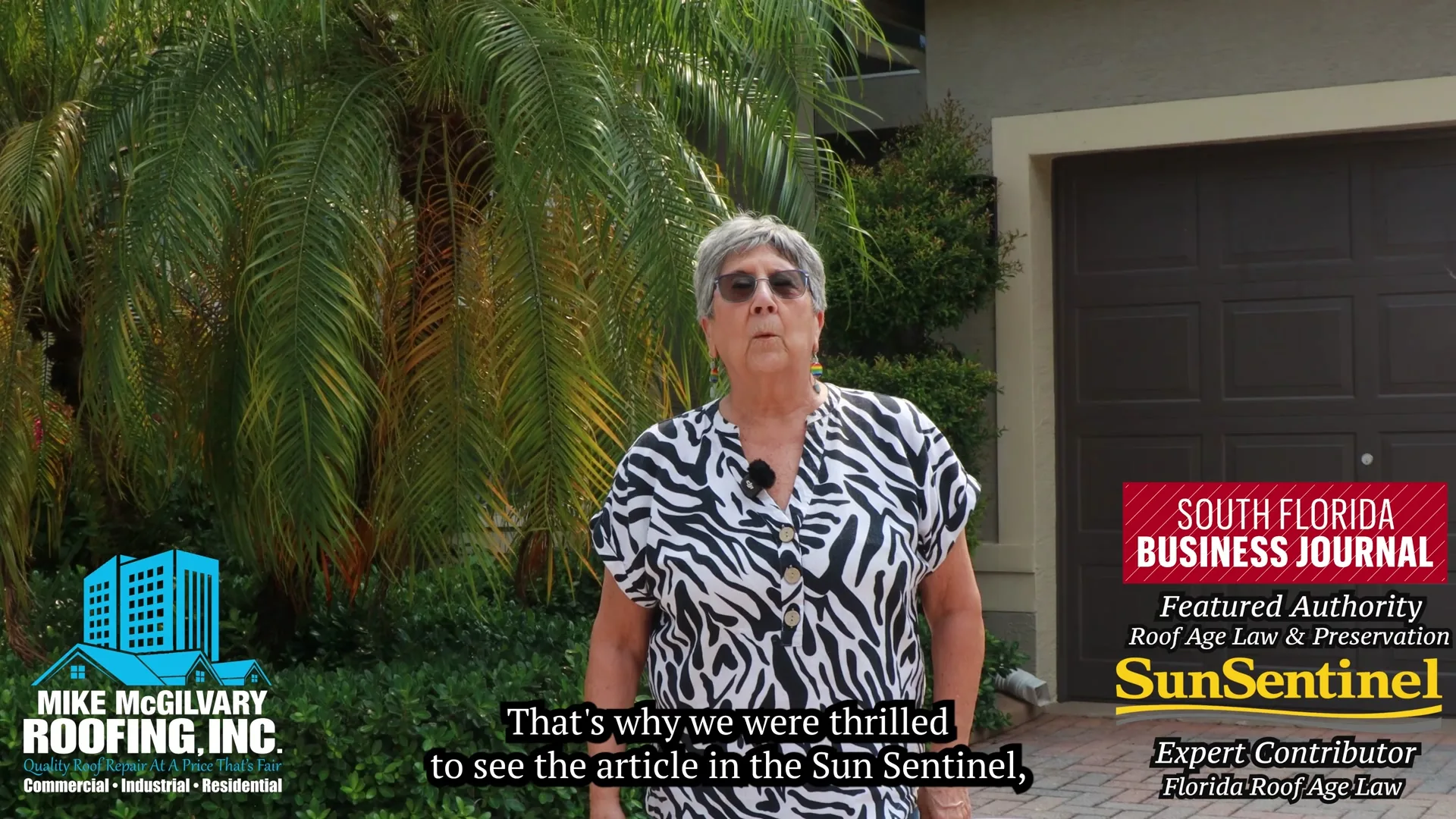
Client testimonial · 0:58
“They all recommended a full roof replacement… it was much better to spend a few thousand on repairs than tens of thousands on a replacement that we didn’t really need yet. We received the roofing certificate within 24 hours for our insurance company.”
— Mrs. Schwartz, Boca Raton homeowner
“Every one of them recommended a full roof replacement”
Mrs. Schwartz did what any careful homeowner does: she called in a variety of roofers and asked for honest evaluations. Each one confirmed the roof had no leaks, noted some broken tiles — and then recommended tearing the whole thing off and starting over. When several contractors independently tell you to replace a roof, it’s easy to assume they must be right.
But broken tiles are not the same thing as a failed roof. On a tile roof, individual tiles can crack from foot traffic, storm debris, or age while the roofing system underneath remains sound. Replacing broken tiles and repairing what has actually failed is often all a roof needs — which is a very different, and far less expensive, project than a full replacement. The question is whether a contractor is willing to look closely enough to tell the difference.
How she found a different answer — through the Sun Sentinel
The turning point came from the newspaper. As Mrs. Schwartz puts it, she was “thrilled to see the article in the Sun Sentinel talking about Mike McGilvary Roofing and his philosophy of evaluate the roof that’s there, see how many years it’s got left, and then recommend repairs when it’s appropriate.”
That philosophy — condition first, not a default to replacement — is the foundation of everything we do. It’s the same approach behind Florida’s Roof Age Law, which recognizes that a roof’s documented condition and remaining useful life matter more than its age. A roof isn’t “done” because it has some broken tiles, any more than it’s “done” because it has reached a certain birthday.
A few thousand in repairs — not tens of thousands in replacement
When we evaluated the Schwartz roof, the finding matched the homeowner’s instinct: this roof could be repaired. We fixed what had actually failed and left the sound roofing system in place. In her words, “it was much better to spend a few thousand on repairs than tens of thousands on a replacement that we didn’t really need yet.”
That is the entire premise of roof repair versus replacement done honestly. Replacement is sometimes genuinely necessary — and when it is, we say so. But it should be the conclusion of a real evaluation, not the opening bid. For tile roofs specifically, targeted tile roof repair and preservation save homeowners enormous sums while protecting the home just as well. And the cleanup? “You couldn’t even tell they had been here,” she says, “except we had a fully repaired roof.”
Documented for her insurer — certified within 24 hours
There was one more piece that mattered as much as the repair itself: insurance. In Florida, homeowners increasingly need to prove their roof’s condition to keep coverage in force. A repair only helps if it comes with the documentation an insurer will accept.
So we did what we do on every qualifying job — we documented the roof’s condition and issued a signed roof certification. Mrs. Schwartz “received the roofing certificate within 24 hours” for her insurance company. That signed condition report is exactly what a roof certification for insurance is meant to provide: evidence, in writing, that a sound roof is sound — so it can be evaluated on its merits rather than replaced by default. (Coverage decisions ultimately rest with the carrier; what we provide is the documented condition to support the conversation.)
Why this is the repair-first difference, in one homeowner’s words
Strip it down and the Schwartz project is the whole Mike McGilvary Roofing philosophy in miniature:
- Evaluate before you replace. Broken tiles and no leaks don’t automatically mean a new roof.
- Repair what has actually failed. A few thousand dollars of the right work beat tens of thousands of unnecessary replacement.
- Document it properly. A signed certification documented the roof for her insurer — delivered within 24 hours.
- Do it cleanly and stand behind it. “We heartily endorse Mike McGilvary Roofing for your repair work,” she says.
It’s the same standard we bring to every roof across Palm Beach County — from Boca Raton family homes to the county’s most documented projects. Roof age and a few broken tiles don’t decide the outcome. Documented condition does.
Important note. This article shares one homeowner’s experience and is general educational information, not legal, insurance, or code-compliance advice. Whether any particular roof can be repaired, preserved, certified, or must be replaced depends on its actual condition as determined by inspection. A roof certification documents condition to support insurance, real-estate, and maintenance decisions but is not a guarantee of any insurance or coverage outcome; those decisions rest with your carrier. Reviewed by Mike McGilvary, Florida Certified Roofing Contractor, license CCC1331721.
Frequently Asked Questions
Do broken roof tiles mean I need a whole new roof?
Not necessarily. Individual tiles can crack from foot traffic, storm debris, or age while the roofing system underneath remains sound. In many cases the broken tiles can be replaced and any failed areas repaired, avoiding a full replacement. Whether a roof needs repair or replacement depends on its documented condition, which is what a proper inspection determines.
How can a roof repair help with my roof insurance in Florida?
Florida homeowners increasingly need to demonstrate their roof’s condition to keep coverage. After a qualifying repair, a signed roof certification documents that the roof is in sound condition with remaining useful life. That written condition report is what supports an insurance conversation. Coverage decisions ultimately rest with your carrier, but documentation gives them the evidence to evaluate the roof on its condition rather than its age.
How quickly can I get a roof certification for my insurance company?
In the Schwartz project, the signed roofing certificate was delivered within 24 hours of the work for the homeowner’s insurance company. Turnaround depends on the specific job, but fast, documented certification is a core part of how Mike McGilvary Roofing supports homeowners with insurance requirements.
How much can I save by repairing a roof instead of replacing it?
It varies by roof, but the difference is often dramatic. In this homeowner’s words, it was “much better to spend a few thousand on repairs than tens of thousands on a replacement that we didn’t really need yet.” A repair-first evaluation identifies what has actually failed so you only pay to fix that, rather than replacing a roof that still has useful life left.
Why would several roofers recommend replacement if the roof didn’t need it?
A full replacement is the simplest answer for a contractor to give, and broken tiles are an easy thing to point to. But an honest evaluation looks at the whole roofing system, not just the tiles on top — whether it leaks, how many years it has left, and what has actually failed. That closer look is what reveals when a repair is the right call.
Does Mike McGilvary Roofing serve my area?
Mike McGilvary Roofing serves Palm Beach County and surrounding South Florida communities, with a repair-first focus on tile roof repair, roof preservation, roof certifications, and condition-based roofing decisions. The McGilvary family has served the area as licensed roofing contractors since 1974.
Full video transcript
“We’ve called in a variety of roofers. Each one of them did an evaluation and told us, yep, you got no leaks, but you got broken tiles, and they all recommended a full roof replacement. That’s why we were thrilled to see the article in the Sun Sentinel talking about Mike McGilvary Roofing and his philosophy of evaluate the roof that’s there, see how many years it’s got left, and then recommend repairs when it’s appropriate. And it was much better to spend a few thousand on repairs than tens of thousands on a replacement that we didn’t really need yet. And they did a fantastic job cleaning up — you couldn’t even tell they had been here except we had a fully repaired roof. We received the roofing certificate within 24 hours for our insurance company, and we heartily endorse Mike McGilvary Roofing for your repair work.”
About Mike McGilvary Roofing
Mike McGilvary Roofing serves Palm Beach County and surrounding South Florida with a repair-first philosophy focused on tile roof repair, tile roof preservation, roof certifications, and condition-based roofing decisions. Rather than recommending replacement solely because of a roof’s age or a few broken tiles, the company evaluates the roof that’s there, repairs what has actually failed, and documents the result so homeowners can keep sound roofs insured. Explore Florida’s Roof Age Law, learn about roof repair versus replacement, or read more documented case studies.