
Why cheap roof repairs fail — and what a real repair should include.
A low price is not automatically a bad roof repair. The problem is paying for a surface patch when the roof actually needs a source repair. When the leak is never traced to its true entry point — or the waterproofing beneath the visible surface is never inspected — the same problem returns with the next hard South Florida rain. Cheap isn’t the problem. Incomplete repairs are.
Free, documented inspection. No obligation. Repair-first recommendation.
Request a Free Inspection
Licensed CCC1331721 · BBB A+ · 5.0★ Across Hundreds of Google Reviews · A McGilvary Family Legacy of Licensed Roofing in Palm Beach County Since 1974
Two-Year Workmanship Warranty on Qualifying Repairs
Why do inexpensive roof repairs sometimes fail?
From what we repeatedly uncover in the field, a repair that fails quickly was often never a complete repair in the first place.
The visible symptom may have been covered with caulk, coating, mortar, a replacement tile, or a new shingle while the actual failed component remained underneath — a flashing detail, deteriorated underlayment, compromised decking, a penetration, a valley, a roof transition, trapped moisture, or a drainage problem. A complete repair identifies where the water entered, opens enough of the roofing system to inspect what failed, corrects the failed component, integrates the new work into sound surrounding materials, and documents what was done.
Three repairs. Three visits. The roof was still leaking.
This is what an incomplete repair looks like in the field. The homeowner had already paid another contractor for three separate repairs on the same active leak — and it kept coming back. Here is what we found once the roof was opened, and what it actually took to stop it.
The previous repairs never reached the real problem.
The previous contractor repeatedly patched different portions of the roof but never corrected the complete water path — and never found the rotted decking at the bottom of the section. Mike McGilvary Roofing removed the tile throughout the full affected area, replaced the compromised wood, rebuilt the waterproofing system, and reinstalled the existing tile in one complete corrective repair.
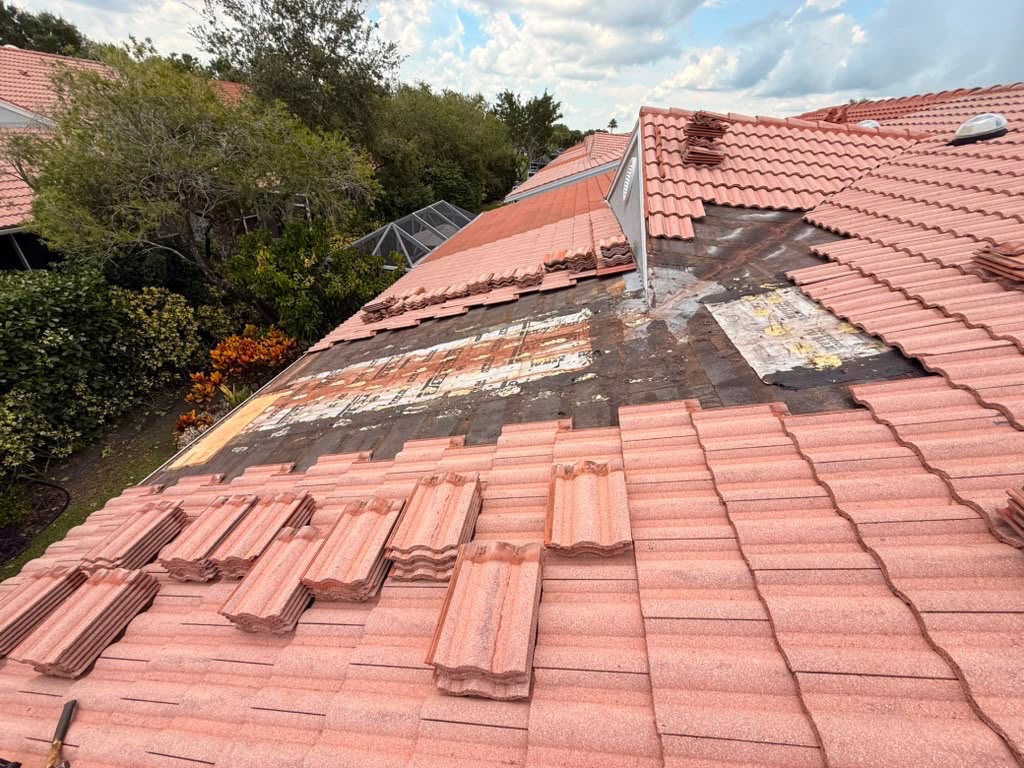
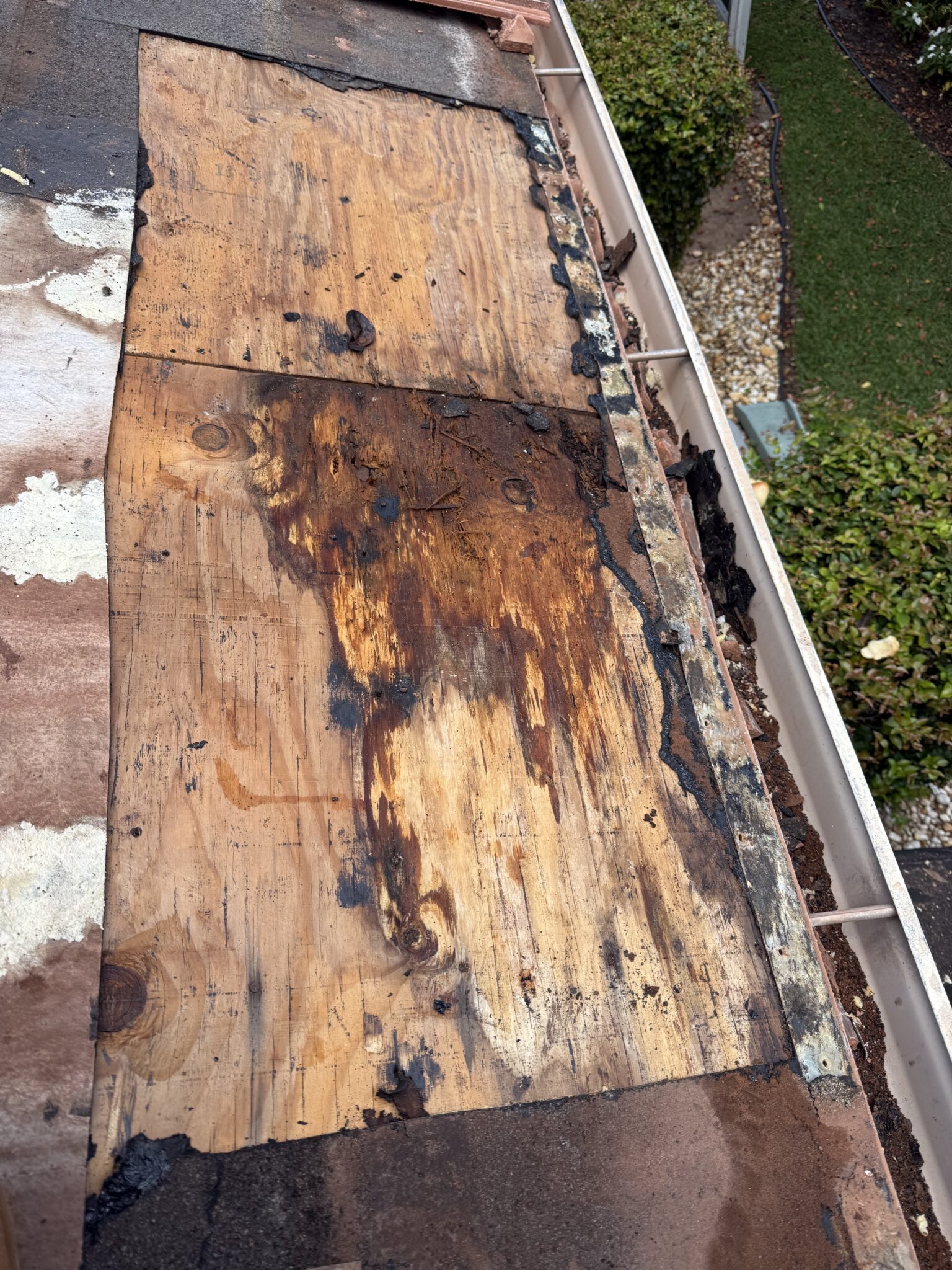
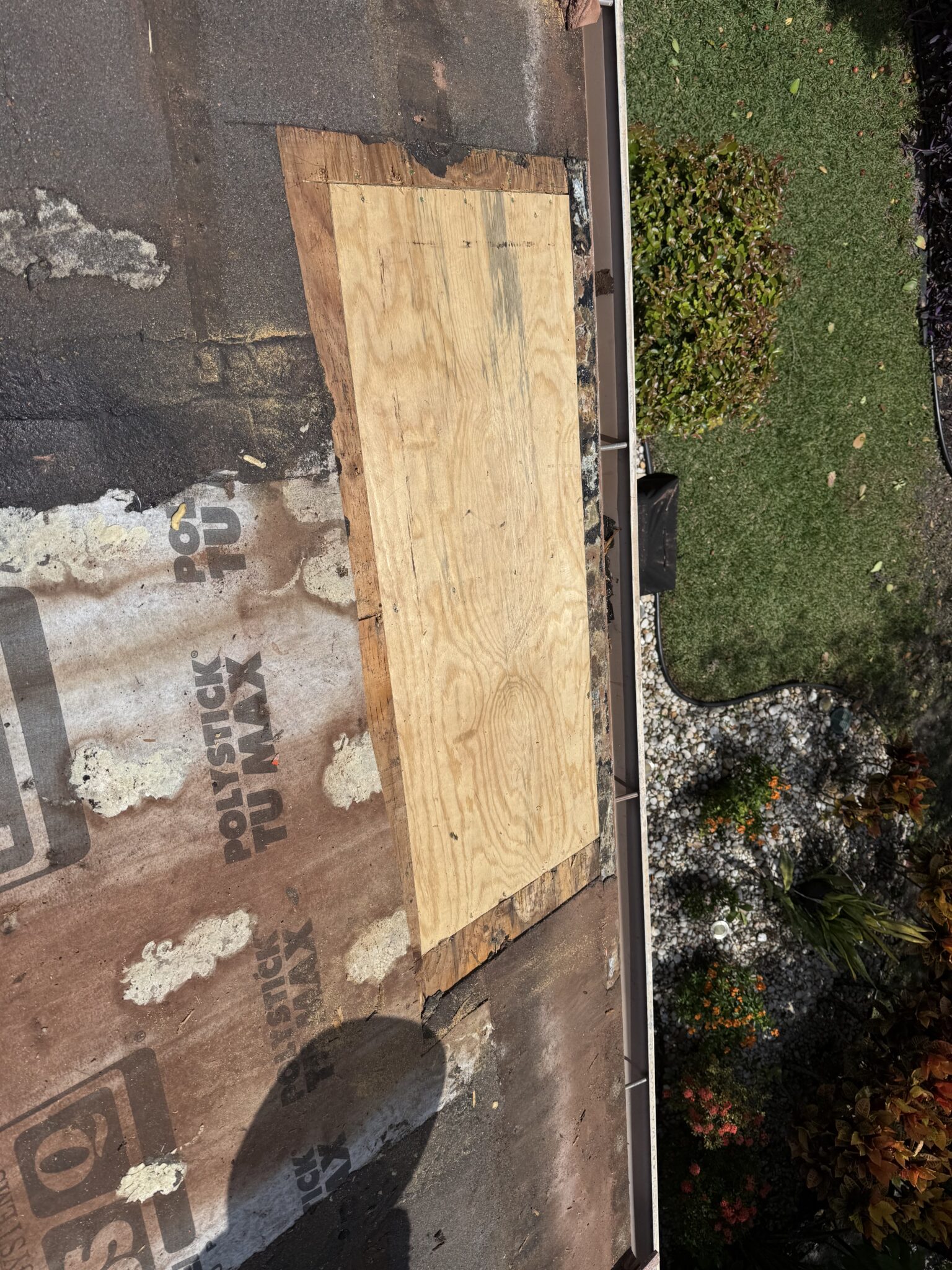
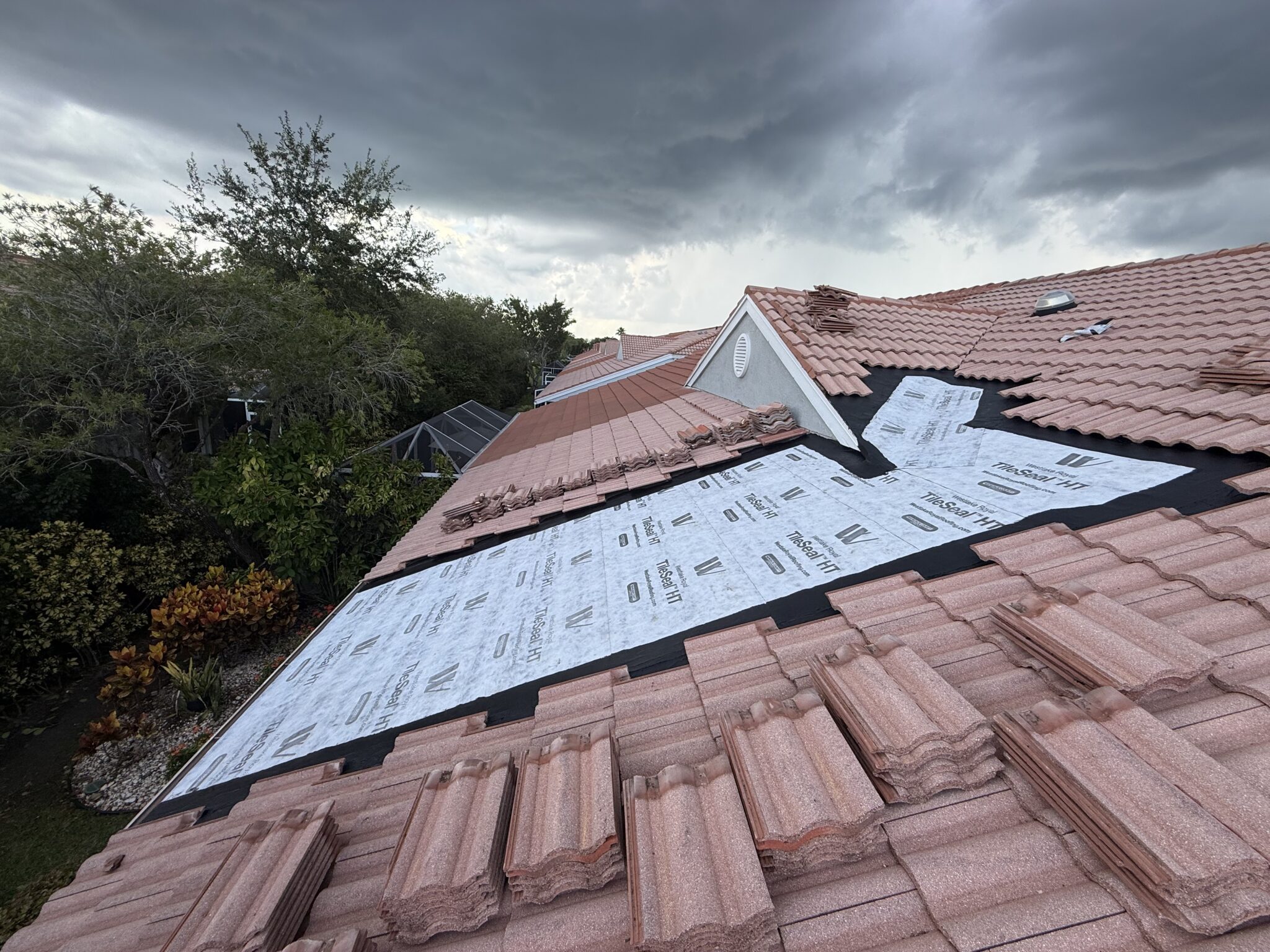
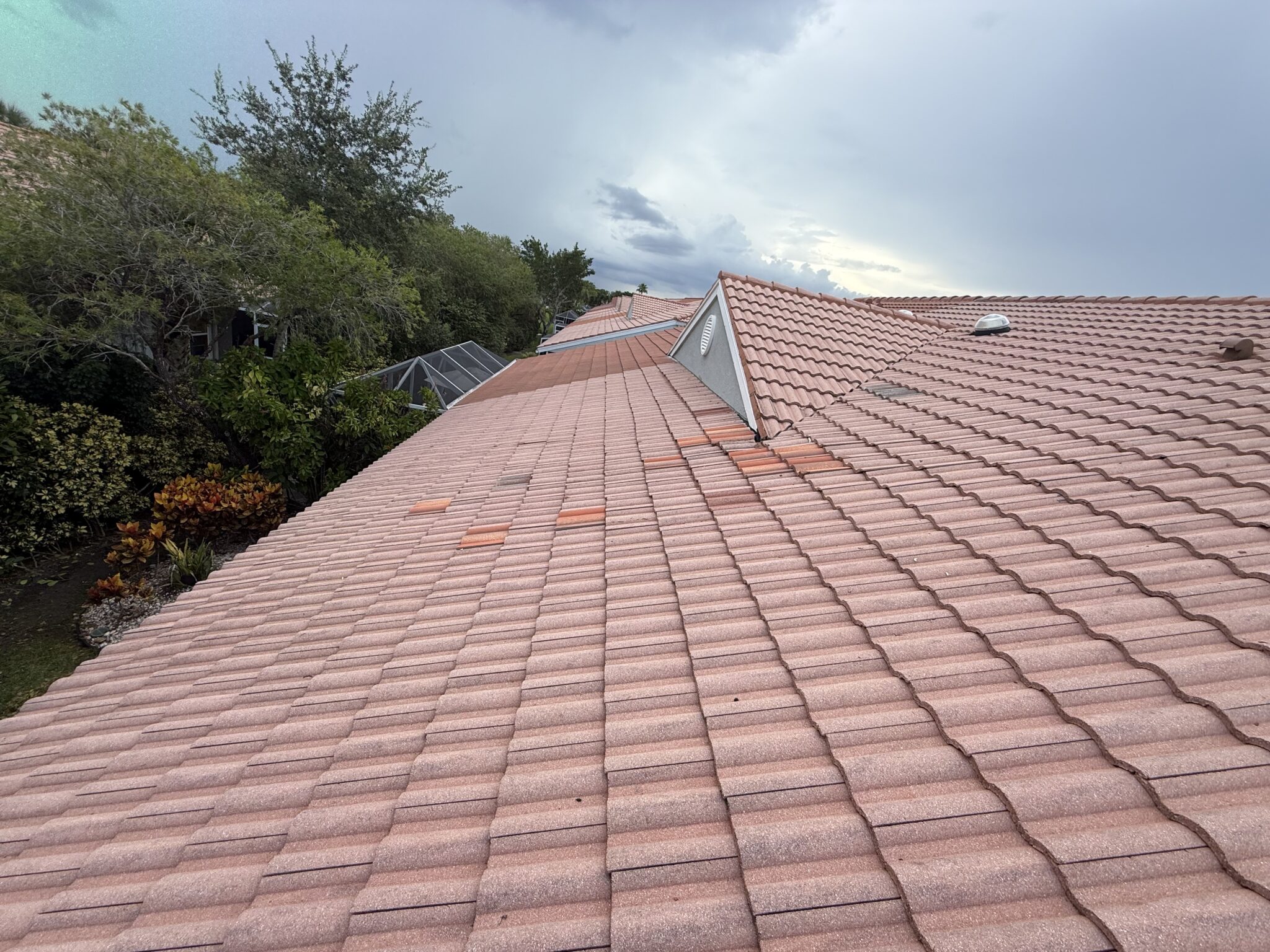
A note on the tile color: the few mismatched tiles visible in the final photo were already on the roof from the previous repairs — not installed by us. This is a discontinued tile profile, and the homeowner chose to reuse the existing tile because a full replacement is planned within the next few years. Mike McGilvary Roofing did not supply or install those mismatched tiles.
What the previous repairs missed
- Three separate repair attempts — and the leak never stopped.
- The work was limited and pieced together instead of correcting the full section.
- The lower termination and water-flow area were never properly addressed.
- Rotted wood at the base of the section was left in place.
- The underlayment carried multiple overlapping patches from earlier attempts.
How Mike McGilvary Roofing corrected it
- Removed the tile across the full affected section — not just the visible leak.
- Traced and opened the complete water path.
- Removed and replaced the compromised, rotted wood.
- Installed new self-adhered underlayment across the rebuilt section.
- Sealed the surrounding transitions and perimeter edges.
- Reset the homeowner’s original tile into its original placement.
Fifteen tries. One real fix.
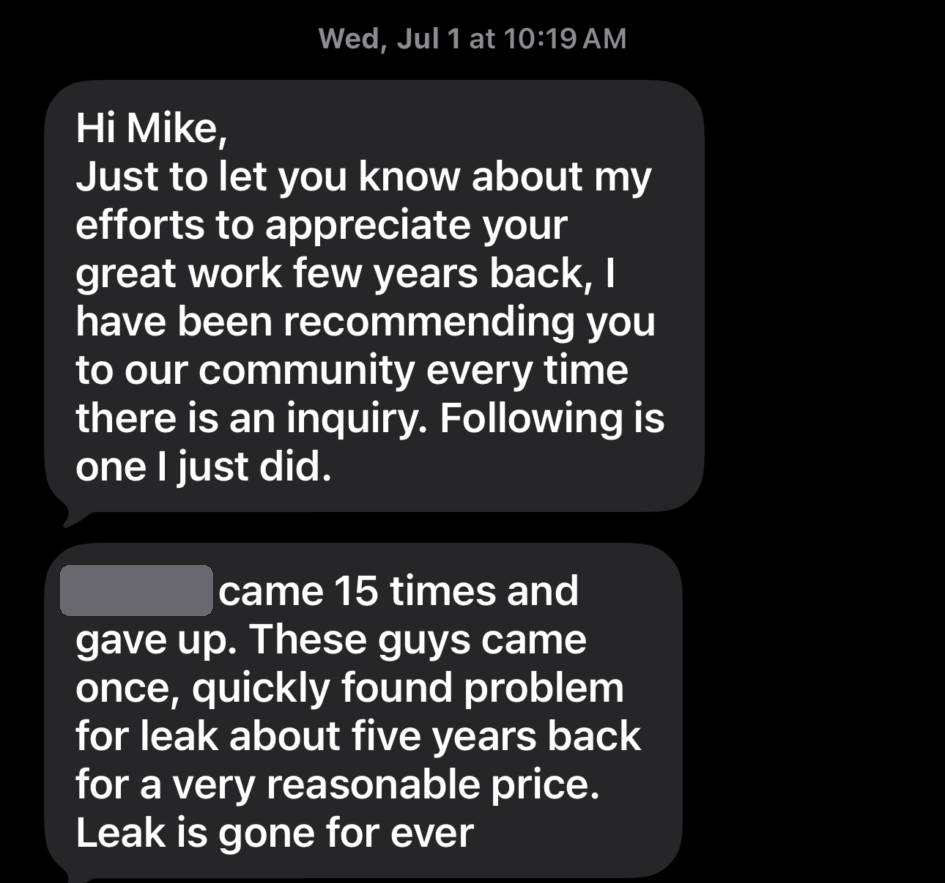
One homeowner had already been through it the hard way. They told us their builder had sent contractors out roughly fifteen times over several years to stop a stubborn leak — and every time, it came back. The problem was never that the repairs were cheap; it was that none of them ever found where the water was actually getting in.
When they finally called Mike McGilvary Roofing, we traced the leak to its true source, corrected that section properly, and the callbacks stopped.
A low price is not the red flag. A missing diagnosis is.
Some roof repairs should be small and affordable. One cracked tile over sound underlayment, one isolated fastener, one localized vent detail — we perform small repairs when a small repair is the honest answer. Price alone does not tell you whether a repair is complete. These questions do:
- Where is the water entering?
- What component actually failed?
- What materials will be removed?
- What will be inspected underneath?
- What will be replaced or rebuilt?
- How will the new work connect to the sound existing roof?
- What does the warranty cover?
A temporary patch can be exactly right for an emergency — when it’s clearly labeled temporary. The problem isn’t temporary work used to slow an active leak. It’s temporary work sold as a complete, permanent repair.
“I recently bought a new house so needed to fix the roof. Mike and the team were amazing. They did thorough inspection, provided me the options and gave an honest recommendation of which would be the most reasonable way forward instead of pushing for the costliest option. Also the work was very clean and professional. They provided all the before and after photos of the work, which gave me additional comfort with the level of craftsmanship they put into this project.”
The ceiling stain is not a map of the roof leak.
Where water appears inside is often only where it finished its journey. It can enter at a wall flashing, valley, vent, cracked tile, transition, or penetration, then travel along the underlayment and deck before finding an interior opening several feet away.
1 · Water enters
At a failed roof detail — a flashing joint, a valley, a penetration, a cracked tile — often uphill from where you’ll ever see it.
2 · Water travels
Beneath the visible roof covering, running along the underlayment and roof deck toward the lowest opening it can find.
3 · Water appears
Inside, at a stain that can sit several feet from the real entry point — which is why repairing directly above it can miss the source.
Eight reasons a roof repair can look finished — but still be incomplete.
The symptom gets sealed, not the source
The crack, loose tile, or open seam may be only the visible symptom. The true entry point often sits uphill at a wall, valley, vent, transition, or failed flashing joint — left untouched.
The roof isn’t opened far enough
On tile especially, pulling only the visibly damaged tile may never expose the full underlayment or flashing failure. A proper opening reaches sound surrounding material and creates a reliable tie-in.
The covering is replaced, the waterproofing ignored
Tile, shingles, and coatings are only part of the system. Underlayment, flashings, fasteners, penetrations, drainage, and deck all work together — replacing only the visible material can leave the real failure in place.
Compromised decking gets covered back up
Water can rot plywood before the damage is visible inside. When an area is opened, the deck should be inspected, photographed, and addressed — not simply covered over.
Sealant is used where a detail needs rebuilding
Sealants are useful when the joint is sound and the surface is prepared. They are not a substitute for reconstructing loose, corroded, or poorly installed flashing. More material over a failed assembly doesn’t fix the assembly.
Wrong product — or the surface is never prepared
Even a high-quality product fails on a wet, dirty, chalking, moving, or incompatible surface. The material and preparation must match the roof type and the specific failure.
Water flow and drainage are ignored
Valleys, wall transitions, and roof-to-roof tie-ins carry concentrated water. A narrow patch may not survive if it doesn’t account for the real volume and direction of water moving through.
There’s no proof of what was repaired
Without before, opened-up, installation, and completed photographs, a written scope, and clear warranty terms, there’s no reliable record that the failed component was ever actually corrected.
A finished-looking roof surface does not prove the waterproofing underneath was repaired.
Patch vs. repair vs. rebuild vs. replacement.
The price doesn’t define which category you’re buying. The scope does.
Emergency patch
Slow or stop active water immediately.
Weather, safety, or active interior damage demands immediate temporary protection.
This is temporary stabilization — it should be labeled temporary and followed by an inspection and permanent scope.
Targeted repair
Correct an isolated failure while preserving the sound surrounding roof.
The source is identified and the damage is confined to a tile, penetration, flashing detail, seam, fastener, or vent.
A defined diagnosis, proper removal, correction of the failed component, integration into sound materials, documentation, and written warranty terms.
Targeted rebuild
Reconstruct a failing section from the deck up while preserving most of the roof.
A valley, slope, transition, underlayment section, or flashing assembly has failed but the surrounding roof is serviceable.
Surface removal as needed, deck inspection, compromised-wood replacement, new underlayment and flashing, and complete documentation.
Full replacement
Replace a roofing system with broad, system-wide deterioration.
The underlayment or covering has failed extensively, decking damage is widespread, or repeated failures make continued repair unreliable.
Repair-first doesn’t mean repairing a roof that can’t be made reliable — it means replacing only when the roof’s actual condition supports it.
Five contractors said $100,000. The right repair was about $15,000.
“Listen up — Mike McGilvary is the real deal. He is why you read these reviews. What five other contractors said was over $100,000 for a complete replacement, Mike took a different approach with. He doesn’t go looking for the worst part of your roof to scare you into a full new roof — he fixes what needs fixing and works to extend the life of your roof. Mike bid $15K, showed up on time or early for each of his four workdays, documented his work, and gave us an outstanding roof for exactly the price he quoted.”
Six steps that separate a repair from a surface patch.
Diagnose before prescribing
Understand what the homeowner is seeing, when the leak occurs, and where the water appears. Inspect the interior or attic when access allows; use moisture evaluation or thermal imaging when appropriate, then a methodical rooftop inspection of the likely water path.
Identify the failed component
The written scope should explain what failed — not simply “repair leak.” A tile, seam, fastener, penetration, flashing, underlayment section, valley, transition, deck area, drainage detail, or a combination.
Open enough to see the truth
Remove enough material to expose the complete repair area and reach sound surrounding materials. A reliable repair can’t be designed around assumptions about conditions that stay hidden.
Correct what actually failed
Repair or replace the compromised decking, underlayment, flashing, fasteners, penetrations, surface materials, or drainage details the verified condition requires — with compatible materials installed to scope, manufacturer, and code.
Integrate into the sound roof
The new work must tie into dry, stable, serviceable surrounding materials. The goal isn’t to cover the center of the problem — it’s to restore continuity across the whole repaired section.
Document, explain, and warranty
The homeowner receives a clear record: the before condition, what was discovered once opened, the materials installed, the completed repair, the warranty terms, and any future maintenance that makes sense.
“Excellent work and service at a great price! … He diagnosed the problem and offered an estimate promptly including price and time after discussing my options. … He didn’t try to upsell me on unnecessary work or a new roof but rather stuck to the parameters of repairing the existing damage as requested. … Pictures were provided before, during and after the project. The time needed to complete the work and the price were exactly as promised. The work was guaranteed with a warranty also, and the crew cleaned up the area.”
What incomplete repairs look like on the roofs we see every day.
Tile roofs
An incomplete tile repair may…
- Seal or swap only the visibly cracked tile
- Remove too few tiles to inspect the full water path
- Ignore failed underlayment beneath sound-looking tile
- Apply mortar or sealant over a failed valley or wall detail
- Reinstall tile over compromised decking
A complete tile approach may…
- Remove enough tile to expose the entire failed area
- Inspect the deck and waterproofing underneath
- Replace compromised materials and rebuild the detail
- Reinstall the sound existing tile, replacing only broken pieces
Related: Tile Roof Repair
Flat & low-slope roofs
An incomplete flat-roof repair may…
- Coat over a wet or poorly prepared surface
- Cover only the most visible crack or pinhole
- Ignore failed seams, penetrations, or terminations
- Coat over trapped moisture or ignore ponding
- Use a product incompatible with the existing system
A complete flat-roof approach may…
- Trace the moisture source and confirm the surface is suitable
- Prepare the substrate and repair failed seams and penetrations
- Correct deteriorated materials and address drainage
- Apply a compatible repair or coating system
Related: Flat Roof Repair
Shingle roofs
An incomplete shingle repair may…
- Replace the shingle above the stain without tracing the path
- Leave exposed, misplaced, or failed fasteners
- Ignore a failed pipe boot, wall flashing, valley, or underlayment
- Install shingles without integrating them into surrounding courses
A complete shingle approach may…
- Trace the source and remove affected shingles as needed
- Inspect the underlayment and deck
- Correct flashing and fastener details
- Install compatible materials that integrate correctly
Related: Shingle Roof Repair
When a small repair is enough — and when it isn’t.
A small repair may be right when…
- A cracked or slipped tile is isolated and the materials beneath remain sound
- A vent, fastener, seam, or penetration has a clearly confined defect
- Storm or impact damage is limited to a specific area
- A flat-roof seam or coating detail is caught early
- Surrounding underlayment, flashing, deck, and covering are serviceable
- The new work can be integrated reliably into the existing roof
A rebuild or replacement may be needed when…
- Underlayment deterioration extends across multiple sections
- The deck is compromised in numerous areas
- Leaks recur across different slopes or penetrations
- Previous repairs created overlapping or incompatible materials
- A drainage or design issue affects a broad area
- Continued repair would create unreasonable cost or uncertainty
We don’t force a small repair when the roof can’t be made reliable — and we don’t condemn a serviceable roof because one area failed. Preserve what’s sound, correct what failed, replace only what’s truly necessary. See roof repair vs. replacement.
“The roof of my home had leaks; roof replacement has been planned by the HOA, but not yet scheduled. … While they identified several problems, their proposal focused only on the leaks since a community-wide roof replacement was planned. The price seemed reasonable. The team sent by Mike McGilvary Roofing was friendly and competent, and completed the work within 5 hours. They did a good job.”
Compare the scope — not only the total at the bottom.
Before approving a roof repair, ask the contractor:
- Where do you believe the water is entering, and what component has failed?
- Is this an emergency patch, maintenance repair, targeted repair, rebuild, or replacement?
- What materials will be removed, and how much of the area will be opened?
- Will the decking, underlayment, and flashing be inspected once exposed?
- How will damaged wood or hidden deterioration be handled?
- What new materials will be installed, and how will they tie into the sound existing roof?
- Will I receive before, opened, during, and completed photographs?
- What exactly does the workmanship warranty cover, and what’s excluded?
- Will a permit be required for this scope, and who is responsible for it?
- What happens if additional damage is discovered after the roof is opened?
- Is any portion of the proposed work intended only as a temporary measure?
A qualified contractor should be able to answer these in plain English before the work begins.
The MMR difference — build the correct scope.
We’re not trying to sell the smallest patch or the biggest roof. The goal is to determine what actually failed and match the work to the condition — a minor repair, a targeted rebuild, or occasionally a full replacement. The recommendation follows the evidence, not the size of the sale.
Source-first inspection
We trace the likely water path instead of assuming the stain marks the entry point.
Interior, attic & thermal evaluation
When access and the roof system allow, we use interior inspection and thermal imaging to help evaluate hidden moisture.
Repair, rebuild, or preserve
We distinguish a minor repair from a failing section that should be rebuilt, and from a roof that genuinely needs replacement.
Before / opened / during / after
We photograph the visible condition, what’s found underneath, the work being installed, and the completed roof.
Written scope & warranty terms
Qualifying repairs are backed by a two-year workmanship warranty, subject to the written proposal and warranty terms.
Continued roof monitoring
Qualifying clients receive complimentary annual inspections to catch new maintenance needs before they become failures.
“Cheap is not the problem. Incomplete is. I would rather recommend a properly scoped minor repair that matches the actual failure than a large proposal that never explains what is wrong. The homeowner should know exactly what failed, what we are opening, what we are replacing, and what they will receive when the work is complete.”
Owner & Operator · Florida Certified Roofing Contractor CCC1331721
See what was hiding beneath the previous repair.
The completed tile repair earlier on this page is the first of these. From the surface, a previous patch can look finished — the true condition is often revealed only after the roof is opened. More real Mike McGilvary Roofing projects are being added here: the prior condition, what we found underneath, and how each failed section was corrected.
The leak was stopped at the vent — but the water had already run downhill.
A previous contractor addressed the leak at the roof vent by opening only a few surrounding tiles. The point of entry was handled, but water had already traveled down the slope and gone to work on the system below — deteriorating the underlayment and rusting the fasteners from the vent all the way to the lower edge. Mike McGilvary Roofing opened the entire affected section, from the vent to the perimeter, replaced the compromised waterproofing, and rebuilt the complete water path — not just the original point of entry.
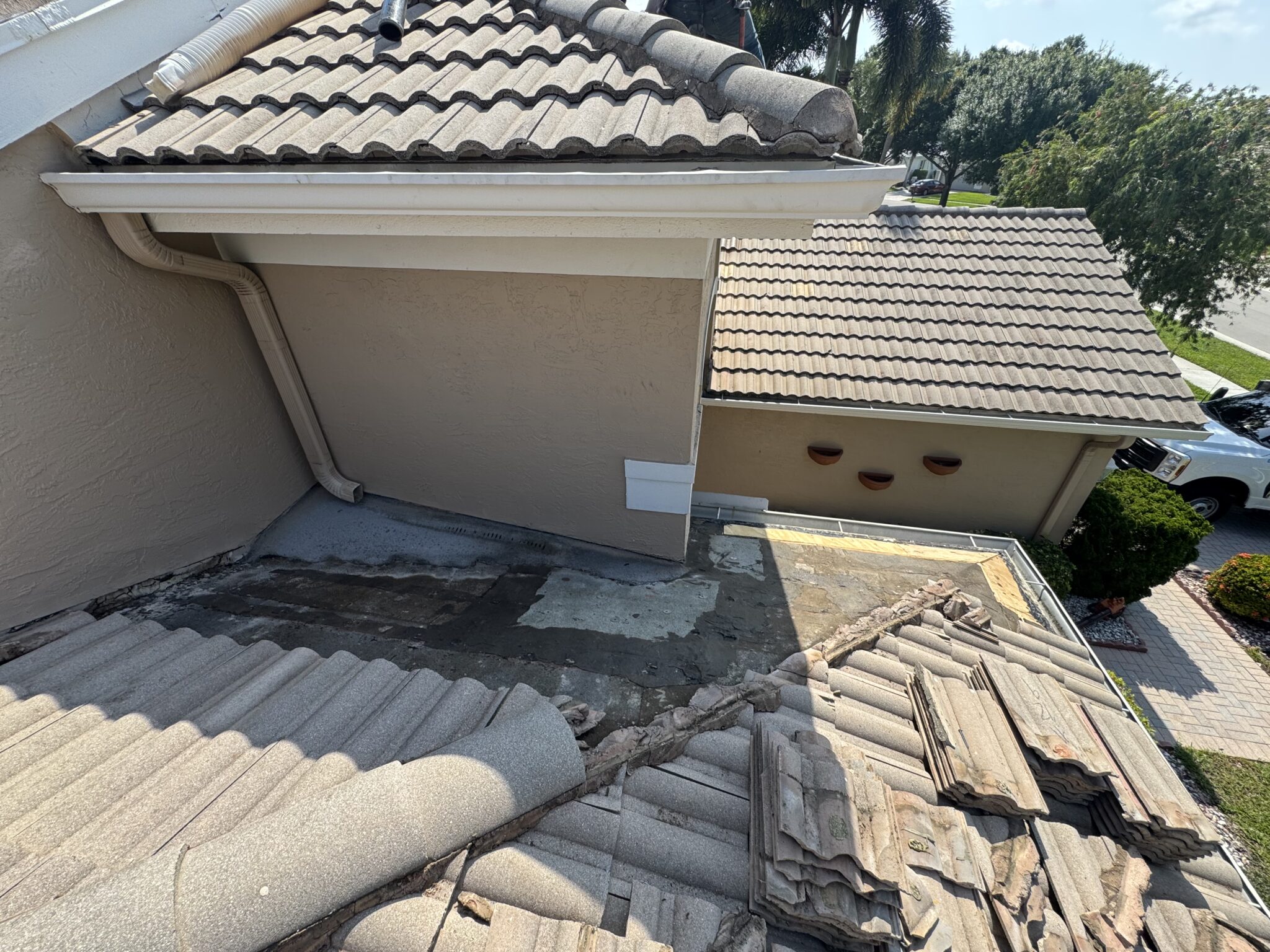
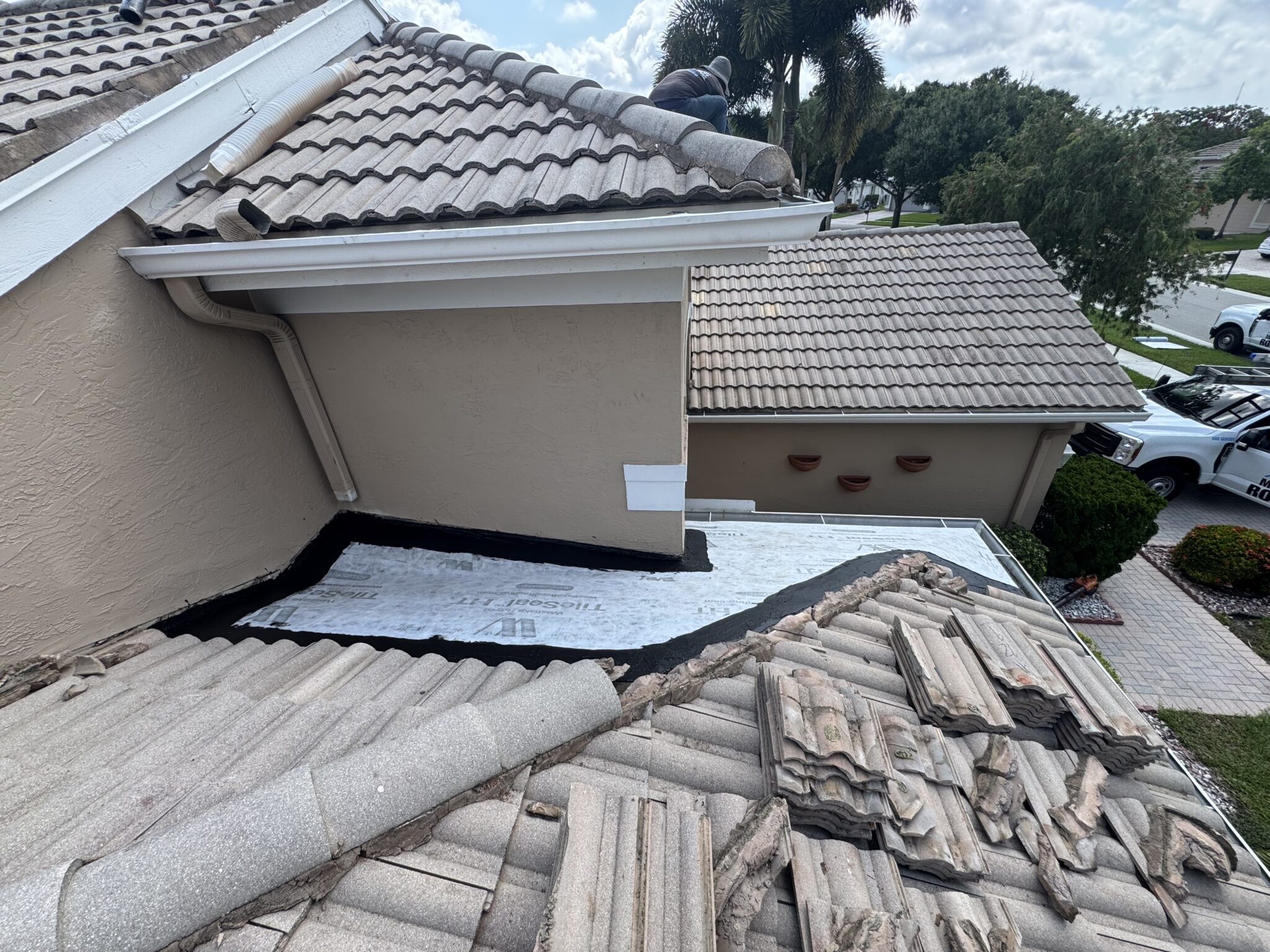
The old “repair” was tar smeared over the leak — nothing underneath was ever fixed.
The homeowner kept getting leaks after a previous repair that simply spread roofing tar and granules over the failed area. No roofing materials were removed and no new underlayment was installed — the patch only covered the surface and never addressed the failed waterproofing beneath the tile. Mike McGilvary Roofing removed the failed repair, rebuilt the entire affected section with new high-temperature self-adhered underlayment, and reinstalled every roof tile back into its original placement.
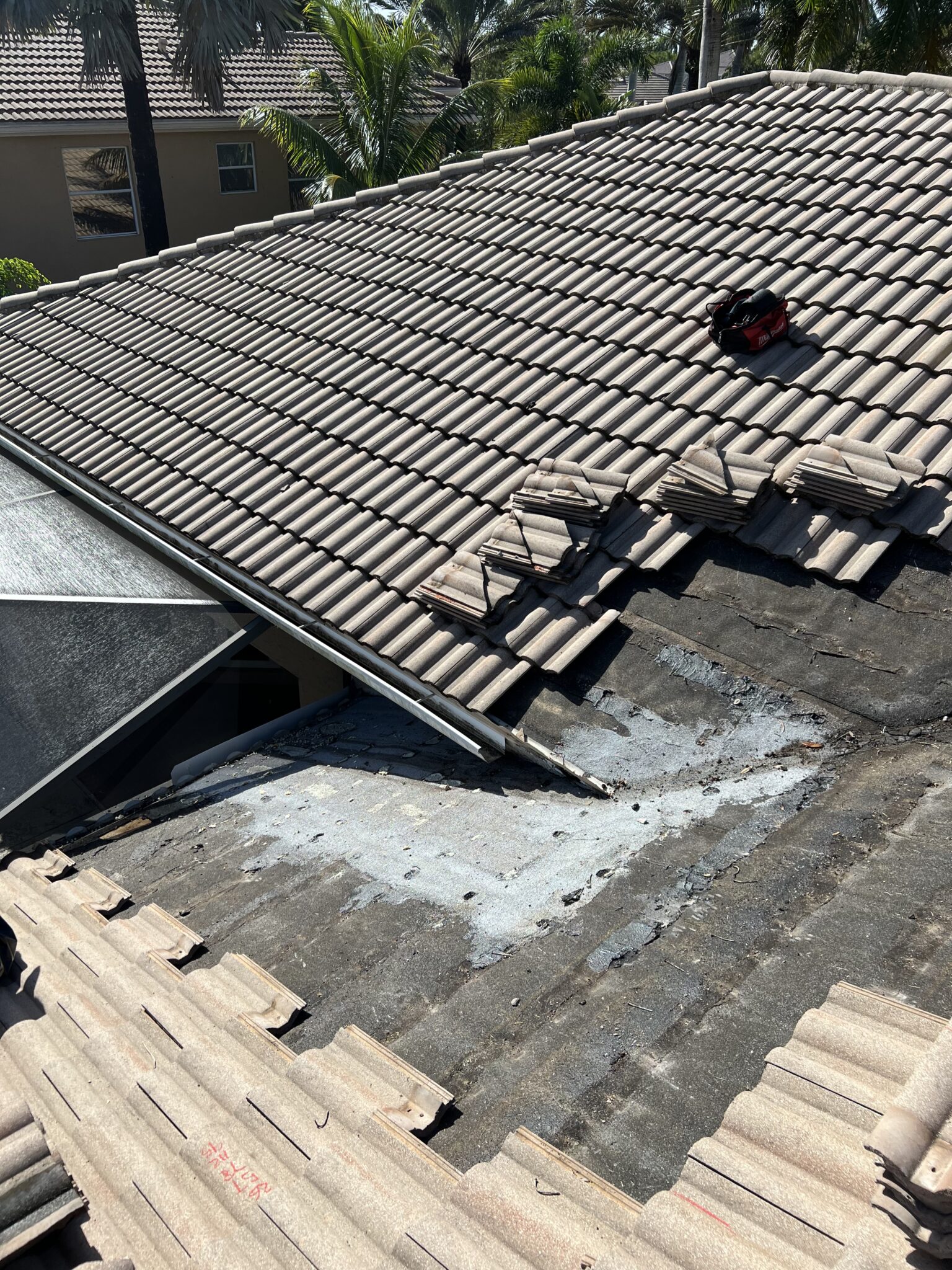
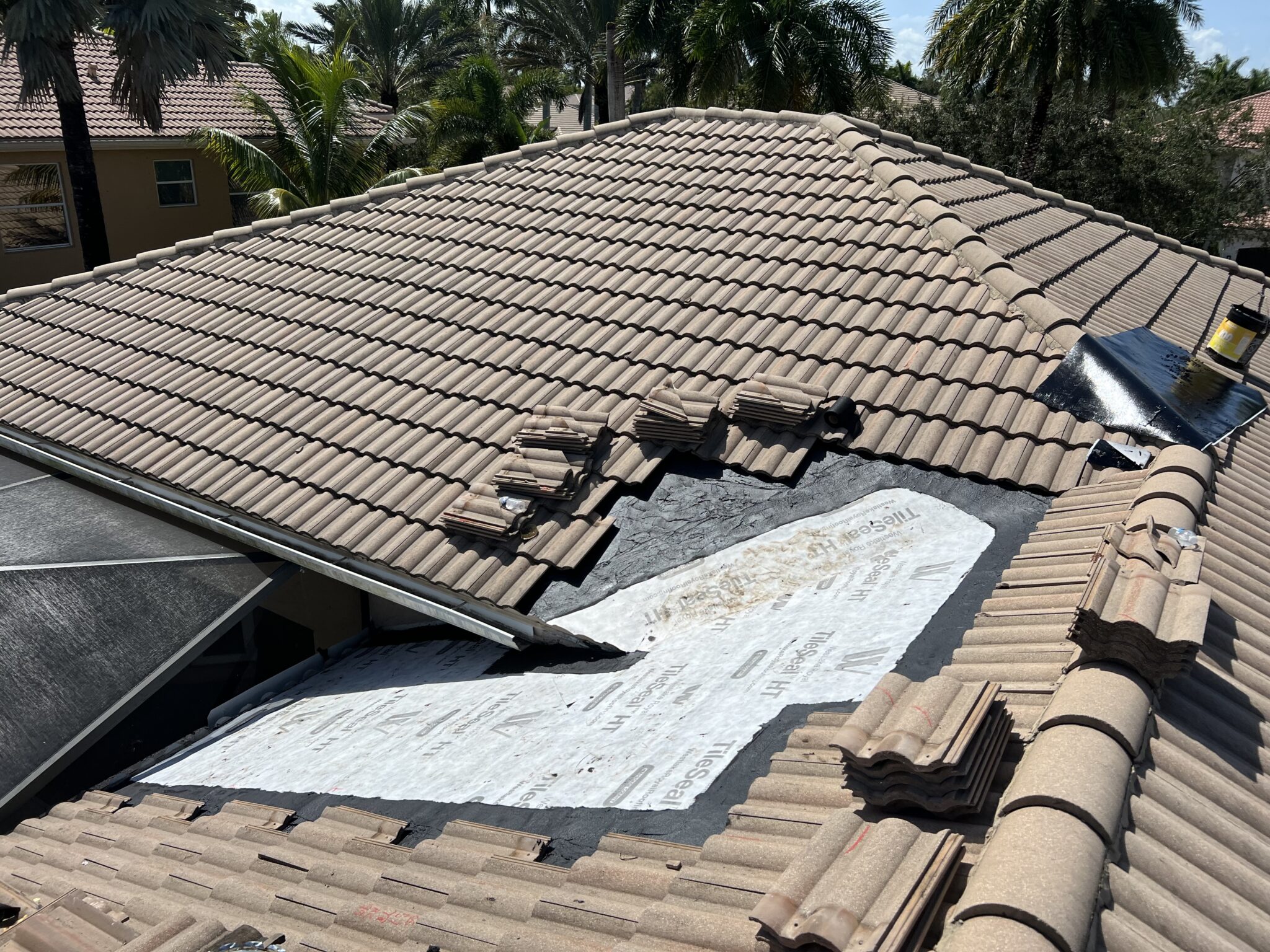
A patch in one spot can’t fix a problem that runs across the whole section.
The homeowner kept getting leaks after a previous localized repair. The earlier contractor patched a single area, but the leak persisted because the complete affected section was never addressed. Mike McGilvary Roofing opened the entire section, installed new high-temperature self-adhered underlayment, and rebuilt the area properly — instead of performing another isolated patch.
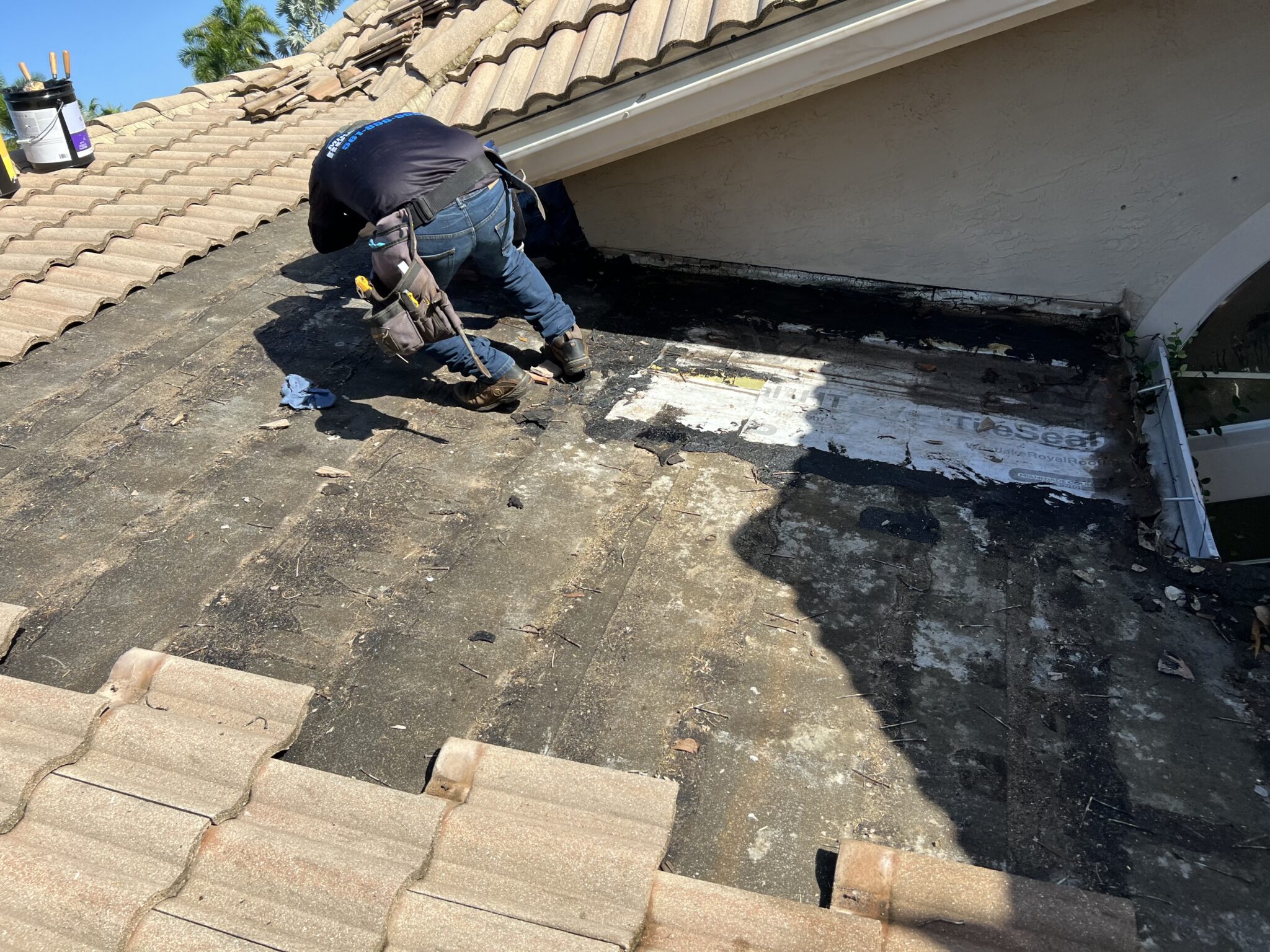
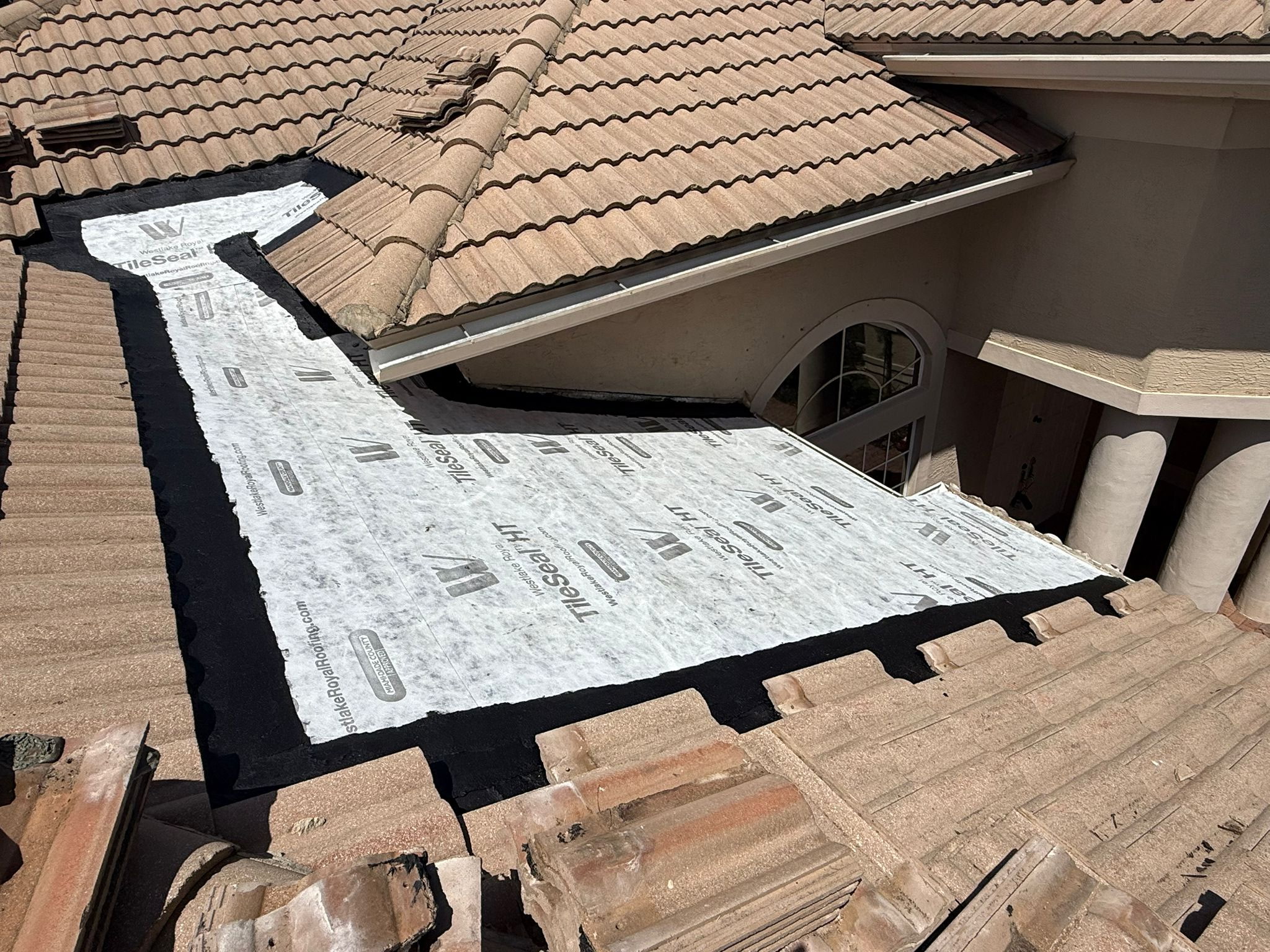
Three separate patches, three callbacks — because no one rebuilt the failing area.
The homeowner kept leaking through three separate repair attempts. Each visit patched a small, localized area, and the roof kept leaking afterward. Instead of rebuilding the complete failing section, the previous contractor kept repairing isolated spots — repeated callbacks that never resolved the problem. Mike McGilvary Roofing rebuilt the entire affected section with new high-temperature self-adhered underlayment. Every tile was individually marked and stacked in order, so each one could go back into its exact original placement — preserving the roof’s original appearance and layout.
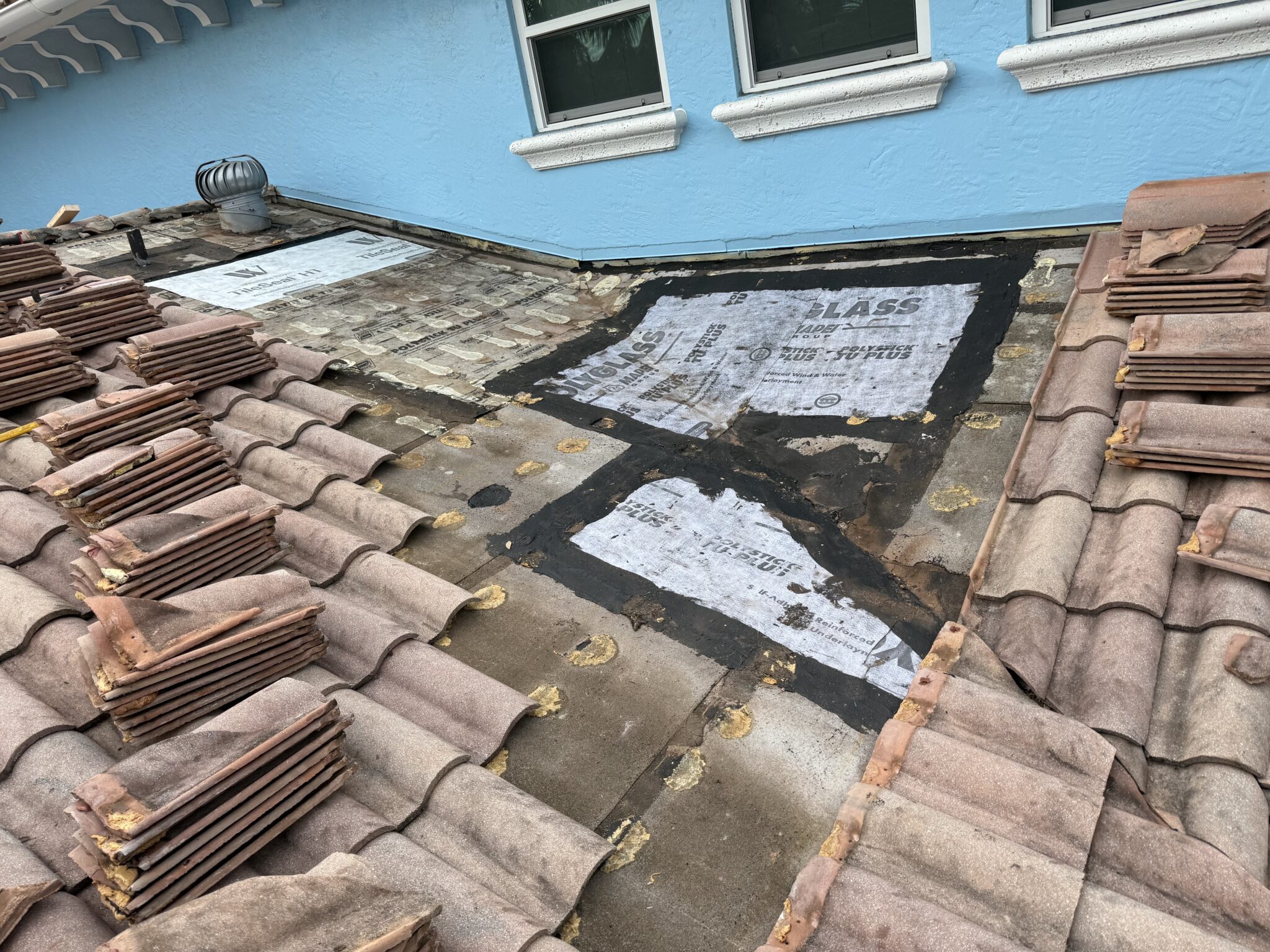
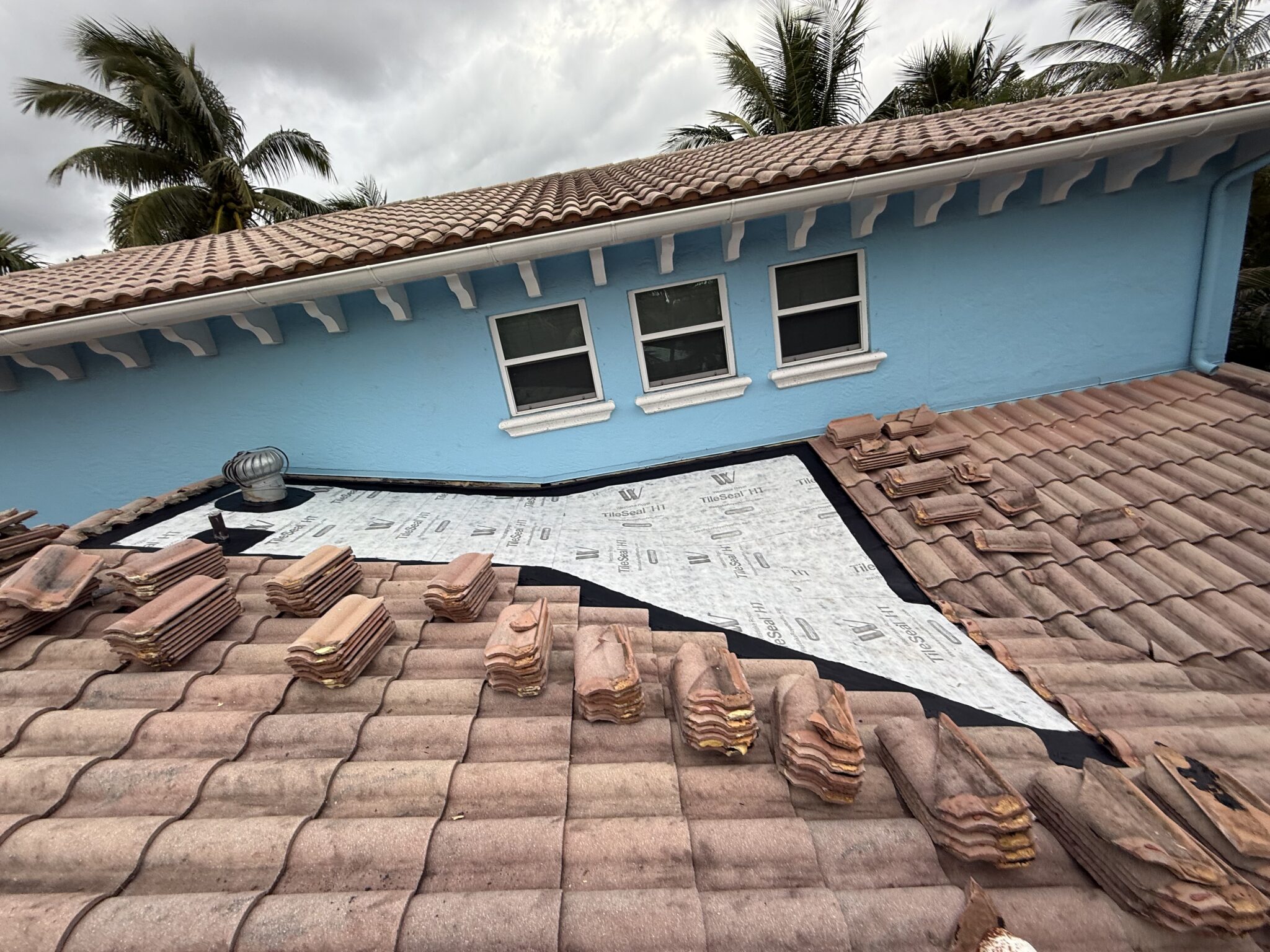
This failed valley section needed a complete rebuild — not another patch.
The homeowner kept getting leaks after a previous contractor made a small localized repair. It addressed only a limited portion of the failure and left the surrounding section compromised, so water kept getting in. Mike McGilvary Roofing rebuilt the entire affected section with new high-temperature self-adhered underlayment, restoring the complete waterproofing system instead of another isolated repair.
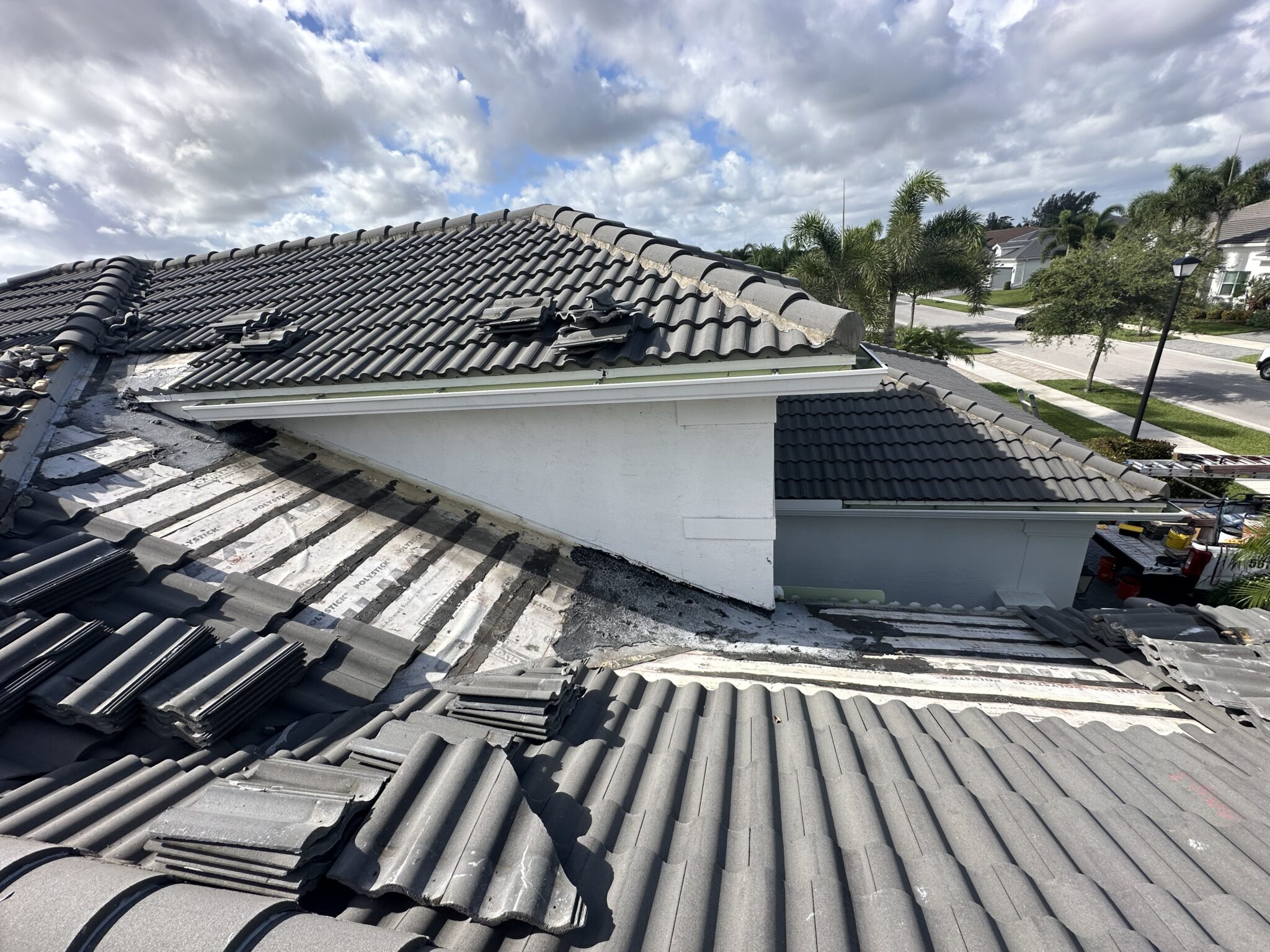
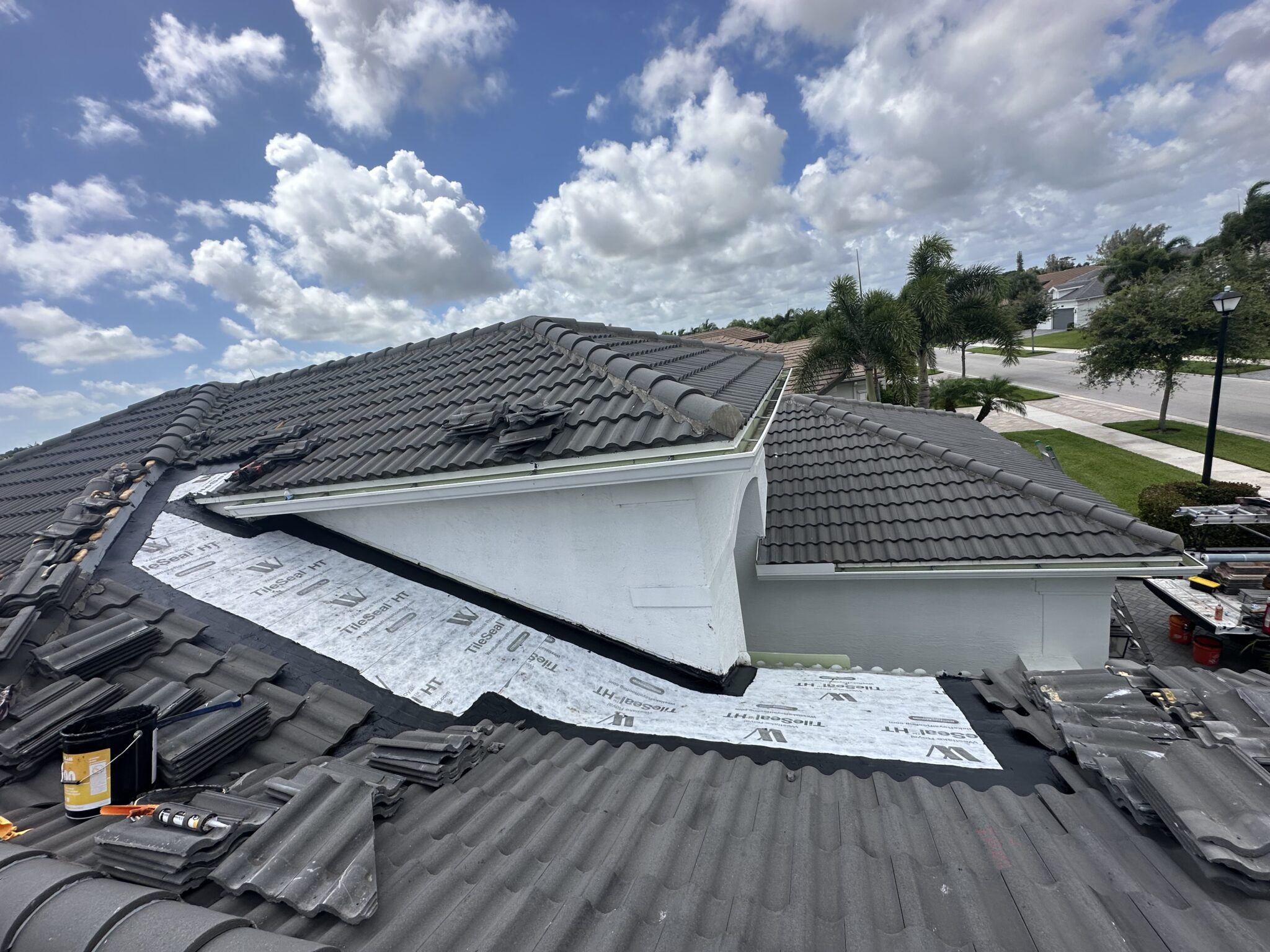
The patch was at the bottom — but the leak was getting in higher up.
The homeowner kept getting leaks after a previous contractor made a small repair near the lower portion of the roof section. That repair never identified or corrected the actual source, so water kept entering through the surrounding roof system. Mike McGilvary Roofing rebuilt the entire affected section with new high-temperature self-adhered underlayment, correcting the complete leak path instead of another localized repair.
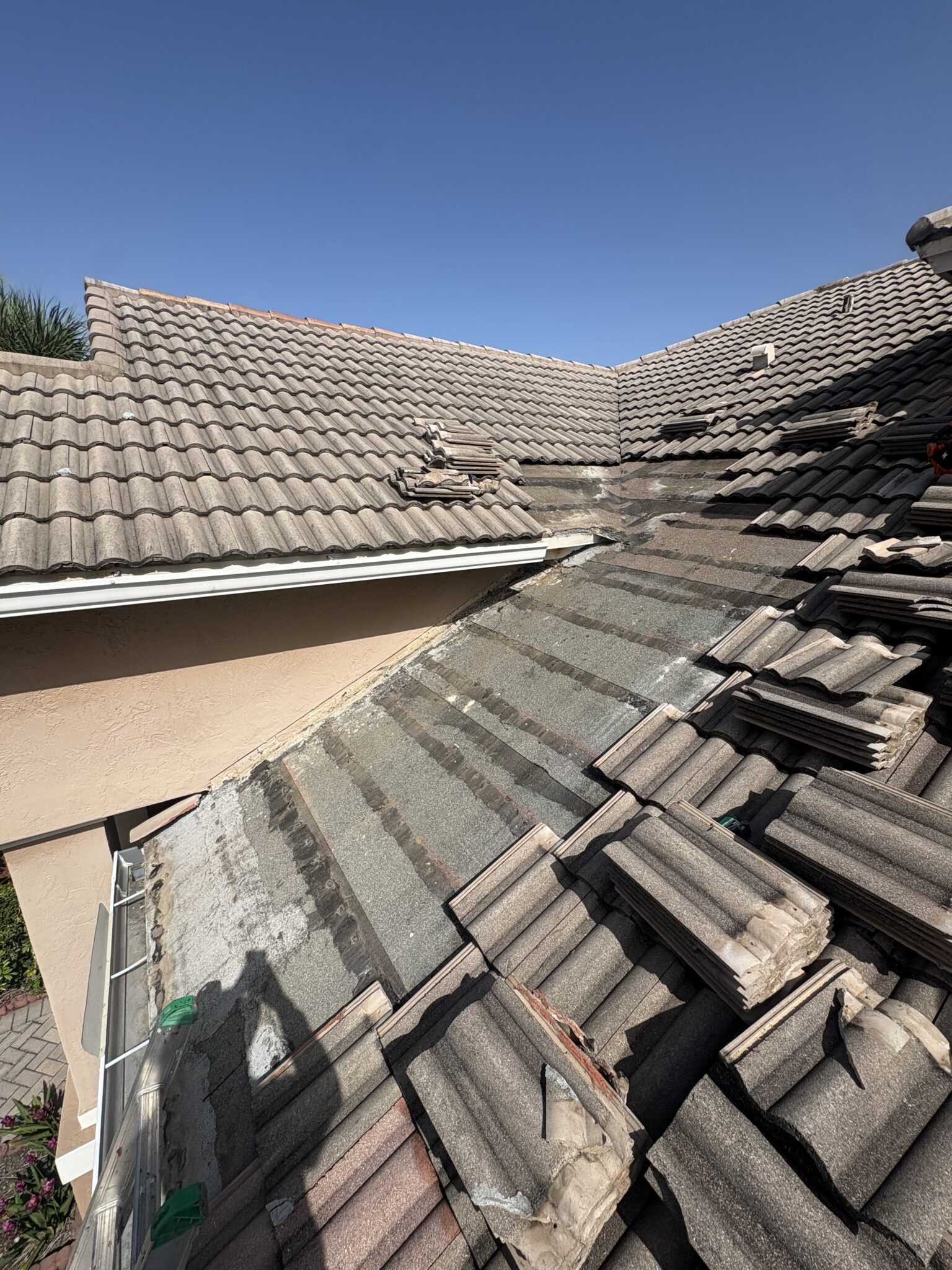
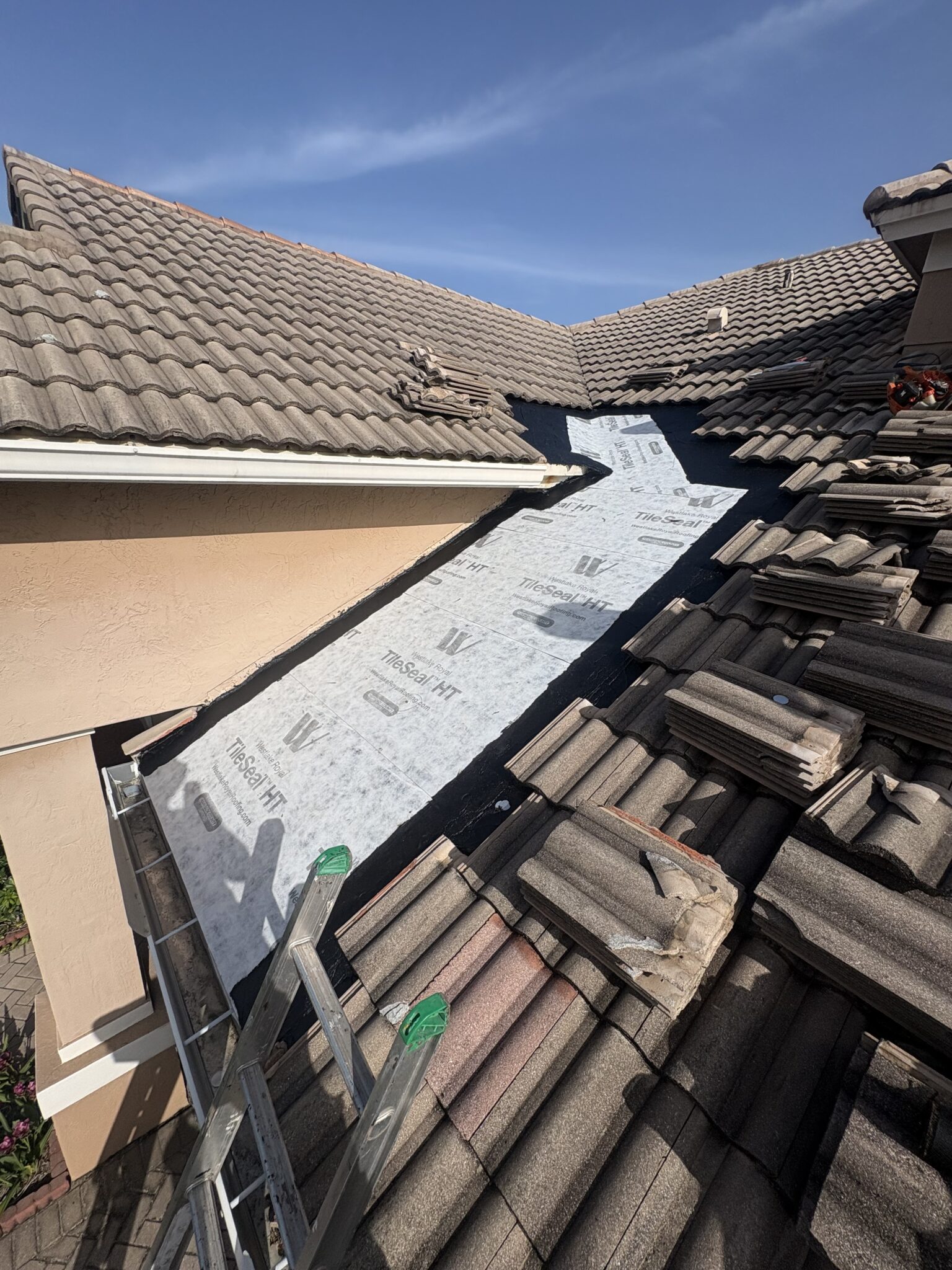
The repair nobody was supposed to see.
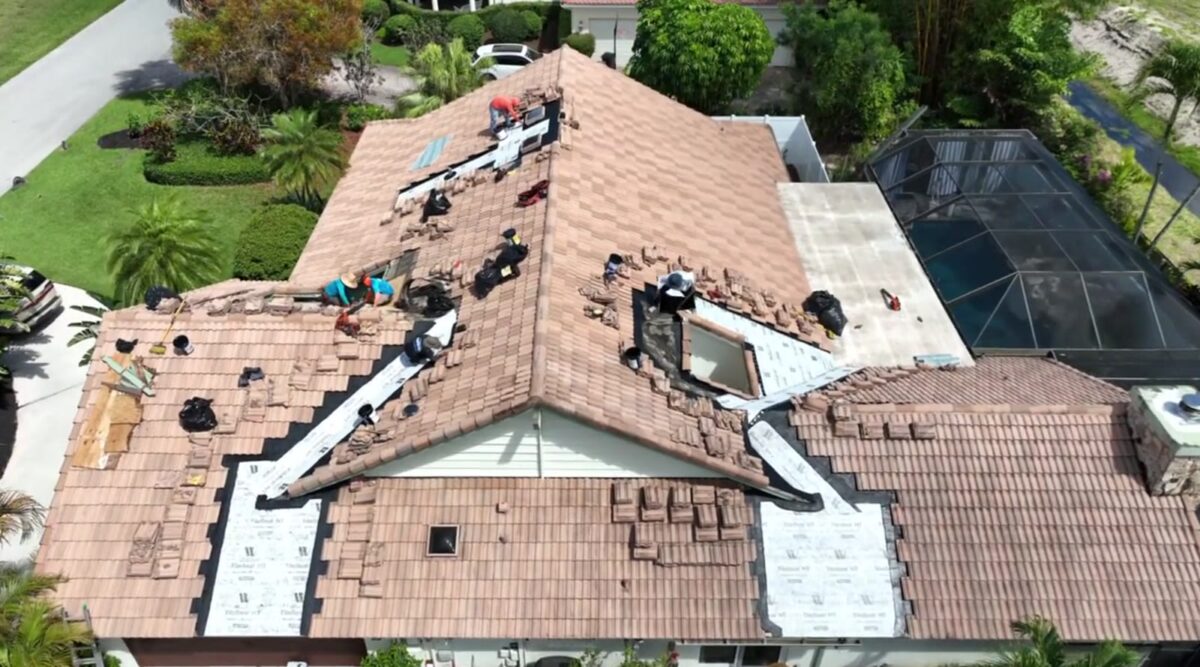
This was not our job, and we are not naming who did it. A drone shows what the homeowner couldn’t see from the ground: at the highest point of the roof, where a lower roof ties into the main roof, the junction was left open with black patching material on the surface and broken tile sitting loose on the roof.
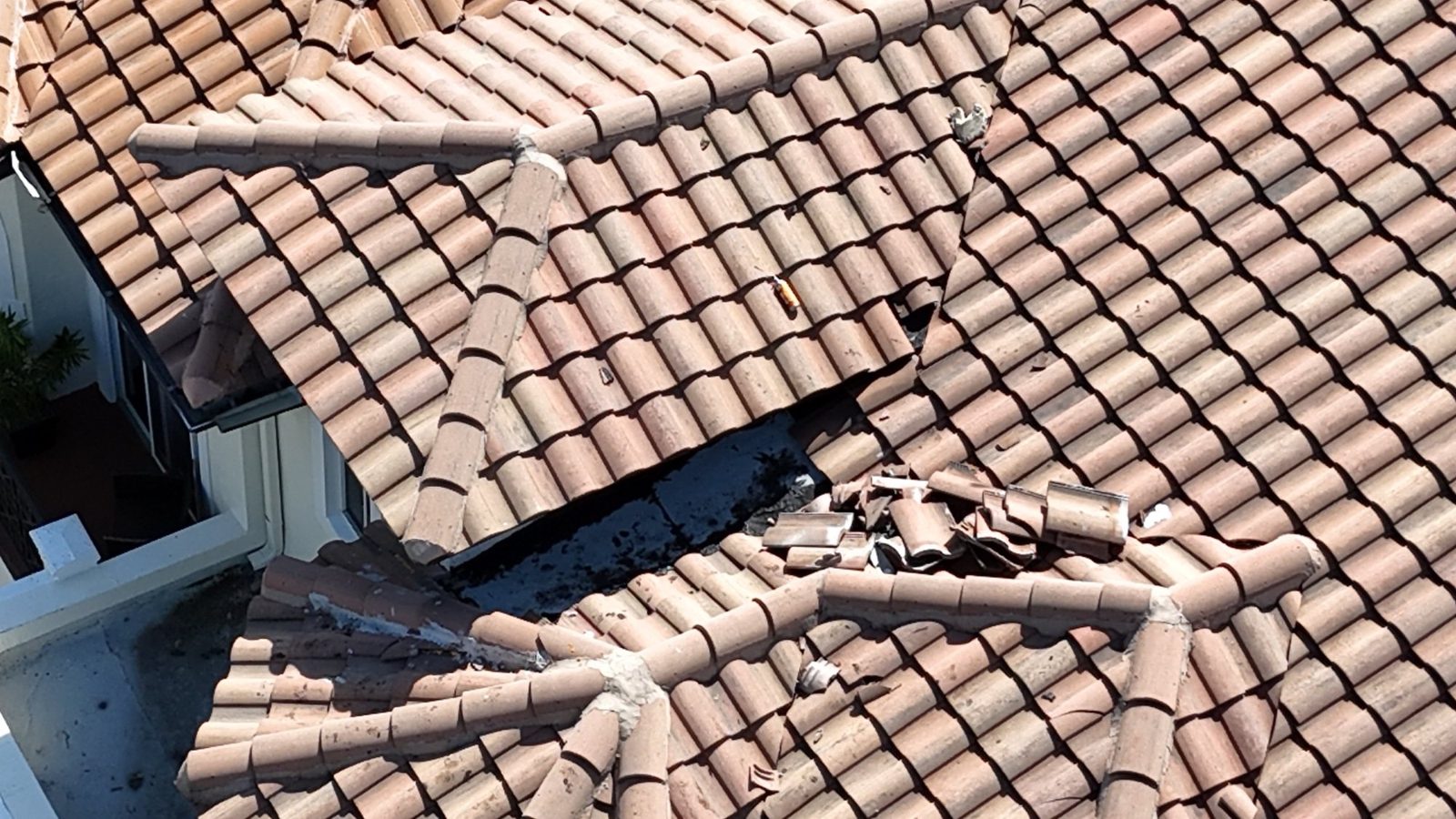
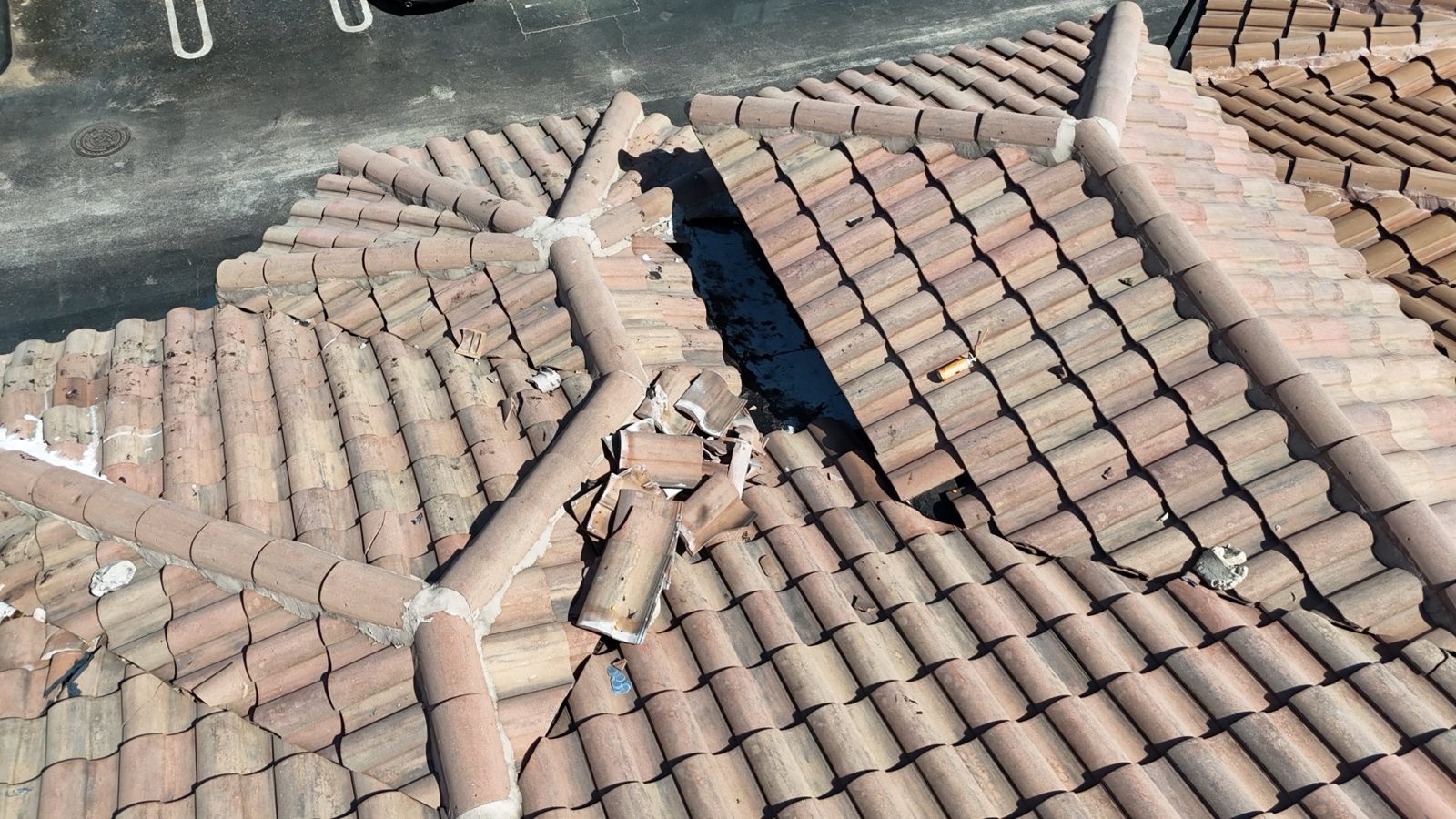
See all seven drone photos and what a real repair includes →
The lowest invoice is not always the lowest total cost.
The first repair invoice is only one part of the cost. When a leak returns, the homeowner may also face a second repair, more opening and reconstruction, more damaged decking, wet insulation, drywall and paint repairs, interior cleanup, lost time, repeated appointments — and uncertainty every time heavy rain arrives.
Answered directly.
Is every inexpensive roof repair a bad repair?
Why did my roof begin leaking again after it was repaired?
Can silicone permanently repair a roof leak?
Should tiles be removed during a tile-roof repair?
How do you determine where a roof is actually leaking?
What photographs should I receive after a roof repair?
How long should a roof repair last?
Does an older roof automatically need to be replaced?
Does Mike McGilvary Roofing warranty roof repairs?
Can you inspect a previous roof repair performed by another contractor?
Before you pay for another roof repair, find out what actually failed.
We’ll inspect the roof, explain the likely source, show you whether a minor repair, targeted rebuild, or replacement is appropriate, and put the recommendation in plain English. You receive documented findings and a repair-first recommendation — not an automatic replacement pitch.
Request a Free Inspection
Written and reviewed by Mike McGilvary
Florida Certified Roofing Contractor CCC1331721 · Owner and Operator, Mike McGilvary Roofing · A McGilvary Family Legacy of Licensed Roofing in Palm Beach County Since 1974.
Repair requirements, expected service life, warranty coverage, permitting requirements, and available solutions depend on the roof system, existing conditions, written scope, and completed inspection. Mike McGilvary Roofing does not guarantee any insurance-company decision or outcome.
Related roofing guides.
Roof Leak Repair
Source-first leak repair — find where the water really enters.
Tile Roof Repair
Barrel and S-tile repairs done at the underlayment, not just the surface.
Flat Roof Repair
Seams, penetrations, and coatings done on a properly prepared surface.
Shingle Roof Repair
Trace the path, correct the flashing, integrate into the surrounding courses.
Roof Rebuilds
Reconstruct the failed section from the deck up — keep what’s sound.
Repair vs. Replacement
How condition — not age or price — drives the right decision.
Tile Roof Preservation
Preserve serviceable tile roofs instead of replacing them.
5-Year Roof Certifications
Documented certification when the roof qualifies.
Roof Preservation Case Studies
Real, documented Palm Beach County projects.