After every tropical storm or hurricane that passes through South Florida, thousands of Boca Raton homeowners face the same question: Did my roof sustain damage? The answer isn’t always obvious from the ground. While some damage like missing tiles or visible holes is immediately apparent, many serious issues hide beneath the surface, silently compromising your roof’s integrity until they manifest as interior leaks months later.
Understanding how to identify storm damage on your roof can mean the difference between a $2,000 targeted repair and a $15,000 emergency restoration after water intrusion damages your ceiling, insulation, and belongings. Drawing on family roofing roots since 1974, Mike McGilvary Roofing Inc. has helped Palm Beach County homeowners navigate post-storm assessments with honest evaluations that prioritize necessary repairs over unnecessary replacements.
The Types of Storm Damage Common to Boca Raton Roofs
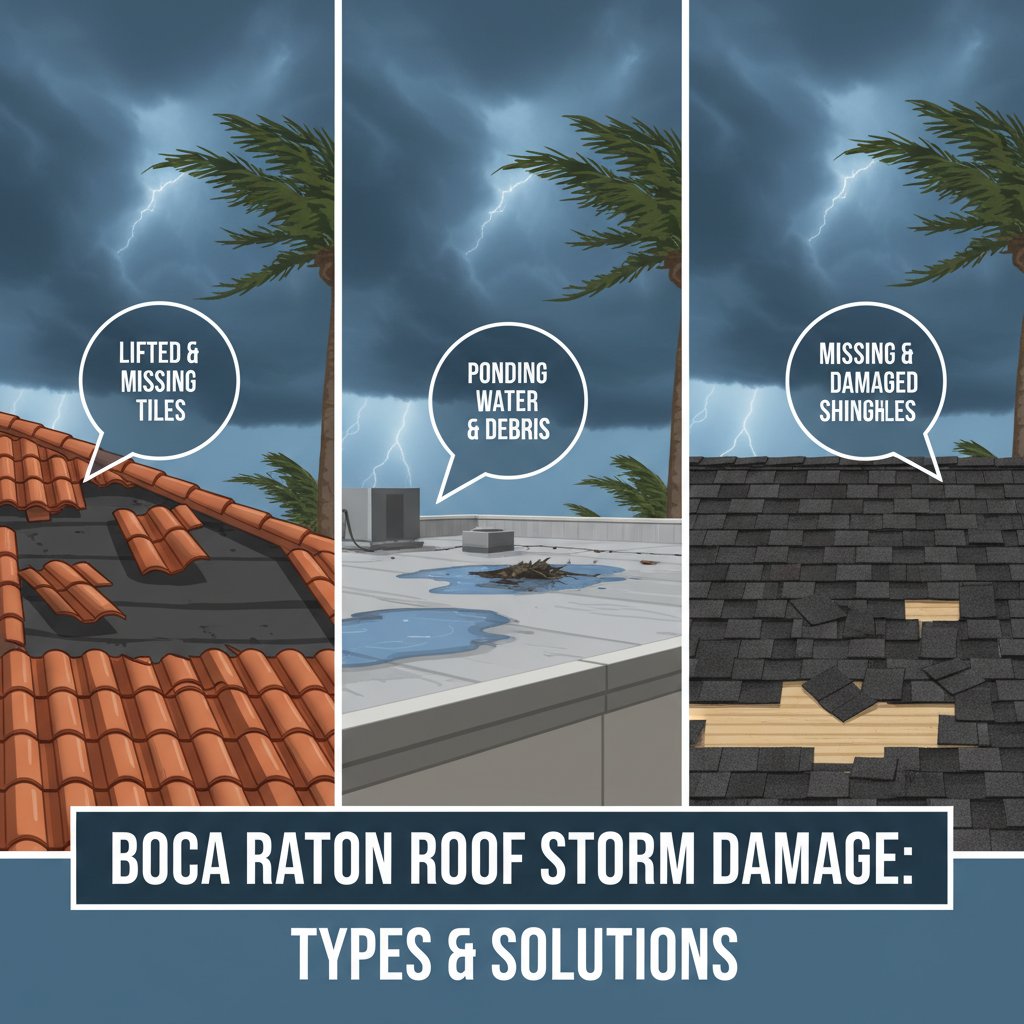
South Florida’s storm events create distinct damage patterns depending on your roofing material, roof age, and the storm’s characteristics. Boca Raton’s predominant Mediterranean-style tile roofs face different vulnerabilities than flat commercial roofs or architectural shingle systems.
Wind Damage Indicators
Tropical storm and hurricane-force winds don’t affect all roofing materials equally. Here’s what wind damage typically looks like across different roof types:
- Concrete and clay tile roofs: Lifted, cracked, or displaced tiles, particularly along ridgelines, hips, and edges where wind forces concentrate. Individual tiles may shift position without completely detaching, creating gaps that allow water penetration.
- Architectural shingle roofs: Missing shingles, lifted tab corners, exposed nail lines, and granule loss in concentrated areas rather than uniform wear patterns.
- Flat commercial roofs: Membrane lifting or bubbling, seam separation, and punctures from windborne debris.
- Flashing and penetrations: Loosened or torn flashing around chimneys, vents, skylights, and HVAC units where wind creates uplift pressure.
Wind damage often occurs in patterns reflecting the storm’s direction and intensity. Eastern exposures typically bear the brunt during hurricanes approaching from the Atlantic.
Impact Damage from Flying Debris
Boca Raton’s lush landscaping and mature tree canopy become hazards during severe storms. Palm fronds, branches, patio furniture, and construction materials from neighboring properties become projectiles capable of puncturing roofing materials.
Impact damage includes:
- Cracked or shattered tiles with visible impact points
- Punctures through shingles exposing underlayment or decking
- Dented or torn flashing and metal components
- Damaged roof boots around plumbing vents
- Broken or cracked ridge caps
Even seemingly minor impacts can compromise waterproofing layers, creating entry points for future leaks that won’t manifest until the next rain event.
Water Intrusion Evidence
Sometimes storm damage isn’t visible from outside. Water intrusion during the storm event itself provides critical clues about roof vulnerabilities:
- Ceiling stains or discoloration, particularly if they appeared during or immediately after the storm
- Water spots on interior walls near the roofline
- Dripping or active leaks during heavy rain
- Musty odors in attic spaces indicating trapped moisture
- Insulation saturation or compression
Water intrusion during a storm event suggests either new damage or the storm exposing pre-existing vulnerabilities that normal rainfall didn’t stress sufficiently.
Conducting Your Initial Ground-Level Assessment
Never climb onto your roof without proper safety equipment and experience. Most storm damage indicators are visible from the ground using binoculars and a systematic inspection approach.
Exterior Visual Inspection Checklist
Walk your property’s perimeter and document the following:
- Missing or displaced roofing materials: Count visible missing tiles or shingles and note their locations
- Debris accumulation: Branches, leaves, or other materials piled on roof surfaces can trap moisture and indicate impact zones
- Gutter and downspout condition: Granule accumulation in gutters suggests shingle deterioration; dents indicate hail impact
- Fascia and soffit damage: Torn or separated trim components often accompany roof edge damage
- Ground debris field: Roofing materials found in your yard indicate loss locations above
Take photographs with identifiable reference points. These images document damage for insurance claims and provide contractors with preliminary assessment information.
Interior Inspection Points
Interior evidence often reveals damage invisible from outside:
- Inspect attic spaces with a flashlight, looking for daylight penetration through the roof deck
- Check insulation for moisture, compression, or discoloration
- Examine roof decking from below for water stains, sagging, or warping
- Note any new ceiling stains in living spaces, photographing their size and location
- Check around skylights, chimneys, and bathroom vent areas where flashing failures commonly occur
If you notice active dripping or significant water intrusion, this constitutes an emergency roof repair situation requiring immediate professional response.
When Professional Residential Roof Inspection Is Necessary
While homeowner assessments provide valuable preliminary information, professional residential roof inspection reveals damage invisible to untrained eyes. Mike McGilvary Roofing offers free roof inspections throughout Palm Beach County specifically because we understand that many homeowners can’t accurately assess storm damage extent from the ground.
What Professional Inspections Reveal
A comprehensive post-storm residential roof inspection by a licensed Florida contractor examines:
- Underlayment integrity: The waterproofing layer beneath tiles or shingles may tear or separate without visible exterior damage
- Fastener withdrawal: Wind uplift can pull fasteners partially out without removing tiles, compromising attachment strength for future storms
- Decking condition: Water penetration may compromise plywood or OSB sheathing structural integrity
- Valley metal condition: These critical drainage channels often sustain hidden damage affecting water management
- Flashing seal integrity: Sealant failures around penetrations allow water entry without obvious external damage
- Code compliance opportunities: Professional inspections identify whether repairs should include upgrades to current wind resistance standards
Mike McGilvary personally reviews every inspection because experience matters when distinguishing between cosmetic issues, necessary repairs, and situations requiring more extensive work.
The Importance of Timely Inspection
Florida’s insurance claim requirements create time sensitivity around storm damage documentation. Most policies require damage reporting within specific timeframes following storm events. Additionally, temporary damage can worsen rapidly in South Florida’s climate:
- Small openings allow water intrusion during subsequent rain events
- Moisture penetration leads to mold growth within 24-48 hours
- Compromised structural members deteriorate faster in humid conditions
- Loose materials pose falling hazards and may cause additional damage
Scheduling a professional residential roof inspection within days of a storm event protects both your property and your insurance claim rights.
Common Boca Raton Storm Damage Scenarios
Boca Raton’s specific housing characteristics create predictable storm damage patterns. Understanding these helps homeowners know what to look for based on their roof type and property features.
Mediterranean Tile Roof Damage Patterns
Boca Raton’s signature concrete tile roofs in communities like Woodfield Country Club, Boca Pointe, and St. Andrews Country Club show characteristic storm damage:
Tiles along western and southern exposures experience maximum sun deterioration, making them more vulnerable to wind and impact damage. Ridge caps frequently lift or displace because they present the greatest wind resistance profile. Valley areas concentrate water flow, and debris accumulation during storms can dam water under tiles, forcing it beneath underlayment.
The good news? Individual tile roofs rarely need complete replacement after storm damage. Mike McGilvary Roofing’s repair-first philosophy means we replace damaged tiles, repair underlayment in affected sections, and reseal flashings—typically for $3,000-$8,000 rather than the $50,000+ full replacement many contractors push unnecessarily.
Flat Roof Commercial and Condominium Damage
Boca Raton’s commercial corridors along Glades Road and Congress Avenue feature predominantly flat or low-slope roofs using modified bitumen, TPO, or built-up roofing systems. Storm damage on these roofs includes:
- Membrane punctures from airborne debris
- Seam separation from wind uplift forces
- HVAC equipment displacement or damage
- Parapet wall flashing failures
- Drain blockage causing ponding water
Commercial properties require rapid response because business interruption compounds storm damage costs. Mike McGilvary Roofing provides 24/7 emergency roof repair service throughout Boca Raton for exactly these situations.
Emergency Roof Repair Boca Raton: When Damage Requires Immediate Response
Not all storm damage constitutes an emergency, but certain conditions demand immediate professional intervention to prevent catastrophic secondary damage.
True Roof Emergencies Include:
- Active water intrusion during or immediately after storms
- Structural compromise visible as sagging, bowing, or ceiling collapse
- Large sections of missing roofing material exposing underlayment or decking
- Damaged areas larger than approximately 10 square feet
- Any compromise to occupied commercial buildings affecting business operations
Mike McGilvary Roofing maintains 24/7 availability specifically for emergency roof repair situations throughout Palm Beach County. Our emergency response includes temporary weatherproofing measures like tarp installation and immediate damage mitigation while developing permanent repair plans.
Temporary vs. Permanent Repairs
Emergency situations often require two-phase responses. Immediate temporary repairs prevent further damage while allowing time for proper insurance documentation, material ordering, and comprehensive permanent repairs.
This approach protects your property immediately while ensuring permanent repairs address all damage properly rather than rushing incomplete fixes.
Hurricane Roof Damage Repair Versus Regular Storm Damage
Hurricane roof damage repair involves different considerations than typical thunderstorm damage. Named storm events trigger specific insurance policy provisions and often create widespread contractor availability issues.
Post-hurricane environments attract out-of-state contractors with no local presence, proper Florida licensing, or intention of standing behind their work. Verify any contractor’s credentials through Florida’s Department of Business and Professional Regulation website. Mike McGilvary Roofing holds active Florida Contractor License CCC1331721 and maintains an A+ BBB rating specifically because we’ve served Palm Beach County, built on family roofing roots dating to 1974—we’re not disappearing after hurricane season.
The Repair-First Philosophy for Storm Damage
Here’s the honest truth about storm damage roof repair: most contractors make significantly more money selling complete roof replacements than targeted repairs. A $55,000 replacement generates far more profit than a $4,500 repair—creating massive incentive to exaggerate damage severity.
Think of your roof like your car. You don’t buy a new vehicle when a storm breaks your windshield—you replace the damaged component. Your roof works the same way. A 20-year-old tile roof with storm damage in one section doesn’t automatically need $50,000 replacement. It needs honest assessment and targeted home roof repair addressing actual damage while preserving sound materials with remaining service life.
Mike McGilvary Roofing pioneered the “roof rebuild” approach for exactly these situations—strategically replacing only damaged components while preserving functional materials. This isn’t cutting corners; it’s intelligent roofing that respects your investment.
Working with Insurance After Storm Damage
Storm damage typically falls under your homeowner’s insurance policy, but navigating claims requires documentation and realistic expectations.
Before filing claims, understand your deductible. If damage estimates fall below your deductible amount, filing claims that won’t pay creates rate increase risk without benefit. For damage exceeding deductibles, thorough documentation is critical:
- Photograph all visible damage from multiple angles
- Document the storm event date and characteristics
- Obtain professional inspection reports detailing damage scope
- Request detailed repair estimates breaking down materials and labor
- Keep all communications with contractors and adjusters in writing
Mike McGilvary Roofing works directly with insurance adjusters and provides documentation supporting legitimate claims while refusing to inflate damage to justify unnecessary work—honesty that’s kept us in business for over 50 years.
Your Next Steps After Identifying Storm Damage
If you’ve identified potential storm damage on your Boca Raton roof, taking prompt, informed action protects your property and financial interests:
- Document visible damage with photographs and written notes
- Schedule professional residential roof inspection with a licensed Florida contractor
- Obtain honest assessment distinguishing between necessary repairs and full replacement recommendations
- Review repair estimates for detailed scope and material specifications
- Verify contractor licensing, insurance, and local reputation before signing contracts
- File insurance claims only after understanding damage scope and cost estimates
Mike McGilvary Roofing has provided honest residential roof repair and hurricane roof damage repair throughout Palm Beach County, built on family roofing roots dating to 1974. We offer free roof inspections, 5-year roof certifications for insurance requirements, and the transparent communication homeowners deserve when making significant repair decisions.
Call Mike McGilvary Roofing today for your free storm damage assessment. We’re locally owned, properly licensed (Florida Contractor License CCC1331721), and committed to repair-first solutions that respect your investment. Available 24/7 for emergency roof repair throughout Boca Raton and surrounding Palm Beach County communities.
Related from Mike McGilvary Roofing