
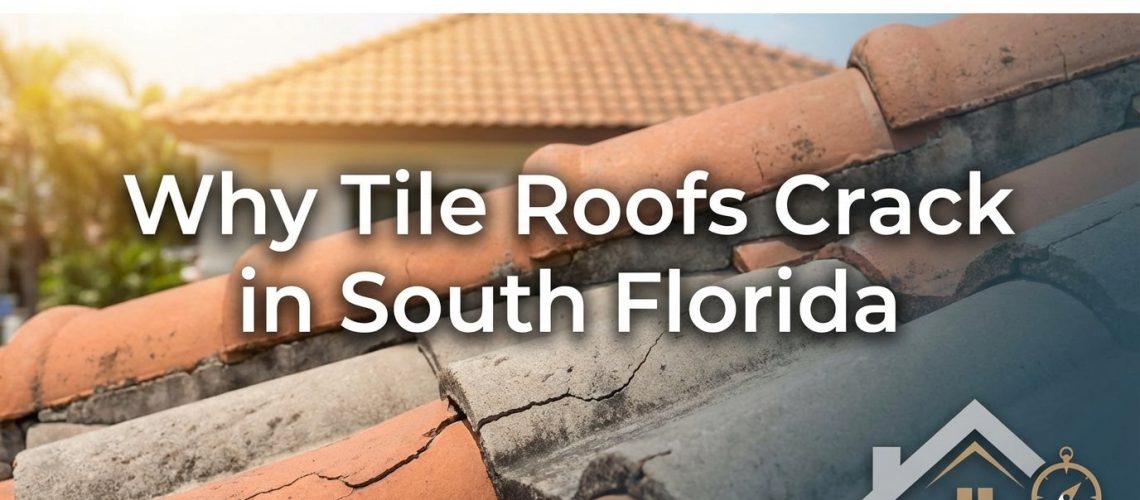
Standing in your driveway and spotting broken tiles scattered across your roof sends most homeowners into panic mode. Before you start calling for replacement quotes, understand this: cracked tiles are a normal part of life with South Florida tile roofs, and they’re rarely a reason for complete replacement. Drawing on family roofing roots since 1974, Mike McGilvary Roofing has helped thousands of Palm Beach County homeowners understand why tiles crack and how to address the problem without unnecessary expense.
The reality is simple: tiles crack because South Florida’s climate creates unique stresses that most roofing materials weren’t designed to handle. Whether you have clay or concrete tiles, understanding the causes helps you make smarter repair decisions and avoid contractors who push replacements when targeted repairs will do.
The Six Primary Causes of Tile Cracking in Palm Beach County
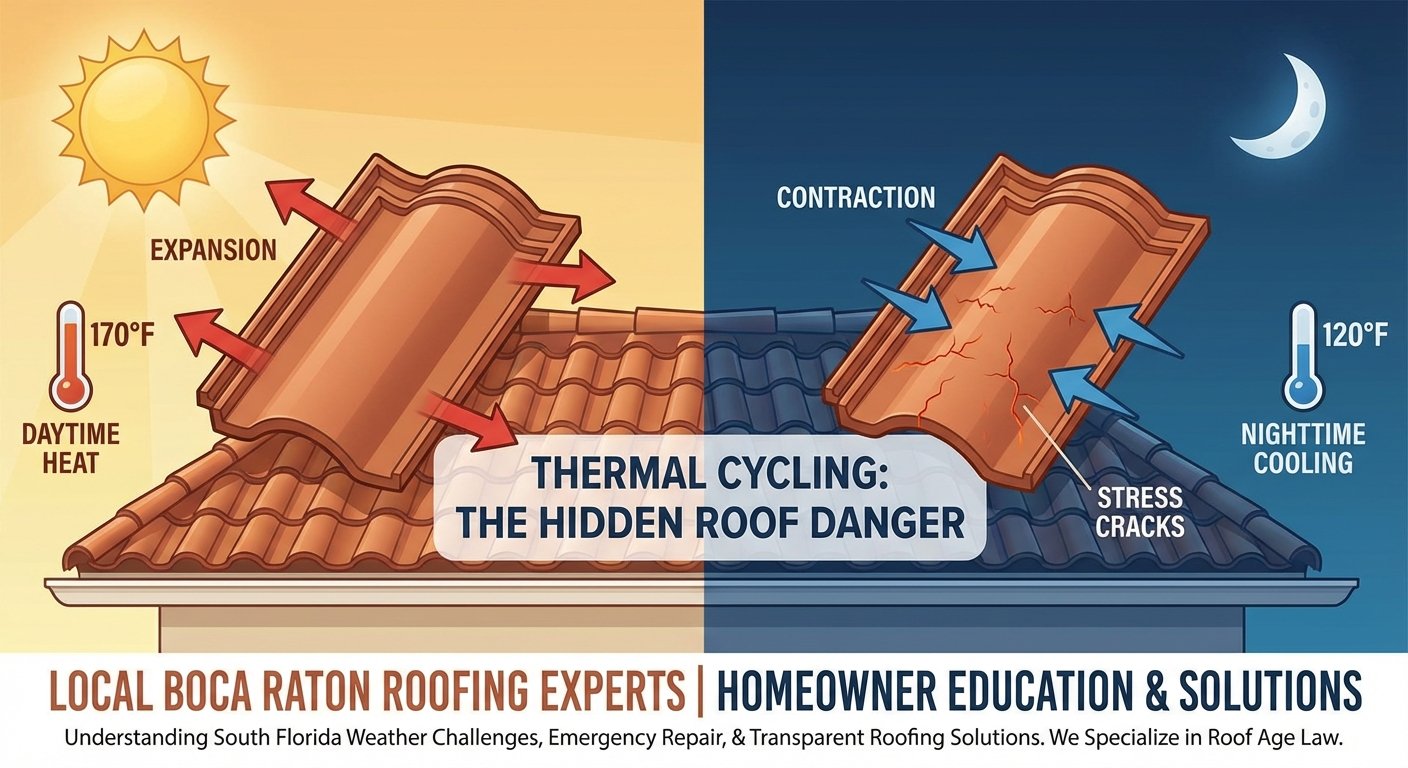
1. Thermal Cycling and Extreme Heat
South Florida roofs endure what engineers call “thermal cycling”—dramatic temperature swings that expand and contract roofing materials. Your roof surface can reach 160-180 degrees during summer afternoons, then drop 40-50 degrees overnight. This daily cycle repeats hundreds of times yearly for decades.
Concrete tile roof repair becomes necessary when this cycling creates micro-fractures that eventually develop into visible cracks. Concrete tiles are particularly vulnerable because they absorb moisture, which expands when heated and contracts when cooled. Clay tiles handle thermal stress better but aren’t immune—their brittle composition makes them susceptible to sudden temperature changes.
After 15-20 years of this daily expansion and contraction, even premium tiles develop stress fractures. This isn’t a defect; it’s physics. The good news? Individual broken tile replacement costs $50-$150 per tile, not $40,000+ for full replacement.
2. Walking Damage During Maintenance
Most cracked tiles Mike encounters result from foot traffic. Air conditioning technicians, satellite installers, chimney sweeps, and even well-meaning homeowners create damage by walking improperly on tile roofs.
Tile roofs require specific walking patterns. Step on the lower third of each tile where it overlaps the tile below—that’s where structural support exists. Step on the upper unsupported section, and tiles crack under concentrated weight. A 200-pound technician stepping wrongly can crack multiple tiles in a single service call.
This is why Mike personally inspects every project and educates homeowners about proper roof access. Finding a tile roof contractor in Boca Raton who takes time to preserve your existing tiles rather than carelessly creating more damage distinguishes honest contractors from those indifferent to your property.
3. Impact from Falling Debris
Palm Beach County’s mature tree canopy creates constant impact risks. Coconuts, palm fronds, oak branches, and pine cones fall year-round. During afternoon thunderstorms, wind-driven branches become projectiles. Hurricane season brings obvious risks, but routine debris causes more cumulative damage than occasional storms.
Clay tile roof repair frequently addresses impact cracks from falling debris. Clay tiles are harder but more brittle than concrete—they resist weathering beautifully but crack more easily from impact. A coconut dropping 30 feet can shatter a clay tile instantly, while a concrete tile might survive with just a surface crack.
Regular tile roof maintenance includes trimming overhanging branches and removing debris accumulation in valleys where fallen material concentrates water and creates additional weight stress.
4. Manufacturing Defects and Quality Variations
Not all tiles are created equal. South Florida’s building boom periods saw varying quality control, especially during the 1990s and early 2000s when construction demand outpaced manufacturing capacity.
Some concrete tiles from this era have higher porosity, allowing moisture intrusion that accelerates deterioration. Others have inconsistent curing, creating weak points. Certain batches had improper pigment mixing that affected long-term durability. These issues don’t appear immediately—they emerge 15-25 years later as premature cracking, spalling, or complete failure.
Mike regularly sees homes where specific roof sections show concentrated cracking while adjacent areas remain perfect. This pattern indicates a manufacturing batch issue rather than installation problems or environmental factors. When this occurs, targeted broken tile replacement addressing the defective batch is far more sensible than replacing an entire roof where 70-80% of tiles remain sound.
5. Structural Movement and Settling
Florida’s porous limestone substrate and high water table create foundation movement that translates to roof stress. Homes settle unevenly, especially in western Palm Beach County where properties sit on reclaimed wetlands and former agricultural land.
As foundations shift minimally—often just 1/4 to 1/2 inch—roof structures flex. This flexing creates stress points where tiles are rigidly attached, causing cracks along ridges, hips, and valley transitions where two roof planes meet.
Older homes in established communities like Delray Beach or West Palm Beach show settlement cracking patterns different from newer construction in Wellington or Royal Palm Beach. Understanding these patterns helps identify whether cracking indicates normal settling or active structural issues requiring more comprehensive attention.
6. Fastener Failure and Installation Issues
Tiles don’t just sit on roofs—they’re fastened with nails or screws driven through pre-drilled holes. When fasteners corrode, loosen, or were improperly installed initially, tiles shift and crack.
South Florida’s salt air accelerates metal corrosion. Homes within three miles of the ocean experience particularly aggressive corrosion that can compromise fasteners in 15-20 years. When fasteners fail, tiles rock in wind, creating stress fractures around fastener holes.
During concrete tile roof repair, Mike often discovers original installation shortcuts: insufficient fasteners, improper fastener placement, or failure to use corrosion-resistant fasteners in coastal applications. These issues create progressive damage as tiles shift and crack against each other.
Clay Tiles vs. Concrete Tiles: Different Cracking Patterns
Understanding material differences helps diagnose problems and set realistic expectations.
Clay tiles are fired ceramic, extremely hard and weather-resistant. They last 50-100+ years in South Florida when properly maintained. However, their brittleness makes them vulnerable to impact and walking damage. Clay tile roof repair typically addresses impact cracks—clean breaks from specific incidents rather than gradual deterioration. The good news: clay tiles age beautifully and rarely need replacement for weathering reasons.
Concrete tiles are formed from cement, sand, and pigments. They’re more affordable and widely used across Palm Beach County. Concrete is more forgiving underfoot but more vulnerable to weathering. Concrete tiles absorb moisture, making them susceptible to freeze-thaw damage (rare but possible during unusual cold snaps), UV degradation, and surface spalling where the outer layer flakes away. Concrete tile roof repair often addresses age-related deterioration alongside impact damage.
Both materials perform excellently in South Florida when properly installed and maintained. The key is addressing damage promptly before minor cracks allow water intrusion that damages underlayment and decking.
What to Do When You Notice Cracked Tiles
Immediate Actions
When you spot cracked tiles, take these steps:
- Document the damage: Take photos showing the overall roof and close-ups of specific cracks. Note approximate locations and quantities.
- Check for interior signs: Look for water stains on ceilings, especially after rain. Cracked tiles don’t always leak immediately—intact underlayment often provides temporary protection.
- Avoid further traffic: Keep people off the roof until professional inspection. Additional walking often cracks more tiles.
- Schedule professional inspection: Get expert assessment before deciding on repairs.
Professional Inspection and Honest Assessment
This is where contractor selection matters enormously. Many roofing companies see cracked tiles as sales opportunities, presenting worst-case scenarios to justify replacement quotes.
Mike McGilvary Roofing approaches inspections differently. Mike personally examines every roof, counting damaged tiles, assessing underlayment condition, checking flashing integrity, and evaluating overall roof health. Homeowners receive honest assessments: if your roof needs 30 tiles replaced at $3,000, Mike tells you that—not that you need a $45,000 replacement.
During inspection, Mike evaluates:
- Total number and location of cracked tiles
- Pattern indicating cause (impact vs. thermal vs. structural)
- Underlayment condition and remaining service life
- Flashing integrity around penetrations and valleys
- Evidence of water intrusion or moisture damage
- Overall roof system age and expected remaining lifespan
This comprehensive evaluation determines whether broken tile replacement alone suffices or if underlying issues require attention.
Repair Options: From Simple to Comprehensive
Individual Tile Replacement
For isolated damage—a dozen tiles here, a few there—individual replacement is straightforward and affordable. Cost runs $50-$150 per tile depending on type, location, and accessibility. This includes carefully removing damaged tiles without breaking adjacent ones, installing new tiles with proper fasteners, and ensuring weather-tight integration.
The challenge is tile matching. Discontinued styles, color variations from aging, and manufacturing changes make exact matches difficult. Mike maintains relationships with specialty suppliers and salvage sources to find appropriate replacements. Sometimes perfect matches exist; other times, close matches placed strategically minimize visual contrast.
Section Repairs
When cracking concentrates in specific areas—a south-facing slope, a valley section, a portion with defective tiles—section repairs make sense. This involves removing all tiles from the affected area, inspecting and replacing underlayment if necessary, repairing any decking damage, and reinstalling tiles with proper modern fastening.
Section repairs cost $3,000-$8,000 depending on area size and complexity. This is tile roof maintenance at its most strategic—addressing problems comprehensively in damaged areas while preserving sound sections.
Comprehensive Rebuilds
For roofs with widespread issues—extensive cracking, underlayment failure, multiple problem areas—Mike’s rebuild approach offers the best value. This isn’t full replacement; it’s systematic restoration.
The process: carefully remove and inventory all tiles, replace underlayment completely, repair or replace damaged decking, upgrade flashing and valley metals, reinstall original tiles that remain sound, integrate new tiles where originals are damaged. The result: a fully restored roof system at 40-60% the cost of complete replacement.
This approach particularly benefits homes with 20-30 year old roofs where tiles have decades of life remaining but underlying components need renewal. Why discard $15,000-$20,000 worth of sound tiles when strategic rebuilding delivers equivalent performance?
The Insurance Consideration
Florida’s property insurance crisis makes roof condition critical. Many carriers restrict coverage for roofs over 15 years, and roof certifications increasingly determine insurability.
Here’s where honest tile roof repair provides immense value: a properly executed repair or rebuild with a 5-year certification can satisfy insurance requirements at a fraction of replacement cost. Mike provides free roof inspections and 5-year certifications when warranted, helping homeowners document their roof’s condition without unnecessary expense.
Understanding Florida Statute §627.7011—the roof age law—helps homeowners navigate insurance requirements intelligently. Insurers can’t refuse coverage solely based on roof age if the roof passes inspection and receives certification. Strategic repairs that address actual problems while preserving sound components often meet certification standards perfectly.
Prevention and Long-Term Maintenance
While some cracking is inevitable, proper tile roof maintenance minimizes damage:
- Annual inspections: Professional examination catches small problems before they escalate.
- Immediate debris removal: Don’t let branches, leaves, or other debris accumulate.
- Controlled roof access: Require service contractors to check in before roof access; educate them on proper walking techniques or require Mike McGilvary Roofing supervision.
- Tree management: Trim overhanging branches; remove hazardous trees near structures.
- Prompt repairs: Address cracked tiles quickly before water intrusion damages underlying components.
Regular maintenance extends roof life dramatically. A well-maintained tile roof can last 40-50 years (concrete) or 75-100+ years (clay) in South Florida. Neglected roofs fail prematurely, not from tile failure but from water damage to underlying components that could have been prevented.
Choosing the Right Contractor
Not all tile roof contractors in Boca Raton approach repairs honestly. The industry incentive structure favors replacement sales over repair integrity. When selecting a contractor, consider:
- Licensing and credentials: Verify active Florida contractor licenses (Mike McGilvary Roofing: CCC1331721), BBB accreditation, and professional memberships.
- Repair philosophy: Do they offer repair options or push replacement exclusively?
- Owner involvement: Will the owner personally inspect and oversee your project?
- Transparent pricing: Do they provide itemized estimates showing what you’re actually paying for?
- Local reputation: Check Google reviews, BBB ratings, and community presence.
Mike McGilvary has built 50+ years of business on honesty and transparency. As a BBB A+ accredited company with a a BuildZoom score of 107 (94th percentile of Florida contractors) and hundreds of five-star Google reviews, Mike McGilvary Roofing’s reputation reflects consistent integrity.
Get an Honest Assessment Today
Cracked tiles don’t mean roof replacement. They mean you need an honest evaluation from someone who profits from telling you the truth, not from overselling unnecessary work.
Mike McGilvary personally inspects every roof and provides straightforward recommendations. If you need tile replacement, he’ll tell you how many and why. If you need more comprehensive repairs, he’ll explain exactly what’s required and provide transparent pricing. And if your roof is fine with minor maintenance, he’ll say that too—even if it means a smaller project.
Serving Palm Beach County since 1974, Mike McGilvary Roofing offers free inspections, 24/7 emergency availability, and the peace of mind that comes from working with a contractor who values long-term relationships over short-term sales.
Contact Mike McGilvary Roofing today at your convenience for a free, honest roof inspection. Let’s determine exactly what your tile roof needs—nothing more, nothing less. With proper assessment and strategic repairs, your South Florida tile roof can provide decades of continued protection at a fraction of replacement cost.
Related from Mike McGilvary Roofing