
Palm Beach Gardens tile roof restoration & 5-year roof certificationQuoted to replace. Restored and certified.
Charlie L.’s replacement quotes for his 25‑year‑old concrete tile roof were all different, and none was fully explained. Our inspection found the leaks isolated to the valleys and other high-water-flow sections. We rebuilt those sections, put his existing tiles back and certified the roof on 07/13/2026.
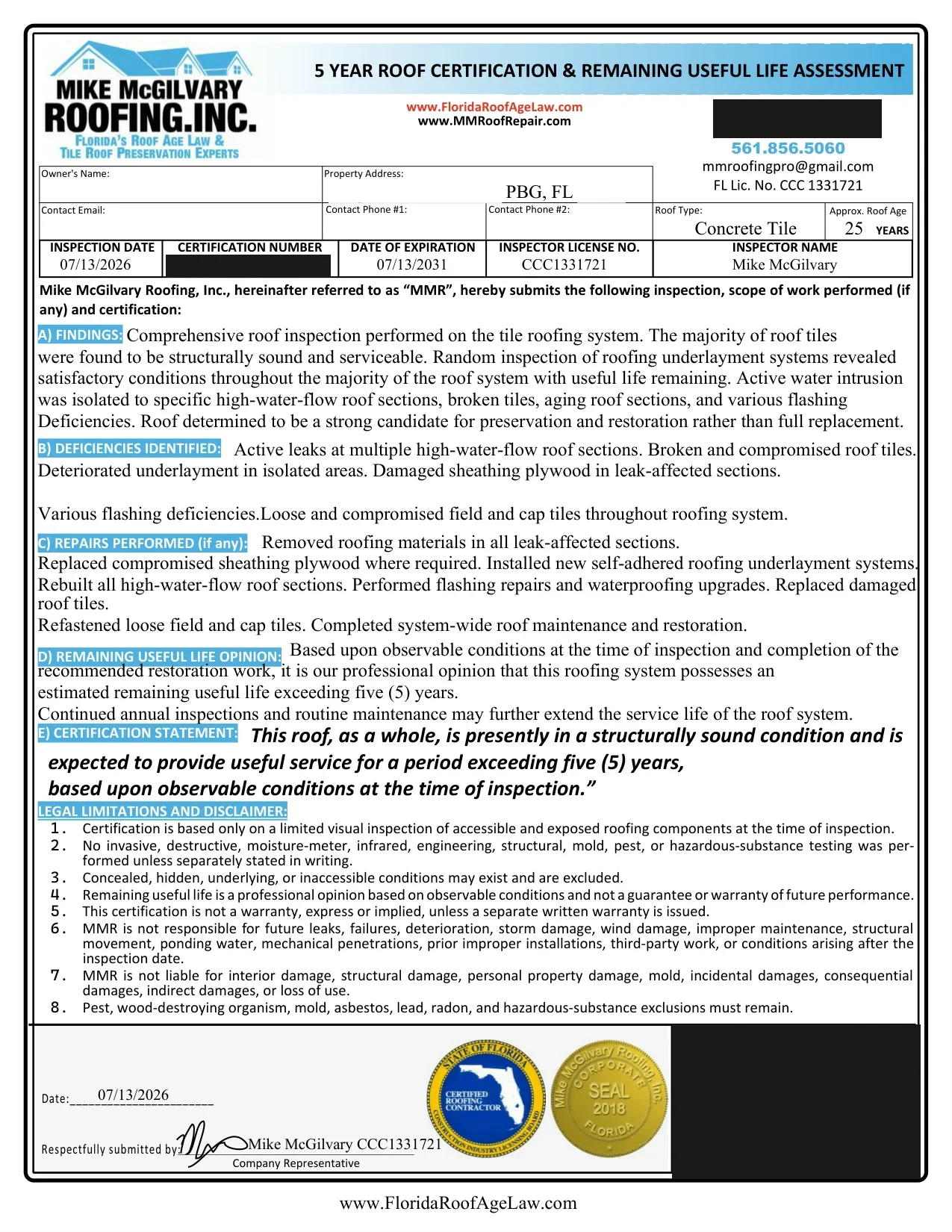
- Inspected 07/13/2026. Concrete tile, about 25 years old. Signed by Mike McGilvary, CCC1331721.
- Repairs performed, every one listed in writing.
- The certification: “expected to provide useful service for a period exceeding five (5) years.” See all 9 pages
- The quotes
Replacement quotes, all different
None was fully explained. He found us through our reviews and through work we’d done on a neighbor’s house a week before he called.
- The free inspection
Most of the roof was sound
Most tiles were structurally sound and the underlayment was satisfactory through most of the roof. The leaks were isolated to the high-water-flow sections.
- The rebuild
Opened, rebuilt, re-tiled
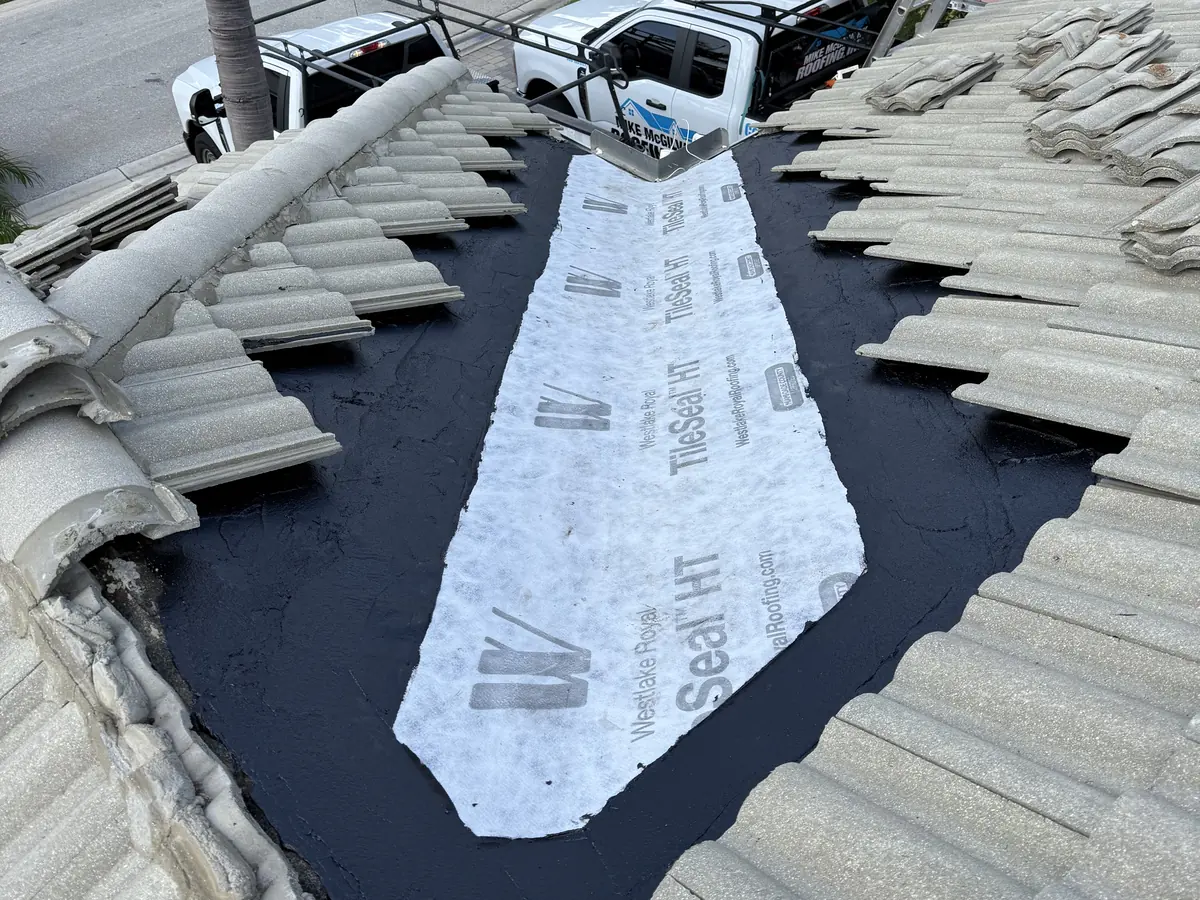
We opened every leak-affected section, replaced rotted plywood where required, installed new self-adhered underlayment and put his existing tiles back in their original places.
- 07/13/2026 · Certified
Five-plus years, in writing
Mike McGilvary signed the certification: an estimated remaining useful life exceeding five (5) years.
…the documentation and photos he supply’s of the project from start to finish is the best I ever dealt with
Charlie L., Palm Beach Gardens homeowner · Google review
Where the water was getting in, and what we rebuilt.
These are the photos from Charlie’s certificate, in the order the work happened. Captions in quotation marks are the certificate’s own wording. Most photos are now the full-size originals from the job; open any exhibit page to see it the way he received it.
What we found
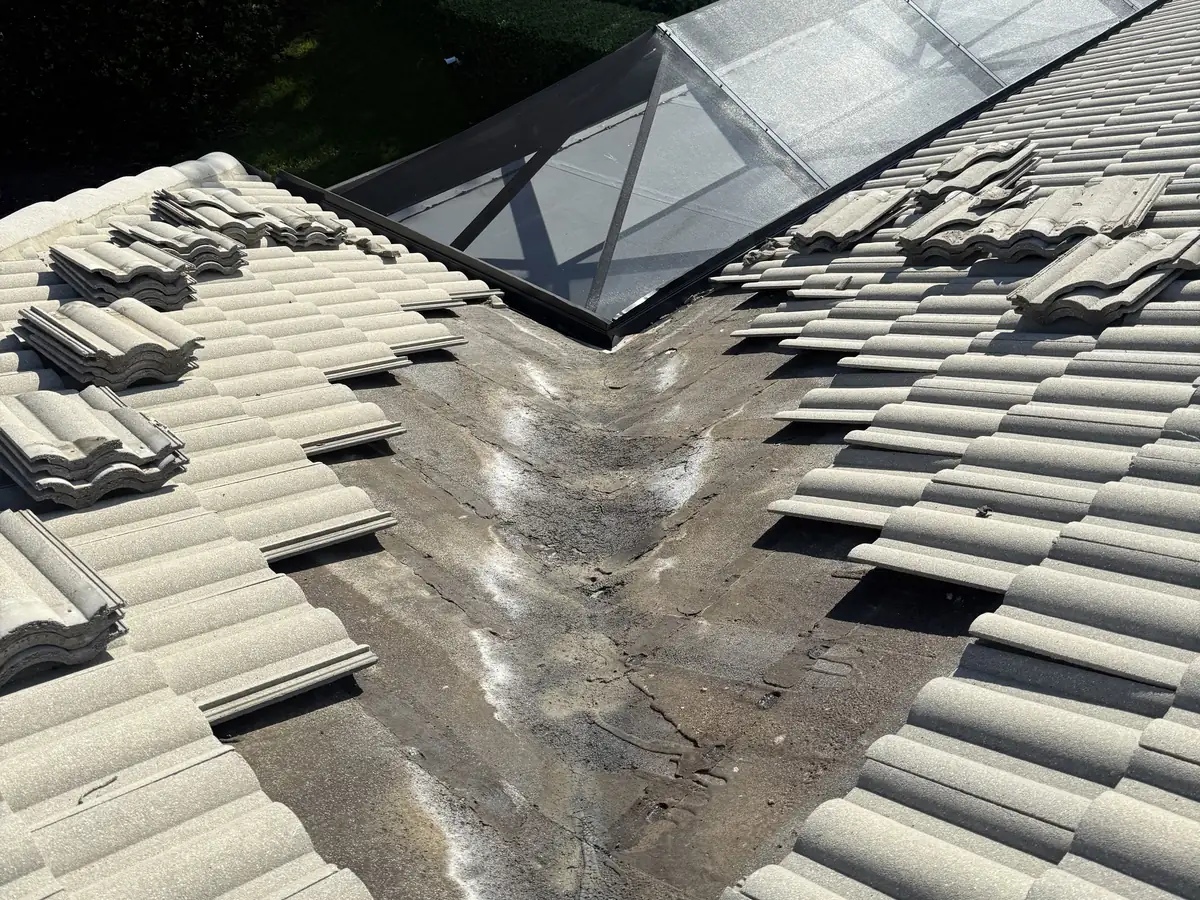
A valley carrying the heaviest water on the roof, an earlier repair that hadn’t stopped the leak, and rotted plywood below it.
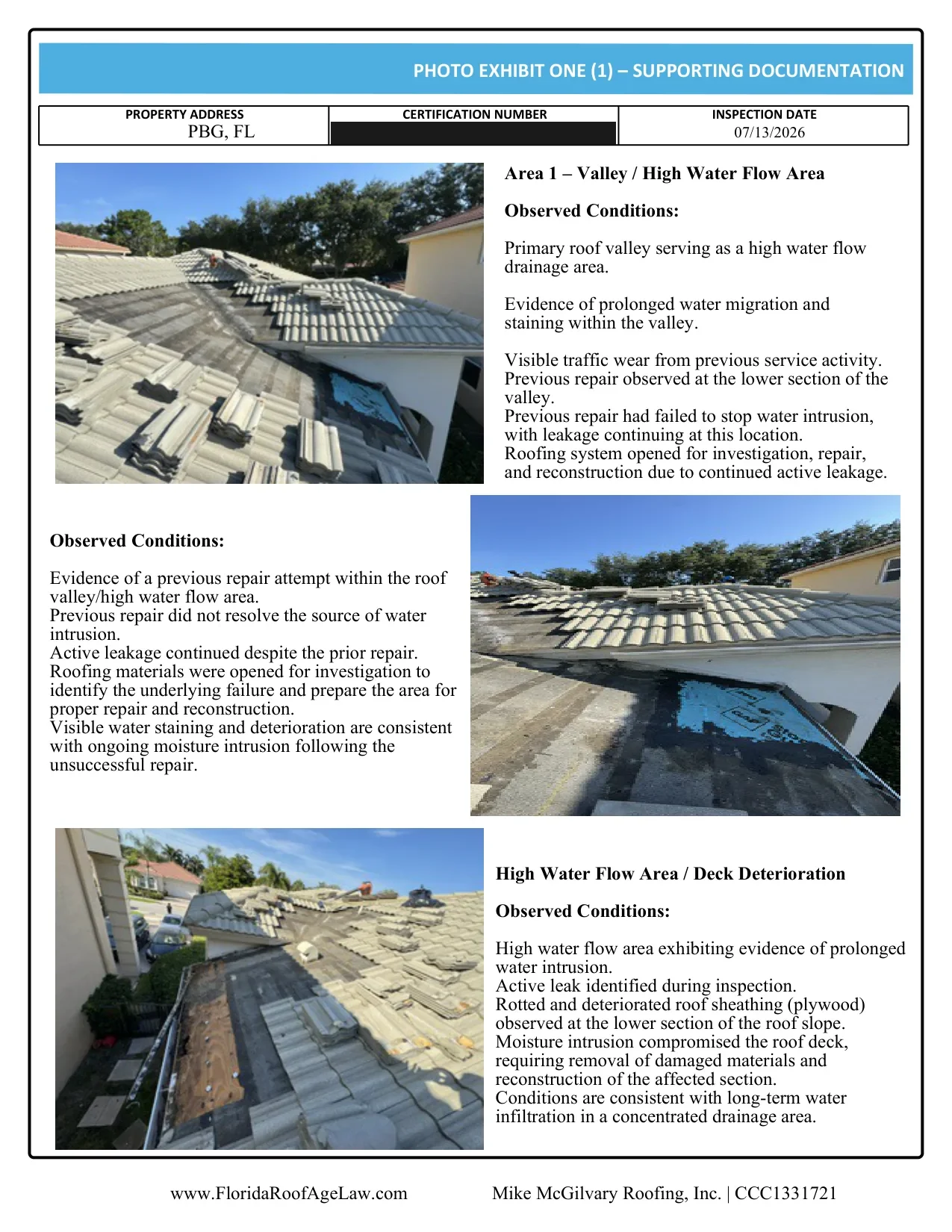 Exhibit 1 · photo 1 of 3
Primary roof valley serving as a high water flow drainage area. Evidence of prolonged water migration and staining within the valley.Certificate, Photo Exhibit One · Open page
Exhibit 1 · photo 2 of 3
Previous repair had failed to stop water intrusion, with leakage continuing at this location.Certificate, Photo Exhibit One · Open page
Exhibit 1 · photo 3 of 3
Rotted and deteriorated roof sheathing (plywood) observed at the lower section of the roof slope.Certificate, Photo Exhibit One · Open page
One section, rebuilt from the deck up
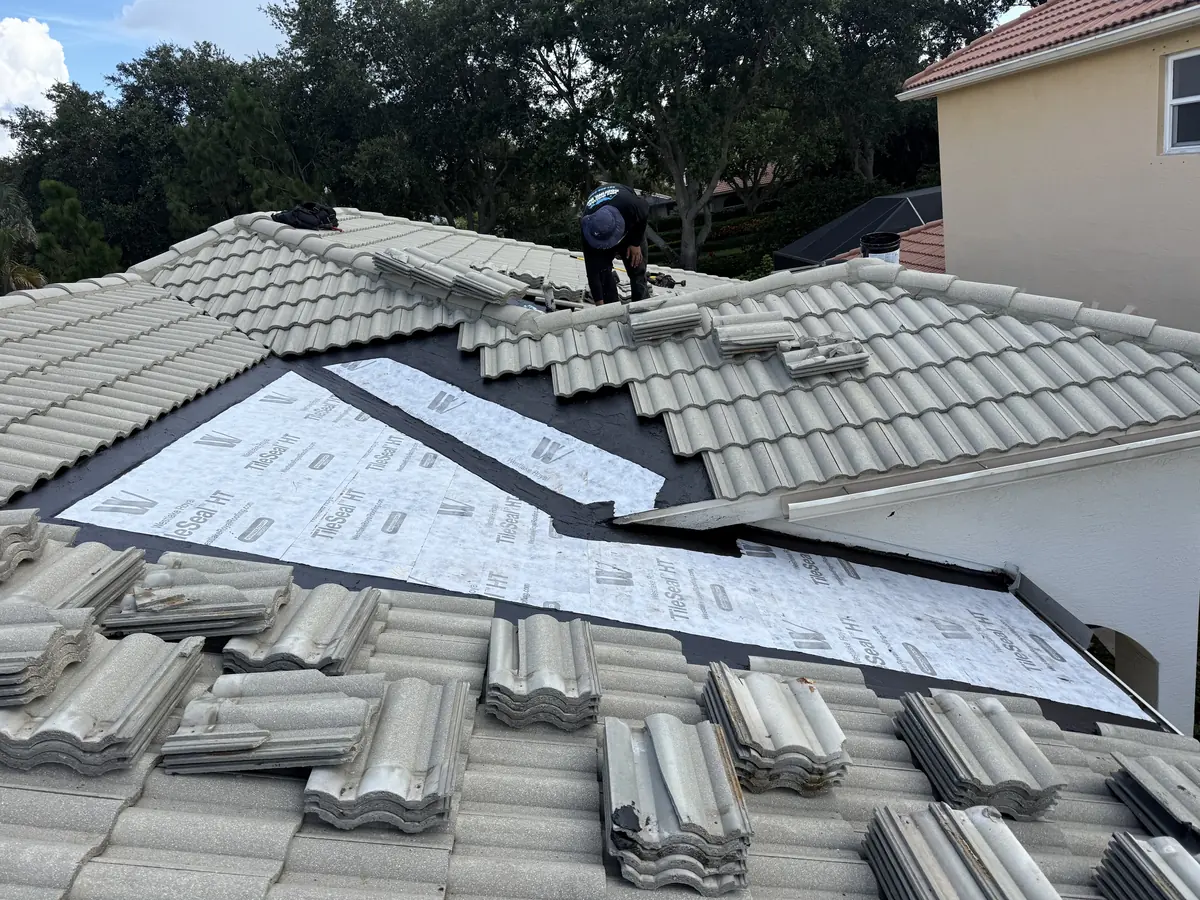
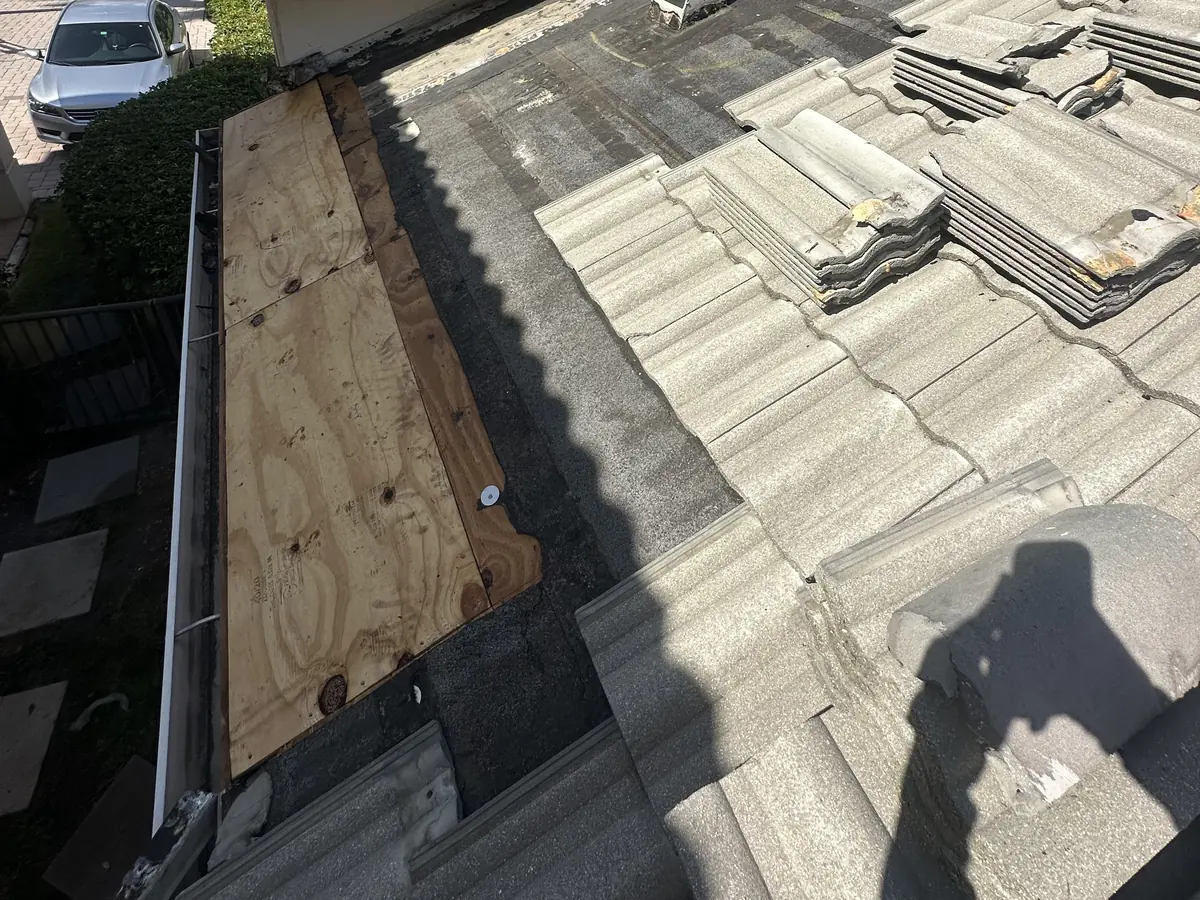
The first three photos are the same spot along the gutter, from the same angle. The fourth is the next step. This is what “rebuilt” means on a certificate.
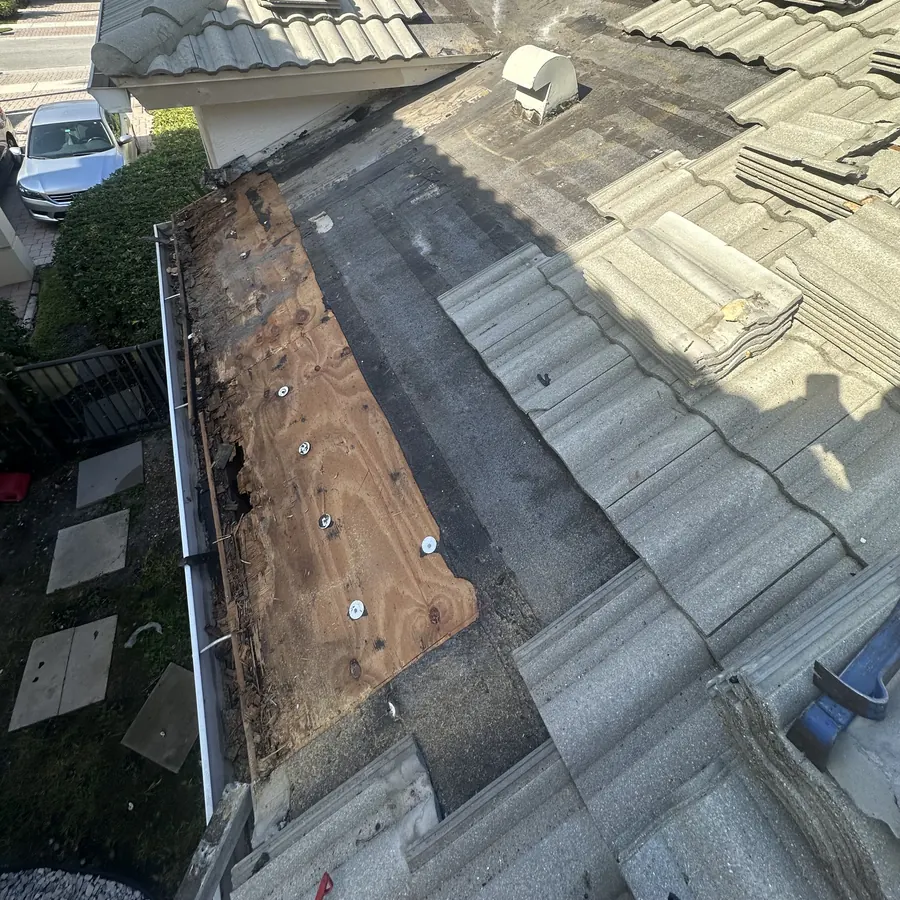 1Opened
Significant deterioration was observed within the drainage path, with active water intrusion resulting in rotted roof sheathing (plywood) at the lower section.Certificate, Photo Exhibit Five · Open page
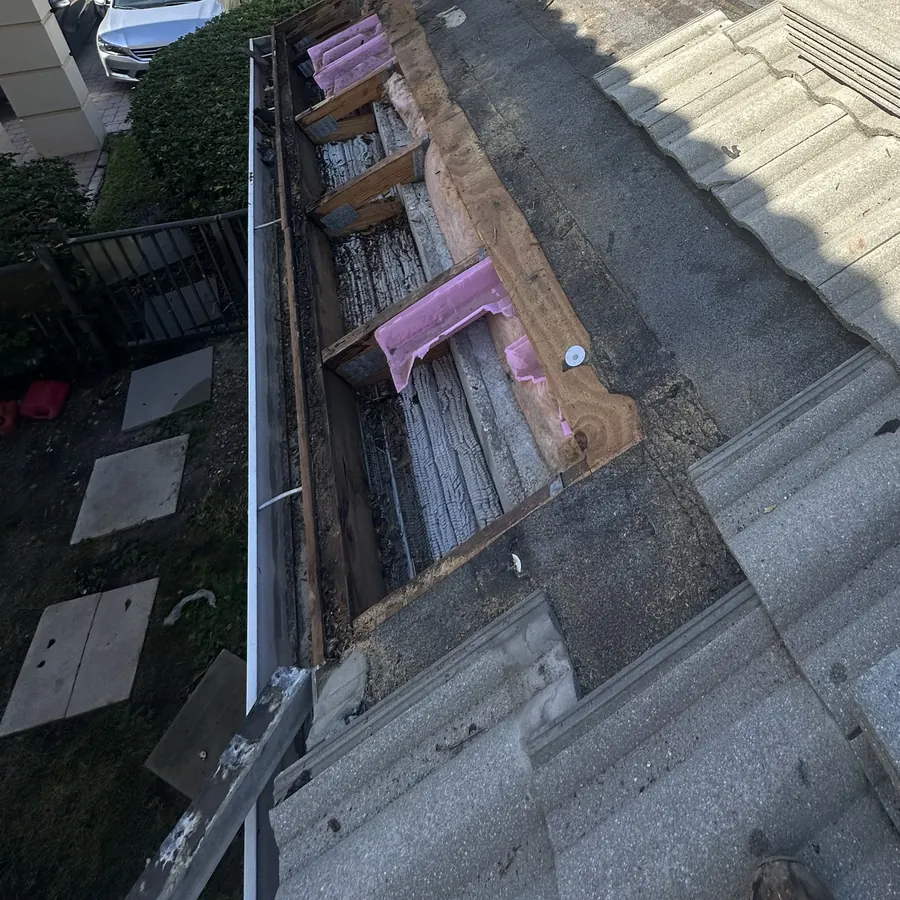 2Removed
All compromised decking was removed to expose sound structural framing and prepare the section for reconstruction.Certificate, Photo Exhibit Five · Open page
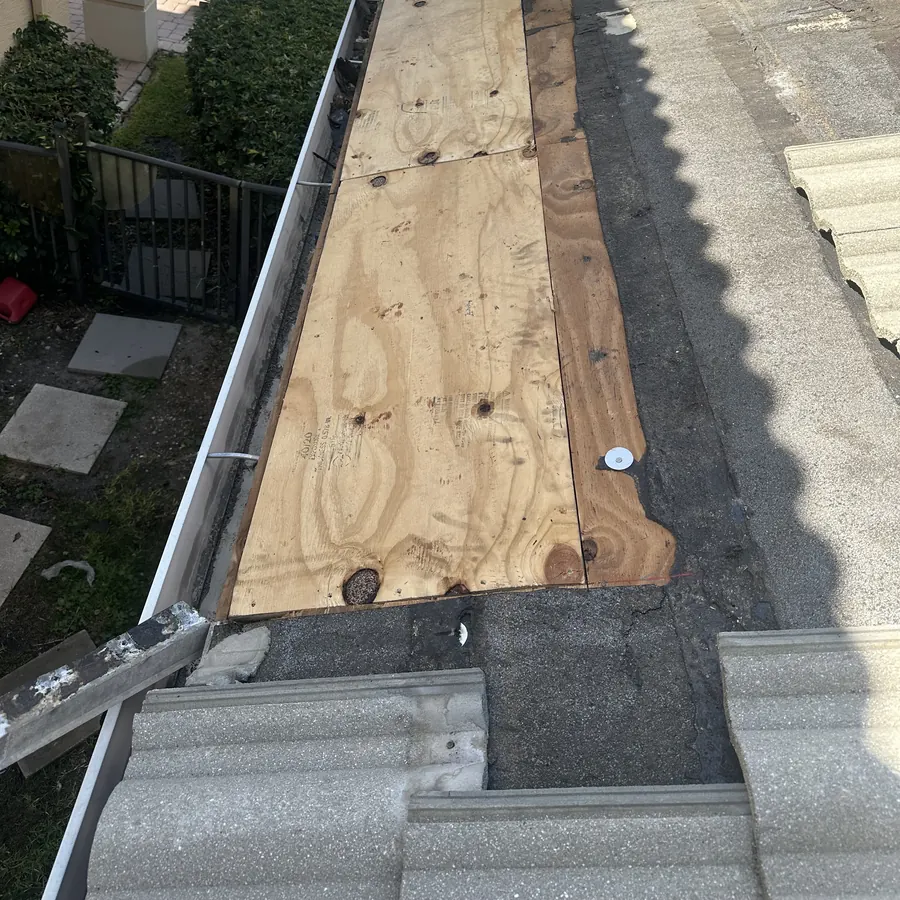 3Rebuilt
New roof sheathing (plywood) has been installed, restoring the structural integrity of the roof deck.Certificate, Photo Exhibit Six · Open page
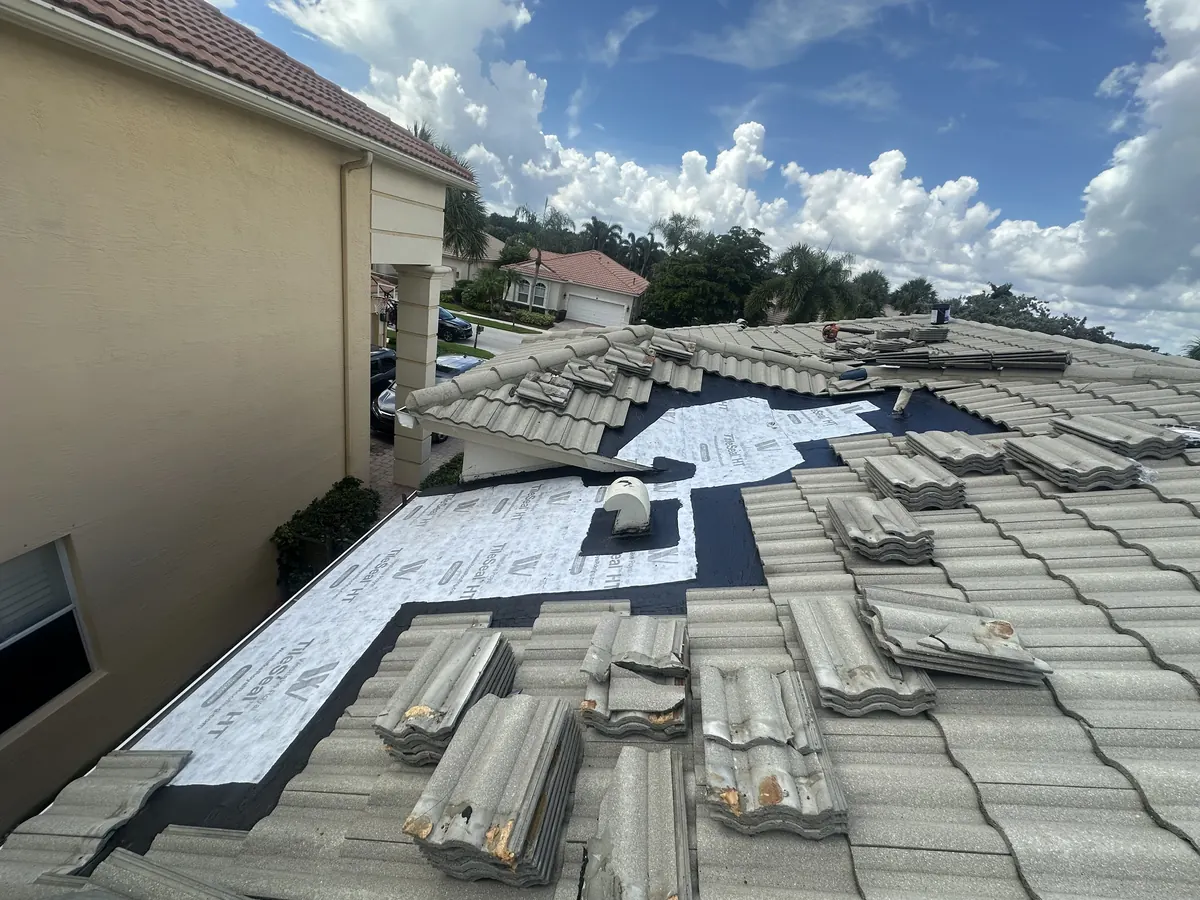 4Sealed
Each rebuilt section was sealed with new self-adhered waterproof underlayment, with his tiles stacked beside it to go back on.
Certificate, Photo Exhibit Six · Open page“Replaced compromised sheathing plywood where required.” Certificate, section C.
His tiles, back in place
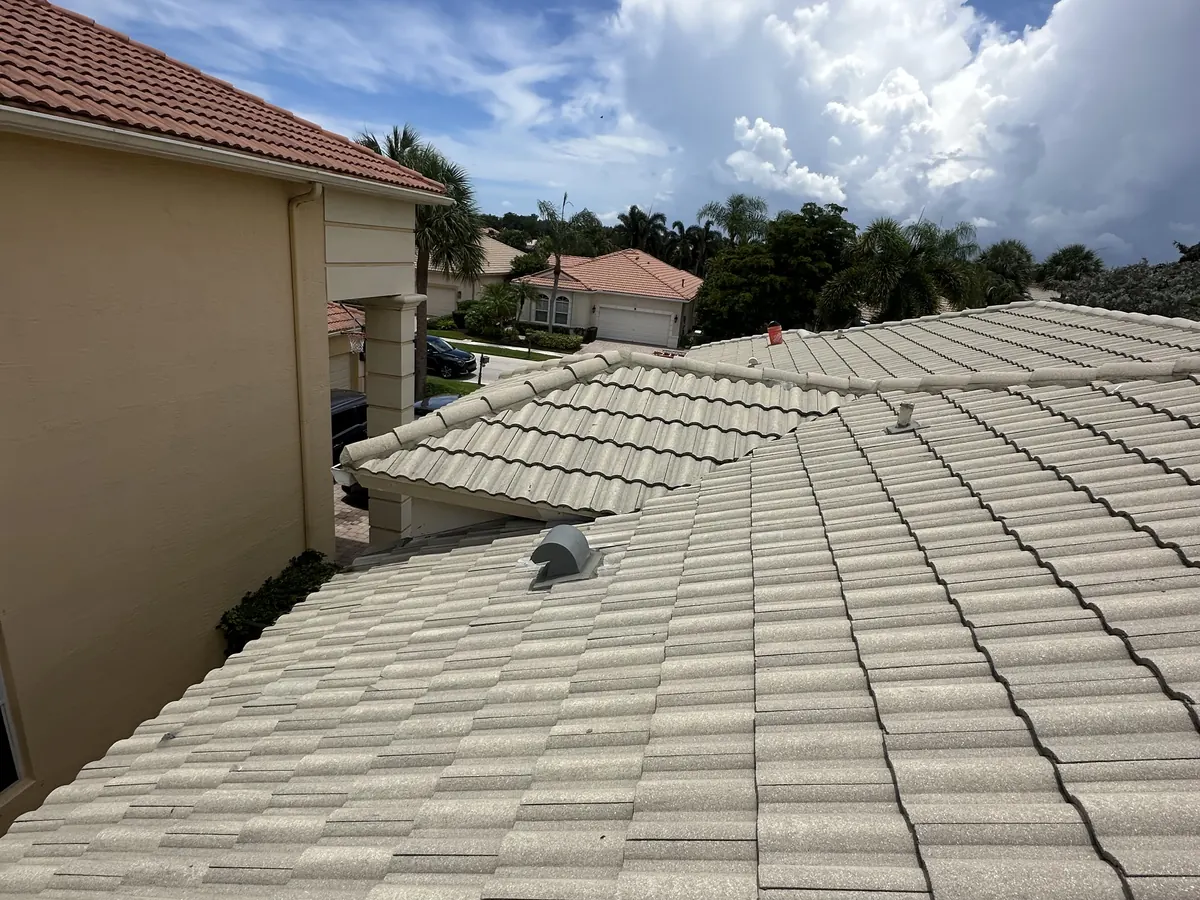
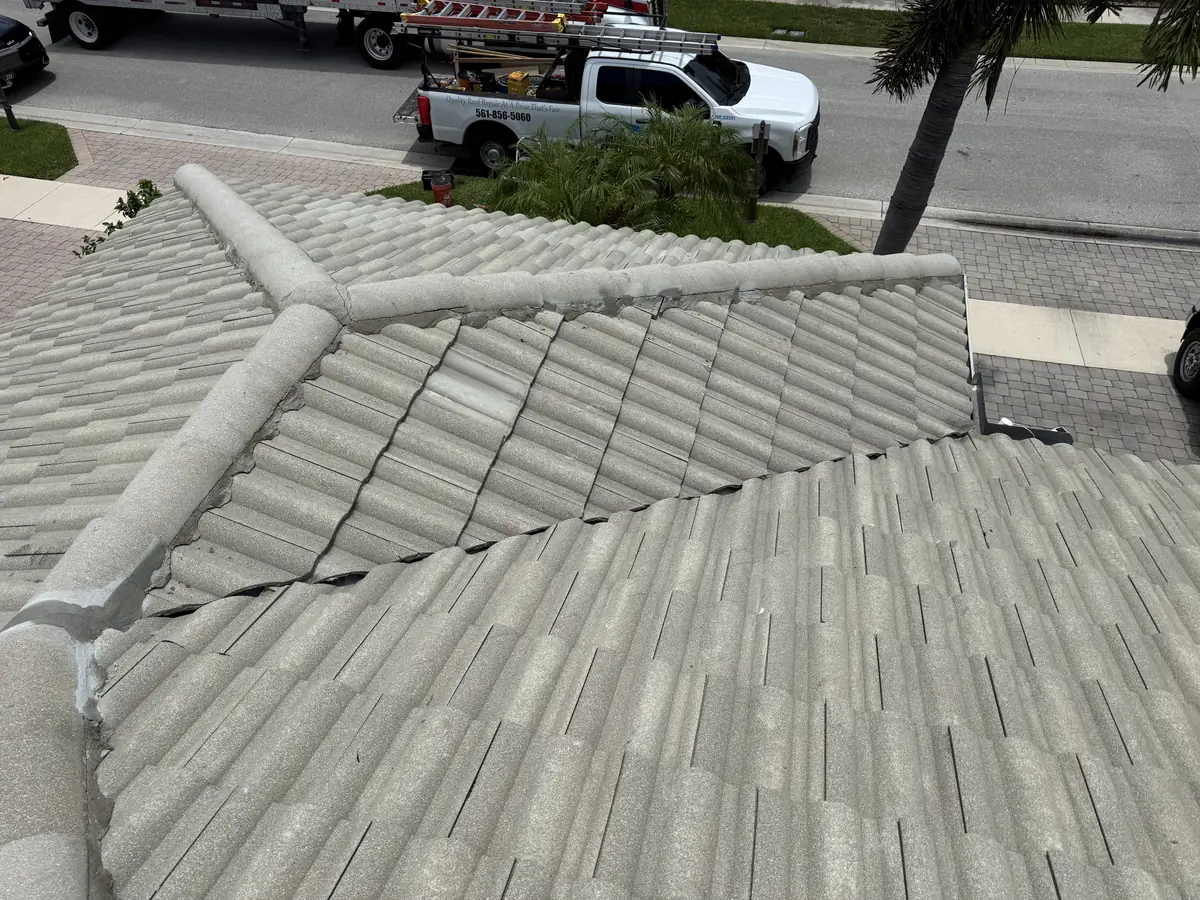
The valleys were rebuilt and sealed, then the existing tiles went back in their original places. Damaged tiles were replaced.
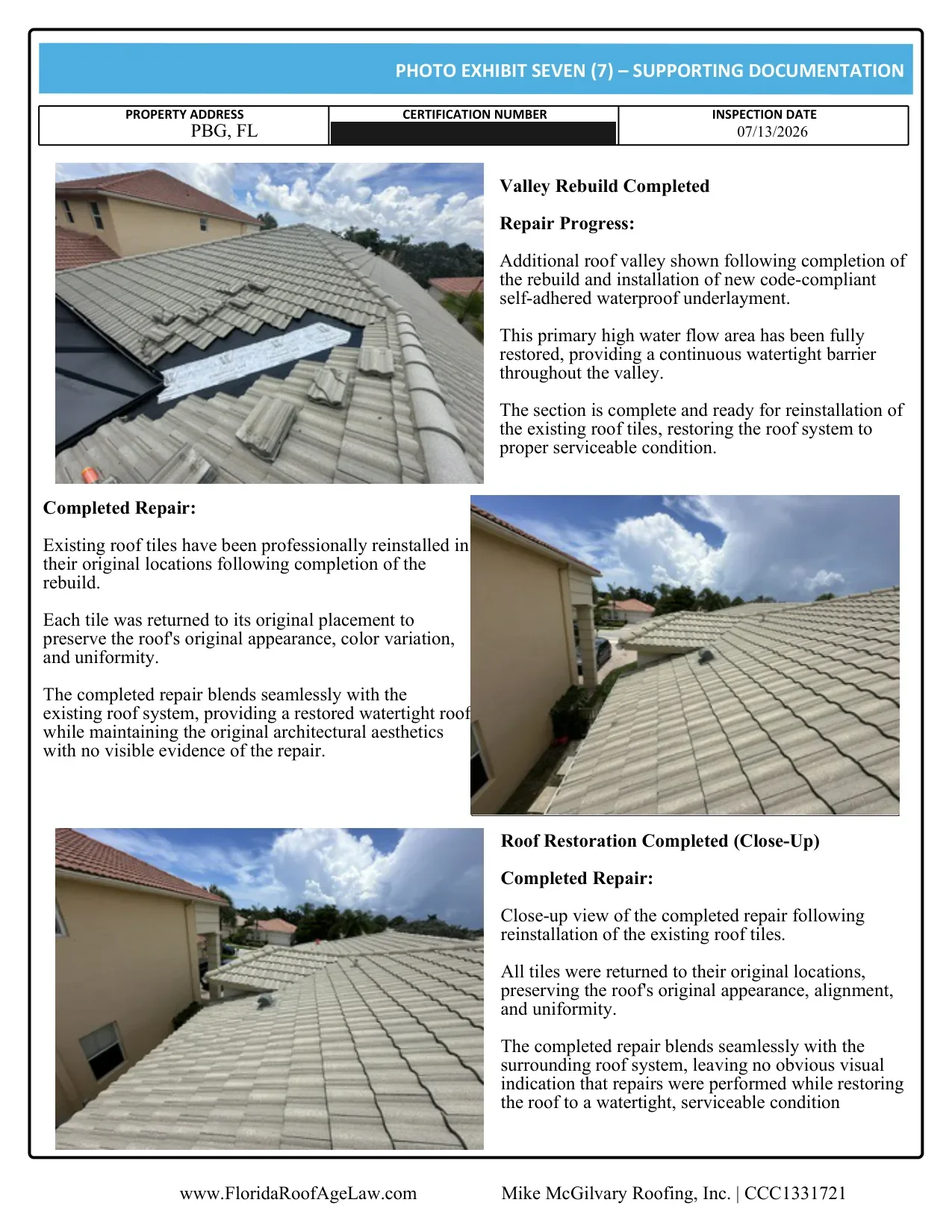 Exhibit 7
Each tile was returned to its original placement to preserve the roof’s original appearance, color variation, and uniformity.Certificate, Photo Exhibit Seven · Open page
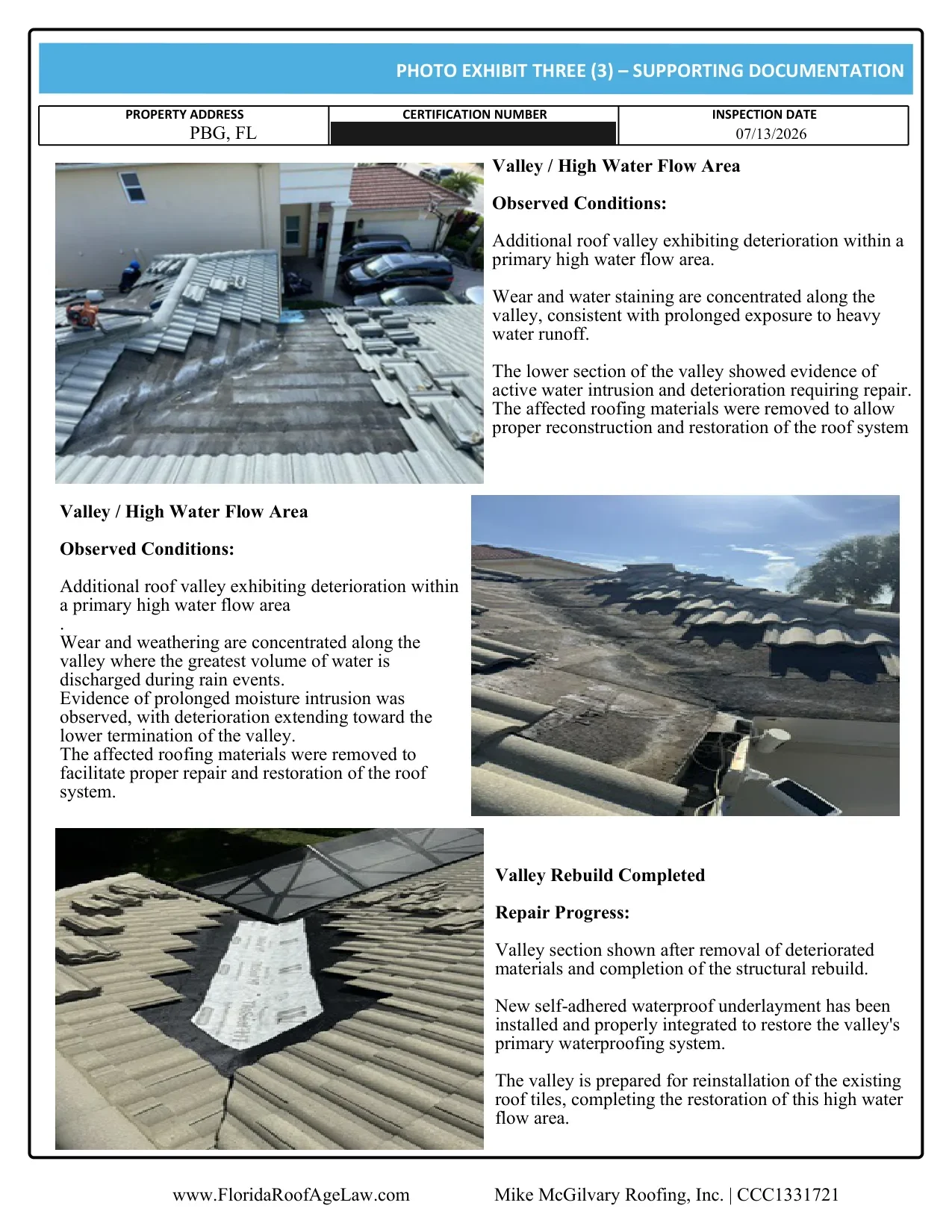 Exhibit 3
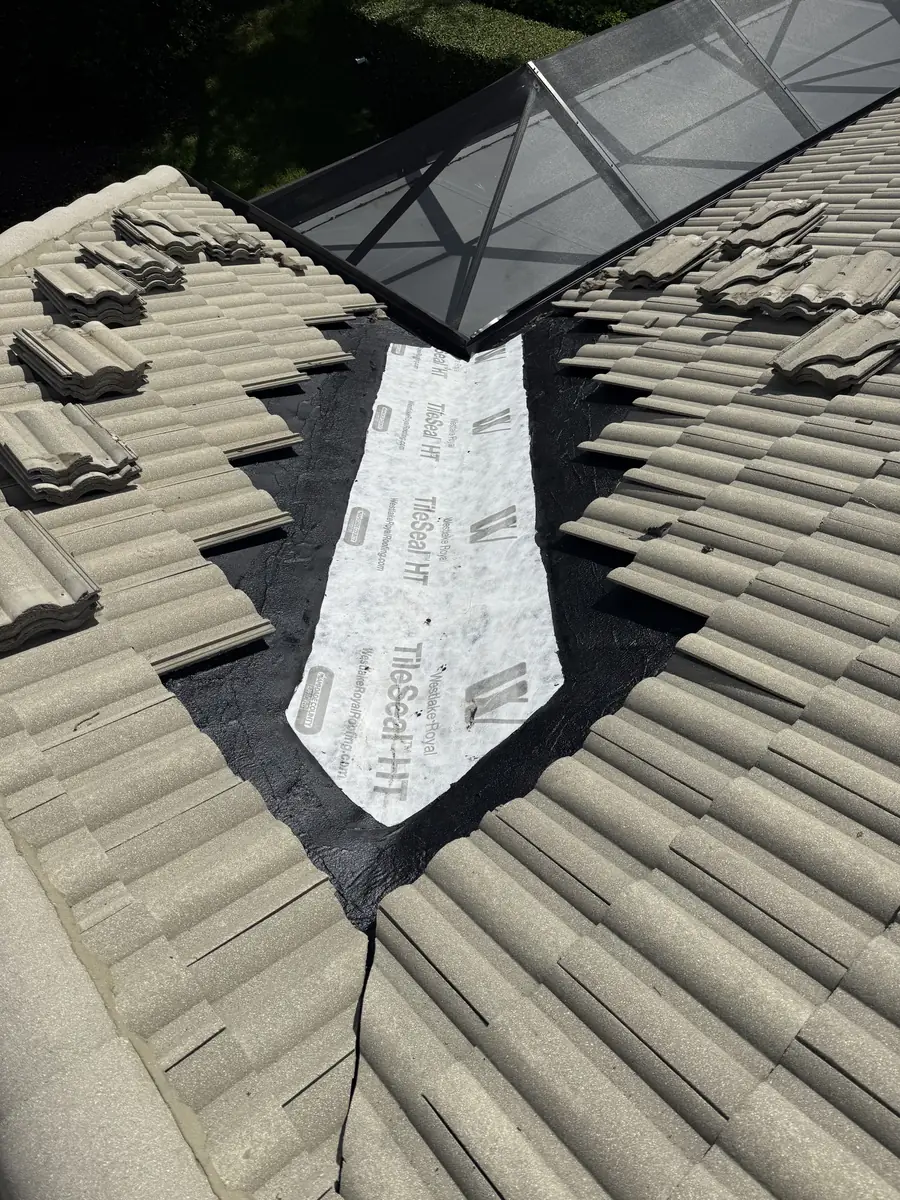
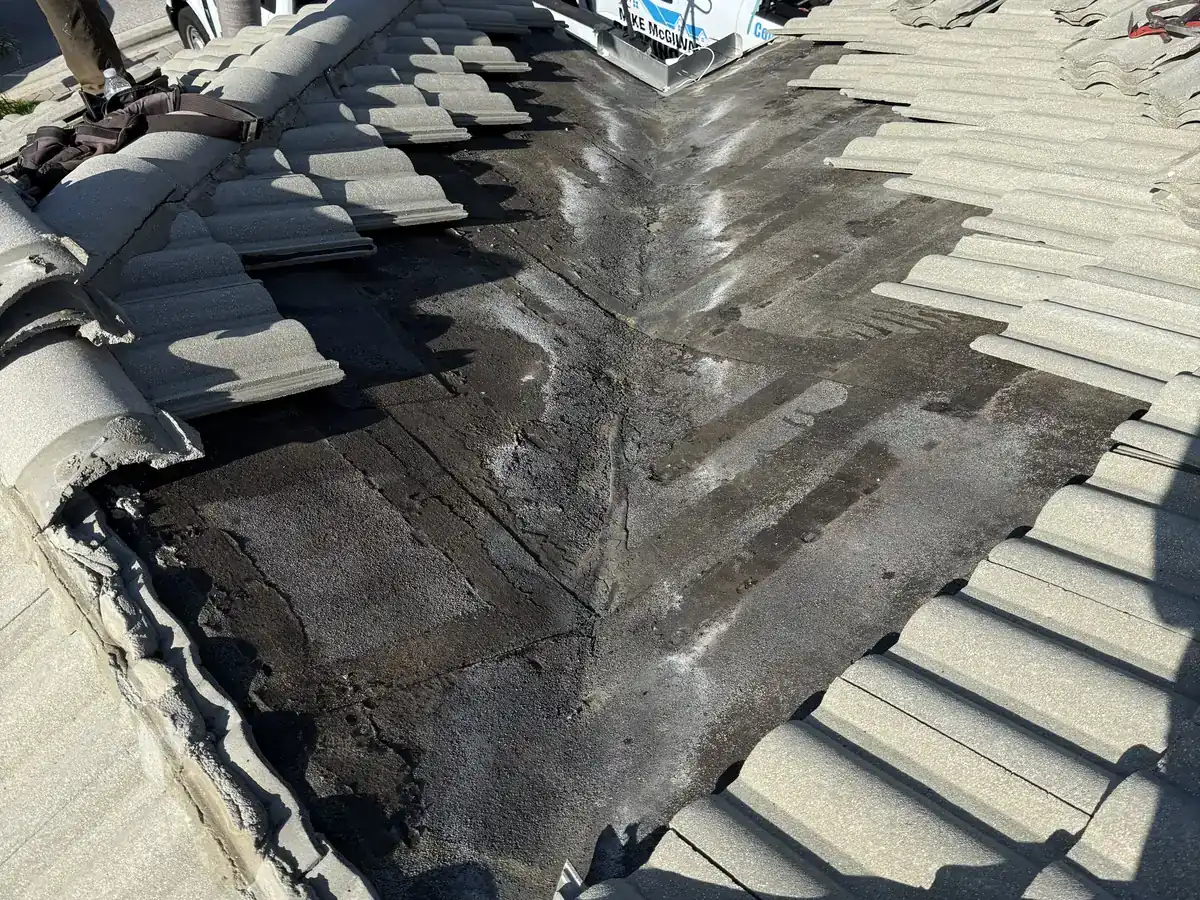
New self-adhered waterproof underlayment has been installed and properly integrated to restore the valley’s primary waterproofing system.Open Exhibit Three
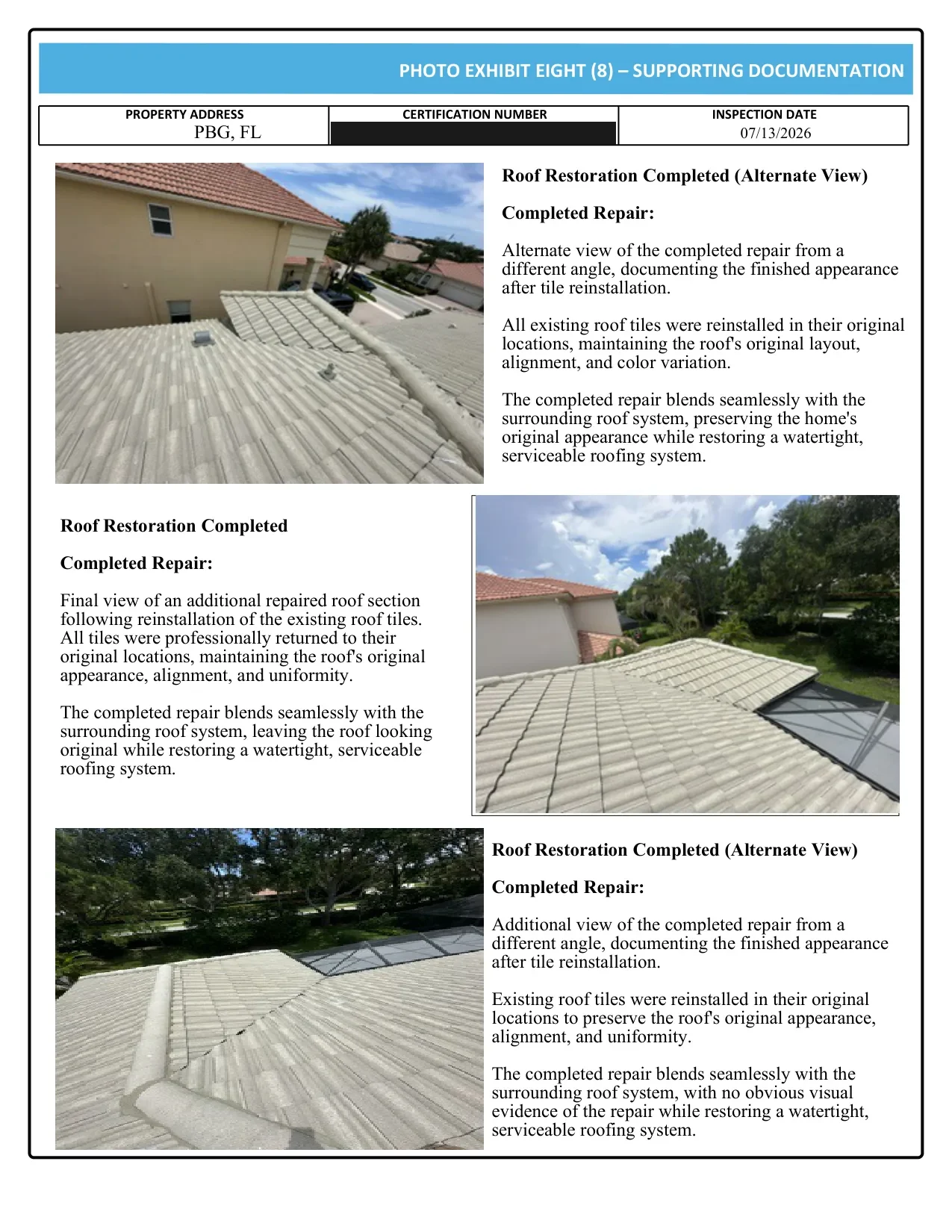 Exhibit 8
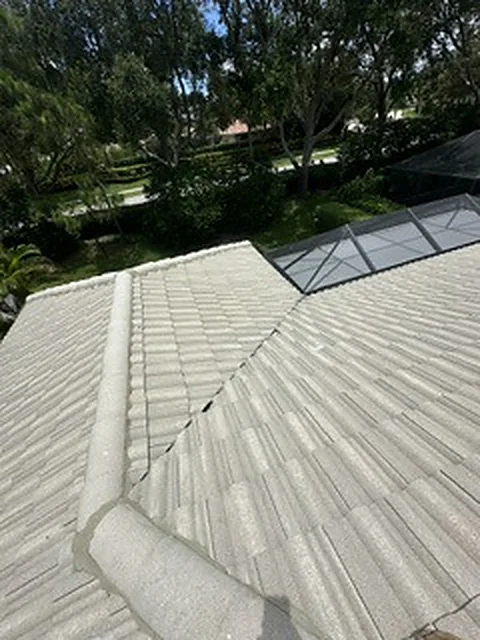
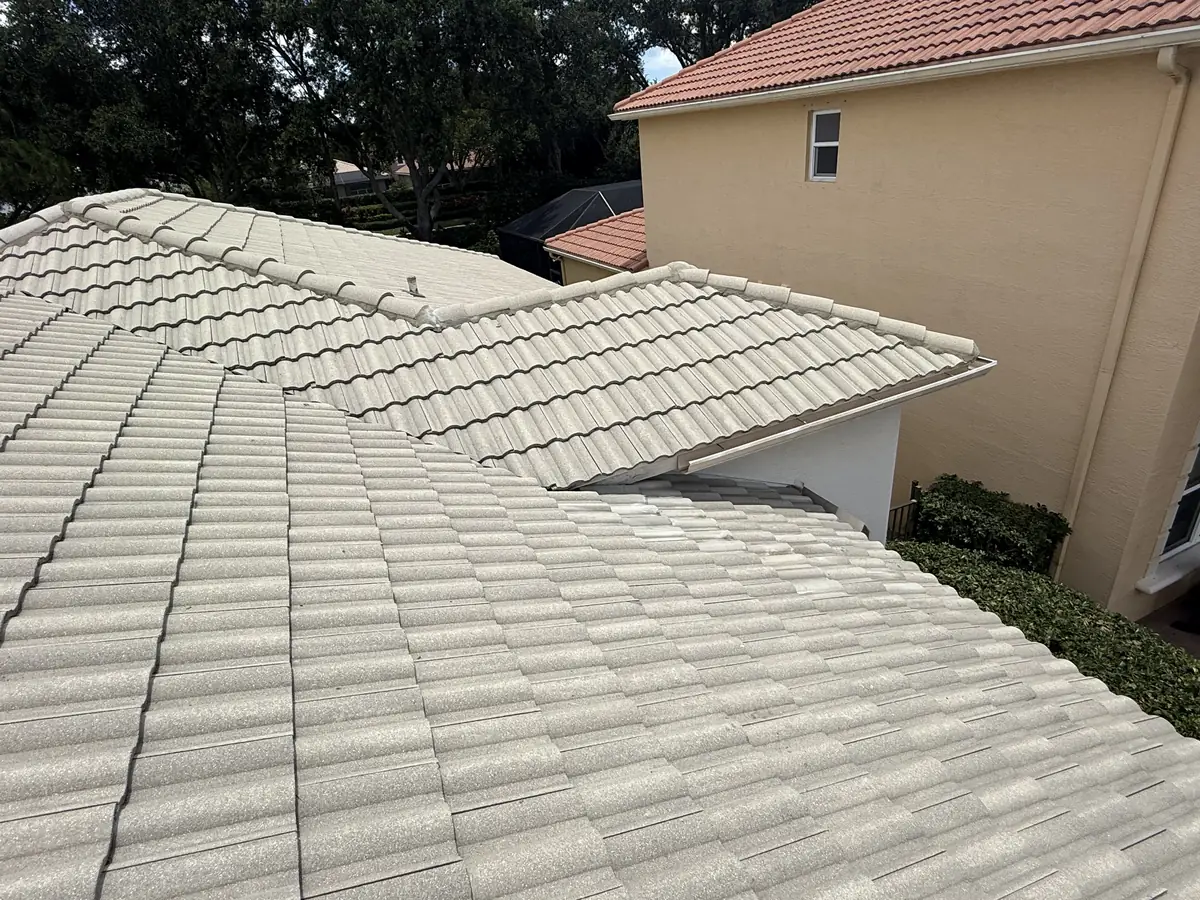
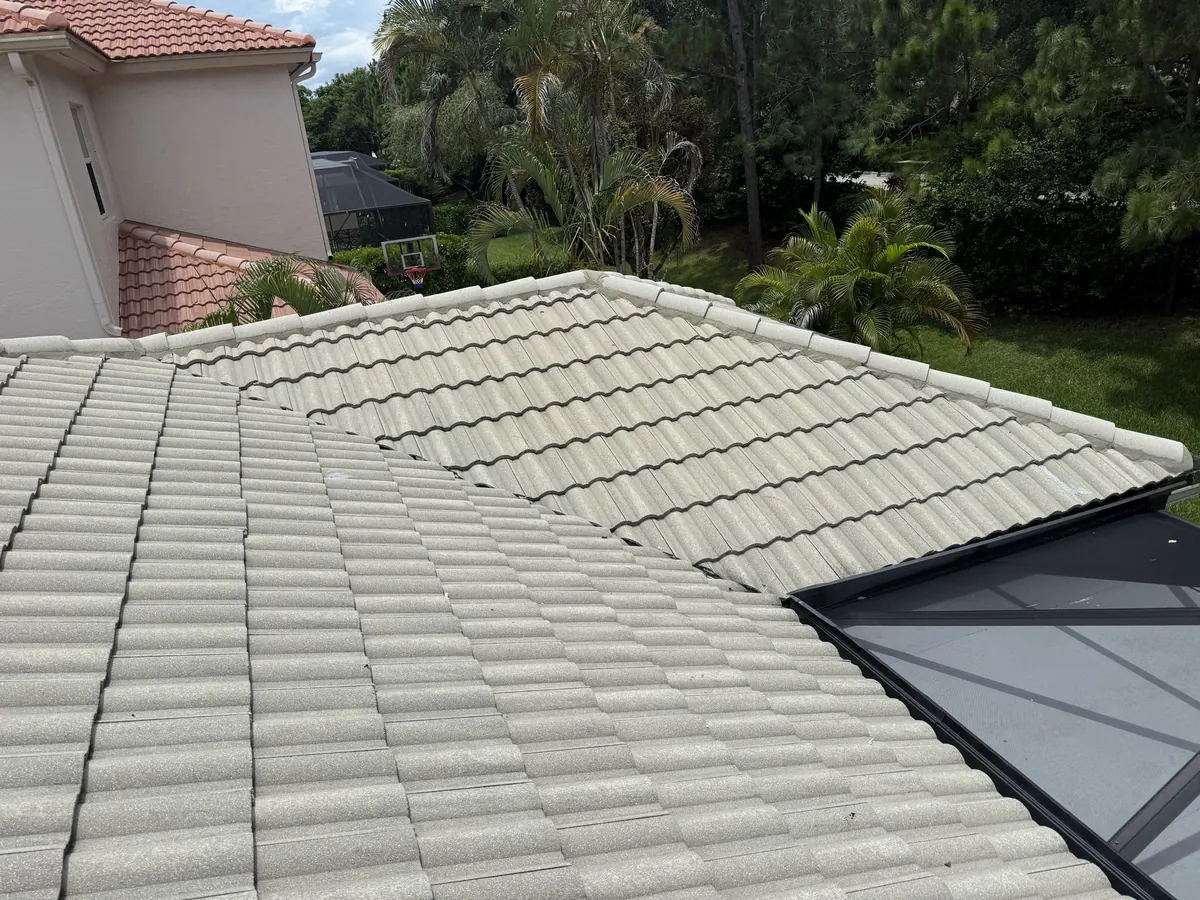
The completed repair blends seamlessly with the surrounding roof system, preserving the home’s original appearance.Open Exhibit Eight
The whole certificate, as Charlie received it: 9 pages, with the owner’s details and certificate number blacked out.
Open the certificate (PDF)Four leak areas, from opened to finished.
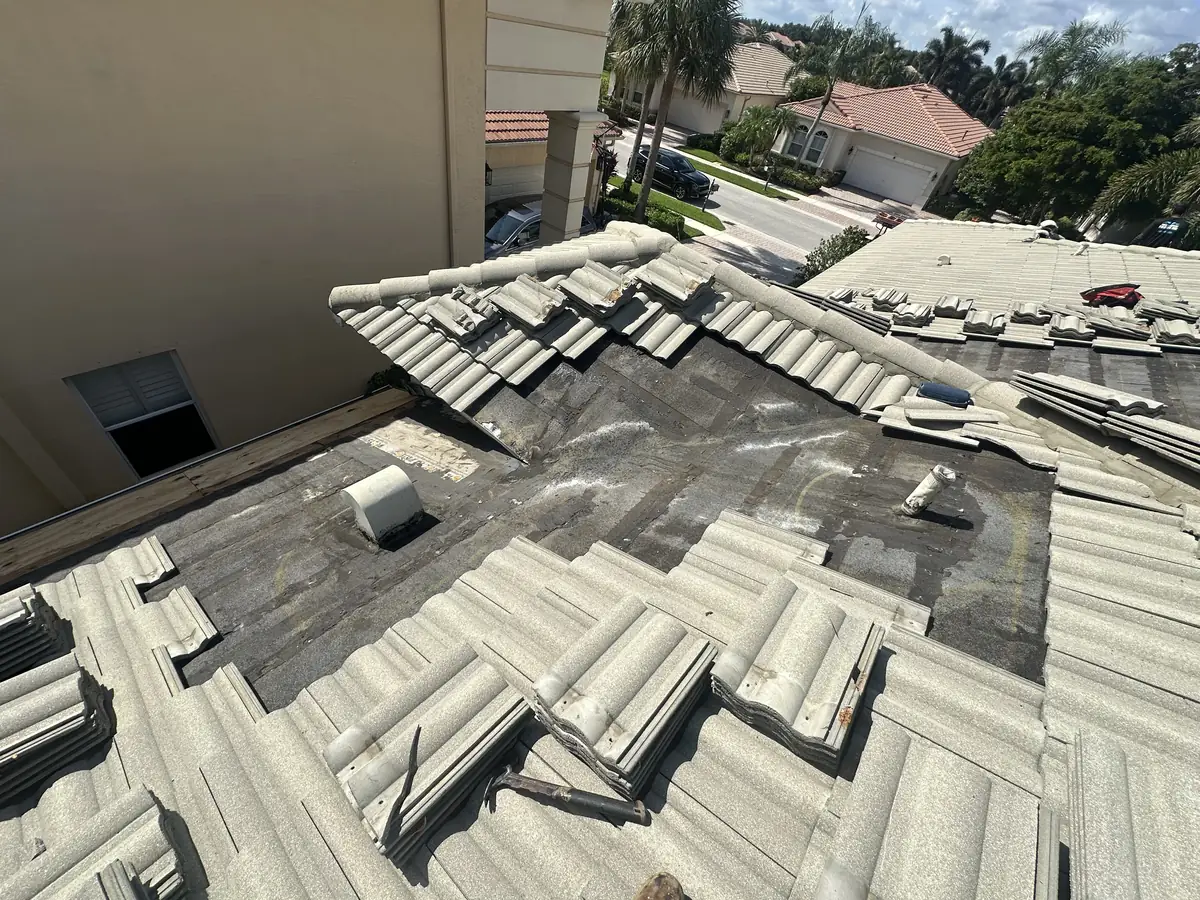
These are our own photos from the job, one row for each area we repaired: what we found under the tiles, the new waterproofing going down, and the finished roof. Tap any photo to see it full size.
The long valley
Where the earlier repair had failed.
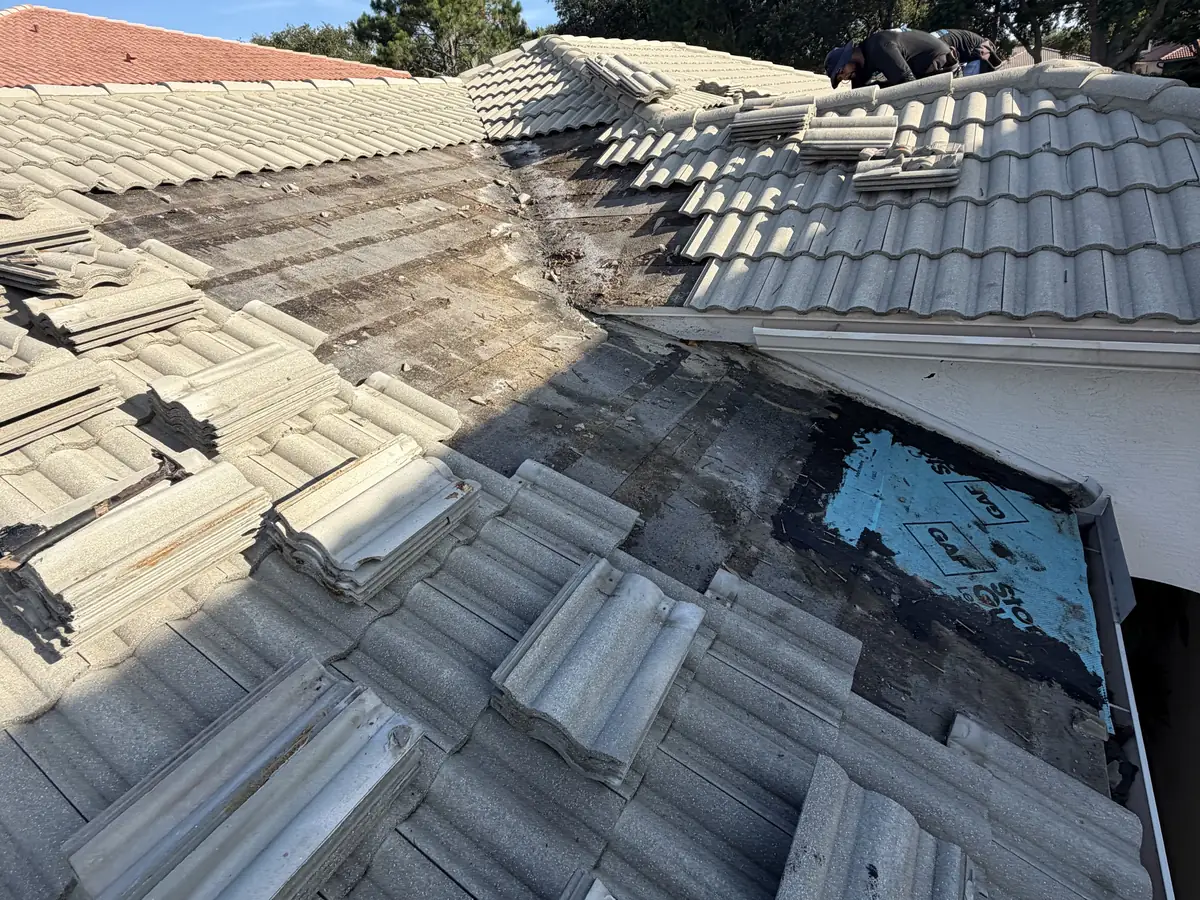
The valley by the pool enclosure
Exhibits 3 and 8 above.
The lower slope along the gutter
Where the rotted plywood was replaced, shown step by step above.
Charlie L.’s Google review
“After looking for a good roofer in the palm beach gardens area I got a few replacement quotes from other roofers the prices were all over the place and really confusing as every quote was different and never fully explained ,I found Mike McGilvary roofing because of the great reviews. I found on a internet search and he recently did work on my neighbors house a week before I contacted him .After talking to Mike over the phone the first time it was a no pressure call he educated me on roofing and what I would need to do he offered a free inspection of roof which was simple and painless his pricing was very competitive but his honesty and workmanship and follow ups exceeded all of my expectations. The job was completed on schedule so if you need any roof work you must call Mike McGilvary Roofing he’s upfront and honest I wish all contractors were up to his standards and follow-up. Also the documentation and photos he supply’s of the project from start to finish is the best I ever dealt with Mike deserves 10stars”
Charlie L., Palm Beach Gardens homeowner · Google review, quoted as written · Read our reviews on Google →
What the certificate says, and what it doesn’t.
A 5-year roof certification is a signed professional opinion from a Florida Certified Roofing Contractor. Here is Charlie’s, section by section, with its limits shown word for word.
Why the leaks were in the valleys
Properly installed concrete and clay tile usually outlasts the underlayment and flashing beneath it.
Valleys carry the most water on a tile roof. On this roof the certificate found the deterioration “isolated within the valley, where the roofing system experiences the highest volume of water flow,” while “the surrounding field roof remains in better condition.”
That is why rebuilding the failed sections, rather than the whole roof, was enough here.
✓What it says
- A · Findings
- “The majority of roof tiles were found to be structurally sound and serviceable.”
- B · Deficiencies
- “Active leaks at multiple high-water-flow roof sections. Broken and compromised roof tiles. Deteriorated underlayment in isolated areas. Damaged sheathing plywood in leak-affected sections.”
- C · Repairs performed
- “Removed roofing materials in all leak-affected sections. Replaced compromised sheathing plywood where required. Installed new self-adhered roofing underlayment systems. Rebuilt all high-water-flow roof sections. Performed flashing repairs and waterproofing upgrades. Replaced damaged roof tiles. Refastened loose field and cap tiles.”
- D · Remaining useful life
- “…an estimated remaining useful life exceeding five (5) years.”
“This roof, as a whole, is presently in a structurally sound condition and is expected to provide useful service for a period exceeding five (5) years, based upon observable conditions at the time of inspection.”E · Certification statement · signed by Mike McGilvary, CCC1331721, 07/13/2026
!What it doesn’t say
- Certification is based only on a limited visual inspection of accessible and exposed roofing components at the time of inspection.
- No invasive, destructive, moisture-meter, infrared, engineering, structural, mold, pest, or hazardous-substance testing was performed unless separately stated in writing.
- Concealed, hidden, underlying, or inaccessible conditions may exist and are excluded.
- Remaining useful life is a professional opinion based on observable conditions and not a guarantee or warranty of future performance.
- This certification is not a warranty, express or implied, unless a separate written warranty is issued.
Legal limitations 1–5 from page 1 of the certificate, word for word. The full list is in the certificate PDF.
Have an older tile roof and a replacement quote?
Charlie’s roof isn’t every roof. A roof whose underlayment has failed across the whole roof, not just the valleys, needs more. The way to know is to have it inspected and the findings put in writing.
signed roof certifications since 2019As of October 2026 · MMR certification records
A free inspection, on the roof
We inspect the tile, the underlayment and the flashing from on the roof, and look hardest where the water runs: the valleys.
Findings in writing, with dated photos
Findings are photographed and dated, and the repair scope the roof actually needs is written down.
Repair what failed. Certify if it qualifies.
When the condition supports it, we rebuild the failed sections, put your tile back and issue a 5-year roof certification like Charlie’s.
Tile roof repair and certification, answered.
Can a 25-year-old tile roof be repaired instead of replaced?
It depends on the roof’s condition, not its age. On this Palm Beach Gardens roof, most tiles were structurally sound and the underlayment was satisfactory through most of the roof; the leaks were isolated to high-water-flow sections. Rebuilding those sections and reinstalling the existing tile restored it, and it was certified. A roof whose underlayment has failed across the whole roof, not just the valleys, would need more.
Why do tile roofs leak in the valleys first?
Properly installed concrete and clay tile usually outlasts the underlayment and flashing beneath it, and the valleys carry the most water on the roof. On this roof the certificate found wear isolated within the valleys, with the surrounding field roof in better condition. Opening a valley shows whether the underlayment and plywood beneath it have failed.
Do you reuse my existing tiles?
When they are sound, yes. On this roof the existing tiles were set aside and reinstalled in their original locations over new self-adhered underlayment, which keeps the roof’s original appearance and color. Broken and compromised tiles were replaced, and loose field and cap tiles were refastened.
What is a 5-year roof certification?
A roof certification is a signed, licensed contractor’s written opinion, based on a limited visual inspection of accessible components, that a roof is structurally sound and is expected to provide useful service for a stated period, here five years. Ours documents the findings, the deficiencies identified, any repairs performed, and a remaining-useful-life opinion, with photo exhibits. It is not a warranty and it does not guarantee any insurance outcome. See our roof certification page.
What does Florida’s roof age law mean for a roof like this?
Under Florida Statute §627.7011, a homeowner with a roof that is at least 15 years old may obtain an inspection by an insurer-approved authorized inspector before an insurer requires replacement based on age; if the inspection shows the roof has five or more years of remaining useful life, the insurer cannot refuse to issue or renew the policy solely because of the roof’s age. Inspection results do not guarantee coverage; insurers may still apply other lawful underwriting and property-condition requirements. Mike McGilvary Roofing is a licensed roofing contractor, not a public adjuster. Full guide: Florida Roof Age Law.
Holding a replacement quote for an older tile roof? Have it inspected first.