
…He not only used a moisture meter to identify the leaks pathway but also went into the attic to confirm the leaks intrusion. … He also did a full roof inspection to identify any future problems.
Case file · Commercial flat roof · Lantana, FL 33460
Lantana retail plaza: roof core samples and thermal imagingEight samples came out wet. One came out dry.
Integra Real Estate asked us to inspect the flat roof over its Lantana retail plaza. We cut core samples in seven zones and checked them with a thermal camera; one cool reading turned out dry. Own a flat-roof building? Get this evidence before you pay for a roof.
5.0 rating · 600+ Google reviews
Florida Certified Roofing Contractor CCC1331721
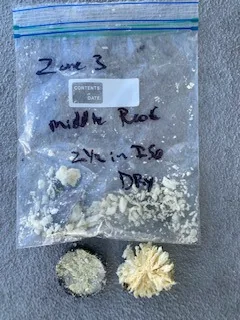 The core
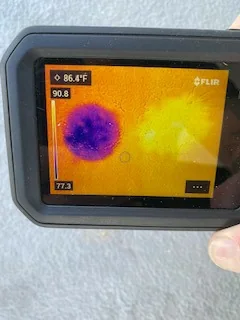 The camera
The case in four lines
- The ask
Inspect the plaza’s flat roof
Integra Real Estate asked us to look at the roof over its retail plaza in Lantana 33460. Report dated 5/1/2026.
- The method
Cut, bag, label, then scan
Core samples from seven roof zones, each bagged and labeled, then checked with a FLIR thermal camera.
- The finding
Eight wet, one dry, one rusted deck
Wet insulation in eight of nine samples. Rust on the metal deck in Zone 4. One cool reading came out dry.
- The recommendation
Replace what’s wet, look further
Replace the wet insulation in Zone 1’s middle section and Zone 2. Investigate further in Zones 4, 6 and 7.
The samples
See every sample: what came out, and what the camera saw
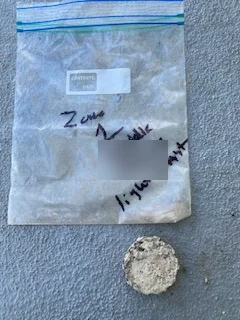
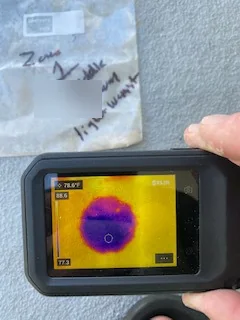
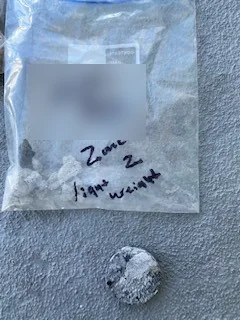
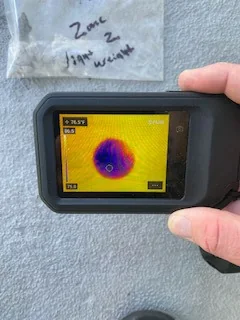
Nine core samples from seven roof zones, each in a bag labeled by hand. Flip the board to see the thermal camera’s view of the same samples, then flip it back to see what came out of the roof.
- 9 core samples
- 7 roof zones
- 8 wet
- 1 dry
- 1 zone with a rusted deck
- Wet
- Zone 1 (both samples), Zone 2, Zone 3 rear, Zones 4, 5, 6 and 7
- Dry
- Zone 3, middle of the roof
- Rusted deck
- Zone 4, rear of the roof
Readings are the report’s approximate numbers; a lab test would be needed to measure exact moisture. Tenant names on some bags are blurred. Read the full report (PDF)
-
-
-
-
-
-
Rusted metal deck
-
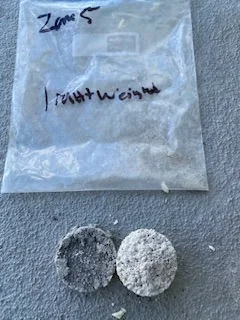
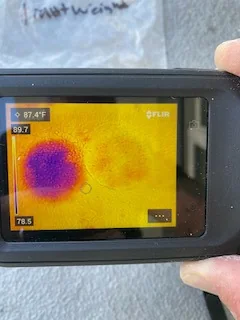
-
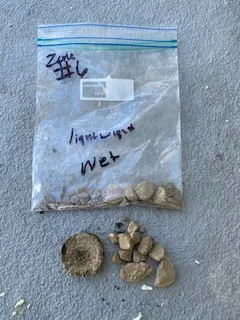
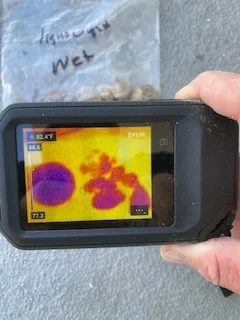
-
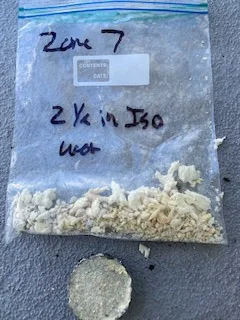
The report has no thermal image for the Zone 7 sample.
-
How to read the board
- Wet
- Zone 1 (both samples), Zone 2, Zone 3 rear, Zones 4, 5, 6 and 7
- Dry
- Zone 3, middle of the roof
- Rusted deck
- Zone 4, rear of the roof
Wet and dry are how the report documents each sample. Readings are the report’s own numbers, which it gives as approximate. Zone 7 has no thermal image in the report.
The report’s limit applies to every result: a lab test would be needed to measure exactly how much moisture a sample held. Tenant names written on some bags are blurred; zones are numbered as in the report.
Read the full report (PDF)
1 of 9 samples
Want this kind of record for your building?
Request a roof inspectionCall us · open 24 hours(561) 856‑5060Two samples, both cool on the thermal camera
Same kind of reading. Only one was wet.
Why the dry sample matters
A thermal camera finds cool spots. It can’t tell you they’re wet.
In the middle of Zone 3, the camera showed a cooler spot on the sample: the same kind of reading that came with wet insulation in Zone 1 and elsewhere on this roof. When the core came out, both insulation layers were dry. The report says so plainly, and says why.
“Although the sample exhibited a measurable thermal contrast against the surrounding surface, it was documented as dry during field examination. Therefore, the temperature differential alone should not be interpreted as confirmation of retained moisture. The contrast may reflect differences in material composition, density, surface temperature, or heat-retention characteristics.”
Inspection report, Zone 3 middle, page 3
In plain words: a cool reading can come from a different material, a denser layer or the way the roof holds heat. Cutting a core shows which one it is.
The report says the same about thermal images of the whole roof: “Thermal imaging is a diagnostic screening method and does not independently confirm moisture; physical sampling or calibrated moisture testing is required for confirmation.”Inspection report, page 7
Zone 4, rear of the roof
Under the wet insulation, the metal deck had started to rust
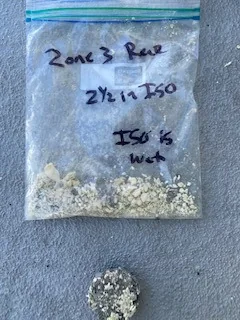
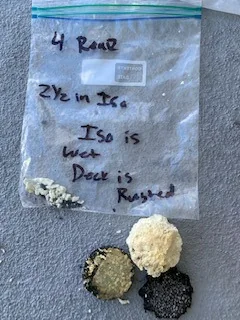
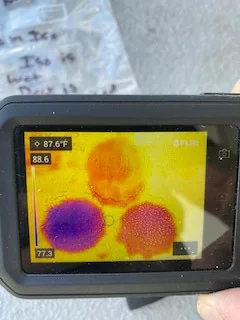
The Zone 4 core went all the way down: about 2½ inches of ISO foam insulation, the roofing layers above it and the metal deck it sits on. The insulation was wet when it came out, and the deck showed visible rust and corrosion. On the thermal camera, the insulation read coolest of everything in that core.
What the report says it means
These findings indicate moisture intrusion, compromised insulation, and moisture-related deterioration of the underlying roof deck within the rear section of Zone 4.
A core is a few inches across. It shows what is under that one spot; it can’t show how far the rust runs. That’s why the report recommends further investigation before anyone scopes work on the deck (see the recommendations below).
What the Zone 4 core cut through, top to bottom
- Roofing layersComponents of the existing roofing system
- About 2½ in. of ISO insulationWet when it came out; read coolest on the cameraWet
- Metal roof deckVisible rust and corrosionRusted
The method
A thermal scan tells you where to look. A core sample tells you what’s there.
How core samples and thermal imaging document hidden roof moisture: on this plaza, the two were used together, sample by sample.
Cut a core
A small round sample is cut down through the roof layers so you can see what is inside: the roofing, the insulation and, where the cut goes deep enough, the deck. In Zone 4 it reached the metal deck.
Bag it, label it, photograph it
Each sample goes into its own bag, marked by hand with its zone and where on the roof it came from, and is photographed.
Check it on the thermal camera
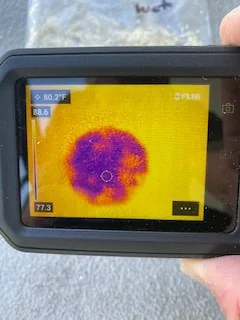
A handheld thermal camera (a FLIR, per the report) reads the sample against the surface around it. The report treats a cooler reading as consistent with evaporative cooling: water in the material evaporating and pulling heat away.
Record what came out
Wet or dry when it was pulled, what the material is, how thick it is, and anything found under it, like the rusted deck in Zone 4.
Say what it proves, and what it doesn’t
A cool reading on a wet core supports the finding. A cool reading on a dry core does not. Measuring exactly how much moisture a sample holds takes a lab test.
The record, zone by zone
Every sample in the report, in the report’s own terms. Temperatures are the report’s approximate readings.
See the full zone-by-zone record
| Zone | What came out | Result | Thermal reading | What it shows |
|---|---|---|---|---|
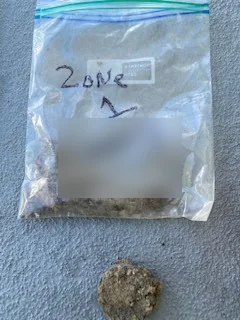
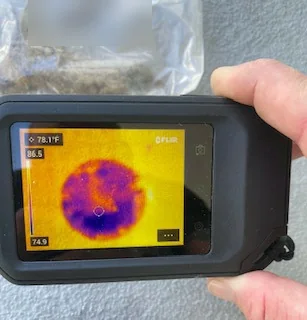
| Zone 1, first sample | Fibrous insulation, discolored, compressed | Wet | About 74.9°F vs 78.1–86.5°F around it | The cooler reading supports the finding that the sample was wet when tested |
| Zone 1, middle | Insulation, wet when pulled | Wet | About 77.3°F vs 88.6°F: about 11.3°F cooler | Insulation compromised and no longer performing as intended; replacement recommended |
| Zone 2 | Insulation, wet when pulled | Wet | About 75.9°F vs 86.5°F: about 10.6°F cooler | Moisture-compromised insulation; removal and replacement recommended |
| Zone 3, middle | Two insulation materials, both dry | Dry | Spot about 86.4°F, range 77.3–90.8°F | A cool reading on a dry sample: the reading alone is not proof of moisture |
| Zone 3, rear | About 2½ in. of ISO foam insulation | Wet | About 77.3°F vs 88.6°F: about 11.3°F cooler | Moisture intrusion and compromised insulation |
| Zone 4, rear | About 2½ in. of ISO over the metal deck; deck rusted | Wet | Spot about 87.6°F, range 77.3–88.6°F; insulation coolest | Deck deterioration under wet insulation; further investigation recommended |
| Zone 5 | About 1 in. of insulation | Wet | Spot about 87.4°F, range 78.5–89.7°F | Moisture intrusion and compromised insulation |
| Zone 6 | Lightweight insulating concrete | Wet | Spot about 82.4°F, range 77.3–86.6°F | Moisture-compromised insulating concrete; further investigation recommended |
| Zone 7 | About 2½ in. of ISO foam insulation | Wet | No thermal reading in the report | Moisture intrusion; further investigation recommended |
Inspected and documented by Mike McGilvary, Florida Certified Roofing Contractor CCC1331721.
The recommendations
What the report recommended, word for word
Integra Real Estate, LLC · retail plaza, Lantana, FL 33460Report dated 5/1/2026 · Mike McGilvary Roofing, Inc.
- Zone 1Middle section
Replacement of the wet insulation and affected roofing materials is recommended.
- Zone 2
Removal and replacement of the affected insulation and associated roofing materials are recommended.
- Zone 4Rear of the roof
Further investigation is recommended to determine the full extent of the concealed corrosion and affected materials.
- Zone 6
Further investigation is recommended to establish the full extent of the affected material.
- Zone 7
Further investigation is recommended to determine the full extent of the affected roofing materials.
- Every sample
Laboratory analysis would be required to quantify the … precise moisture content.
These are the report’s recommendations. This page doesn’t describe any work done afterward.
Request a roof inspection
Read the full report (PDF)
7 pages. The street address, tenant names and an outside aerial image are removed from this copy.
In their words
Clients on how Mike checks, confirms and documents
As a former Condo Association President I interviewed 5 roofing companies before hiring McGilvary Roofing. … They provide concierge roofing service with their quick response to calls and detailed photos of all repairs completed.
…The company scanned the roof, send photos from their drone, discussed the work that would be done… When the work was complete, we received a full breakdown of all the work they did with video evidence of before and after the damage was repaired.
Rated 5.0 across 600+ Google reviews. See all reviews on Google
Your building
Before you price a new roof, find out what’s under the one you have
We document commercial roofs the way this plaza’s was documented: what we found, where, with photos and readings you can check, and what we recommend. For property owners, asset managers, property-management companies and commercial associations.
- Drone-based aerial and thermal imaging
- Physical core sampling
- Handheld thermal verification
- Interior and exterior leak investigation
- Roof-zone mapping
- Detailed photographic documentation
- Repair, preservation and replacement planning
Our office is in Lantana too: 615 Whitney Ave, Ste 1, Lantana, FL 33462.
Questions
Core samples and thermal imaging, answered
Straight answers, using this plaza’s report as the example.
What is a roof core sample?
A small round cut down through the roof layers, pulled out so you can see and test what is inside. On this Lantana plaza the cores showed the insulation type and thickness (ISO rigid foam board, a 1-inch insulation layer, lightweight insulating concrete) and, in Zone 4, the metal deck under it. Each sample went into a labeled bag and was photographed.
Can a thermal camera alone prove a flat roof is wet?
No. It shows temperature differences. On this roof, a cooler reading in the middle of Zone 3 came from samples that were dry when cut, and the report says the differential alone “should not be interpreted as confirmation of retained moisture.” Core samples, calibrated moisture testing or lab work confirm it.
Why does wet roof insulation read cooler on a thermal camera?
Water in the material evaporates and pulls heat away, so a wet spot often reads cooler than the dry roof around it. The report calls this “evaporative cooling associated with retained moisture.” Other things can read cool too, such as a different material, a denser layer or how the surface holds heat. That is why the cores matter.
What happens when insulation under a flat roof stays wet?
On this plaza, the report says the wet insulation “has been compromised and is no longer performing as intended,” and in Zone 4 the metal deck under it showed rust and corrosion. So it recommended replacing the wet insulation and affected roofing materials in two zones, and further investigation in three.
When should a building owner ask for core samples?
When leaks or a thermal scan point to trapped moisture and you need to decide between repair, restoration and replacement. The scan narrows down where to look; the cores show what is actually there. See how we approach commercial roof repair and flat roof repair.
Do you need a lab test to know if a roof sample is wet?
Not to tell wet from dry: that is recorded when each core comes out of the roof. The report says a lab test would be needed to measure exactly how much moisture a sample holds, and to identify some of the insulation materials conclusively.