
An luxury oceanfront estate: repaired, preserved, and certified.
A large oceanfront estate in Delray Beach — a complex concrete tile roof, documented by drone, restored through targeted reconstruction, and awarded a signed 5-Year Roof Certification. To protect the client’s privacy, the property’s address and ownership details are not published.
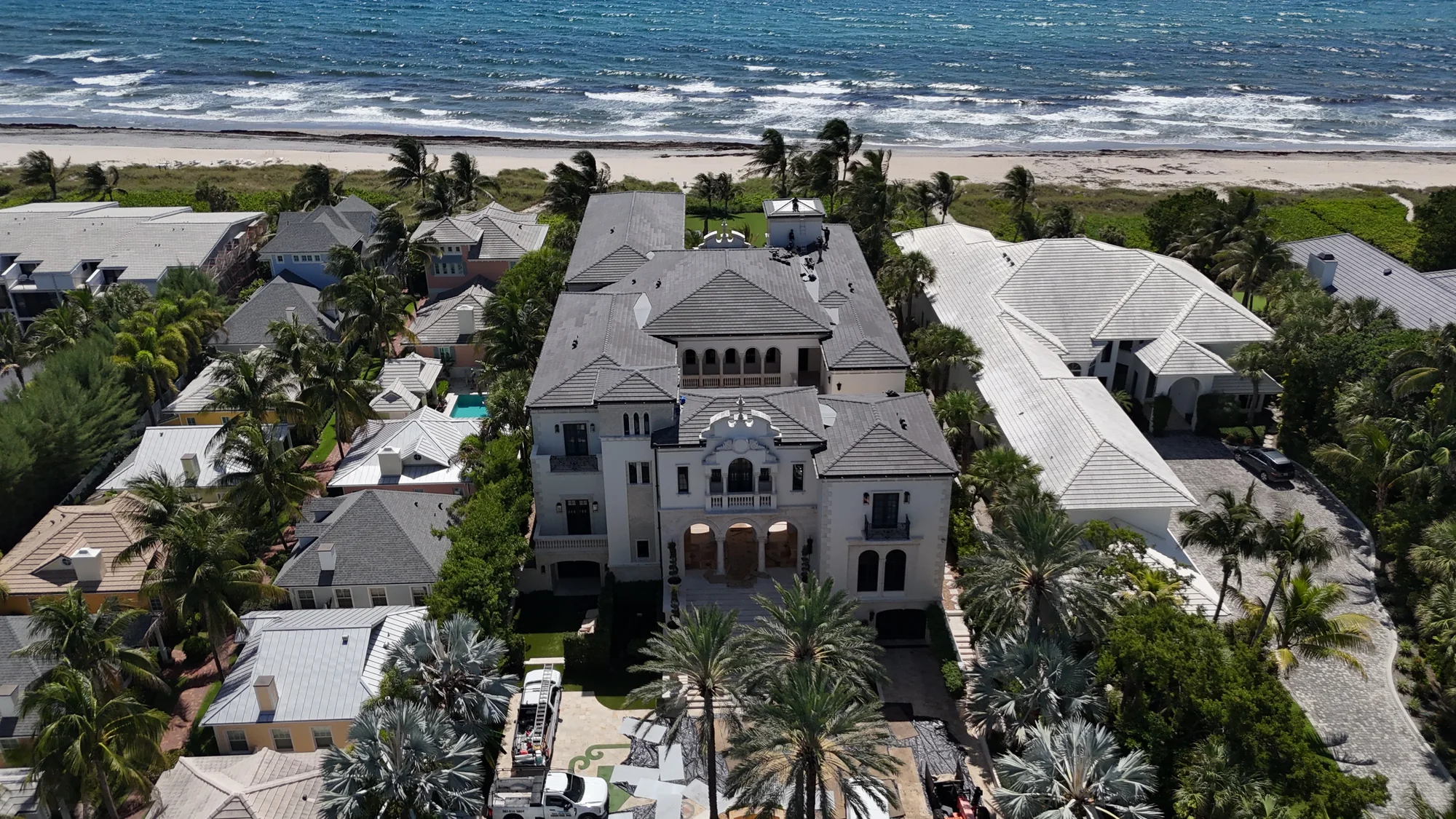
The estate, its roof, and the ocean behind it — from the air.
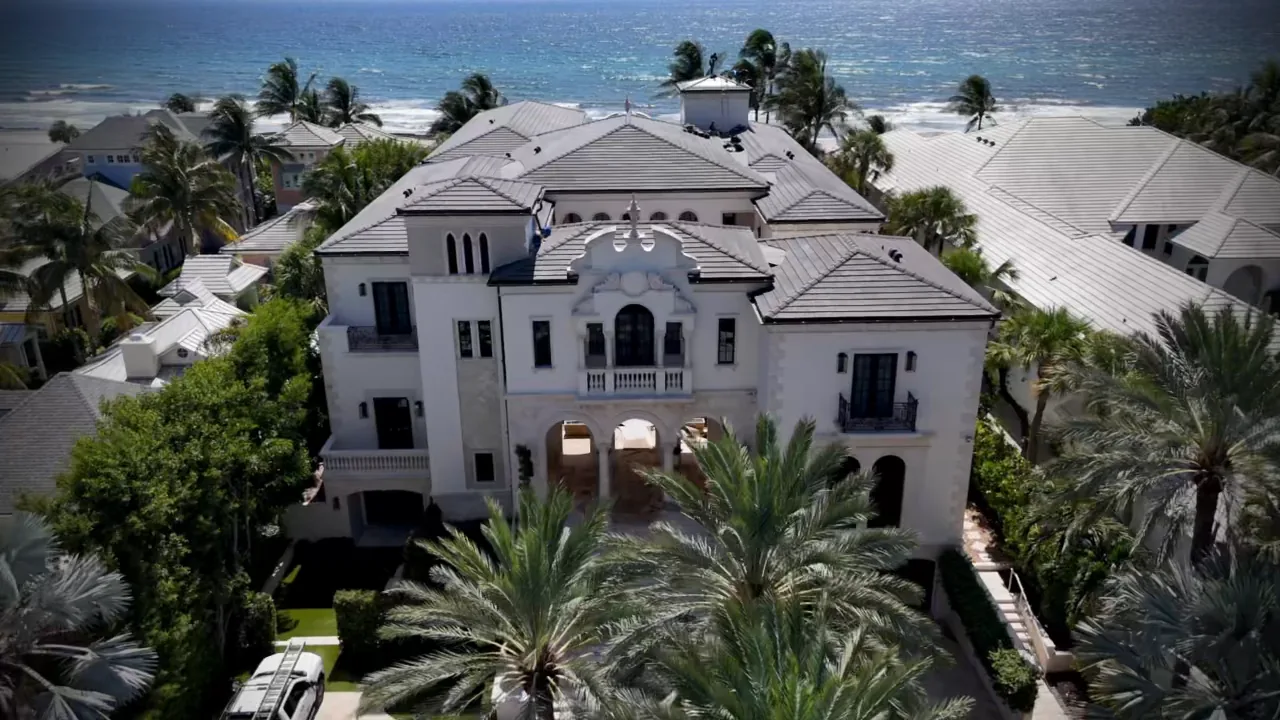
A one-minute drone tour of the property and the complex concrete tile roof this case study documents — front elevation, towers, tile fields, and the Atlantic shoreline just beyond.
 Aerial roof tour · 1:02
What you're watching: a drone tour of an luxury oceanfront estate in Delray Beach, flying the front elevation, the towers and multi-section concrete tile roof, and out over the Atlantic shoreline behind the property. It's the same roof our team inspected, documented, repaired through targeted reconstruction, and then certified.
Everything you see here was inspected, documented, repaired through targeted reconstruction, and then certified — the repair-first arc detailed in the sections below.
To protect the owner's privacy, the estate's address and ownership details are not published. Explore the full write-up in the Delray Beach oceanfront estate case study.
A roofing system proportionate to the property.
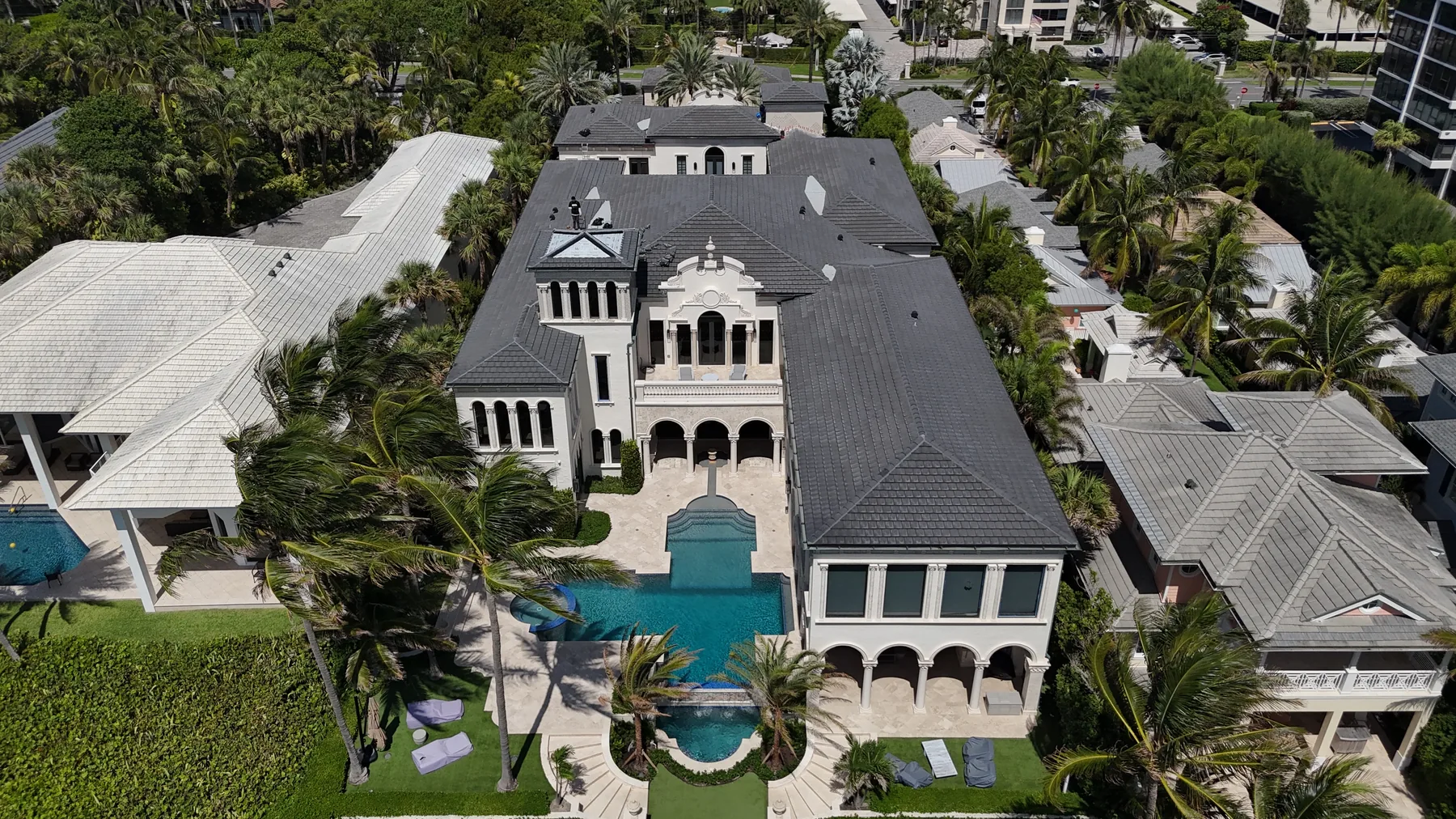
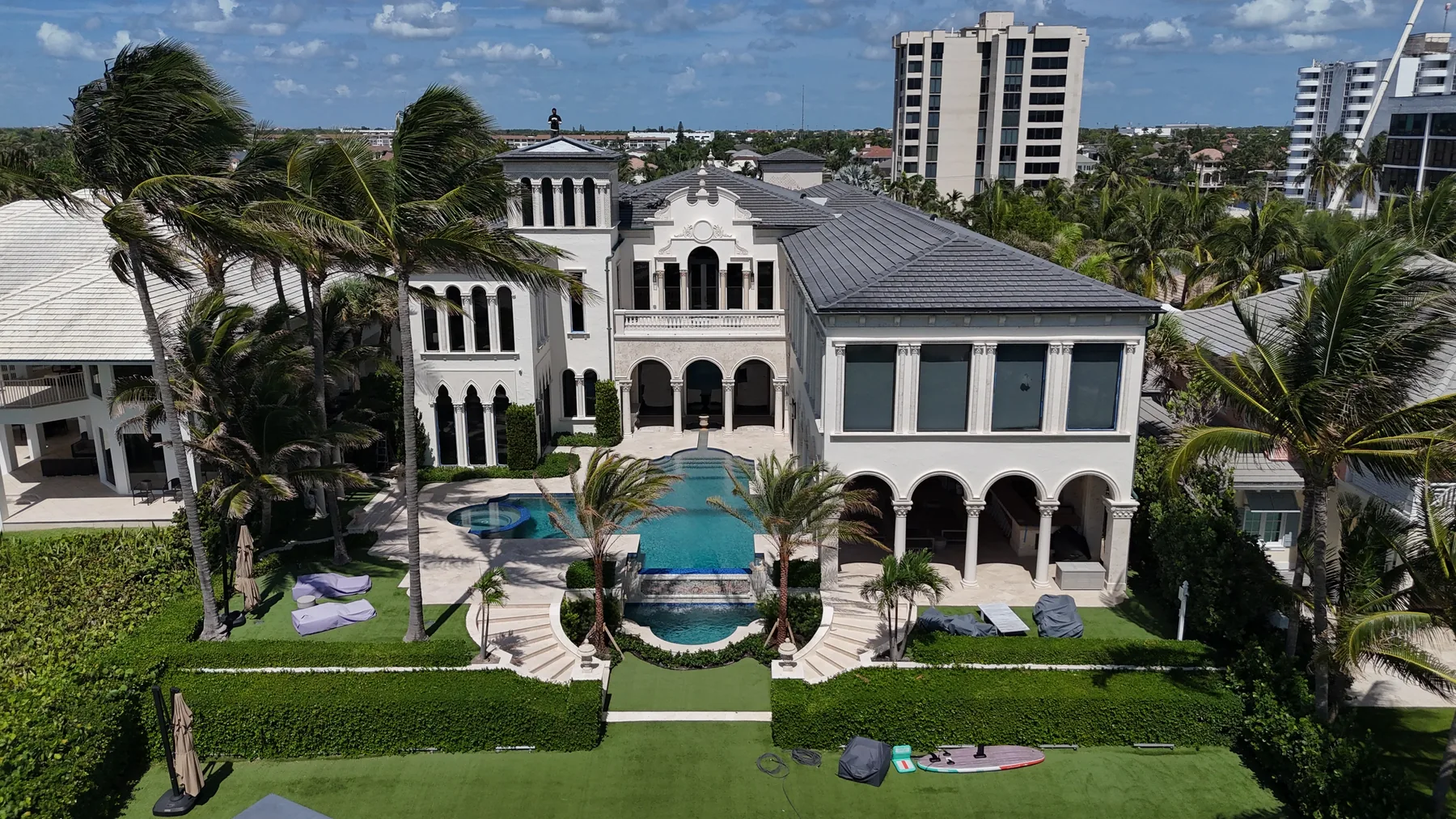
On a residence of extraordinary architectural and financial value, the roof is not an ordinary construction component — it protects custom interiors, structural elements, and the long-term integrity of the entire home. This Delray Beach oceanfront estate carries a complex concrete tile roof of numerous sections, elevations, hips, ridges, towers, and roof-to-wall transitions, each of which must work together to move water safely away from the structure.
Mike McGilvary Roofing was engaged to determine the roof’s true condition and to correct what had actually failed — not to default to a wholesale replacement. What follows is the documented arc of that project: inspection, condition, the repair-first decision, reconstruction, and the completed certification.
Drone documentation, aerial to deck.
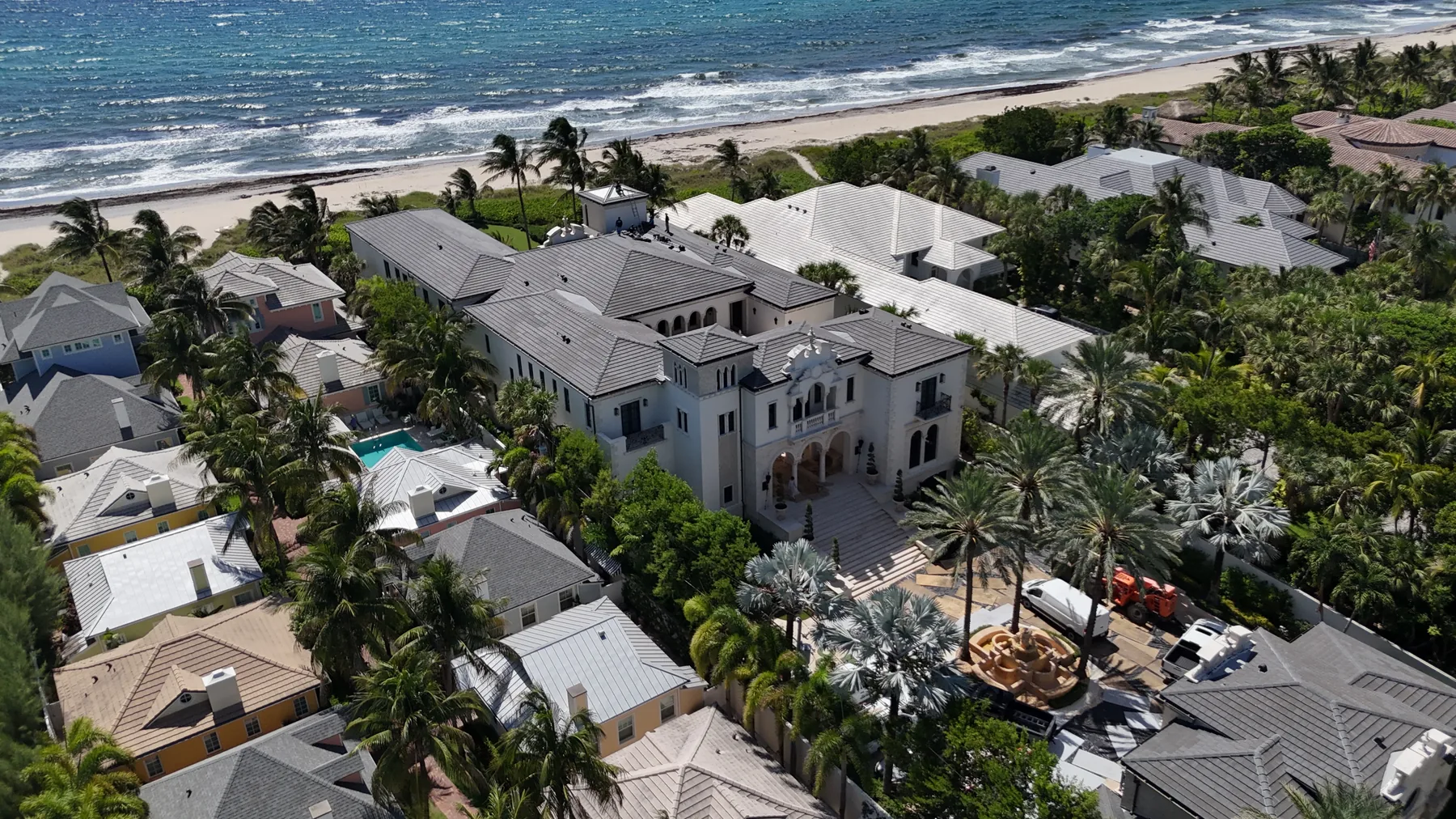
A property of this size cannot be understood from the ground. Our inspection combined drone documentation of the roof covering with a close, on-roof examination of the tiles, ridges, valleys, vents, and roof-to-wall transitions — recording the relationship between the individual roof sections and the areas where water was getting in.
A serviceable roof with isolated, correctable failures.
The documented finding was the opposite of what a tear-off assumes. The majority of the tile field and underlayment were structurally sound and serviceable, with remaining useful life — while active water intrusion was concentrated in specific, correctable areas.
Majority of the roof
Most of the concrete tile field and the underlayment beneath it were found structurally sound and serviceable, with useful life remaining.
High-water-flow sections
Active leaks were isolated to specific high-water-flow roof sections — documented while still correctable, before widespread interior damage.
Broken & compromised tiles
Broken and compromised roof tiles, plus loose field and cap tiles throughout the system, each an opening for water.
Deteriorated in isolated areas
Deteriorated underlayment in isolated areas, with damaged sheathing plywood in the leak-affected sections below.
Various flashing deficiencies
Flashing deficiencies at vulnerable transitions — the points on any tile roof most likely to admit wind-driven rain.
Preserve, don’t replace
The roof was determined to be a strong candidate for preservation and restoration rather than full replacement.
Condition — not age — drives the decision.
Here is the detail that makes this project a genuine teaching example: the roof was only about two years old, yet a contained section still required targeted reconstruction before it could be certified. Age alone said “new roof.” The documented condition said “a specific section has failed and must be rebuilt.” On a high-value home, only one of those is the truth worth acting on.
Replacing an entire tile roof because one contained area has failed can destroy valuable materials that still have years of service remaining. Applying a surface sealant over a concealed failure is equally wrong — it hides the symptom instead of correcting the cause. The correct solution depends on the condition beneath the tiles, which is exactly what the inspection was for. This is the same principle behind Florida’s approach to roof age: see our explainer on the Florida Roof Age Law and how a documented remaining useful life should guide the call between repair and replacement.
Open it, rebuild it, preserve the rest.
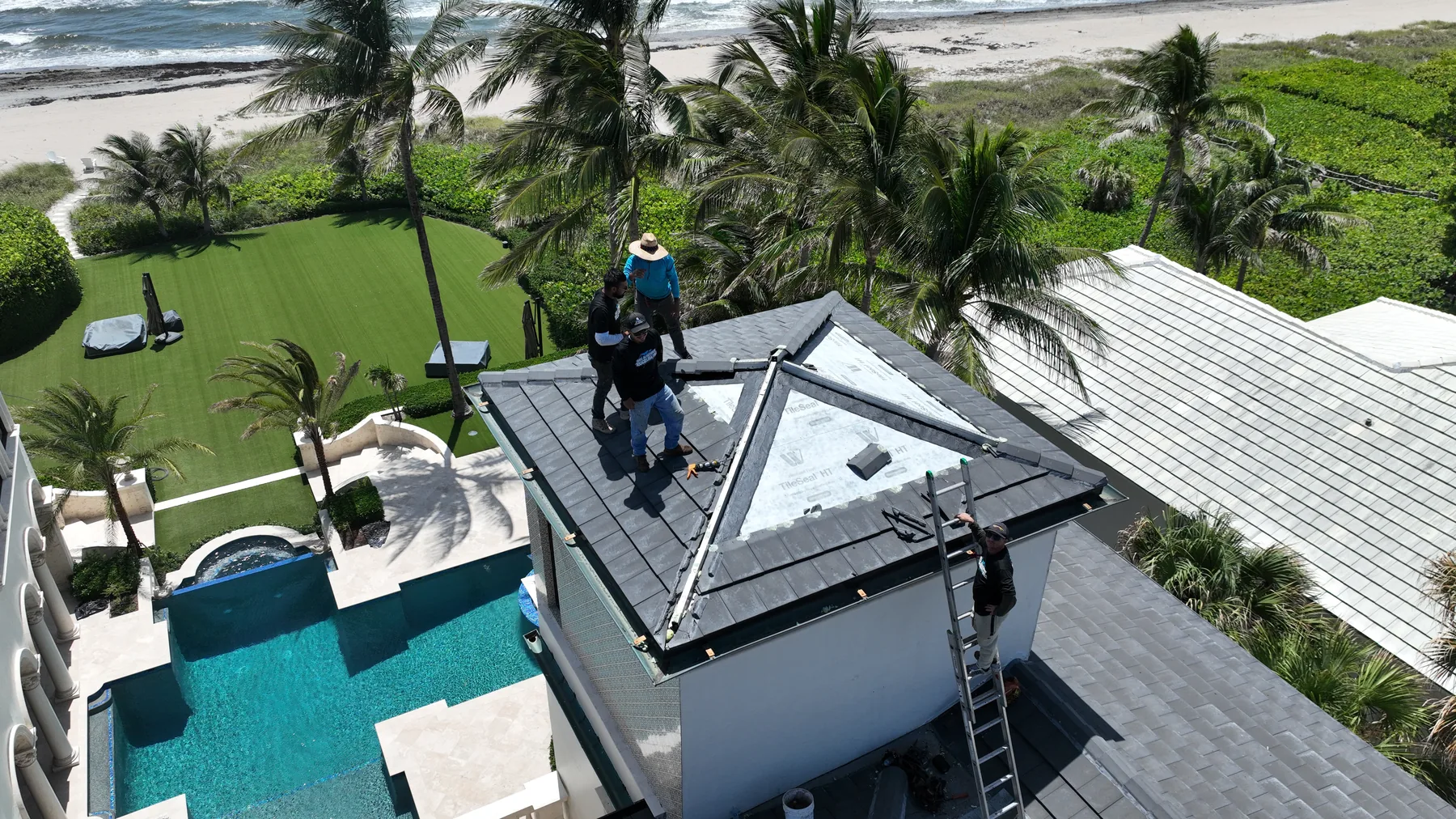
Once the affected section was identified, the existing concrete tiles were carefully removed and organized for reinstallation wherever they remained serviceable — then the roof was rebuilt from the deck upward. This is targeted reconstruction, not wholesale replacement.
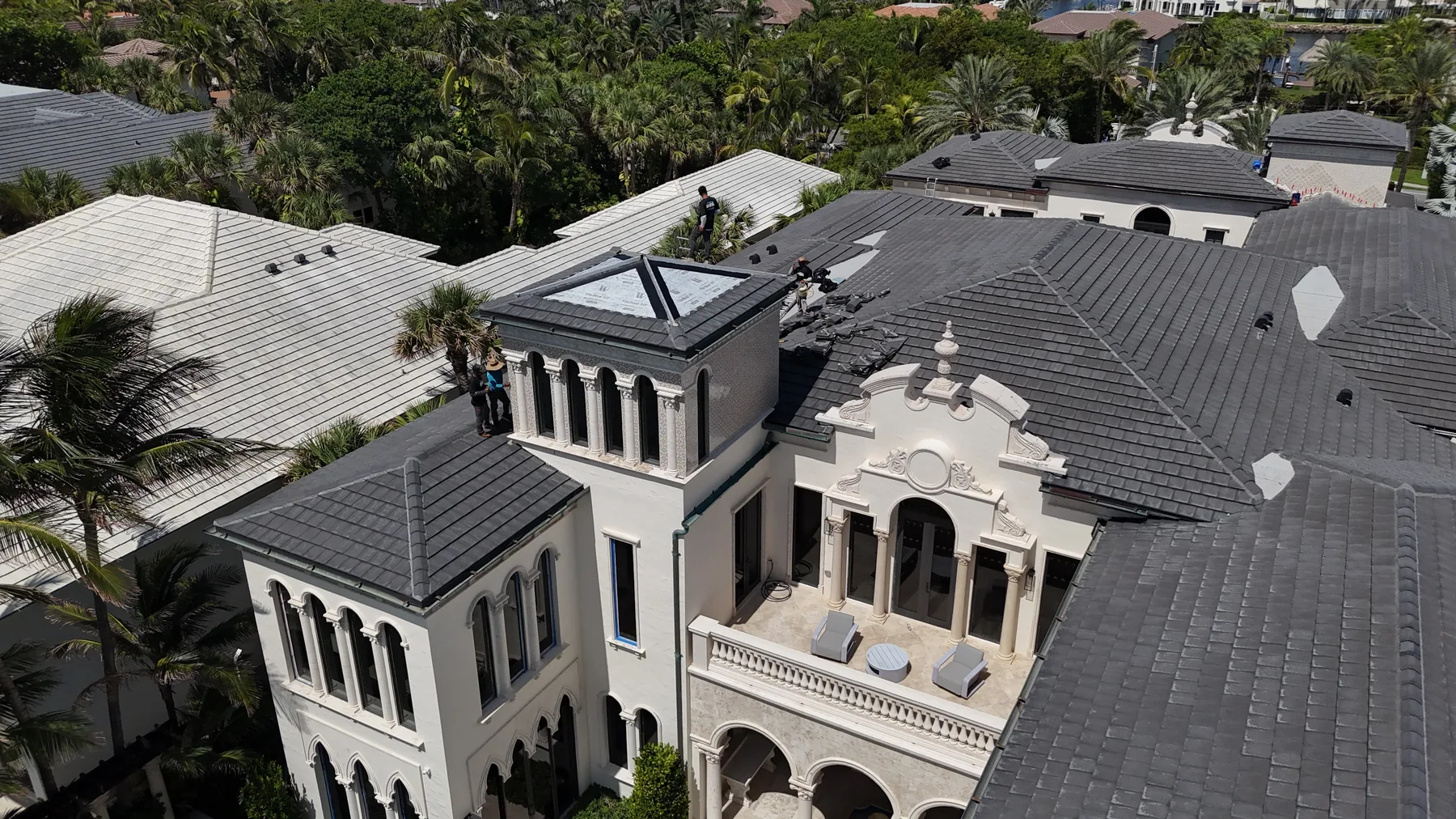
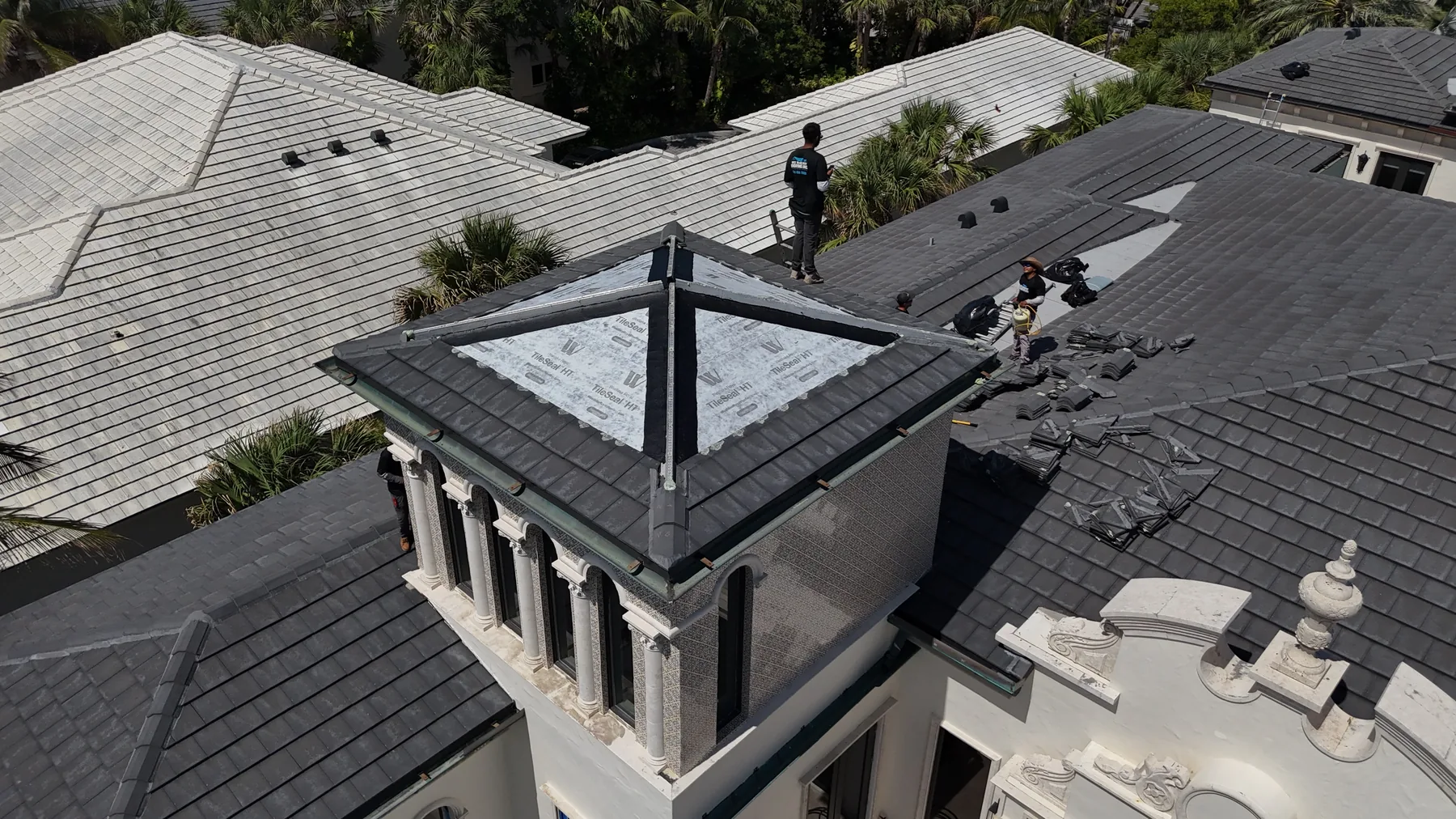
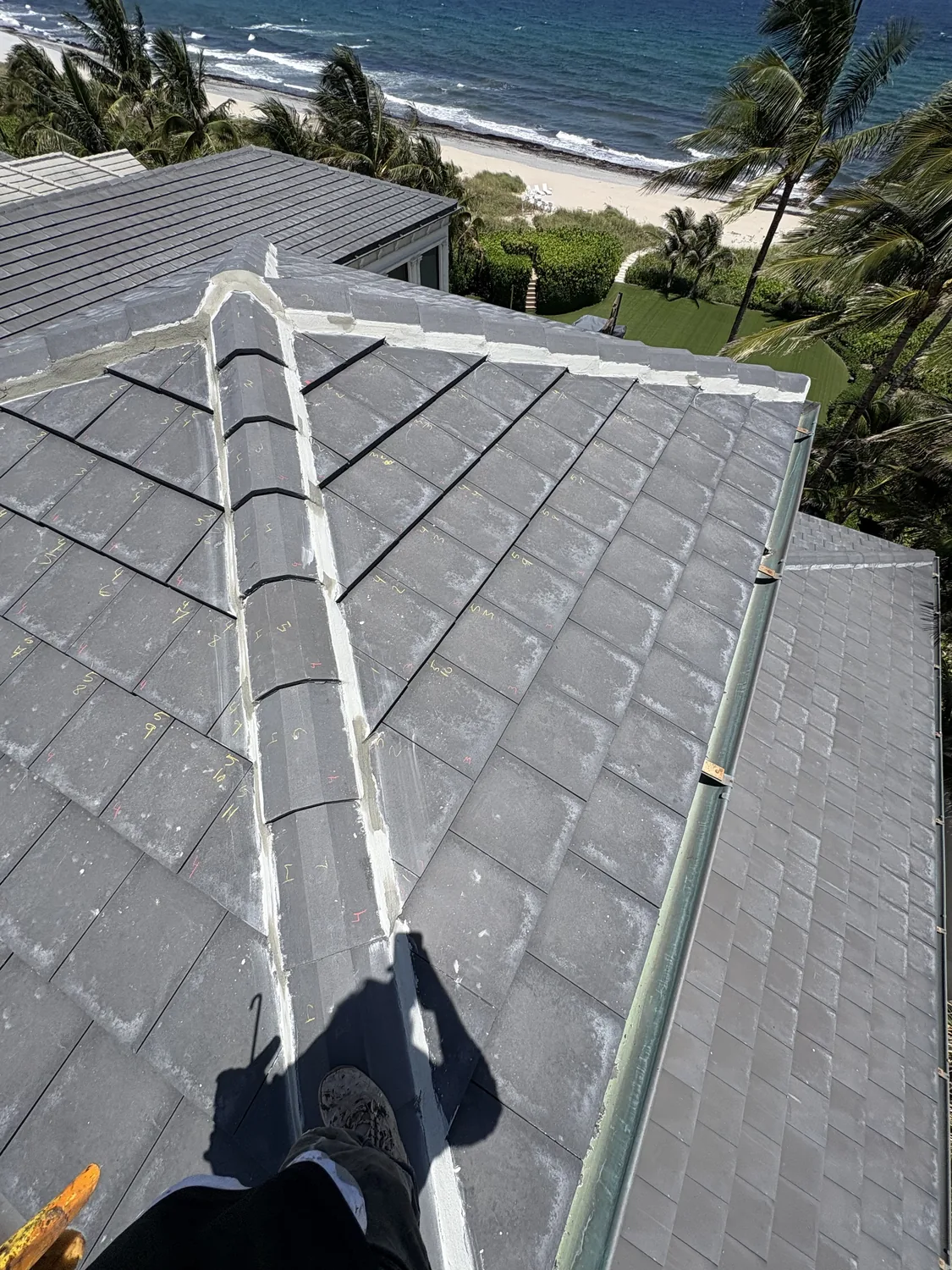
The work followed the scope recorded in the certification: roofing materials were removed in all leak-affected sections; compromised sheathing plywood was replaced where required; new self-adhered roofing underlayment was installed; all high-water-flow sections were rebuilt; flashing repairs and waterproofing upgrades were performed; damaged tiles were replaced and loose field and cap tiles refastened; and the system received a full maintenance and restoration pass.
On an architecturally significant estate, appearance matters as much as performance. Tiles were organized and numbered during the work so that alignment, spacing, and the existing roof pattern were faithfully restored — the repaired section integrating seamlessly with the surrounding tile roof.
A signed 5-Year Roof Certification, on the record.
After inspection, targeted reconstruction, and a final reinspection, the roof was issued a signed 5-Year Roof Certification & Remaining Useful Life Assessment. It documents the findings, the deficiencies identified, the repairs performed, and a professional opinion of remaining useful life — the kind of record an owner, insurer, or future buyer can rely on. Homeowner-identifying details have been redacted.
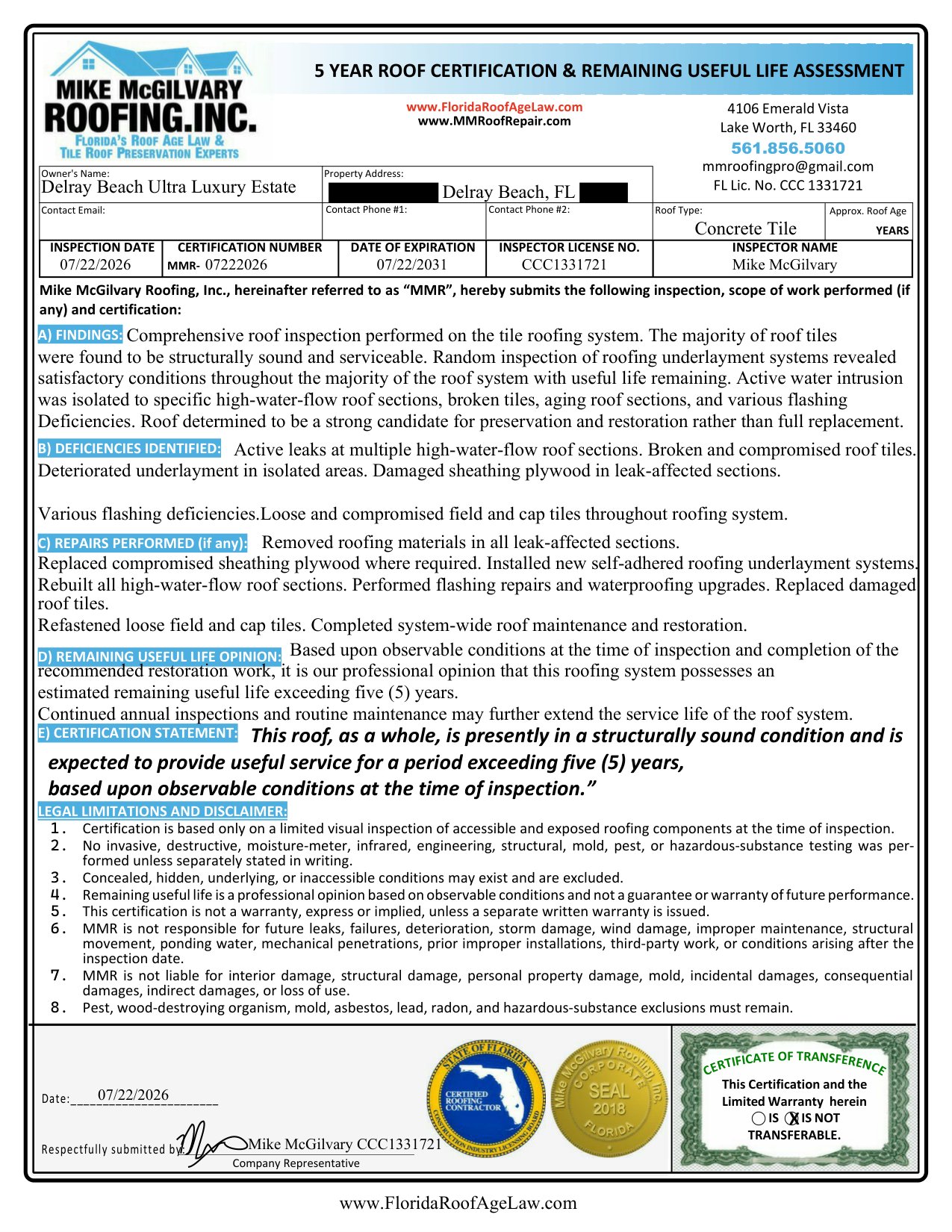
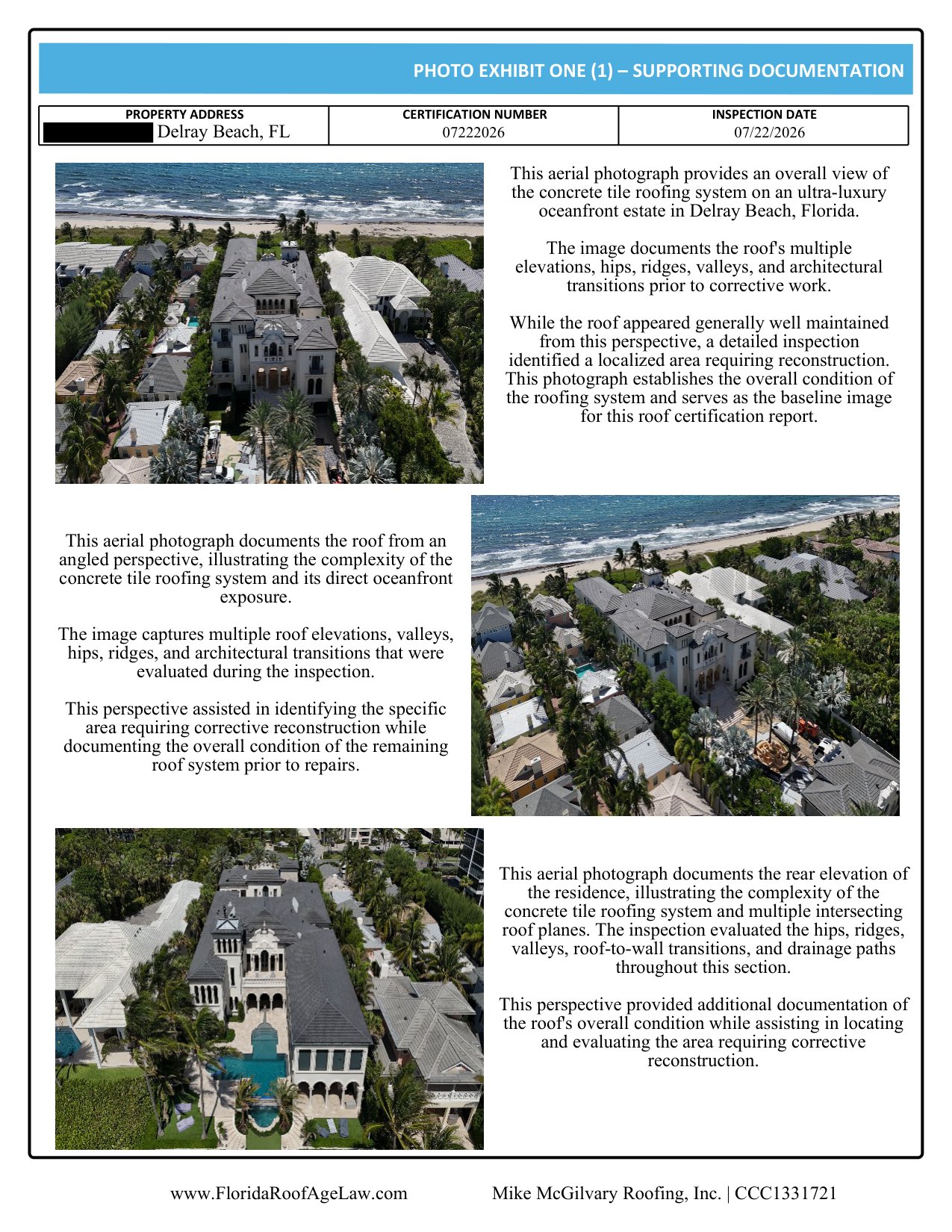
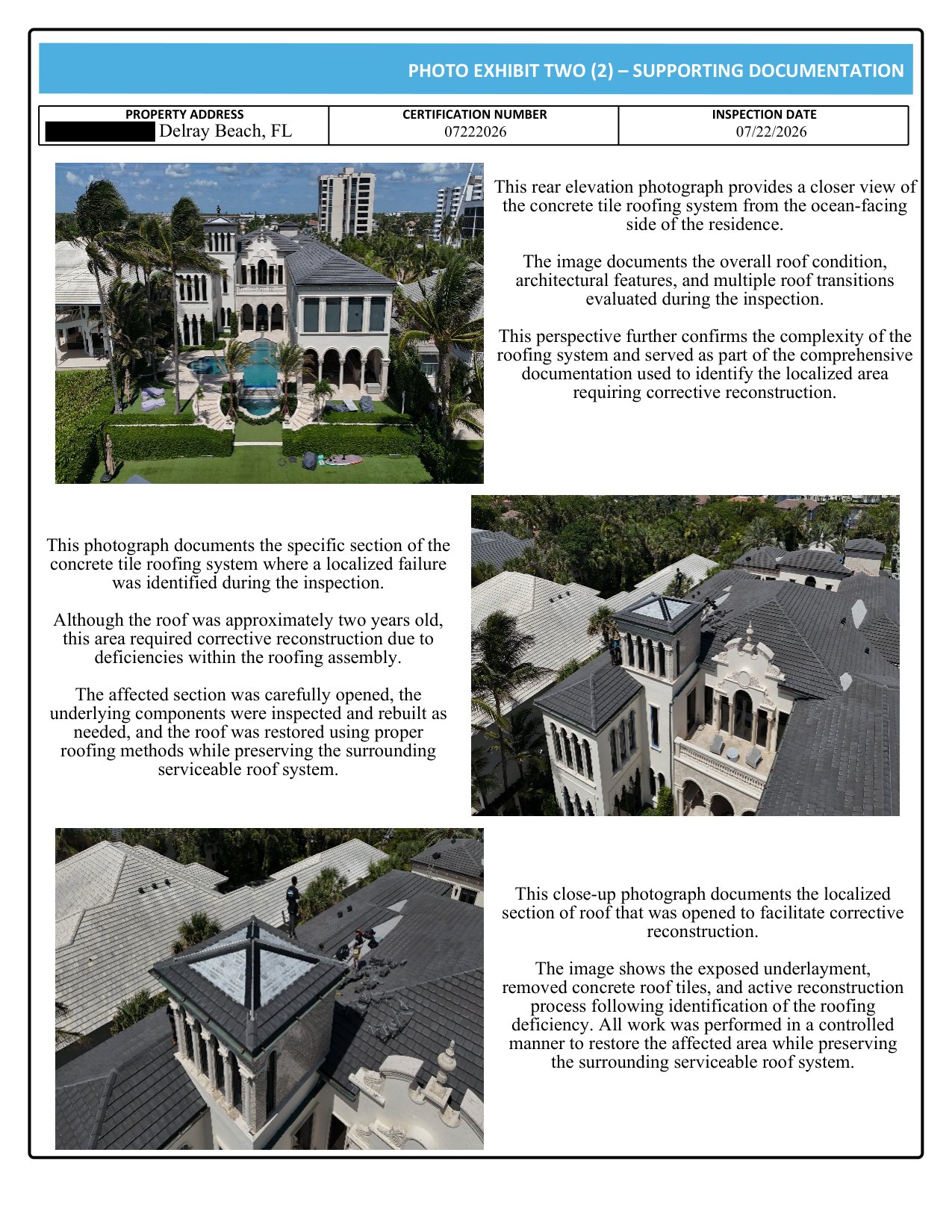
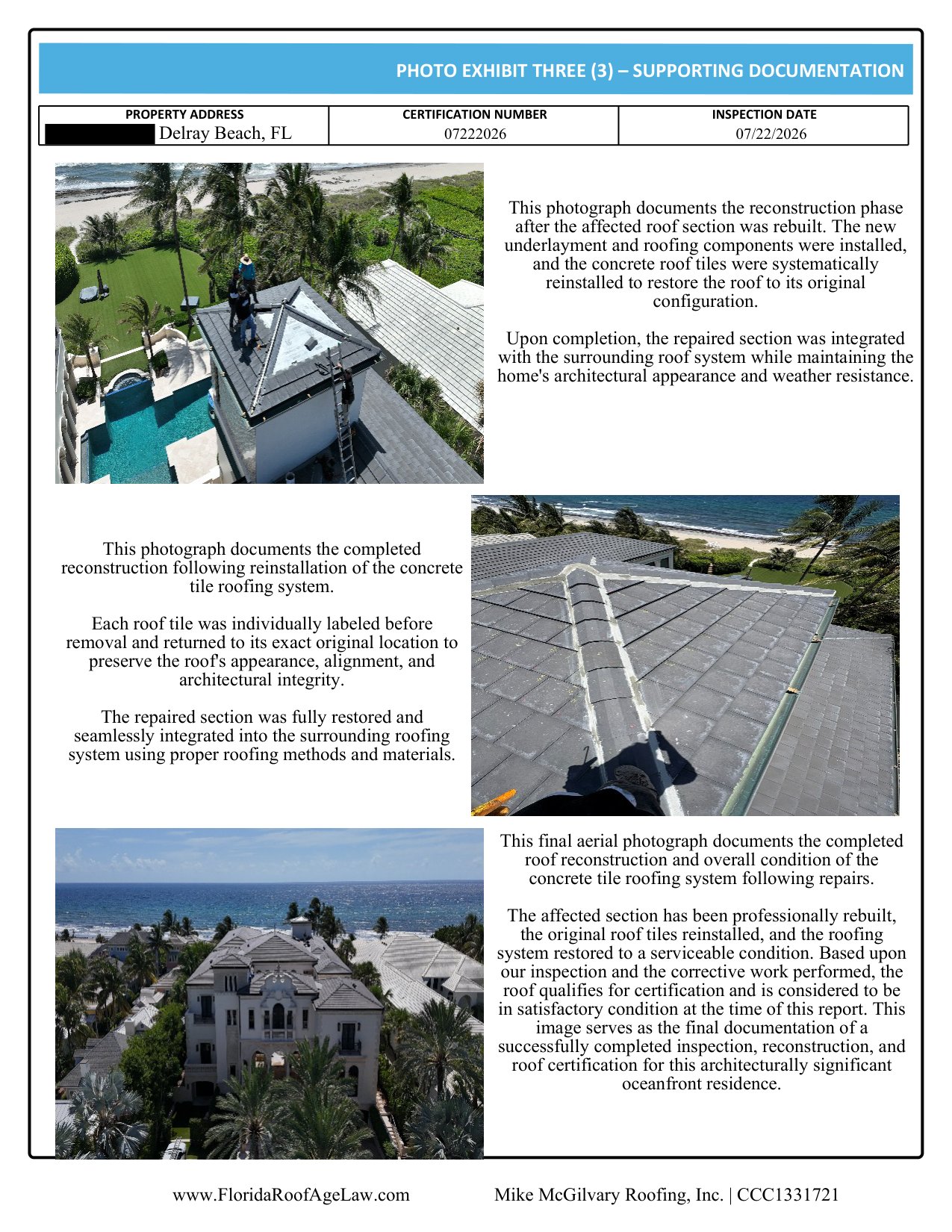
The certification statement: “This roof, as a whole, is presently in a structurally sound condition and is expected to provide useful service for a period exceeding five (5) years, based upon observable conditions at the time of inspection.” Continued annual inspections and routine maintenance may further extend the roof’s service life.
Protected, preserved, and documented.
Rather than treating the entire roof as defective, the affected area was isolated, the underlying system accessed, the necessary reconstruction performed, and the surrounding tile roof preserved. The result is a structurally sound, fully documented roof with a certified remaining useful life exceeding five years — and a photographed record of exactly what was done.
That is what responsible roofing looks like on a significant South Florida estate: not the largest possible scope of work, but the correct scope — protecting the property entrusted to us.
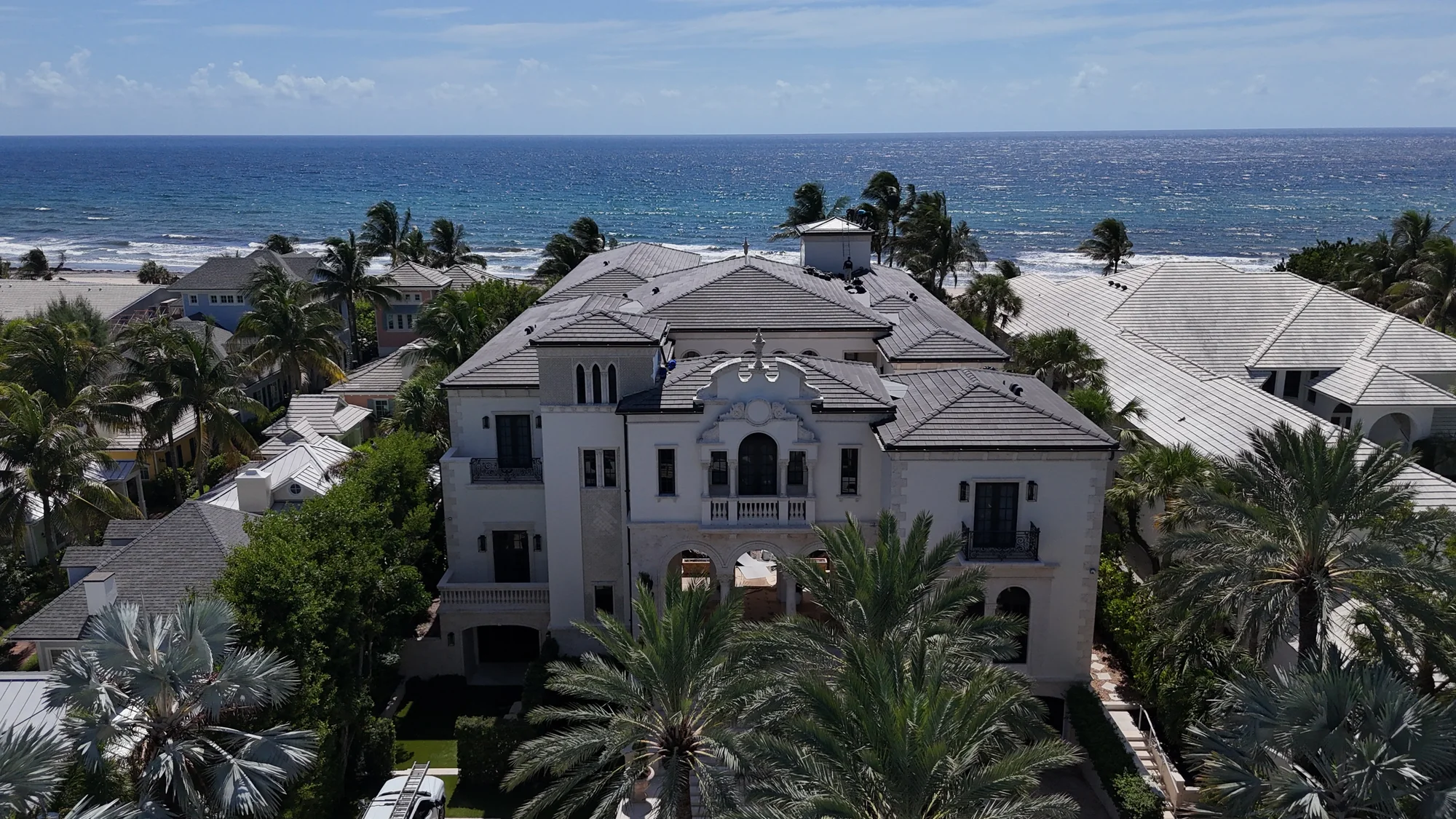
The full documentation, before to after.
Questions about this project.
Why not just replace the whole roof on a home like this?
Because most of the roof was sound. The inspection documented that the majority of the tile field and underlayment were serviceable with useful life remaining, while failures were isolated to specific high-water-flow sections. Replacing an entire tile roof because one contained area failed would discard materials with years of service left. The correct scope was targeted reconstruction of the failed section, preserving the rest.
The roof was only about two years old — why did it need work?
Roof age and roof condition are not the same thing. Even a relatively new roof can develop localized deficiencies — here, active leaks and flashing issues at high-water-flow sections. A documented inspection identified the specific failure, which was rebuilt before the roof qualified for certification. Condition, documented properly, should drive the recommendation rather than age alone.
What does the 5-Year Roof Certification actually say?
It certifies that the roof, as a whole, is presently in a structurally sound condition and is expected to provide useful service for a period exceeding five years, based on observable conditions at the time of inspection. It documents the findings, deficiencies, repairs performed, and a remaining-useful-life opinion. It is a professional opinion based on a limited visual inspection, not a warranty or a guarantee of any future outcome.
Why does oceanfront exposure matter?
Direct oceanfront roofs face wind-driven rain, persistent salt exposure, strong ultraviolet radiation, and accelerated corrosion of exposed metals and fasteners. Those conditions make transitions, flashing, and fasteners more vulnerable, which is why an oceanfront inspection must look beyond visibly broken tiles to the underlayment, flashing, deck, and drainage configuration.
Do you work on other high-value and oceanfront properties?
Yes. Mike McGilvary Roofing specializes in luxury residences, oceanfront homes, and architecturally complex concrete tile roofing systems — with drone-assisted inspections, targeted reconstruction, tile roof preservation, remaining-useful-life assessments, and detailed photographic documentation throughout Palm Beach County and South Florida.
Protecting South Florida’s most significant properties.
For high-value residences, estates, oceanfront properties, and professionally managed properties, we provide detailed inspections supported by drone photography, thermal technology, and clear visual documentation — the same standard behind our media coverage and our documented case studies.
or contact Mike McGilvary Roofing · (561) 856-5060 · Florida Certified Roofing Contractor · License CCC1331721
Reviewed by Mike McGilvary, Florida Certified Roofing Contractor, License CCC1331721. This case study documents a completed roof preservation and certification project for educational purposes; property-identifying details have been withheld at the client’s request. Every roof is different, and the right approach for any specific roof depends on a documented inspection of its actual condition. A roof certification is a professional opinion based on a limited visual inspection and is not a warranty or a guarantee of any insurance outcome.
Request a Free Roof Inspection
No obligation — a documented, repair-first inspection from Mike McGilvary Roofing. Prefer to talk now? Call (561) 856-5060.