A practical guide for homeowners preparing for insurance renewals, home sales, refinancing, roof certifications, and underwriting reviews.
Florida’s updated OIR-B1-1802 wind mitigation form became effective April 1, 2026. For inspections performed after that date, the revised form must be used.
As insurance requirements become more documentation-driven, homeowners are increasingly being asked to provide proof of roof condition, roof improvements, wind mitigation features, and remaining useful life.
The issue is often not the roof itself.
The issue is lack of documentation.
This guide is written so that homeowners, realtors, buyers, sellers, insurance agents, property managers, HOA board members, and lenders can all reference the same clear standard for what a well-documented Florida roof looks like in 2026.
What Is a Wind Mitigation Inspection?
A wind mitigation inspection is a documented evaluation of the construction and condition features that influence how a home performs in high winds. In Florida, those features are recorded on the state’s Uniform Mitigation Verification Inspection Form (OIR-B1-1802). An inspection typically documents:
- Roof covering — the type of roofing material and whether it meets current product-approval standards.
- Roof deck attachment — how the roof sheathing is fastened to the structure.
- Roof-to-wall connections — the clips, straps, or connectors tying the roof to the walls.
- Roof geometry — the overall shape of the roof (for example, hip versus gable).
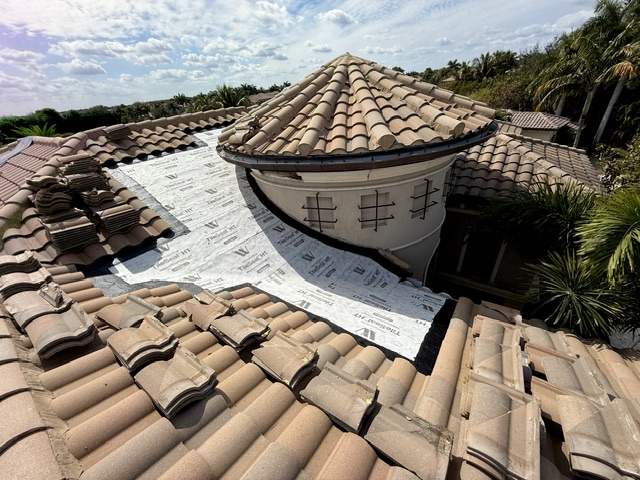
- Secondary water resistance — a sealed or supplemental barrier beneath the roof covering that helps keep water out if the primary covering is compromised.
- Opening protection — impact-rated or shuttered windows, doors, and other openings.
The purpose is to document the features that may help reduce hurricane-related damage and assist with insurance evaluation. Whether any particular feature results in a credit is determined by the insurer and the policy — the inspection’s job is to capture the facts accurately and completely.
What Changed in 2026?
The wind mitigation form was revised. The current version — OIR-B1-1802 Rev. 04/26 — became effective April 1, 2026, and inspections performed after that date must be completed on the revised form.
For Florida property owners, a few points matter:
- Documentation requirements. The form continues to rely on photographs and verifications for each feature. Features that are not properly documented generally cannot be credited.
- Form validity. A wind mitigation report is a point-in-time record. Carriers set their own standards for how long a report remains acceptable, and a roof that has since been repaired or altered may warrant an updated inspection.
- Accurate inspection records. Because the report drives insurance and transaction decisions, accuracy and completeness matter more than ever. An incomplete or inconsistent report is a common source of friction.
The change is procedural, not dramatic. The goal of this guide is not to add urgency — it is to help you understand what a complete, current, and credible documentation file looks like.
2026 Florida Wind Mitigation Checklist
Use this as a practical reference for the documentation that supports a Florida wind mitigation inspection, an insurance review, or a real estate transaction:
- ✓Current roof photos
- ✓Attic photos
- ✓Roof age information
- ✓Permit records
- ✓Product approvals
- ✓Roof deck attachment documentation
- ✓Roof-to-wall connection photos
- ✓Secondary water resistance documentation
- ✓Opening protection information
- ✓Garage door documentation
- ✓Repair history
- ✓Before-and-after repair photos
- ✓Roof certification records
- ✓Remaining useful life reports
- ✓Annual inspection records
Why Documentation Matters
The single biggest difference between a roof that creates problems and a roof that does not is rarely the roof. It is the file behind the roof.
A roof that is properly documented is easier to insure, easier to maintain, easier to sell, easier to refinance, and easier to evaluate. When an underwriter, a buyer’s inspector, a lender, or an HOA board has a question, documentation answers it before it becomes an obstacle. When documentation is missing, every party defaults to caution — and caution, in a transaction, usually means delay or expense.
A roof that is documented properly is easier to explain, defend, insure, sell, and maintain.
Condition Matters More Than Age
Florida’s insurance conversation has shifted from how old a roof is to what condition it is actually in. This is the heart of our Florida Roof Age Law positioning.
Two roofs can be the exact same age. One may need replacement. The other may still have meaningful serviceable life remaining. Condition, maintenance history, repairs, and documentation often matter more than a calendar date.
That is why a documented remaining useful life evaluation can carry more weight in an insurance or real estate decision than the installation year on a permit.
Tile Roof Preservation
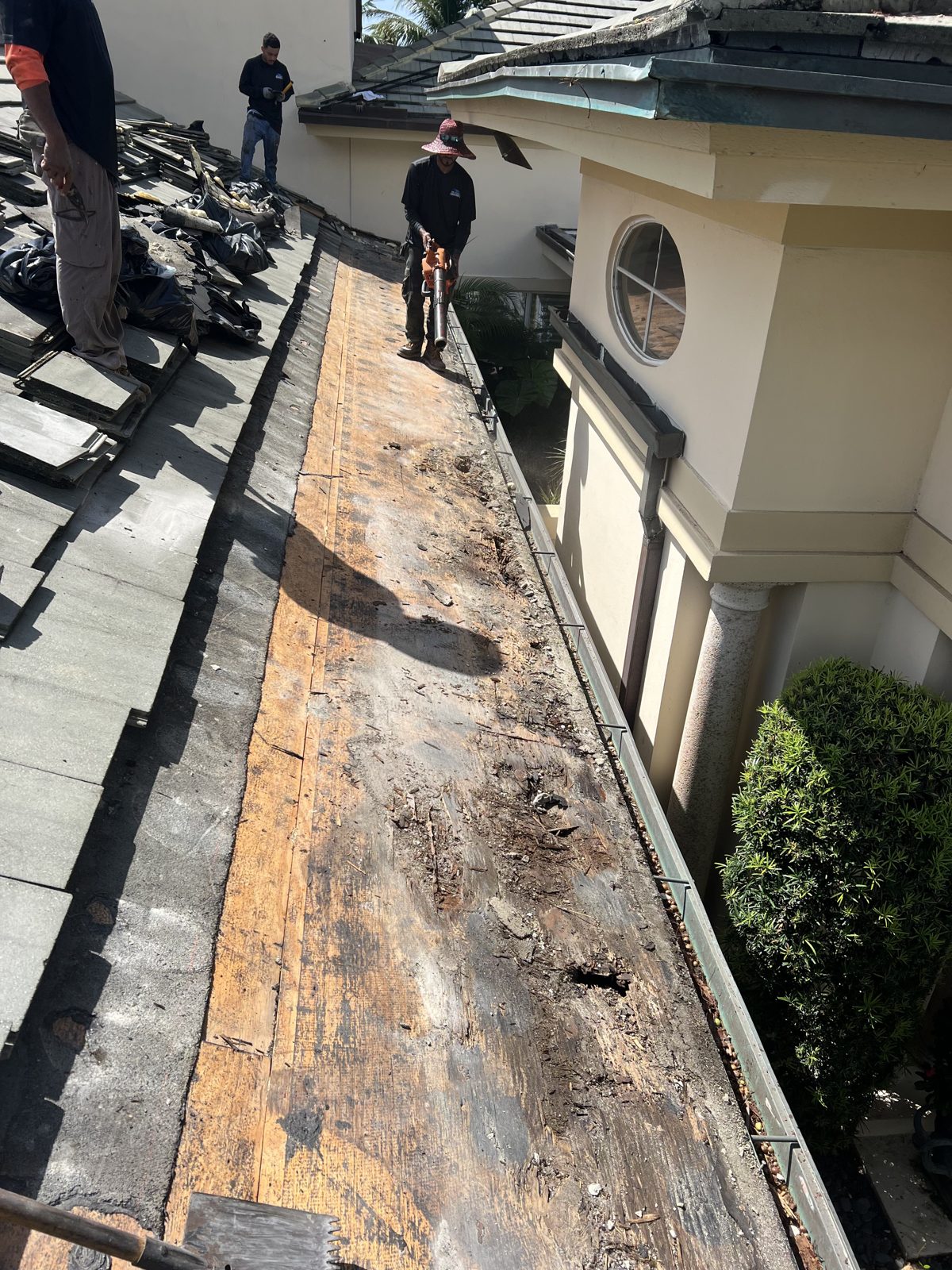
This point is important for South Florida, where tile roofs are common: many tile roofs do not fail all at once. They fail first in isolated, high-water-flow areas — long before the entire roof system reaches the end of its life. Those areas include:
- High-water-flow areas
- Valleys
- Dead valleys
- Penetrations
- Transitions
- Flat tie-ins
- Fascia edges
When these specific areas are rebuilt and the underlayment beneath them is restored, the roof’s serviceable life can often be extended without a full tear-off. That is the essence of tile roof preservation — saving the sound tile and rebuilding what has actually worn out.
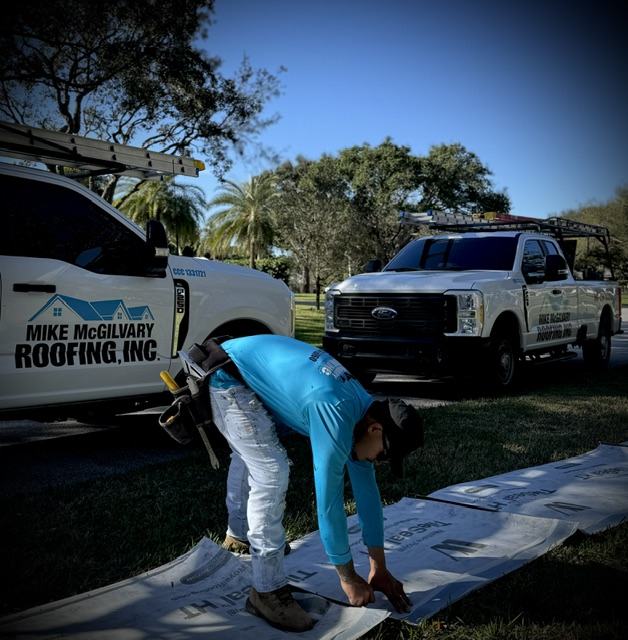
What Mike McGilvary Roofing Provides
Most roofing companies provide a proposal. Mike McGilvary Roofing provides the documentation that helps homeowners, insurers, buyers, sellers, lenders, and real estate professionals understand and defend the condition of the roof. Our work includes:
- Drone documentation
- Roof inspections
- Roof certifications
- Remaining useful life evaluations
- Repair documentation
- Before, during, and after photos
- Annual inspection recommendations
- Tile roof preservation strategies
We do not just repair the roof. We build the documentation file behind the roof.
You can see what that documentation looks like in practice in our documented Palm Beach County case studies — real inspections, real repairs, and real certifications.
Who This Helps
A documentation-first approach to roofing benefits everyone who has to make a decision about a Florida roof:
- Homeowners preparing for an insurance renewal or simply protecting their investment.
- Buyers who want to know what they are actually purchasing.
- Sellers who want the roof to be an asset, not a question mark.
- Realtors who need transactions to close without last-minute roof surprises.
- Insurance agents who need accurate, complete documentation to place coverage.
- Property managers responsible for maintaining and reporting on roof condition.
- HOA boards overseeing multiple roofs and long-term reserves.
- Luxury property owners with tile and specialty roof systems worth preserving.
- Mortgage and refinance clients who need the roof to clear lending review.
Frequently Asked Questions
What is a wind mitigation inspection?
A wind mitigation inspection is a documented evaluation of the features that affect how a home performs in high winds — roof covering, roof deck attachment, roof-to-wall connections, roof geometry, secondary water resistance, and opening protection — recorded on Florida’s OIR-B1-1802 form. It is used to document features that may help reduce hurricane-related damage and assist with insurance evaluation.
What changed on the 2026 OIR-B1-1802 form?
The form was revised to OIR-B1-1802 Rev. 04/26, effective April 1, 2026. Inspections performed after that date must use the revised form. The change reinforces the form’s documentation requirements; the practical takeaway is that complete, accurate inspection records matter more than ever.
How long is a wind mitigation report valid?
A wind mitigation report is a point-in-time record, and insurance carriers set their own standards for how long a report remains acceptable. If a roof has been repaired or altered since the last report, an updated inspection may be warranted. Confirm current requirements with your insurance professional.
Can roof repairs help extend roof life?
Often, yes. Many roofs — especially tile roofs — fail first in isolated, high-water-flow areas such as valleys, transitions, and penetrations. Rebuilding those areas and restoring the underlayment beneath them can extend a roof’s serviceable life without a full replacement.
Does roof age automatically mean replacement?
No. Age alone does not automatically require replacement. Two roofs of the same age can be in very different condition. A documented inspection that establishes condition and remaining useful life is what determines whether a roof can continue to perform.
What is a roof certification?
A roof certification is a signed statement from a licensed roofing contractor documenting a roof’s condition and serviceable life. It gives homeowners, buyers, insurers, and lenders a clear, professional record they can rely on. Learn more on our roof certification page.
What is remaining useful life?
Remaining useful life (RUL) is a professional estimate of how many years a roof can be expected to continue performing, based on its present condition rather than its installation date. It is increasingly the deciding factor in Florida insurance and real estate decisions.
Can a tile roof be preserved instead of replaced?
In many cases, yes. When the tile itself is sound but the underlayment beneath it has worn out, the tile can be lifted and re-laid over new underlayment, and the failed high-water-flow areas rebuilt — preserving the roof instead of replacing it.
If you need a roof evaluated, documented, or certified for an insurance renewal, a sale, a refinance, or peace of mind, request a comprehensive inspection or call (561) 856-5060.
Mike McGilvary Roofing, Inc.
Florida Certified Roofing Contractor CCC1331721
Florida’s Roof Age Law & Tile Roof Preservation Experts
Reviewed by Mike McGilvary — Florida Certified Roofing Contractor, License CCC1331721.
Disclaimer: This guide is provided for general educational purposes and does not constitute legal, insurance, or financial advice. Florida forms, statutes, insurance underwriting standards, and lender requirements change over time and vary by carrier, policy, and property. Nothing here guarantees any insurance, lending, or coverage outcome. Always confirm current requirements with the applicable form and statute, your insurance professional, and your lender, and rely on a licensed contractor’s inspection of your specific roof.
Related from Mike McGilvary Roofing