Repair, rebuild, or replace? Usually it isn't replace.
Most homeowners told they "need a new roof" actually need a targeted repair or an underlayment rebuild — at a fraction of the cost. Replacement is the last resort, not the default. We inspect the real condition, give you both options in writing, and recommend replacement only when the roof has genuinely reached the end. Repair-first.
Accredited · Certified · Recognized · A McGilvary Family Legacy of Licensed Roofing in Palm Beach County Since 1974
There are three paths — and replacement is the last one.
Many roofs sit in one of the first two: a targeted repair of the failed area, or a roof rebuild — re-laying your sound tile over a new waterproof layer when the underlayment has aged but the tile and deck are fine. A full replacement is the third path, and the right call only in specific, honest situations. The difference between paths is often tens of thousands of dollars. And under Florida's Roof Age Law (§627.7011), a sound roof with five or more years of remaining useful life can't be condemned on age alone — a documented condition and remaining-useful-life evaluation may support repair and certification instead of replacement.
A repair or a rebuild is routinely far less than a full tear-off and replacement — which is exactly why an honest assessment of condition matters before anyone reaches for the word "replace."
What “rebuild instead of replace” actually looks like
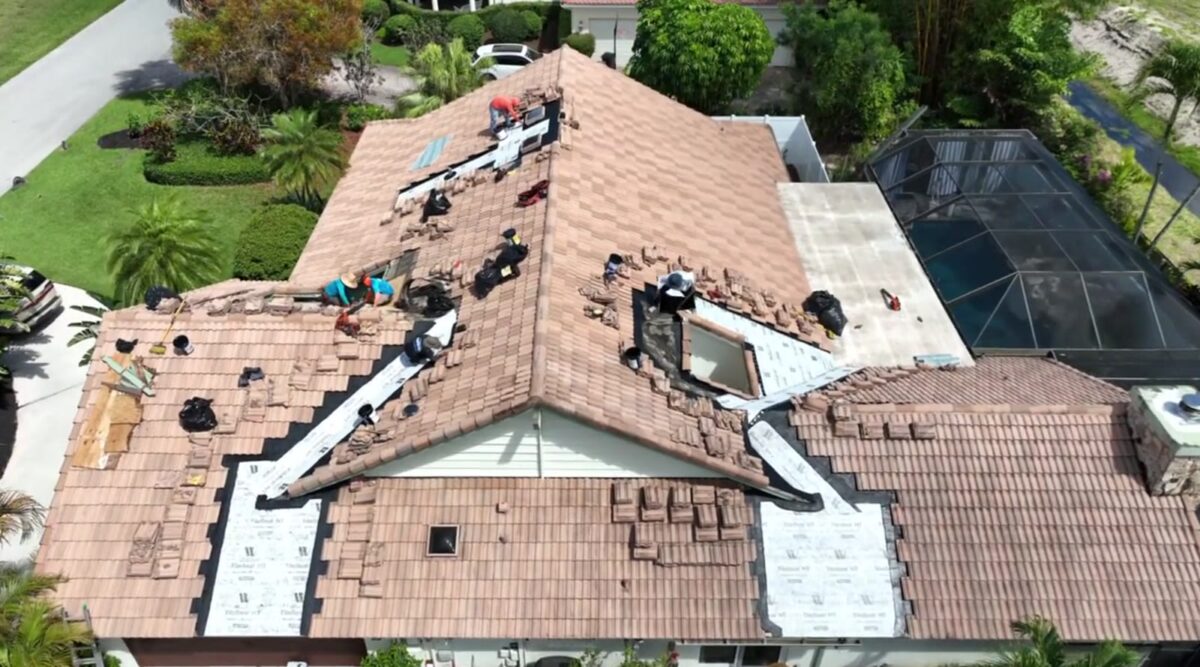
Before you accept a full-replacement quote, see the middle path. Mike opens the high-water-flow sections that fail first, rebuilds the decking, underlayment and flashings beneath, and reinstalls the original tile — the targeted rebuild most contractors skip.
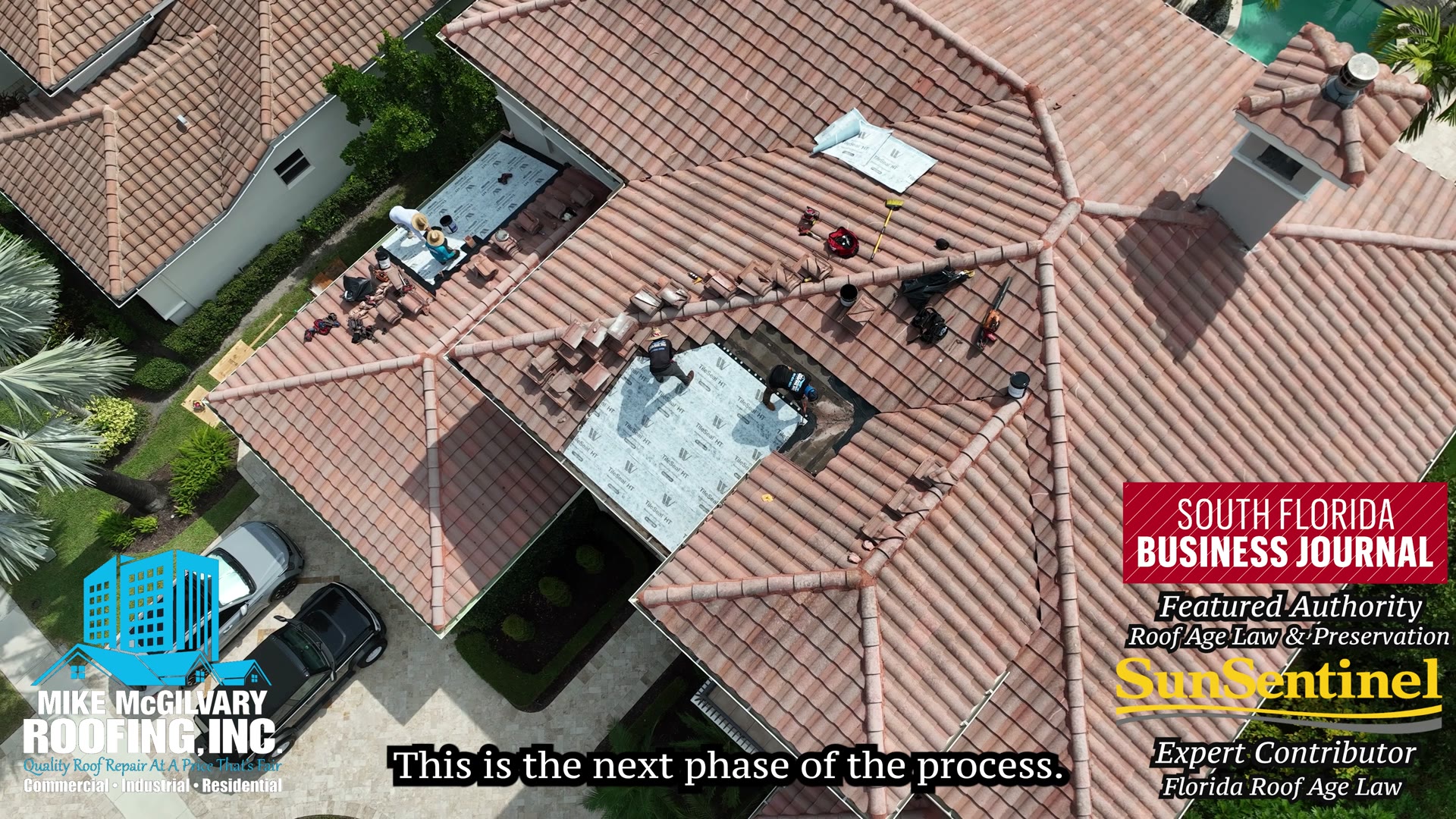
Replacement is the last resort, not the default. Often only a section of the roof has actually failed. This walkthrough shows those sections rebuilt while the sound sections of the roof is preserved — the difference between a targeted rebuild and an unnecessary tear-off.
Watch the full walkthrough and read the complete transcript on our Roof Rebuild page →
Related reading: roof rebuild · tile roof preservation · remaining useful life · 5-Year Roof Certification · Florida Roof Age Law
Wondering if your roof can be rebuilt instead of replaced? Schedule a free roof inspection and let us determine whether targeted rebuilding can extend the life of your roof.
The roofs that don't need replacing — and usually shouldn't.
If your roof fits one of these, repair or a rebuild is almost always the smarter path.
The damage is confined
Leaks or failures limited to valleys, flashings, a few slipped tiles, or one section. We repair the failure points and leave the sound majority of the roof alone — there's no reason to tear off a roof that's mostly fine.
The deck and tile are good
When the roof deck is solid and the tile is largely intact but the underlayment has aged out, the answer is a rebuild — re-lay your existing tile over new underlayment — not a full replacement.
A newer roof, isolated damage
Wind or impact damage on a roof that still has years of life left calls for a targeted repair — often insurance-supported. Replacing a young roof over a localized problem is rarely the right answer.
The roof has years remaining
If an inspection shows five or more years of remaining useful life, Florida's Roof Age Law gives qualifying homeowners the opportunity to obtain an authorized inspection before an age-based replacement can be required, and documented repairs and remaining-useful-life evidence may support the carrier's review.
Published In & Recognized By





What a roof rebuild includes — the option most contractors skip.
A rebuild restores the part of the roof that actually fails — the waterproof layer — while keeping the tile you already own.
- Careful removal and storage of your existing sound tile
- Full replacement of the failed underlayment — the real waterproof layer
- Rebuilt valleys, flashings, and penetration details
- Replacement of any damaged or deteriorated decking
- Re-laying your original tile, replacing only broken pieces
- A documented condition report and remaining-useful-life finding
Six honest signs a roof does need replacing.
Repair-first has limits. When we see these, we say so plainly — replacement is the right call.
Widespread tile failure
Cracking, spalling, or breakdown across the whole field of the roof — not just isolated sections — means too little sound material remains to rebuild around.
Extensive deck damage
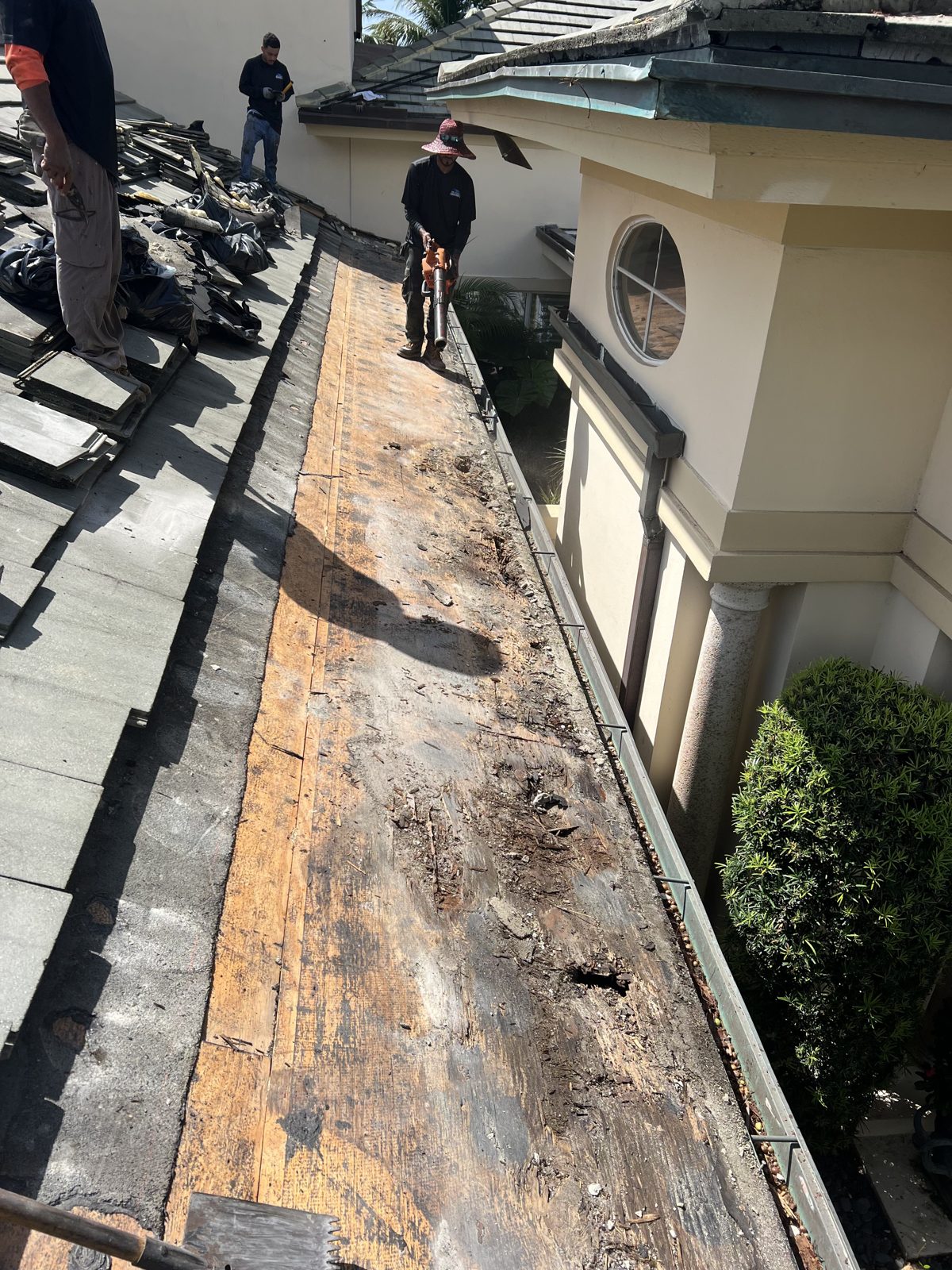
When the wood sheathing beneath the roof is rotted or compromised over large areas, the structure itself needs rebuilding, not a surface fix.
A sagging ridgeline
A roofline that dips or waves signals structural failure underneath. That's beyond what any repair can correct safely.
Recurring, multiplying leaks
When leaks keep appearing in new places faster than they can be chased, the waterproofing system has failed broadly — not in one spot.
Unmatchable materials
If too little sound tile remains to re-lay and the tile is discontinued, a rebuild may not be possible — though we exhaust every sourcing option first.
An older roof, end of life
An older system with extensive damage that has genuinely reached the end — where Florida code or your insurer requires bringing it to current standard.
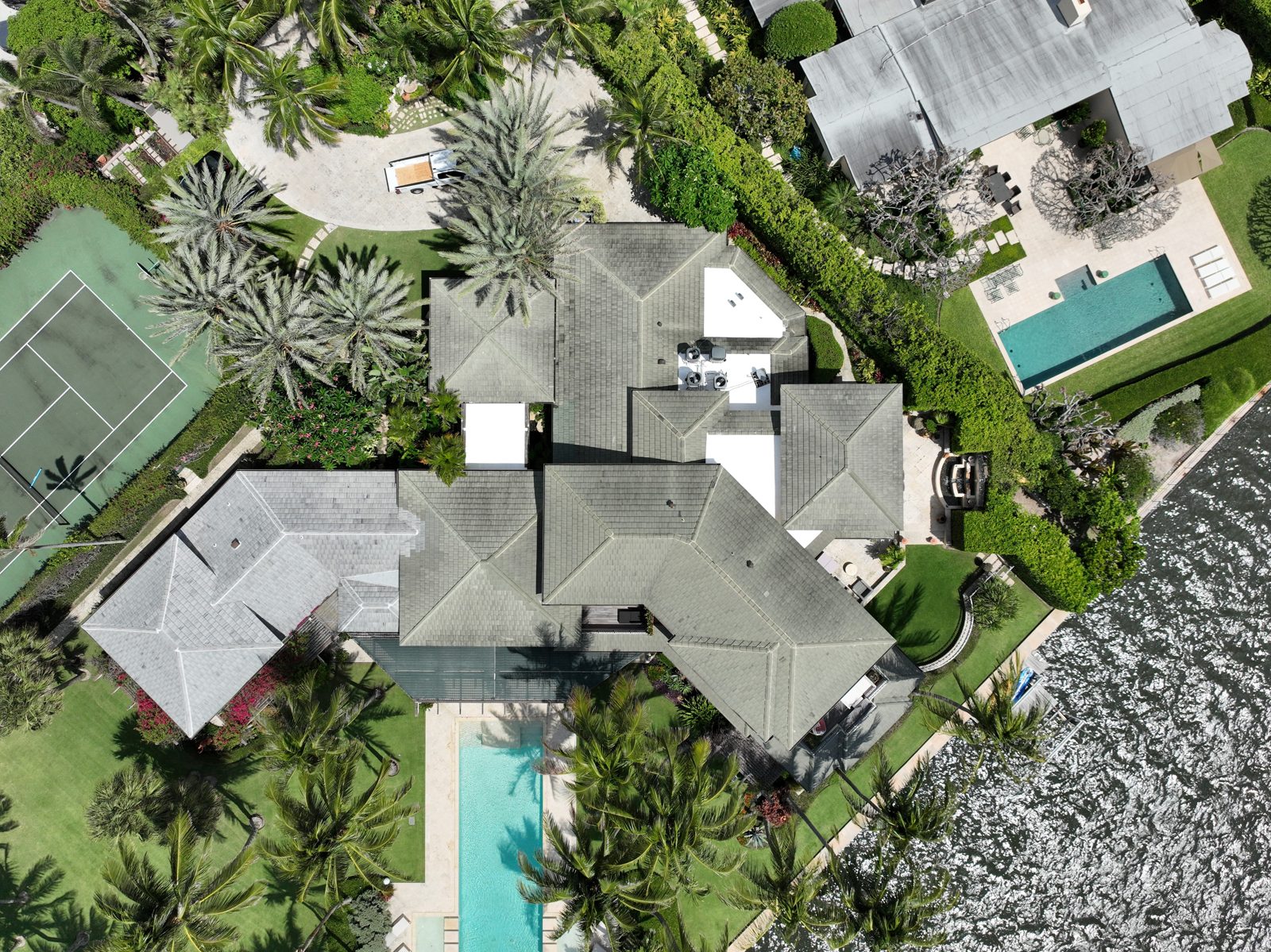
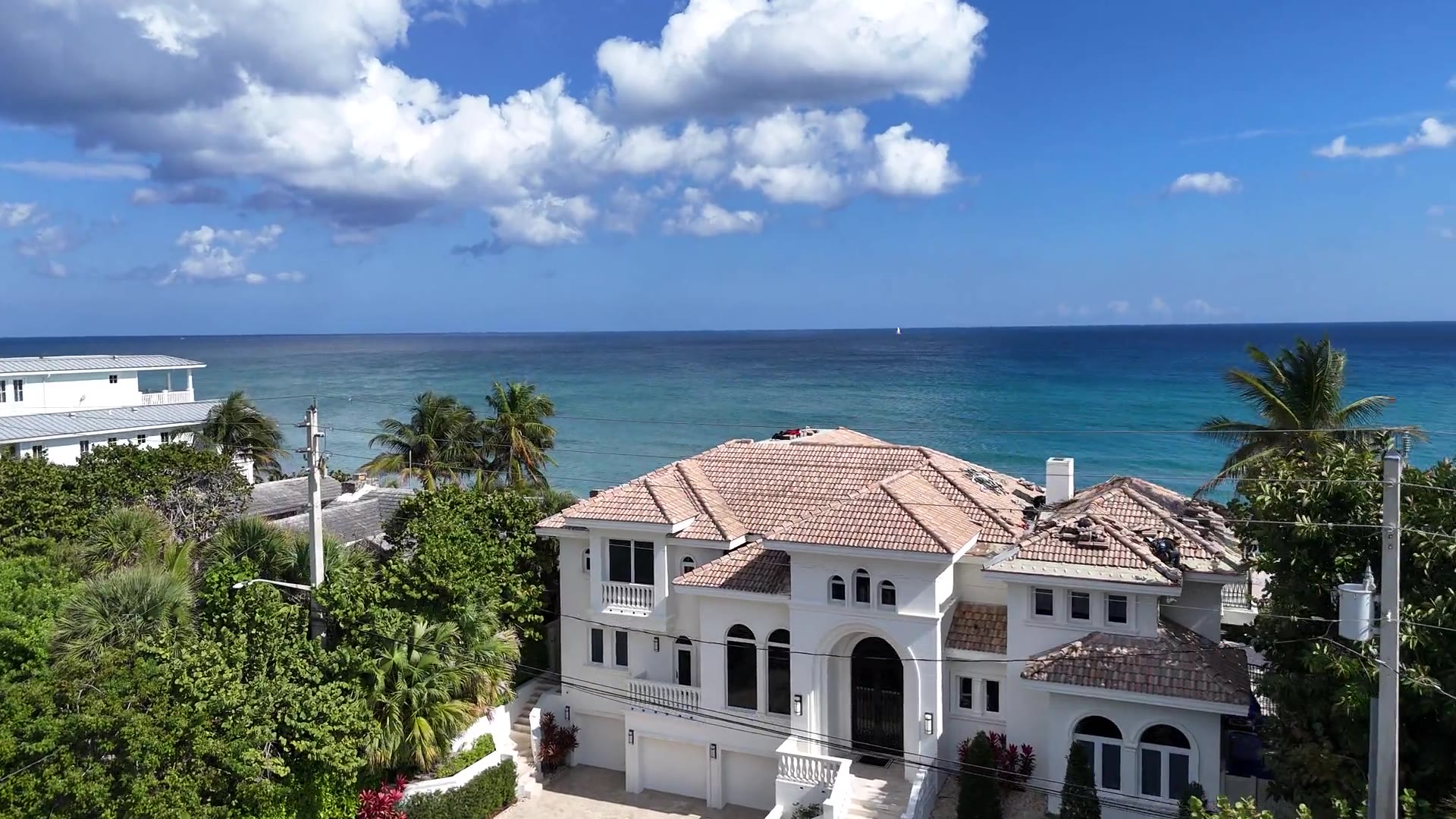
A Palm Beach estate roof five contractors said to replace.
On Island Drive, others quoted a six-figure full replacement. A documented inspection showed the tile and structure were sound — so we rebuilt the failed layer and re-laid the tile, and certified the result.
An honest assessment — both options, in writing.
Free, documented inspection
A complete roof inspection with attic thermal imaging to find what's actually failing — condition, deck, underlayment, and remaining useful life — at no cost and no obligation.
Both options, in writing
Where it's a real choice, you get repair or rebuild and replacement priced side by side — so the decision is yours, made on full information, not pressure.
The honest recommendation
We tell you which path the documented condition actually supports, and why. If a repair will do, we say so. If replacement is genuinely needed, we show you exactly why.
Certify when it qualifies
If the finished roof is sound, a signed 5-Year Roof Certification documents its condition and remaining useful life for your insurer or a future buyer.
Three paths, three very different price tags.
Honest ranges, not scare tactics. Where your roof lands depends on documented condition — which is exactly what the free inspection determines.
Lowest cost
Targeted fixes to valleys, flashings, leaks, or storm damage on a roof that's otherwise sound. The right answer for the majority of roofs — and far less than the alternatives.
Mid — and usually the sweet spot
Re-lay your existing tile over a new waterproof layer. Usually well below a full replacement, because you keep the tile you already own — real project figures are in our case studies.
Highest — last resort
A complete tear-off and new system. The right call only when the tile, deck, or structure has genuinely reached the end of its life.
This page is general information about roofing options and Florida's Roof Age Law, not legal or insurance advice. Florida's building code also limits how much of a roof can be repaired before the whole system must be brought to current code (the "25% rule"); how it applies depends on your roof's age and the specific damage, which we assess on each roof. For coverage questions, consult your insurance carrier or agent. Sources: Florida Statute §627.7011 · Florida CFO: property insurance changes.
“A few thousand on repairs — not tens of thousands on a replacement we didn’t need.”
Every roofer Mrs. Schwartz called said replace. We found the roof didn’t need it — and proved it with a repair-first evaluation and a signed certification.
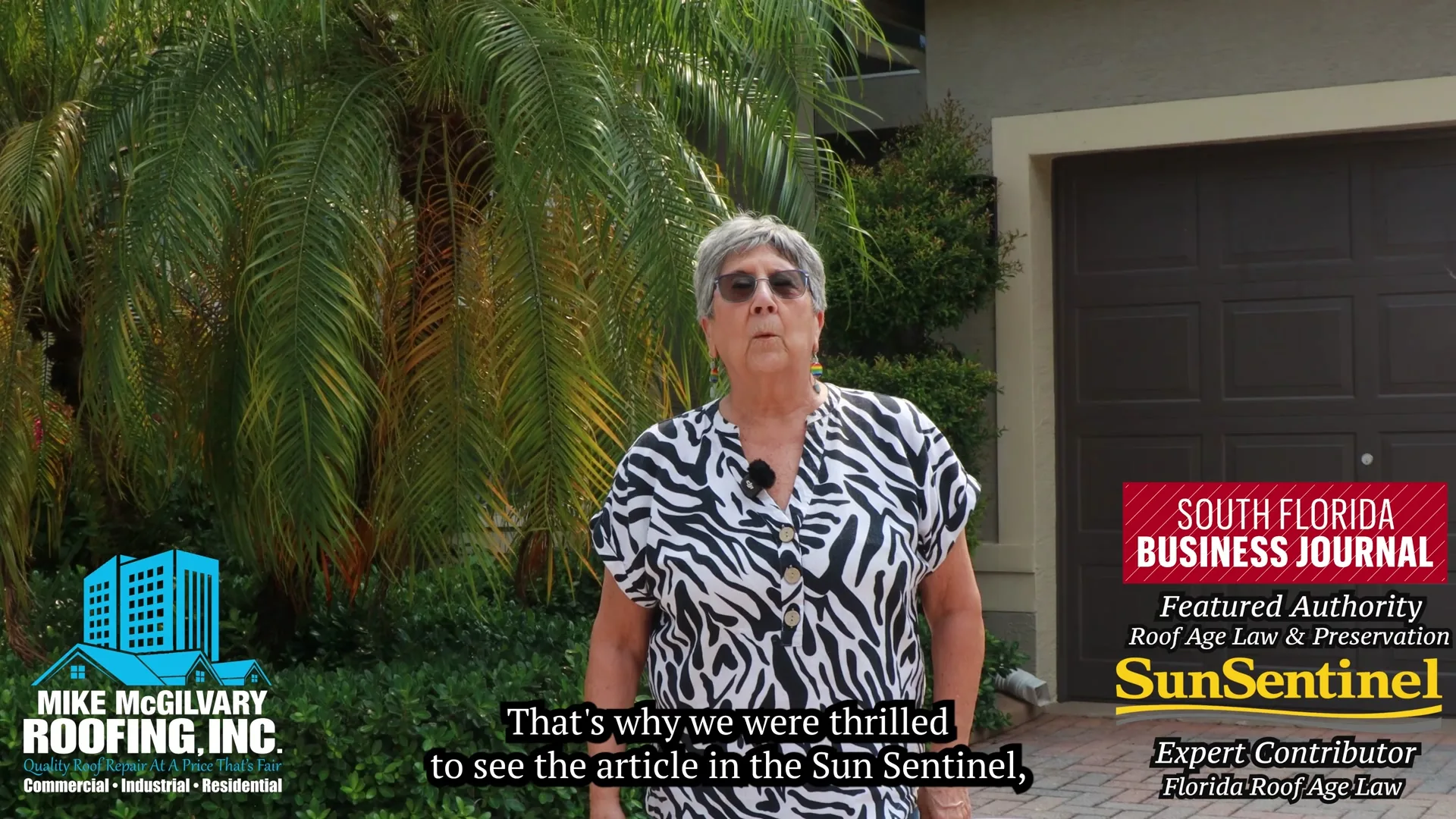 Client testimonial · 0:58
“They all recommended a full roof replacement… it was much better to spend a few thousand on repairs than tens of thousands on a replacement that we didn’t really need yet. We received the roofing certificate within 24 hours for our insurance company.”— Mrs. Schwartz, Palm Beach County homeowner
Mrs. Schwartz found us the same way many of our clients do — through Mike’s Sun Sentinel op-ed on Florida’s Roof Age Law (more in our Florida Roof Age Law guide). Instead of the full replacement every other roofer recommended, we evaluated the roof that was there, repaired what had actually failed, documented the roof’s condition, and delivered a signed roof certification within 24 hours. That’s the repair-first difference.
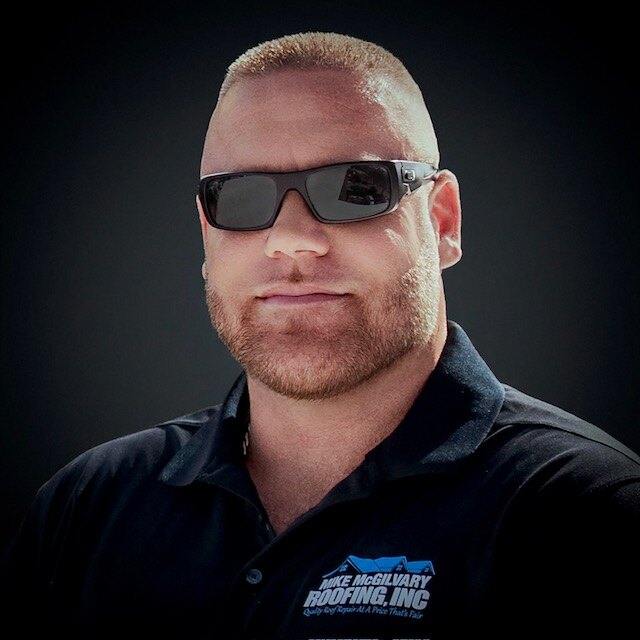
The repair-first roofer — we'd rather earn the next repair than oversell this one.
Both options, always in writing
Where it's a real decision, you get repair or rebuild and replacement priced side by side. An honest comparison is the whole point — you decide, not us.
Thermal imaging, signed reports
Attic thermal imaging finds the moisture you can't see from a ladder, and every assessment is documented and signed under Florida license CCC1331721.
No upsell to replacement
If a repair or rebuild will do, that's what we recommend — even though a replacement would bill more. If replacement is genuinely needed, we show you exactly why.
See it for yourself
Browse the Resource Center, read about tile roof preservation, and see the Island Drive case study — a Palm Beach estate roof we preserved instead of replaced.
Your questions, answered honestly.
Is it better to patch a roof or replace it?
What is the "25% rule" in Florida roofing?
Can a roof be repaired instead of replaced?
How do you decide between repair, rebuild, and replacement?
Will my insurance company force me to replace my roof?
How much does a rebuild save versus a full replacement?
Told you need a new roof? Get a second, honest opinion first.
A free, thermal-imaged inspection and both options in writing — repair or rebuild versus replacement — with an honest recommendation. A McGilvary Family Legacy of Licensed Roofing in Palm Beach County Since 1974.
Send a Message