
June through November transforms the roofing industry across South Florida. While most homeowners understand that hurricane season brings weather risks, fewer recognize how dramatically these six months affect roof rebuild timelines, material availability, contractor schedules, and project costs. For Boca Raton property owners considering a roof rebuild rather than a complete roof replacement, timing decisions around hurricane season can mean the difference between a smooth three-week project and a months-long ordeal.
The reality is straightforward: hurricane season doesn’t just threaten existing roofs—it fundamentally disrupts the entire roof repair and rebuild infrastructure across Palm Beach County. Understanding these impacts helps homeowners make smarter decisions about when to schedule work and what to expect from their roof rebuild contractors in Boca Raton.
What Qualifies as a Roof Rebuild Versus Complete Replacement
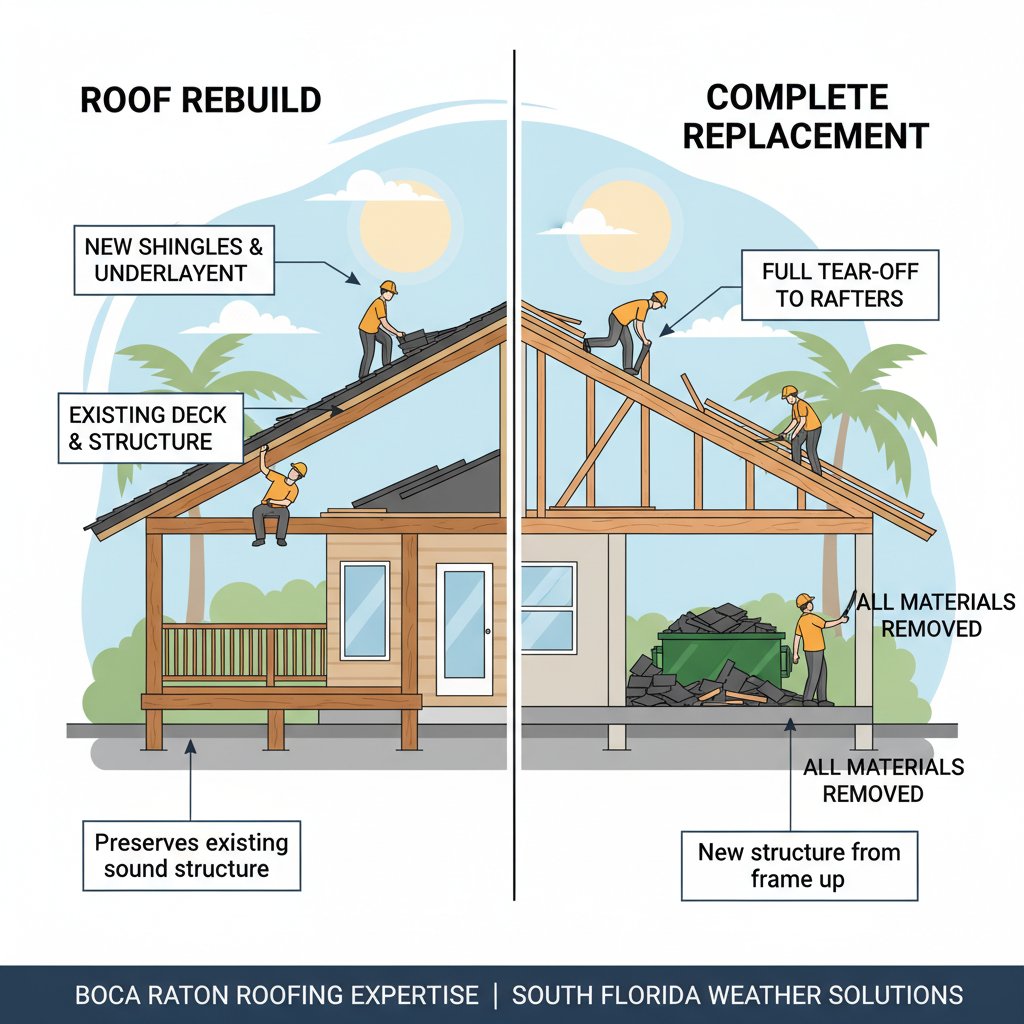
Before addressing hurricane season impacts, it’s essential to understand what distinguishes a roof rebuild from a complete roof replacement. This distinction affects everything from project duration to weather vulnerability during construction.
A complete roof replacement tears off all existing materials down to the decking, replaces underlayment and decking as needed, and installs entirely new roofing materials. For a typical Boca Raton Mediterranean-style home with concrete tile, this means removing and disposing of thousands of tiles that may have 20-30 years of life remaining.
A roof rebuild takes a surgical approach. Mike McGilvary Roofing carefully removes tiles in compromised sections, addresses underlying issues like deteriorated underlayment or damaged decking, then reinstalls the same tiles with proper fastening to current wind codes. Additional work might include valley metal replacement, flashing reconstruction around penetrations, and boot replacements—but the fundamental tile roof remains intact where it’s still performing well.
Think of it like maintaining a quality vehicle. You don’t replace your entire car when it reaches 50,000 miles—you replace worn components while preserving the sound structure. A 20-year-old tile roof with failing underlayment in specific sections doesn’t need $50,000 worth of new materials. It needs targeted repairs addressing actual problems while preserving decades of remaining tile life.
This distinction matters enormously during hurricane season. A roof rebuild typically exposes smaller roof sections for shorter periods compared to complete replacements, reducing weather vulnerability during construction.
Hurricane Season Timeline Pressures
South Florida’s hurricane season officially runs June 1 through November 30, but the realistic impact on roofing projects extends beyond these dates.
Pre-Season Rush (April-May)
Smart Boca Raton homeowners schedule roof rebuilds during April and May. Contractor calendars fill rapidly as property owners rush to complete projects before June 1. Material suppliers maintain full inventory, and weather conditions offer optimal working environments with lower humidity and minimal afternoon thunderstorms.
Mike McGilvary Roofing typically books 4-6 weeks out during this period. Homeowners calling in late April for roof rebuild work might not see crews until early June—right when complications begin.
Early Season Complications (June-July)
June marks the beginning of daily afternoon thunderstorms across Palm Beach County. These predictable weather patterns don’t usually halt roof rebuild projects entirely, but they create scheduling complications.
Morning starts become essential. Crews arrive at 7:00 AM to maximize dry working hours before inevitable 2:00-4:00 PM storms. A roof rebuild project that might take three weeks in April could extend to four or five weeks in July simply due to weather delays.
When Mike McGilvary Roofing performs a section-specific underlayment replacement during this period, we carefully plan which roof sections to expose on which days, keeping vulnerable areas covered whenever storms threaten. This requires more sophisticated project management than off-season work.
Peak Season Chaos (August-October)
August through October represents peak hurricane formation period. This is when timeline impacts become severe and unpredictable.
Named storm watches create immediate project freezes. When a tropical system enters the Gulf of Mexico or approaches from the Atlantic, all roof rebuild work stops. Contractors spend these periods securing job sites, installing temporary protection over exposed sections, and preparing for potential emergency response.
Hurricane Idalia in August 2023 demonstrated these disruptions. Though the storm tracked well north of Boca Raton, all roofing work halted for four days as the system developed and tracked through the Gulf. Projects scheduled for completion that week extended into the following week at minimum.
More significantly, any hurricane making landfall anywhere in Florida triggers a massive contractor migration. Roofing crews from across the state—including some working on Boca Raton roof rebuilds—redeploy to damaged areas where emergency repairs command premium rates. A hurricane striking Fort Myers or Tampa can delay Boca Raton projects for weeks as the industry responds to acute damage.
Late Season and Recovery (November-December)
November technically ends hurricane season, but recovery effects often extend through December. Contractors catching up on delayed projects face material shortages if any significant storms impacted Florida during the season.
Paradoxically, November and December can offer excellent conditions for roof rebuild work. Weather patterns stabilize, afternoon thunderstorms diminish, and contractors have fuller availability as the panic subsides.
Material Availability Fluctuations
Hurricane season doesn’t just affect labor availability—it creates significant material supply disruptions that impact roof rebuild costs and timelines.
Underlayment materials like synthetic felt become scarce after major storms. When thousands of roofs across Florida need emergency repairs, manufacturers can’t increase production fast enough to meet demand spikes. A roof rebuild project scheduled to start in September might face delays simply waiting for underlayment delivery.
Valley metal, flashing materials, and specialized components experience similar shortages. Mike McGilvary Roofing maintains strategic material inventory during hurricane season specifically to avoid these delays, but smaller contractors operating without this buffer may leave clients waiting weeks for basic supplies.
Tile matching presents unique challenges. Boca Raton’s Mediterranean architecture often features discontinued tile profiles from manufacturers who’ve changed product lines. Finding replacement tiles for a roof rebuild requires advance planning. Hurricane season demand spikes make this matching process even more difficult as suppliers prioritize emergency orders.
Insurance Claim Timing Complications
Many Boca Raton roof rebuilds involve insurance claims for storm damage. Hurricane season creates cascading complications for these projects.
Adjusters become overwhelmed after any significant weather event. A roof rebuild claim submitted in September might not receive inspection and approval until November—then face material and contractor availability issues extending the project into the following year.
Florida’s property insurance crisis compounds these delays. With multiple carriers exiting the Florida market and remaining insurers tightening requirements, claims processing has slowed even for legitimate storm damage. The 5-year roof certification that Mike McGilvary Roofing provides becomes essential documentation, but obtaining approvals during peak hurricane season adds weeks to project timelines.
Strategic homeowners file claims immediately after damage occurs rather than waiting. A May storm damage claim processed in June allows for a roof rebuild completion before peak season chaos begins.
When to Rebuild vs Repair Roof: Seasonal Considerations
Hurricane season affects the rebuild-versus-repair decision differently depending on damage severity and timing.
Minor storm damage discovered in August—a few displaced tiles, small flashing issues—often warrants temporary repairs with comprehensive roof rebuild work postponed until November or later. Rushing a full rebuild during peak hurricane season exposes the project to unnecessary weather delays and higher costs.
Significant damage requiring immediate attention can’t wait. Active leaks, compromised structural decking, or extensive underlayment failure demands prompt roof rebuild work regardless of season. In these cases, working with experienced roof rebuild contractors in Boca Raton who understand hurricane season project management becomes critical.
Mike McGilvary Roofing evaluates each situation individually. A 22-year-old tile roof with valley deterioration but otherwise sound condition might receive temporary valley sealing in July with complete valley metal replacement scheduled for December. This staged approach protects the home while avoiding peak season complications.
Conversely, extensive water intrusion affecting interior spaces requires immediate comprehensive repair even if that means navigating August weather challenges.
Storm Damage Roof Repair Emergency Response
When hurricanes do impact Boca Raton directly, understanding emergency response versus permanent roof rebuild timelines becomes essential.
Immediate post-storm priorities focus on temporary protection: tarping exposed areas, securing loose materials, preventing additional water intrusion. These emergency measures don’t constitute roof rebuilds—they’re stopgap protection until comprehensive repairs become feasible.
Actual roof rebuild work may not begin for weeks or months after major hurricanes. Hurricane Irma in 2017 demonstrated this reality. Palm Beach County escaped the worst impacts, but the sheer volume of insurance claims, adjuster availability, and contractor demand meant many Boca Raton roof rebuilds didn’t commence until early 2018.
Mike McGilvary Roofing maintains 24/7 emergency availability specifically for storm damage situations. We provide immediate temporary protection, thorough damage documentation for insurance purposes, then schedule permanent roof rebuild work as materials and optimal conditions allow.
Roof Rebuild Cost Fluctuations
Hurricane season creates predictable cost variations for roof rebuild projects across Boca Raton.
Pre-season rates (February-April) typically offer the best value. Contractors compete for work during slower periods, material suppliers maintain competitive pricing, and project efficiency remains high with ideal weather conditions.
Peak season pricing (August-October) increases 15-25% on average due to reduced contractor availability, weather-related inefficiencies, and material cost pressures. A valley metal replacement quoted at $3,200 in March might cost $3,800 in September simply due to these seasonal factors.
Post-storm pricing becomes unpredictable and often excessive. After Hurricane Ian struck Southwest Florida in 2022, emergency roof repair rates across the entire state jumped 40-60% as contractors responded to desperate demand. Even Boca Raton properties with minor damage faced inflated pricing as the contractor workforce shifted to heavily impacted areas.
Mike McGilvary Roofing maintains consistent pricing structures year-round for scheduled work. Emergency storm response commands premium rates due to 24/7 availability and immediate response requirements, but planned roof rebuild projects receive fair pricing regardless of season.
Optimal Scheduling Strategy for Boca Raton Homeowners
Smart scheduling maximizes value and minimizes complications for roof rebuild projects in Boca Raton’s unique hurricane season environment.
Ideal timing: Schedule roof rebuilds for November through April. This seven-month window offers stable weather, full contractor availability, competitive pricing, and minimal weather delays. A typical roof rebuild requiring three weeks of active work experiences few interruptions during these months.
Acceptable timing: May and early June work well for projects that can complete before peak season begins. Secure contractor commitment by March for May starts.
Challenging timing: July through October brings maximum complications. Reserve this period for emergency repairs only when damage severity requires immediate attention.
Long-term planning: Property owners anticipating roof rebuild needs within the next 12-24 months should schedule comprehensive inspections in January or February. This advance planning allows for optimal project timing and budget preparation.
Working With Experienced Hurricane Season Contractors
Not all roof rebuild contractors in Boca Raton demonstrate equal competence managing hurricane season complications. Mike McGilvary Roofing’s 50+ years serving Palm Beach County provides institutional knowledge that newer contractors lack.
Experienced contractors maintain material inventory to buffer supply chain disruptions. We understand proper temporary protection methods when weather forces project delays. We communicate proactively about weather-related schedule changes rather than leaving homeowners uncertain about project status.
Most importantly, experienced contractors don’t disappear after hurricanes strike elsewhere in Florida. Some less-established companies abandon in-progress Boca Raton projects to chase emergency work in damaged areas. Mike McGilvary Roofing remains committed to completing every project regardless of storm-related opportunities elsewhere.
Our BuildZoom score of 103/100 (top 10% of 191,428 Florida contractors) and A+ BBB accreditation reflect this consistent reliability across all seasons and conditions.
Protect Your Boca Raton Property Year-Round
Hurricane season creates real complications for roof rebuild timelines, but proper planning and experienced contractor selection minimize these impacts. Understanding seasonal patterns allows Boca Raton homeowners to make informed decisions about project timing, realistic timeline expectations, and appropriate responses to damage when it occurs.
Whether you’re planning a roof rebuild, evaluating storm damage, or simply maintaining your property’s hurricane readiness, Mike McGilvary Roofing provides honest assessments focused on what you actually need—not unnecessary complete roof replacements that maximize contractor profit while emptying your wallet.
Contact Mike McGilvary Roofing for a free roof inspection and honest evaluation of your Boca Raton property. We’ll assess whether you need a targeted roof rebuild, minor repairs, or simply routine maintenance—and we’ll recommend optimal timing based on your specific situation and hurricane season considerations. Call our Lake Worth office or visit our website to schedule your inspection with a contractor who’s been navigating South Florida hurricane seasons since 1974.