
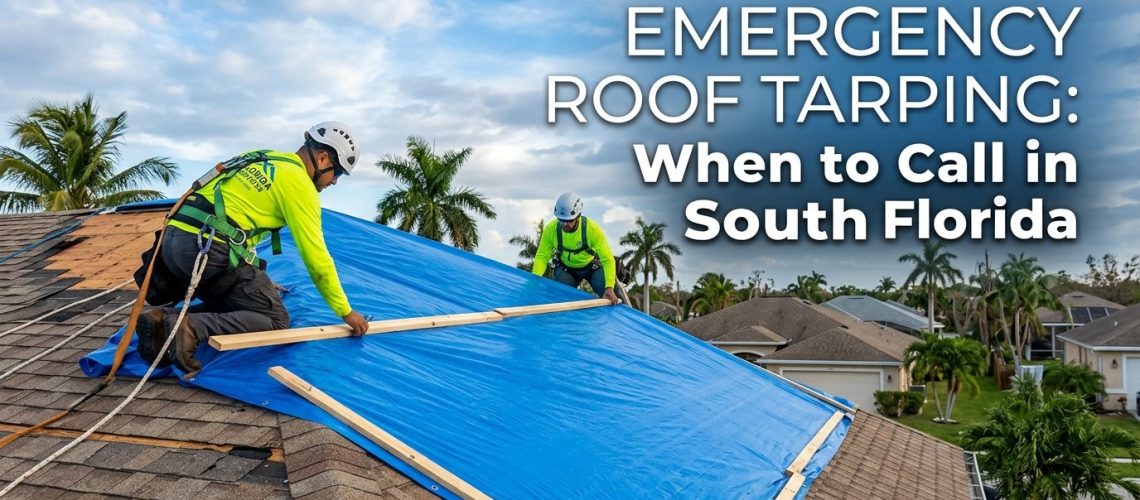
At 2:47 AM, water dripping onto your bedroom floor signals a crisis that can’t wait until morning. In South Florida, where afternoon thunderstorms, tropical systems, and sudden weather events are part of life, knowing when to call for emergency roof tarping can mean the difference between a manageable repair and catastrophic interior damage costing tens of thousands of dollars.
Emergency roof tarping is a temporary protective measure that prevents water intrusion after roof damage occurs. For Palm Beach County homeowners, understanding when this service is truly necessary—and when it isn’t—helps you make informed decisions during stressful situations.
What Emergency Roof Tarping Actually Does
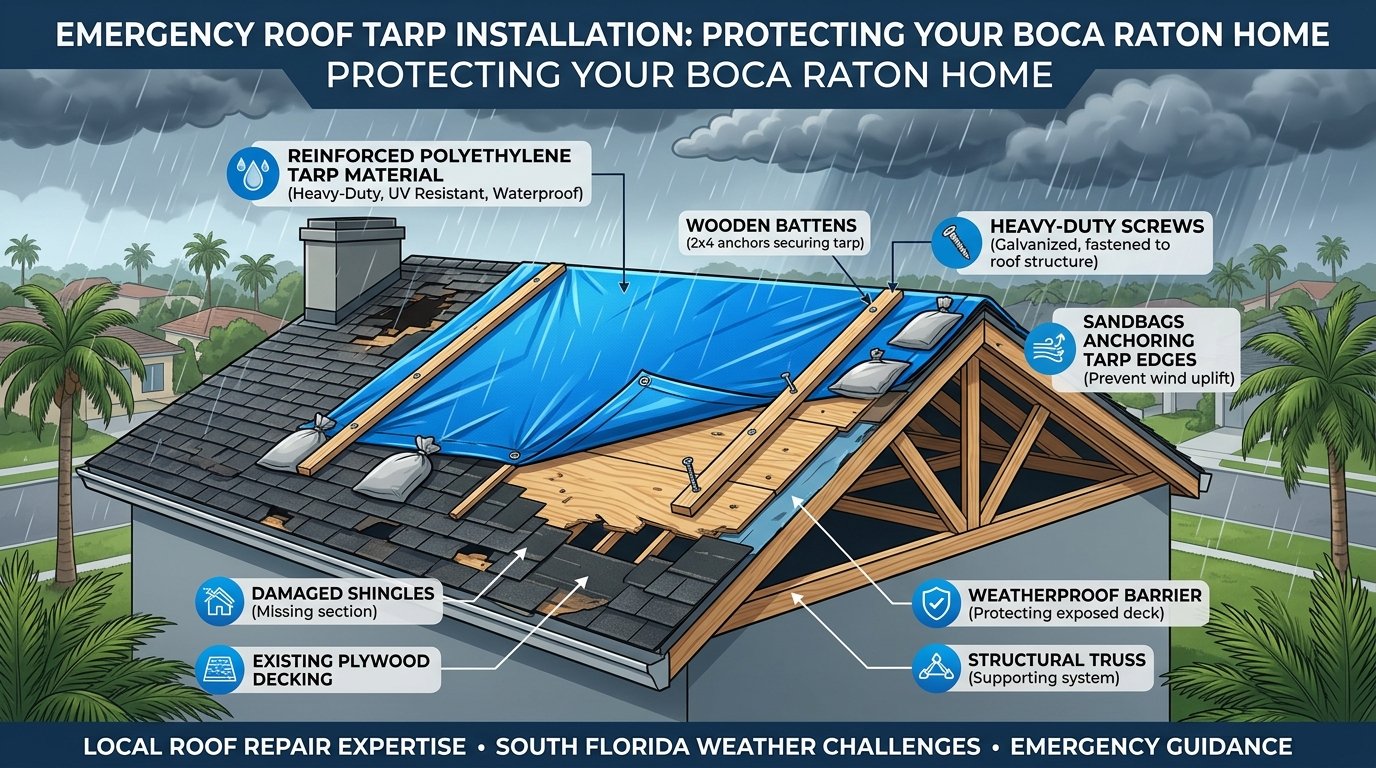
Emergency roof tarping creates a temporary weatherproof barrier over damaged roof sections. Professional tarping involves heavy-duty reinforced polyethylene sheeting (typically 12-20 mil thickness) secured with battens, screws, and sandbags to withstand wind exposure until permanent repairs can be completed.
This isn’t the blue tarp from the hardware store that blows off in the next storm. Professional emergency roof tarping uses commercial-grade materials properly anchored to your roof structure, designed to remain secure through additional weather events while protecting your home’s interior.
At Mike McGilvary Roofing, we’ve provided 24/7 emergency roof repair services throughout Palm Beach County, built on family roofing roots dating to 1974. We’ve tarped everything from historic Palm Beach estates with barrel tile to modern Boca Raton townhomes with architectural shingles, and we know exactly when tarping is necessary versus when alternative solutions make more sense.
When to Call for Emergency Roof Tarping Immediately
Active Water Intrusion During Weather Events
If water is actively entering your home during rain, you need emergency roof tarping immediately. Water damage accelerates exponentially—what starts as ceiling staining quickly progresses to drywall saturation, insulation damage, electrical hazards, and mold growth within 24-48 hours.
Common scenarios requiring immediate tarping include:
- Visible daylight through your roof deck from interior spaces
- Active dripping or streaming water from ceilings during rain
- Ceiling sagging from water accumulation
- Multiple leak points indicating widespread damage
- Water running down interior walls
In these situations, every hour matters. Mike McGilvary Roofing provides 24/7 emergency availability throughout Palm Beach County because we understand that roof emergencies don’t wait for business hours.
Storm Damage Exposing Roof Deck or Interior
Hurricane roof damage repair often requires immediate tarping when storms remove roofing materials. If you can see exposed roof decking, underlayment, or—worse—interior spaces from outside, you need emergency roof tarping before the next rain.
South Florida’s weather patterns create particular urgency. Our afternoon thunderstorms mean exposed roof sections rarely stay dry for long. A hurricane that damages your roof on Saturday will likely be followed by typical summer weather patterns by Tuesday, giving you a narrow window to protect your home.
Storm damage scenarios requiring immediate tarping:
- Missing tile sections (10+ tiles in concentrated areas)
- Torn or blown-off shingle sections
- Damaged or separated roof valleys
- Compromised flashing around chimneys or penetrations
- Tree limbs that have penetrated the roof surface
Structural Damage Creating Openings
Any structural compromise that creates openings in your roof envelope requires immediate attention. This includes tree damage, where fallen branches have broken through roofing materials, or structural failures where sections of roof have collapsed or separated.
These situations demand urgent roof repair service because they expose your home not just to water but to wind-driven rain, pests, and security concerns. Professional emergency roof tarping secures the area while structural assessments and permanent repairs are planned.
When Emergency Tarping Can Wait Until Business Hours
Not every roof issue constitutes a true emergency requiring middle-of-the-night service calls. Understanding when damage can safely wait until morning or the next business day helps you avoid unnecessary emergency service charges while still protecting your home.
Minor Leaks Controlled by Buckets
If you’ve discovered a small leak that’s manageable with buckets or towels, and weather forecasts show clear conditions for the next 24-48 hours, scheduling next-business-day service is typically appropriate. Place containers to catch water, move valuables from the affected area, and call during normal hours.
This approach makes sense when:
- Leak is localized to one small area
- Dripping is slow and containable
- No immediate weather threats are forecasted
- No visible ceiling sagging or structural concerns exist
- The leak just started and hasn’t caused extensive damage
Damage Discovered After Weather Has Passed
If you discover roof damage during post-storm inspection but weather has cleared and forecasts show several dry days ahead, scheduling prompt but non-emergency service is reasonable. Document the damage with photos, cover any interior affected areas with plastic sheeting, and arrange inspection within 24-48 hours.
However, don’t wait too long. South Florida weather can change quickly, and what seems like a clear forecast can shift. Additionally, after major storms, demand for roofing services spikes dramatically, and scheduling delays extend rapidly.
The True Cost of Delayed Emergency Roof Tarping
Homeowners sometimes hesitate to call for emergency roof tarping due to perceived costs. This hesitation often proves far more expensive than the emergency service itself.
Consider the progression of water damage:
Hour 1-6: Surface water on floors and furniture, ceiling staining begins. Damage: $500-$2,000.
Hour 6-24: Drywall saturation, insulation waterlogging, paint damage. Damage: $3,000-$8,000.
24-48 Hours: Structural wood moisture absorption, electrical hazards, mold spore activation. Damage: $8,000-$20,000.
48+ Hours: Active mold growth, structural deterioration, HVAC system contamination. Damage: $15,000 or more.
Professional emergency roof tarping typically costs $500-$2,500 depending on damage extent and roof access difficulty—a fraction of the interior damage costs that accumulate when water intrusion continues unchecked.
At Mike McGilvary Roofing, we believe in transparency about costs. We don’t inflate emergency charges or use crisis situations to pressure homeowners into unnecessary full replacements. Emergency tarping protects your home until we can properly assess what actually needs repair—often far less than other contractors might claim.
What to Expect During Emergency Roof Tarping Service
Understanding the emergency response process helps homeowners know what to expect when calling for urgent roof repair service.
Initial Contact and Assessment
When you call Mike McGilvary Roofing’s 24/7 emergency line, you’ll speak with someone who can assess your situation immediately. We’ll ask about the nature of damage, whether water is actively entering, weather conditions, and safety concerns. This helps us prioritize response and arrive prepared with appropriate materials.
On-Site Evaluation
Our team arrives with commercial-grade tarping materials, safety equipment, and lighting for nighttime work. We assess the damage extent, identify all compromised areas, and explain what we’re seeing before beginning work. Even in emergency situations, we believe in transparency.
Professional Tarping Installation
Professional emergency roof tarping involves:
- Clearing debris from damaged areas
- Measuring and cutting properly-sized tarp coverage
- Securing tarps with wooden battens screwed into sound roof structure
- Ensuring adequate overlap and wind resistance
- Weighting tarp edges with sandbags where appropriate
- Verifying complete coverage of all exposed areas
Quality emergency tarping withstands subsequent weather events. We’ve had tarps remain secure through multiple storm systems when permanent repairs required weeks to schedule due to contractor backlogs after major hurricanes.
Documentation and Next Steps
We document the damage extensively with photos and notes for insurance purposes. Before leaving, we discuss the likely scope of permanent repairs, provide preliminary estimates, and schedule follow-up inspection once weather permits safe roof access for comprehensive assessment.
Emergency Tarping and Insurance Claims
Most homeowners insurance policies cover emergency tarping as part of storm damage roof repair. The cost is typically included in your claim settlement, and many policies specifically require homeowners to take reasonable steps to prevent additional damage—making emergency tarping not just advisable but potentially required under many policies’ duty to prevent further damage.
Key insurance considerations:
- Document everything with photos before and after tarping
- Keep all receipts and invoices related to emergency services
- Report damage to your insurance company promptly
- Don’t wait for insurance approval to tarp—preventing additional damage is your responsibility
- Professional tarping by licensed contractors carries more credibility with adjusters than DIY attempts
Mike McGilvary Roofing has worked with insurance claims throughout Palm Beach County for over 50 years. We provide detailed documentation that supports your claim while ensuring the actual repairs needed—not inflated replacements—are accurately represented.
Why 24/7 Emergency Response Matters in South Florida
Palm Beach County’s weather patterns make true 24/7 emergency availability essential. Our summer weather systems often strike in afternoon and evening hours. Hurricanes and tropical storms don’t respect business schedules. And the rapid progression from storm damage to interior destruction in our humid climate means hours matter.
Companies offering “emergency services” that actually mean “we’ll call you back Monday morning” leave homeowners vulnerable during the critical window when intervention prevents catastrophic damage.
Mike McGilvary personally ensures someone qualified to assess emergency situations and dispatch appropriate response is available around the clock. After 50+ years serving South Florida communities from Palm Beach to Boca Raton, we understand that genuine emergency availability isn’t a marketing claim—it’s a fundamental service requirement for responsible roofing contractors in our region.
Beyond Emergency Tarping: Preventing Future Crises
While emergency roof tarping addresses immediate damage, it also reveals an important truth: most roofing emergencies result from deferred maintenance or unaddressed minor issues that progressed to failure.
That small leak you’ve been monitoring with a bucket? It indicates underlying problems that will worsen. Those few cracked tiles you’ve ignored? Wind-driven rain is penetrating around them. The flashing that seems “mostly okay”? It’s failing.
After providing emergency tarping, we offer honest assessment of what repairs actually prevent future emergencies. Often, targeted repairs addressing specific problem areas—valley metal replacement, section-specific underlayment work, flashing reconstruction—cost a fraction of full replacement while eliminating emergency risk.
This is the repair-first philosophy that’s guided Mike McGilvary Roofing, rooted in a family roofing tradition dating to 1974. You don’t buy a new car when you hit 30,000 miles—you replace the tires, change the oil, and address what actually needs attention. Your roof works the same way. Strategic repairs and rebuilds often provide decades of additional service life at 20-40% the cost of full replacement.
When to Call Mike McGilvary Roofing
If you’re experiencing roof damage that’s allowing water intrusion, exposing your home’s interior, or creating risk during upcoming weather, don’t wait. Emergency roof tarping protects your home from catastrophic damage while permanent solutions are properly planned.
Mike McGilvary Roofing provides 24/7 emergency roof repair throughout Palm Beach County communities including Boca Raton, West Palm Beach, Delray Beach, Wellington, Palm Beach Gardens, Jupiter, and surrounding South Florida areas. Our Florida contractor license (CCC1331721) has been continuously active for over 50 years, we maintain an A+ BBB rating, and our 5.0-star rating across hundreds of Google reviews reflects our commitment to honest, transparent service.
For emergency roof tarping, storm damage roof repair, or hurricane roof damage repair, call our 24/7 emergency line. For non-emergency inspections, roof certifications, or questions about whether your situation requires immediate attention, contact us during business hours.
We don’t use crisis situations to pressure unnecessary replacements. We provide honest assessment of what actually needs attention, and we’re available whenever South Florida weather creates urgent need. That’s been our approach for five decades, and it’s why Palm Beach County homeowners trust Mike McGilvary Roofing when emergencies strike.