
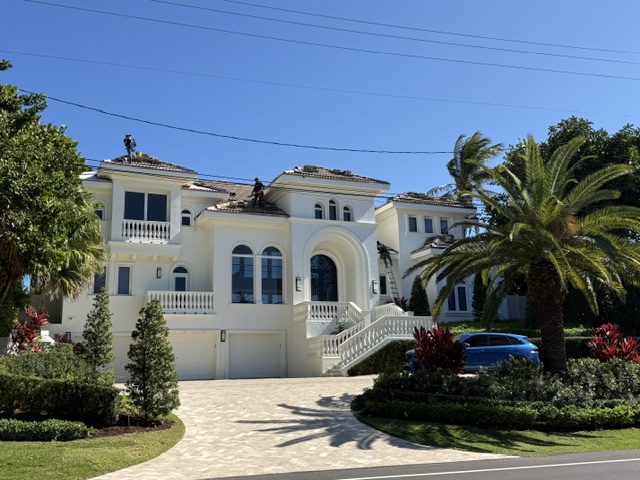
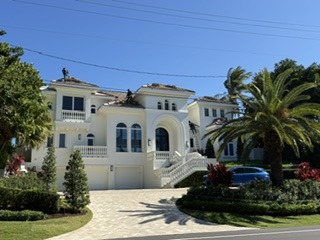
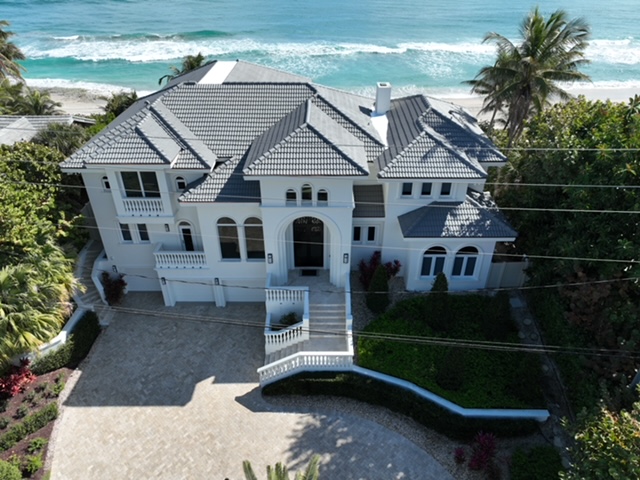
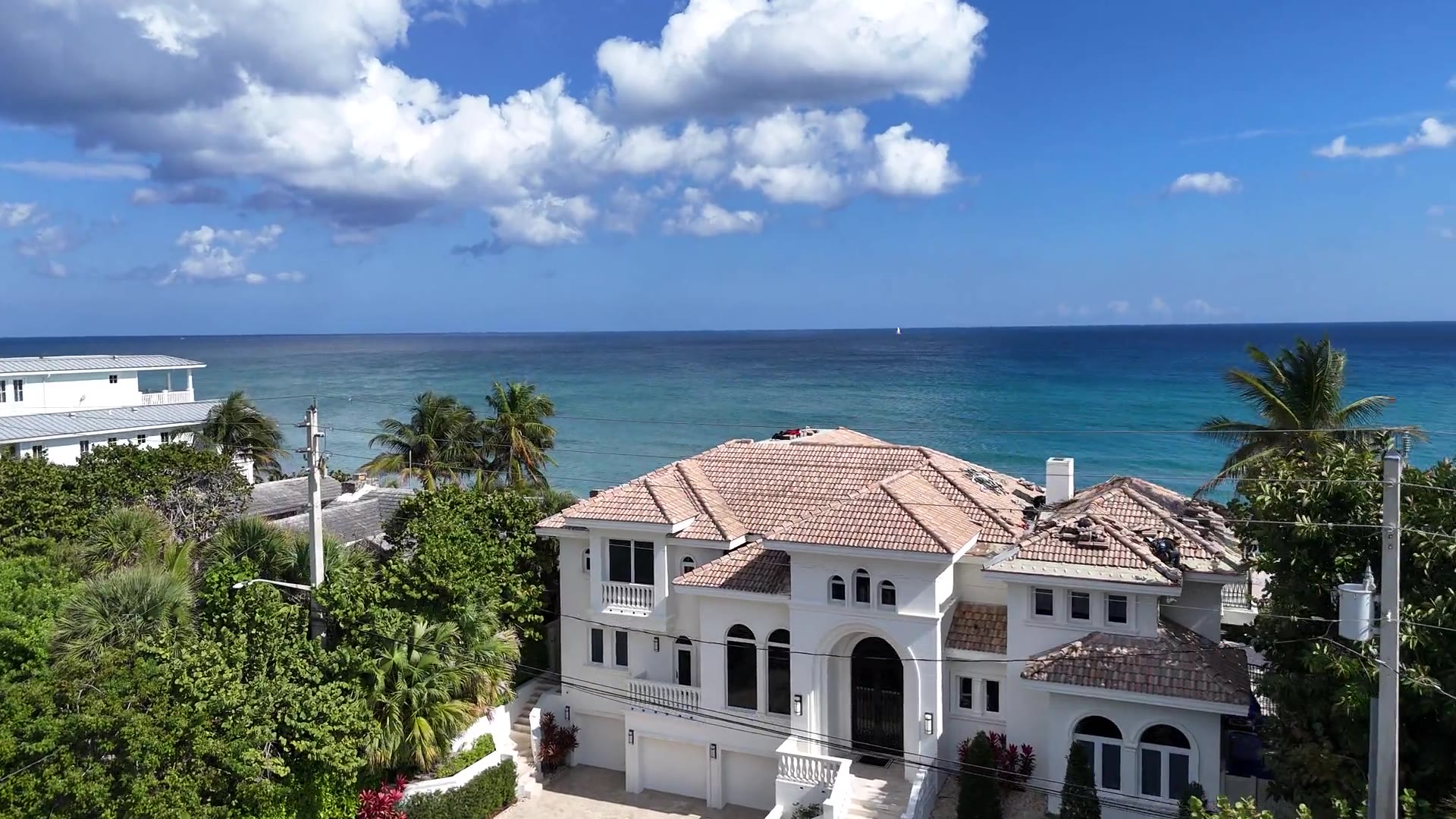
A $12 million oceanfront home, preserved — not replaced.
The roof's age had become a concern with the homeowner's insurance carrier, and a full replacement seemed inevitable. After a comprehensive inspection, Mike McGilvary Roofing determined the 25-year-old tile roof was a strong candidate for preservation. The deciding factor wasn't the home's value, and it wasn't the roof's age — it was the roof's condition.
An insurance question, and an assumption.
The homeowner contacted us because the age of the roof had become a concern with the insurance carrier. The initial assumption was that roof replacement would likely be required — and the owner was seeking pricing and guidance on replacement options.
This is an approximately $12 million oceanfront residence. The owner had every financial ability to replace the roof if necessary. But replacing a roof is a decision that should be driven by condition — not by the value of the home, and not by the age of the roof alone.
Most companies show photos. We show proof.
After performing a comprehensive inspection and documenting the entire roofing system, our conclusion was clear: the roof was not a candidate for replacement based solely on age. Although it contained multiple active leak areas, deteriorated high-water-flow sections, damaged tiles, localized underlayment failures, and isolated sheathing deterioration, the overall system remained structurally sound and retained substantial serviceable life.
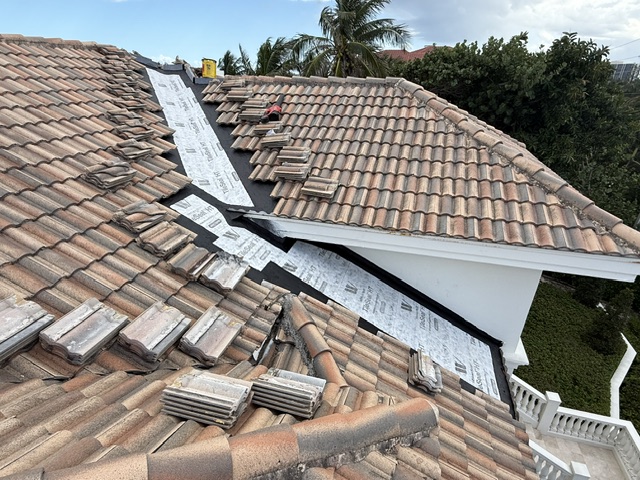
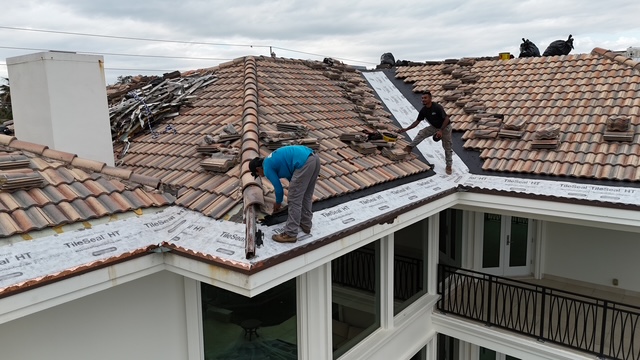
Condition, not age — most of the roof was sound.
The documented findings were the opposite of what a tear-off assumes. The overall system was structurally sound with substantial remaining service life. The failures were real — but localized, and every one of them was repairable.
The roof system
Structurally sound overall, with substantial serviceable life remaining — the basis for preservation rather than replacement.
The tile
The majority of the concrete tile was sound and worth keeping — original architectural tile preserved, not discarded.
Active leaks
Multiple active leak areas, concentrated in the high-water-flow sections where drainage stress is greatest.
High-water-flow sections
Deteriorated sections and primary valleys removed and reconstructed with new self-adhered waterproofing underlayment.
Isolated sheathing
Compromised sheathing in leak-affected areas replaced down to solid structure — isolated, not roof-wide.
Flat roof & flashing
Aging flat-roof sections restored, flashing repaired and waterproofed, damaged tiles replaced, and loose field and cap tiles refastened.
We rebuilt the failures — and kept the roof.
Rather than tear off a sound roof, our crews addressed each failure point with a complete, system-level restoration — preserving the existing tile while making the roof watertight and durable again.
- Comprehensive roof inspection and documentation
- Identification of active leak sources
- Removal of roofing materials in critical high-water-flow sections
- Replacement of compromised sheathing where required
- Installation of new self-adhered waterproofing underlayment systems
- Reconstruction of primary roof valleys
- Flashing repairs and waterproofing upgrades
- Replacement and reinstallation of damaged roof tiles
- Refastening of loose field and cap tiles
- System-wide roof restoration and maintenance
- Restoration of aging flat roof sections
- Cosmetic roof tile color transformation at the owner's request
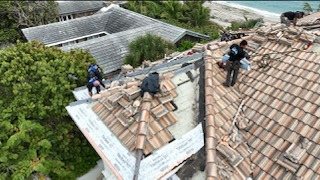
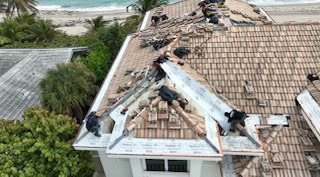
Not the value. Not the age. The condition.
This is the point worth emphasizing — the same one at the heart of Florida's Roof Age Law. Three things could have driven this decision. Only one of them should have.
A roughly $12 million home, with an owner who could replace the roof outright. The value of a home never decides whether its roof needs replacing.
Twenty-five years old — old enough to raise an insurer's question. But age alone never tells you what a roof actually has left.
Structurally sound, with documented service life remaining. Condition is the only honest measure of whether a roof should be preserved or replaced.
Every finding, on the record.
The work concluded with a signed 5-Year Roof Certification — documenting the roof's condition, the deficiencies identified, the repairs performed, and a professional opinion that the system possesses a remaining useful life exceeding five years. The kind of evidence a homeowner can hand to an insurer, an underwriter, or a future buyer.
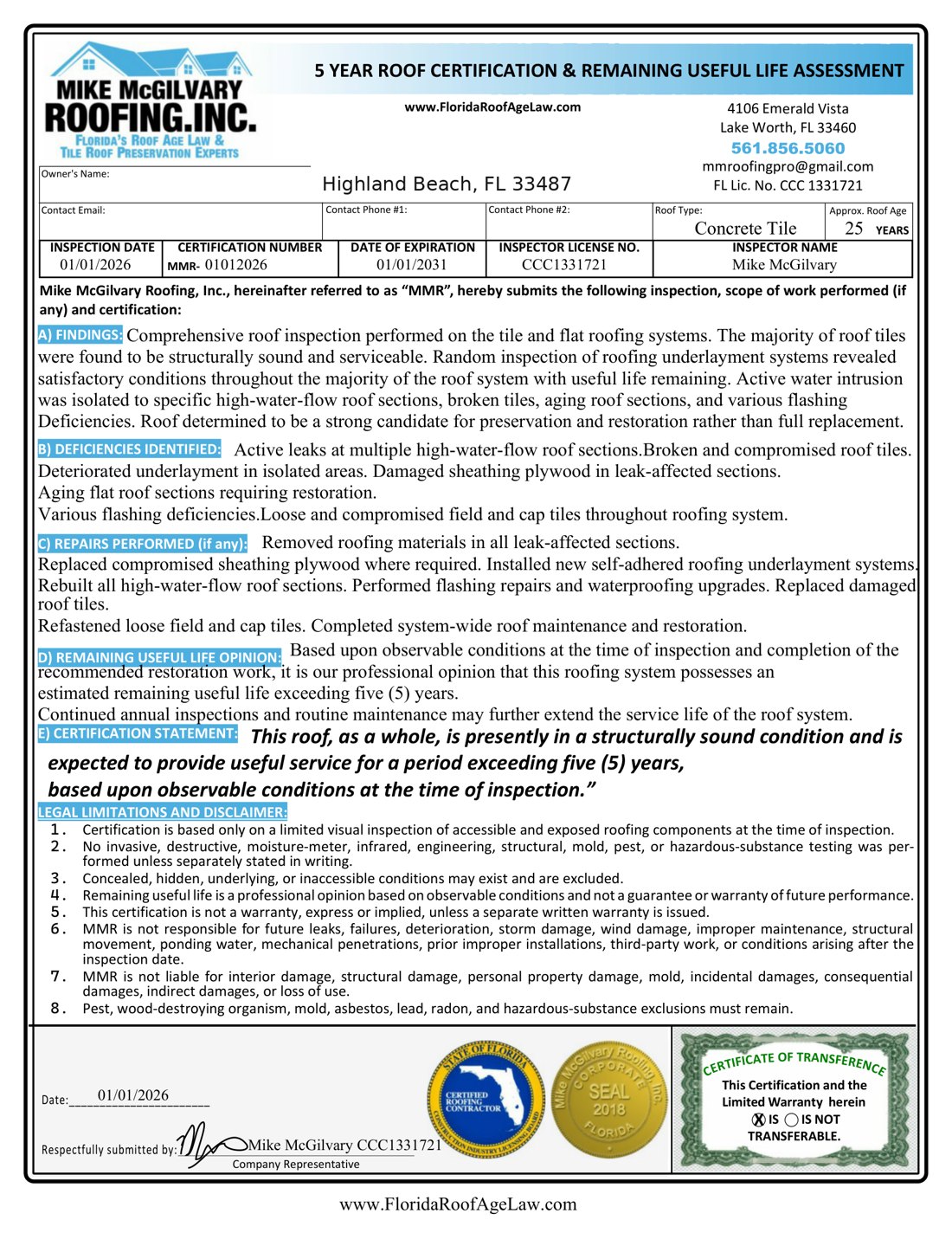
From the signed certification“This roof, as a whole, is presently in a structurally sound condition and is expected to provide useful service for a period exceeding five (5) years, based upon observable conditions at the time of inspection.”
— Mike McGilvary, CCC1331721 · 5-Year Roof Certification, valid through 2031
A signed assessment documented to the standard behind a 5-Year Roof Certification. (Property address redacted for the homeowner's privacy.)
Certified for five more years — instead of replaced.
By rebuilding the failing sections, restoring the waterproofing systems, reconstructing the critical drainage areas, and preserving the existing tile, we restored the roof's performance and issued a signed 5-Year Roof Certification — while the owner avoided a full replacement the roof simply did not need.
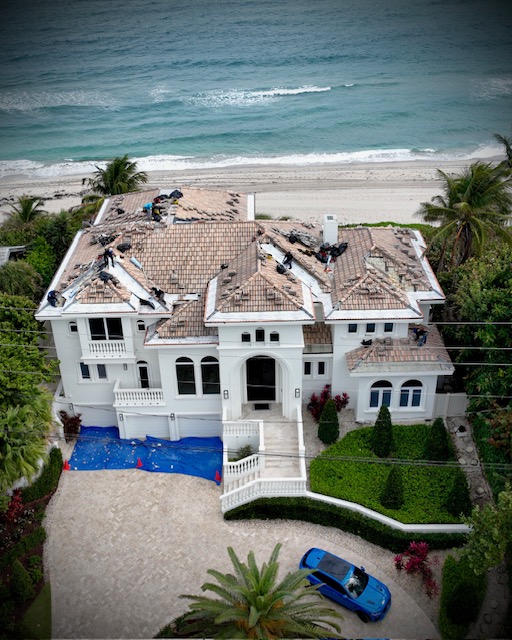
A roof should not be replaced because it is old. It should be replaced when its condition justifies it.
This project demonstrates how proper inspection, documentation, restoration, and certification can extend the useful life of a roofing system — while preserving the homeowner's investment.
Disclaimer: This case study describes one project and is provided for general educational purposes about roof condition assessment, preservation, and Florida Statute §627.7011. It is not a guarantee of any insurance outcome, and roof condition, certification eligibility, and remaining useful life vary by property. A documented inspection determines the appropriate course of action for each roof.
Insurance questioning your roof's age? Get it evaluated first.
Before committing to replacement, schedule a roof evaluation. The condition of the roof — not the age of the roof — should determine the proper course of action. A free, documented inspection from a family-owned Palm Beach County contractor, licensed since 2018, carrying forward a McGilvary family roofing legacy licensed since 1974.