
Your roof faces more abuse in South Florida than almost anywhere else in the United States. Between 250+ days of intense UV exposure annually, ambient temperatures regularly exceeding 95°F, humidity levels that hover near 80%, torrential summer downpours, and occasional hurricane-force winds, the question isn’t whether your roofing material matters—it’s how much money the wrong choice will cost you over the next two decades.
After 50+ years installing and repairing roofs across Palm Beach County, we’ve seen every roofing material perform in Florida’s extreme conditions. Some materials consistently deliver 30+ years of reliable protection. Others start failing within a decade, costing homeowners tens of thousands in premature replacements. Here’s what actually works in Florida heat and humidity—and what doesn’t.
Why Florida’s Climate Destroys Roofing Materials Faster
Before comparing specific materials, you need to understand what makes Florida uniquely destructive to roofs. It’s not just one factor—it’s the relentless combination.
UV Radiation: South Florida receives some of the most intense ultraviolet radiation in the continental U.S. UV breaks down organic materials, degrades protective coatings, and causes thermal cycling that expands and contracts roofing components thousands of times annually.
Humidity and Moisture: Sustained humidity levels above 70% create ideal conditions for algae growth, mold development, and accelerated deterioration of underlayments and adhesives. Unlike dry climates where materials can fully dry between rain events, Florida roofs remain in a constant state of moisture exposure.
Thermal Stress: Surface temperatures on dark roofing materials regularly exceed 170°F during summer afternoons. This extreme heat degrades asphalt-based products, warps inadequate materials, and creates expansion-contraction cycles that fatigue fasteners and sealants.
Wind Requirements: Florida building codes mandate higher wind resistance than most states. Post-Hurricane Andrew regulations require roofing systems to withstand sustained winds up to 150+ mph in coastal zones, which eliminates materials and installation methods that work fine elsewhere.
Concrete Tile: The Gold Standard for South Florida
Concrete tile dominates Palm Beach County residential roofing for good reason—it’s engineered specifically for conditions exactly like ours.
Performance Advantages
Concrete tile typically lasts 40-50 years in South Florida when properly installed and maintained. The material itself is virtually impervious to UV degradation, doesn’t support organic growth, and maintains structural integrity through countless thermal cycles. Unlike asphalt products that deteriorate from sun exposure, concrete tile actually cures harder over time.
The thermal performance is exceptional. Concrete tile’s profile creates natural air circulation between the tile and underlayment, reducing attic temperatures by 10-15°F compared to flat materials. This air gap allows heat to escape rather than transferring into your living space, meaningfully reducing cooling costs.
Wind resistance, when installed to current codes, exceeds Florida’s strictest requirements. Modern concrete tile installations use foam adhesive, mechanical fasteners, and proper hip-and-ridge detailing to achieve ratings above 150 mph.
The Reality of Concrete Tile Maintenance
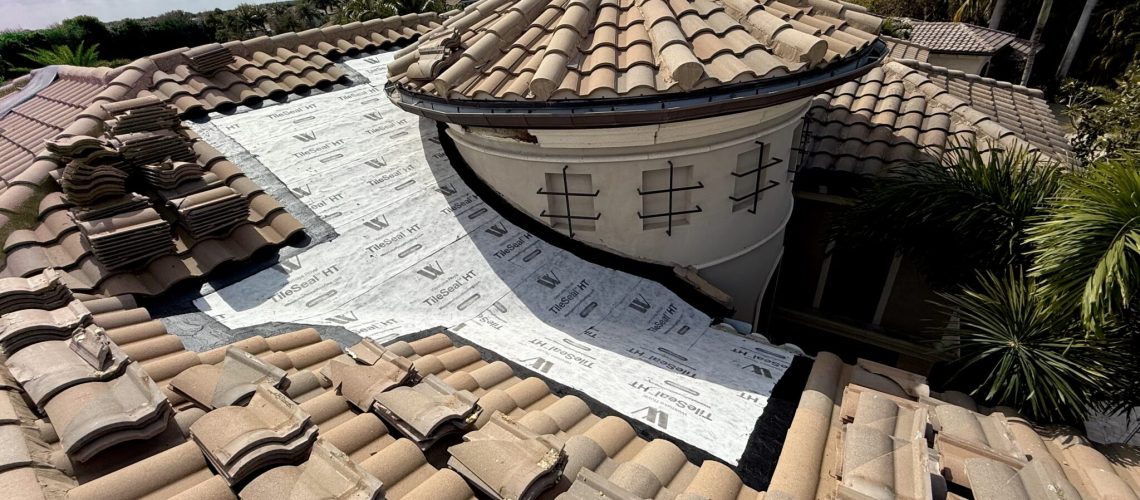
Here’s what most contractors won’t tell you upfront: concrete tile itself outlasts the components underneath it. A 25-year-old concrete tile roof with a failing underlayment doesn’t need replacement—it needs a strategic rebuild.
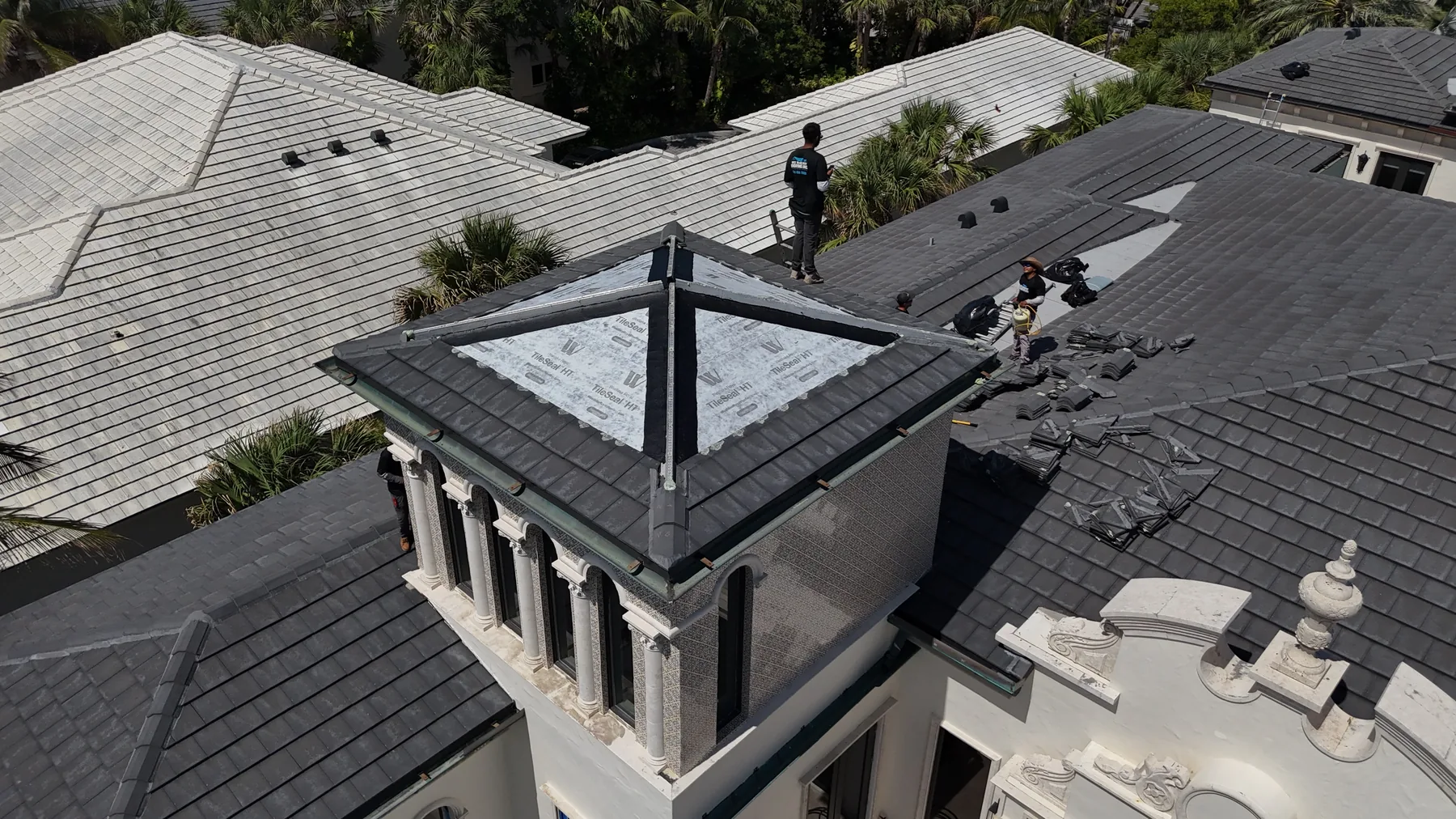
We regularly perform roof rebuilds where we carefully remove tiles (preserving 95%+ for reinstallation), replace deteriorated underlayment, upgrade valley metals, repair any damaged decking, then reset the original tiles with modern fastening methods. Cost: $8,000-$15,000 depending on roof size and complexity. Compare that to $45,000-$75,000 for complete tile replacement, and you understand why insurance companies increasingly accept properly documented rebuilds with 5-year certifications.
Think of it like this: You don’t buy a new car when you need new tires. Your 25-year-old tile with decades of life remaining doesn’t need replacement when the underlayment fails—it needs the equivalent of new tires and an oil change.
Concrete Tile Considerations
Weight matters. Concrete tile adds significant structural load (900-1,100 pounds per square), requiring proper roof framing. Most homes built in the past 40 years in Palm Beach County were engineered for tile, but older structures or homes originally built with lighter materials may need structural evaluation.
Upfront cost runs higher than alternatives—typically $12-18 per square foot installed for new construction. However, when amortized over 40-50 years of service life, concrete tile often proves the most economical choice.
Clay Tile: Premium Performance with Historic Appeal
Clay tile delivers everything concrete tile offers with added longevity and aesthetic appeal—at premium pricing.
Authentic clay tile roofs in Palm Beach’s historic districts routinely exceed 75 years of service. The material is completely inert, doesn’t degrade from UV exposure, resists algae and organic growth, and maintains color stability that concrete tiles can’t match. If you’ve seen Mediterranean Revival homes with rich terra cotta roofs that look virtually unchanged from their 1920s construction, that’s clay tile performance.
Clay tile provides the same thermal air-gap benefits as concrete, exceptional wind resistance when properly installed, and Class A fire rating. The primary consideration is cost—expect $18-30 per square foot installed depending on profile and quality—and weight similar to concrete tile requiring adequate structural support.
For estate properties, historic renovations, or luxury homes where longevity and appearance justify premium investment, clay tile remains the ultimate best roofing material Florida offers for permanent installations.
Metal Roofing: Modern Performance for Contemporary Homes
Metal roofing technology has advanced significantly in the past two decades, creating legitimate competition for tile in Florida applications.
Standing Seam Metal Performance
Quality standing seam metal roofs (not corrugated agricultural panels) deliver 40-50 year service life with minimal maintenance. The material doesn’t absorb moisture, resists algae growth, handles thermal expansion through designed slip joints, and achieves the highest wind ratings available—often exceeding 180 mph when properly installed.
Thermal performance is controversial. Metal roofs reflect significant solar radiation when coated with high-reflectivity finishes, but without adequate attic ventilation and radiant barriers, they can transfer heat through conduction. Properly designed metal roof systems with reflective coatings, ventilation, and insulation frequently outperform tile in energy efficiency.
Weight advantages matter for certain applications. At roughly 50 pounds per square, metal roofing allows installation on structures that can’t support tile, making it ideal for renovations, covered outdoor spaces, and buildings where structural upgrades aren’t feasible.
Metal Roofing Considerations
Quality varies dramatically. Premium aluminum or steel standing seam with Kynar 500/PVDF finishes delivers the performance we’re describing. Economy metal products with inferior coatings, thinner gauges, or exposed fastener systems fail prematurely in Florida conditions—we’ve seen paint failure, rust development, and fastener problems within 10-15 years on inferior products.
Installation expertise is critical. Metal roofing requires specialized knowledge of thermal movement, proper fastening, and detail work. Poor installations create leak points, noise issues, and premature failure. This isn’t a material for general contractors dabbling in roofing.
Cost ranges from $11-20 per square foot installed depending on material quality, profile, and complexity. While comparable to concrete tile initially, metal’s lighter weight can reduce overall project costs by eliminating structural reinforcement.
What Doesn’t Work Well: Materials to Avoid or Reconsider
Asphalt Shingles: Limited Lifespan in Florida
Standard three-tab asphalt shingles that deliver 20-25 years in moderate northern climates typically fail within 12-17 years in South Florida. UV radiation degrades the asphalt binder, granules wash away in heavy rains, and thermal cycling causes curling, cracking, and loss of adhesion.
Architectural (dimensional) shingles perform marginally better—perhaps 15-20 years in Florida—but still represent compromised longevity compared to tile or metal. The cost advantage ($4-7 per square foot installed) disappears when you’re replacing the roof twice as often as tile alternatives.
That said, architectural shingles make sense for certain applications: properties with planned short-term ownership, buildings where weight restrictions eliminate tile options, or tight budgets where immediate waterproofing matters more than long-term performance. We install them when they’re the right solution—we just make sure clients understand the realistic lifespan expectations.
Flat Roof Systems: Technology-Dependent Performance
Modified bitumen, TPO, and EPDM systems dominate commercial flat roofing. Performance varies dramatically based on specific product technology, installation quality, and maintenance commitment.
Premium TPO and modified bitumen systems properly installed with adequate drainage deliver 20-25 years in Florida. Budget products or poor installations fail within 10-12 years. The key differentiators include membrane thickness, seam welding quality, proper slope for drainage, and perimeter/penetration detailing.
For flat or low-slope residential applications (modern architecture, rooftop decks), these systems work—but require professional installation and periodic maintenance inspection that sloped roofs don’t demand.
Making the Right Choice for Your Property
The best roofing material Florida homeowners can choose depends on specific property factors beyond just climate performance.
Budget Reality: A properly installed concrete tile or quality metal roof costs more initially but delivers superior long-term value. If immediate budget constraints require choosing architectural shingles, understand you’re accepting a shorter lifespan rather than getting equivalent performance at lower cost.
Architectural Standards: Many Palm Beach County HOAs mandate specific materials and colors. Mediterranean communities typically require tile profiles. Modern developments may accept metal or premium shingles. Verify restrictions before planning material changes.
Structural Capacity: Existing roof framing determines whether tile installation is feasible without costly structural reinforcement. Metal roofing provides an alternative for structures that can’t support tile weight.
Insurance Considerations: Florida’s insurance crisis makes roof age and condition critical factors. A strategic rebuild with proper certification can satisfy carrier requirements at 20-40% the cost of complete replacement, regardless of material choice.
The Honest Assessment Mike McGilvary Roofing Provides
We don’t make more money pushing complete replacements when your roof needs targeted repairs. A 25-year-old concrete tile roof with valley metal deterioration doesn’t need $50,000 replacement—it needs $3,000-$5,000 in valley work. A metal roof with failed sealant around penetrations doesn’t need replacement—it needs proper flashing reconstruction.
This repair-first philosophy, combined with our roof rebuild approach for aging tile systems, saves Palm Beach County homeowners hundreds of thousands of dollars annually on unnecessary replacements other contractors routinely recommend.
When you need honest assessment of your existing roof’s condition, realistic lifespan expectations, and transparent pricing for repairs versus replacement, we provide that evaluation without sales pressure. Sometimes repairs make sense. Sometimes strategic rebuilds deliver optimal value. Occasionally, complete replacement is genuinely necessary. We explain which applies to your specific situation and why.
For a free professional roof inspection, 5-year certification for insurance requirements, or honest evaluation of repair versus replacement options, contact Mike McGilvary Roofing at [phone number]. We’ve served Palm Beach County, built on a McGilvary family legacy of licensed roofing dating to 1974 with the same straightforward approach: fix what needs fixing, replace what genuinely requires replacement, and never sell you what you don’t need.
Florida Contractor License CCC1331721 | BBB A+ Accredited | 5.0 Stars with Hundreds of Google Reviews | Available 24/7 for Emergencies
Related from Mike McGilvary Roofing