
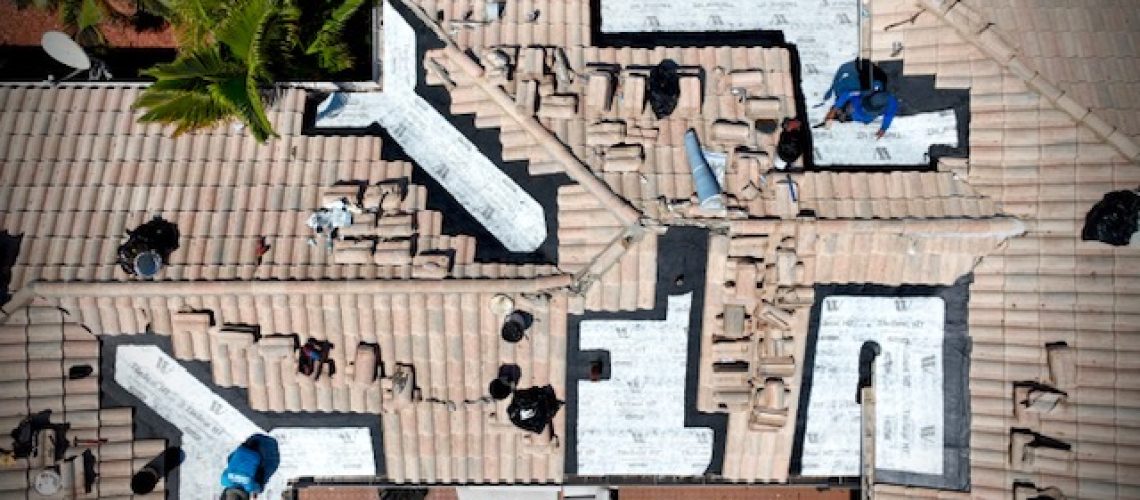
Most homeowners in Palm Beach County assume that when a tile roof begins leaking, the entire roof system has failed.
In reality, that is rarely how Florida tile roofs age.
One of the biggest misconceptions we see throughout South Florida is the idea that roofs fail uniformly. Tile roof systems typically experience the most stress in very specific areas long before the rest of the roof reaches the end of its useful life. In many cases, the general field areas of the roof may still have years of remaining life left while high-water-flow sections begin deteriorating first.
The most common failure point we see on tile roofs throughout Palm Beach County is the valleys.
Why Roof Valleys Matter
A roof valley is the section where two slopes of the roof meet together, creating a natural channel for water flow.
During South Florida rainstorms, valleys handle an enormous amount of concentrated water. Unlike the general field areas of the roof, valleys constantly experience heavy water movement during storms — especially during hurricane season and extended summer rain patterns.
Over time, this repeated water concentration creates accelerated wear on the roofing system underneath the tile.
While homeowners often focus on the visible tile itself, the real waterproofing component of a tile roof system is the underlayment beneath the tile — and valleys are where it wears out first.
Once underlayment begins deteriorating in high-flow areas such as valleys, transitions, penetrations, or flashing locations, leaks begin developing even though the majority of the roof may still appear visually intact.
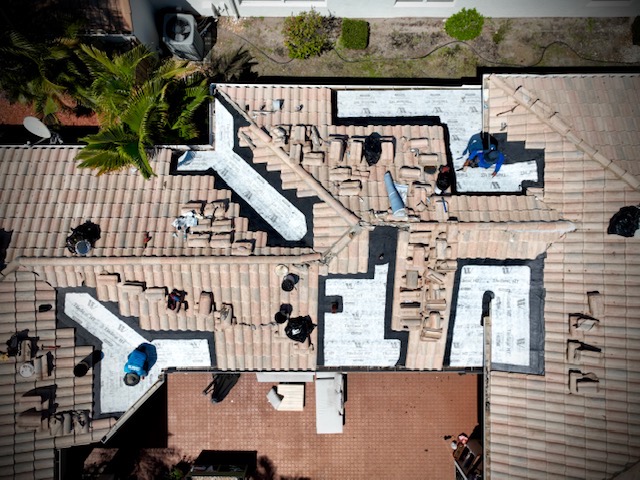
Roof valleys channel concentrated water flow during South Florida storms — the most common source of tile roof leaks in Palm Beach County.
Florida UV Exposure Accelerates Roof Deterioration
South Florida roof systems experience some of the harshest environmental conditions in the country.
Constant UV exposure, heat cycling, humidity, salt air near coastal communities, and heavy seasonal rain all place stress on roofing systems over time. This becomes especially critical in valleys, because these areas already experience concentrated water flow — and once the underlayment begins aging, Florida’s climate accelerates the deterioration process significantly.
This is why two roofs of the same age can perform completely differently depending on:
- Installation quality
- Ventilation
- Flashing integrity
- Underlayment condition
- Water-flow concentration
- Maintenance history
- Exposure conditions (oceanfront vs. inland, coastal vs. western communities)
Roof age alone rarely tells the full story. Two homes built the same year in the same neighborhood can have vastly different roof conditions depending on these variables — which is why every roof requires evaluation on actual condition, not calendar age.
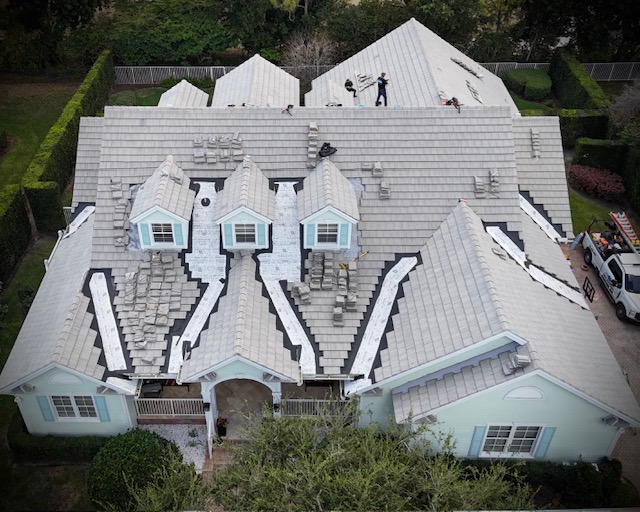
Florida’s UV exposure, humidity, and heat cycling accelerate underlayment deterioration — often well before tiles show any visible signs of wear.
Why Tile Roofs Rarely Fail All at Once
Concrete and clay tile roofs are fundamentally different from many other roofing systems. The tile itself is often not the primary issue. In many cases, the tiles remain reusable while the underlying waterproofing system in high-stress areas requires rebuilding or replacement.
This is why experienced tile roof contractors focus heavily on identifying the specific failure zones:
- Valleys
- Transitions
- Wall flashings
- Penetrations
- Dead valleys
- Drainage concentration areas
- Historically repaired sections
At Mike McGilvary Roofing, the majority of tile roof leaks we inspect throughout Palm Beach County originate in these concentrated stress areas — not across the entire roof system. This is one of the core reasons why targeted tile roof rebuilds are so often the right solution when performed correctly by an experienced contractor.
Roof Rebuild vs. Full Roof Replacement
Homeowners are often told that a leak automatically means the entire roof requires replacement. That is not always accurate — and in many cases it costs tens of thousands of dollars unnecessarily.
If the majority of the roof system remains structurally sound, rebuilding high-stress sections may allow the roof to continue performing properly without prematurely replacing the entire system.
During a tile roof rebuild, the affected sections are carefully opened, inspected, and rebuilt properly. This process typically includes:
- Removing tiles in affected areas
- Inspecting the roof deck for damage or rot
- Replacing compromised plywood where necessary
- Installing new underlayment direct to deck per current Florida Building Code
- Resealing flashings and penetrations with corrosion-resistant materials
- Reinstalling existing tile where it remains serviceable
The goal is to restore the roofing system in the areas that experience the highest stress while preserving sections of roof that still have remaining useful life — extending the roof’s service life at a fraction of the cost of full replacement.

A targeted rebuild addresses the failed valley and underlayment while preserving the original tiles — restoring performance without a full roof replacement.
Insurance Inspections and Roof Certifications
Insurance inspections throughout Florida focus heavily on remaining useful life under Florida Statute §627.7011. But roofs do not age uniformly — and insurance evaluations reflect this.
A properly maintained tile roof system that has had deteriorated high-stress areas professionally rebuilt may still qualify for continued serviceability depending on overall condition. This is why insurance-related roof evaluations focus on:
- Active leaks and water intrusion history
- Structural integrity of the deck
- Underlayment condition
- Flashing performance at valleys, penetrations, and transitions
- Tile attachment and integrity
- Remaining useful life of the system as a whole
Condition matters — not age alone. This is why proactive evaluation and targeted rebuilding can make the difference between a roof that passes an insurance inspection and one that triggers a coverage non-renewal.
For a full breakdown of how Florida’s roof age law works and what your rights are as a homeowner, see our complete guide: Florida Roof Age Law — What Homeowners Need to Know.
The Bottom Line
Tile roof systems throughout Palm Beach County often fail first in valleys and other high-water-flow areas — long before the entire roof reaches the end of its service life.
Understanding how tile roofs actually age is critical when evaluating roof leaks, repair options, rebuild viability, remaining useful life, and insurance inspections. Every roof should be evaluated based on actual condition, not age alone.
At Mike McGilvary Roofing, we specialize in tile roof preservation, targeted rebuilds, repairs, and roof certifications designed to extend roof life where appropriate — while maintaining structurally sound roofing systems throughout South Florida.
Think Your Roof May Be Leaking in the Valleys?
We use thermal imaging and drone inspection to pinpoint the exact source — no guesswork, no unnecessary work. Free inspections for Palm Beach County homeowners.
Frequently Asked Questions
Related from Mike McGilvary Roofing