A “needs new roof” comment on an inspection report can kill a real estate transaction overnight. In Palm Beach County’s challenging insurance market, roof condition has become the single most critical factor in closing deals—often more important than foundation issues, electrical systems, or plumbing concerns. For realtors and home inspectors, understanding when a roof truly needs replacement versus when strategic repairs can extend its serviceable life is no longer optional knowledge; it’s essential to keeping transactions on track.
Mike McGilvary Roofing Inc. has spent five decades helping real estate professionals navigate these exact situations. With continuous Florida Contractor License CCC1331721 and specialized expertise in roof certifications, we provide the documentation and honest assessments that keep deals moving forward while protecting all parties involved.
Why Roof Certifications Matter in 2026’s Insurance Climate

Florida’s property insurance crisis has fundamentally changed real estate transactions. Many carriers now refuse coverage for roofs over 15 years old, regardless of condition. Others require detailed inspections and certifications before issuing or renewing policies. This creates a documentation gap that realtors and inspectors must address.
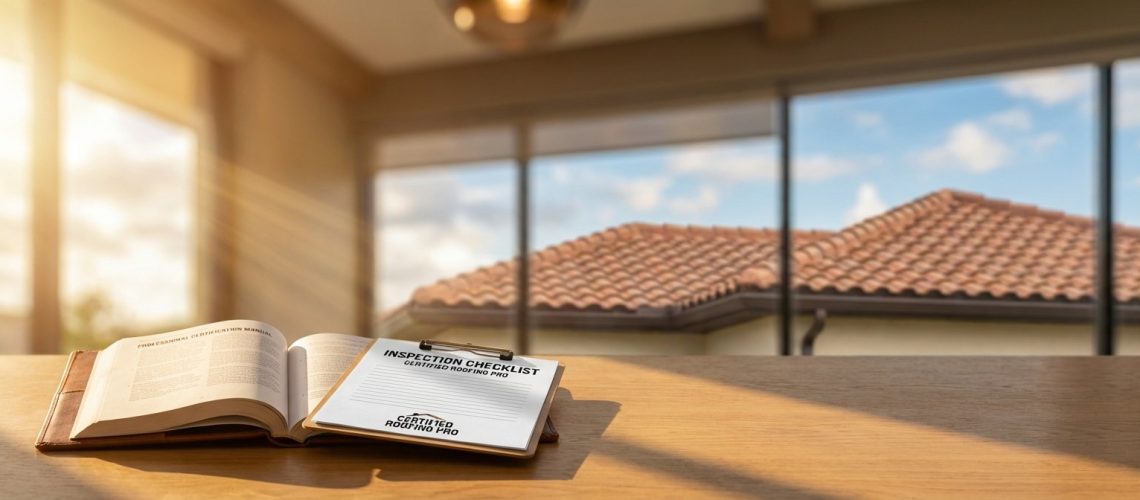
A professional roof certification from a licensed contractor provides third-party verification of roof condition, remaining serviceable life, and compliance with current building codes. For buyers, it offers peace of mind and insurance eligibility. For sellers, it can mean the difference between a successful sale and a collapsed transaction.
Here’s what makes roof certifications valuable in today’s market:
- Insurance companies accept them as proof of insurability for roofs 10-25 years old
- They provide specific timeframes (typically 2-5 years) of certified remaining life
- They document any repairs or maintenance needed to maintain certification
- They establish a baseline condition that protects against future disputes
- They can justify higher property valuations by demonstrating roof investment
Mike McGilvary offers complimentary roof inspections and provides detailed 5-year certifications when roofs meet our standards. We don’t certify roofs that shouldn’t be certified—our license and 50-year reputation depend on honest assessments.
The Realtor’s Guide to Roof Condition Language

Understanding the difference between “needs monitoring,” “needs repair,” and “needs replacement” can save transactions. Most inspection reports use vague language that creates unnecessary alarm.
When you see “roof approaching end of serviceable life” on an inspection report, that doesn’t automatically mean replacement. A 22-year-old concrete tile roof with intact tiles but deteriorated underlayment in valley areas might have another 15+ years of tile life remaining. The solution isn’t a $50,000 replacement—it’s a targeted rebuild addressing the specific compromised components.
Consider this common scenario: A home inspector notes “multiple tiles need replacement” and “evidence of previous repairs.” Many buyers interpret this as a failing roof requiring immediate replacement. In reality, replacing 20-30 tiles and properly sealing penetrations might cost $2,000-$3,000 and add years of serviceable life.
Realtors who understand these distinctions can provide context that keeps nervous buyers engaged rather than walking away from otherwise solid properties.
What Mike McGilvary Evaluates During Roof Certifications
Our certification process examines every component of the roof system, not just surface conditions visible from the ground. Here’s what we assess:
Roof Covering Condition
We evaluate tile integrity, shingle granule retention, and material degradation. Concrete and clay tiles in Palm Beach County regularly last 40-50+ years when properly maintained. Surface appearance doesn’t always correlate with structural integrity—a roof with weathered tiles might have decades of remaining life if underlayment and flashings are sound.
Underlayment Assessment
The underlayment beneath tiles or shingles is often the actual problem component. We look for signs of deterioration including interior water stains, sagging between rafters, and visible degradation during tile inspection. Replacing underlayment in specific sections while preserving sound roof covering saves tens of thousands compared to full replacement.
Valley and Flashing Integrity
Valley metals, step flashings, and penetration seals are high-failure components that generate most leaks. We inspect every valley, chimney, vent pipe, and roof-to-wall intersection. These components typically need replacement or resealing every 15-20 years regardless of overall roof condition.
Decking Condition
We assess roof decking for soft spots, water damage, and structural integrity. Localized decking damage from previous leaks doesn’t necessitate full roof replacement—only the compromised sections need replacement during repairs.
Drainage and Ventilation
Proper water drainage and attic ventilation dramatically affect roof lifespan. We evaluate gutter systems, downspout positioning, ridge venting, and soffit intake to ensure the roof system functions as designed.
How to Position Roof Certifications During Transactions
For listing agents, obtaining a roof certification before listing can prevent deal-killing surprises during inspection periods. When sellers invest $300-$500 in a pre-listing roof certification, they demonstrate transparency and often justify asking prices that might otherwise face pushback.
For buyer’s agents, requesting roof certifications as part of due diligence protects clients from expensive post-closing surprises. When inspection reports raise roof concerns, bringing in a specialist like Mike McGilvary for a certification assessment provides clarity that general inspectors can’t offer.
Here’s effective transaction language: “The inspection report notes roof concerns. We’ve arranged for a licensed roofing contractor with 50+ years in business to perform a detailed roof certification inspection. This will provide definitive answers about remaining serviceable life and any repairs needed to achieve a 5-year certification for insurance purposes.”
This approach replaces uncertainty with documentation, giving all parties confidence to proceed.
The Rebuild Alternative That Saves Transactions
Many transactions collapse when buyers receive $40,000-$60,000 roof replacement estimates and demand seller concessions or credits that sellers can’t or won’t provide. The rebuild approach often provides a middle ground that satisfies both parties.
A roof rebuild strategically replaces only compromised components while preserving sound materials. Think of it like automotive maintenance—you don’t buy a new car at 30,000 miles; you replace tires, change oil, and address what actually needs attention.
For a typical 25-year-old tile roof in Boca Raton, a rebuild might include:
- Valley metal replacement with upgraded materials ($2,000-$4,000)
- Underlayment replacement in affected sections ($3,000-$8,000)
- Complete flashing reconstruction around penetrations ($1,500-$3,000)
- Individual tile replacement and reset ($500-$2,000)
- Boot and seal replacement at all roof penetrations ($800-$1,500)
Total investment: $8,000-$18,000 versus $45,000-$75,000 for complete replacement. The rebuilt roof receives a 5-year certification, satisfies insurance requirements, and preserves 20+ years of remaining tile life.
For realtors, this creates negotiation options. Sellers can offer rebuild costs as credits rather than full replacement amounts. Buyers receive a certified roof system at a fraction of replacement cost. Transactions that seemed dead suddenly move forward.
Red Flags Versus Normal Aging: What Inspectors Should Communicate
Home inspectors serve clients best when they distinguish between conditions requiring immediate attention and normal aging that simply needs monitoring. Here’s how we categorize roof conditions:
True Red Flags Requiring Immediate Action
- Active leaks with interior water damage or mold growth
- Structural sagging indicating compromised rafters or decking
- Widespread tile breakage from impact damage
- Complete flashing failure at multiple locations
- Evidence of multiple failed previous repairs
These conditions affect habitability and insurability. They require professional assessment and documented repair plans before closing. Certain leak patterns indicate urgent problems that shouldn’t wait.
Conditions Requiring Repair But Not Emergency Status
- Isolated tile displacement or breakage (under 5% of roof surface)
- Minor flashing separation without active leaking
- Granule loss on shingles with remaining serviceable life
- Deteriorated pipe boots or vent seals
- Minor valley metal corrosion without perforation
These conditions should be documented and addressed within 6-12 months, but they don’t prevent closing or immediately threaten the structure.
Normal Aging Characteristics
- Surface weathering on concrete tiles
- Minor granule accumulation in gutters
- Slight color variations from repairs or tile replacement
- Minimal flashing sealant degradation without separation
- Age-appropriate wear on 15-20 year old materials
Including these in inspection reports adds little value and often creates unnecessary buyer anxiety. Focus reports on conditions affecting function, safety, or insurability.
Working With Mike McGilvary: What Real Estate Professionals Can Expect
We’ve worked with hundreds of real estate professionals throughout Palm Beach County. Here’s our process for certification inspections:
Our team conducts thorough roof inspections using drone photography to document conditions without creating additional roof traffic. We examine every accessible area including attics, interior ceilings for stain evidence, and all exterior roof surfaces.
We provide written certification reports documenting roof condition, remaining serviceable life estimates, and any repairs recommended or required for certification. Reports include detailed photography showing specific conditions noted.
When repairs are needed, we provide itemized estimates distinguishing between critical repairs affecting certification and optional improvements. We never push unnecessary work—our estimates reflect what actually needs addressing.
For roofs that genuinely need replacement, we explain why repairs won’t provide adequate serviceable life. Our replacement recommendations are honest assessments based on structural conditions, not profit motives.
We understand transaction timelines. When realtors need quick turnaround for inspections during due diligence periods, we prioritize scheduling to keep deals moving. Our 24/7 availability means urgent certification needs don’t derail closings.
Documentation That Satisfies Insurance Underwriters
Not all roof certifications carry equal weight with insurance carriers. Underwriters want specific information that generic inspections often don’t provide.
Effective roof certifications include:
- Contractor license number and verification (ours: CCC1331721)
- Specific certification period (2-year, 5-year, etc.)
- Detailed condition assessment of all roof components
- Documentation of any repairs completed to achieve certification
- High-resolution photography showing overall and detail conditions
- Statement of wind code compliance and proper installation
- Estimated remaining serviceable life beyond certification period
Our certifications meet insurance industry standards because we understand what underwriters need to approve coverage. We’ve helped countless homeowners secure insurance on roofs that other contractors recommended replacing.
Frequently Asked Questions
What things are big red flags in a home inspection?
For roofs specifically, major red flags include active leaks with interior damage, structural sagging indicating compromised framing, widespread material failure affecting more than 20% of the roof surface, and evidence of multiple failed repair attempts. Missing or severely damaged flashings at critical junctions also constitute red flags. However, many conditions inspectors flag as concerns—like isolated broken tiles or minor granule loss—are actually normal aging characteristics that don’t require immediate replacement.
What are 5 very important things that are inspected in a home inspection?
The five critical roof inspection areas are: (1) Roof covering condition including material integrity and remaining life, (2) Underlayment condition which often deteriorates before visible roof covering, (3) Flashing and valley metal integrity at all penetrations and junctions, (4) Structural decking condition for water damage or deterioration, and (5) Drainage and ventilation systems that affect overall roof performance. These components work together as a system—failure in one area doesn’t necessarily mean the entire roof requires replacement.
How much do home inspectors make per inspection?
General home inspectors in Palm Beach County typically charge $300-$600 per inspection depending on property size and scope. However, general inspectors aren’t roofing specialists and often can’t provide the detailed assessment or certification documentation that insurance companies require. Specialized roof certification inspections from licensed roofing contractors like Mike McGilvary provide more comprehensive assessment and carry more weight with underwriters, typically at similar or slightly higher cost but with significantly more value for insurance and transaction purposes.
What is the average cost of a home inspection in Maine?
While Maine inspection costs aren’t relevant to our Palm Beach County market, it’s worth noting that inspection costs and roofing concerns vary dramatically by region. Florida’s unique insurance requirements, hurricane exposure, and intense UV degradation create different roof assessment needs than northern climates. In South Florida, roof condition has become the primary factor in insurance availability—making specialized roof certifications from experienced contractors far more valuable than in markets without our insurance challenges.
Partner With Honest Roofing Expertise
Real estate transactions shouldn’t fail because of roof uncertainty. With 50+ years serving Palm Beach County, Mike McGilvary Roofing Inc. provides the honest assessments and detailed certifications that keep deals moving forward while protecting all parties.
We offer complimentary roof inspections for real estate professionals working transactions in our service area. Our certification process provides the documentation buyers, sellers, and insurance companies need to move forward with confidence.
Whether you’re a realtor with a transaction at risk or an inspector seeking specialist consultation, we’re available 24/7 to provide clarity. Regular professional roof inspections prevent surprises during real estate transactions, and our repair-first philosophy means we’ll never recommend replacement for a roof that strategic repairs can extend.
Contact Mike McGilvary Roofing Inc. at your convenience. We’ll provide straight answers about roof condition, honest repair versus replacement recommendations, and the certification documentation that satisfies insurance requirements. Our Florida Contractor License CCC1331721 has been continuously active since our founding, our BBB A+ rating reflects our commitment to customer satisfaction, and our 5.0 Google rating from 400+ reviews demonstrates consistent quality.
Let’s work together to keep your transactions on track with honest roofing assessments that serve everyone’s best interests.