
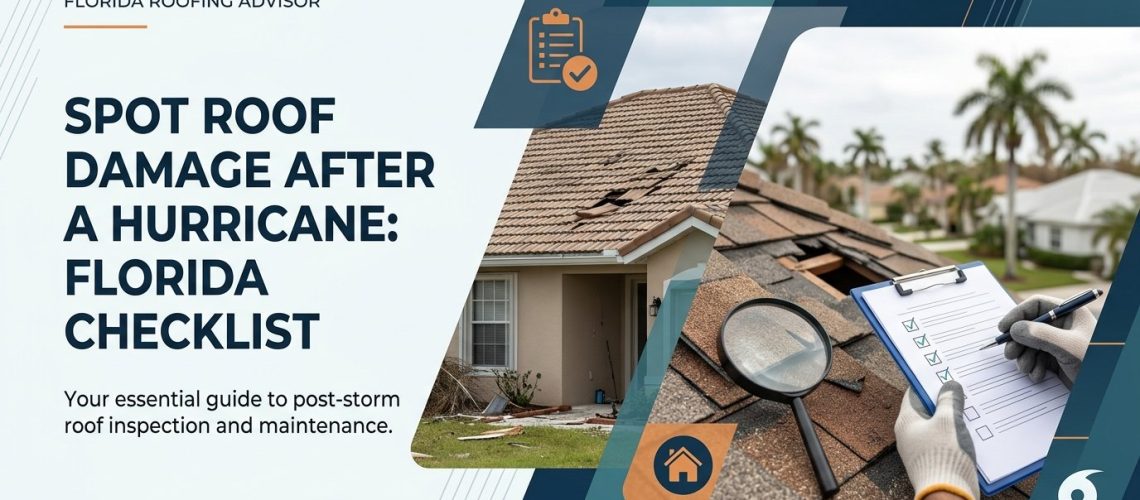
Your home just survived another hurricane season storm. The wind has died down, the rain has stopped, and your immediate concern shifts to one critical question: Did my roof survive intact? In Palm Beach County, where hurricane impacts range from tropical storms to major hurricanes, knowing how to identify roof damage quickly can mean the difference between a simple repair and a catastrophic insurance claim denial.
Drawing on a McGilvary family legacy of licensed roofing since 1974, Mike McGilvary Roofing has responded to hundreds of post-hurricane emergencies across South Florida communities. What we’ve learned is that most homeowners miss the subtle signs of damage that lead to major problems months later. This inspection checklist gives you the knowledge to identify issues immediately—when documentation matters most for insurance claims and emergency roof repair.
Why Immediate Post-Hurricane Inspection Matters
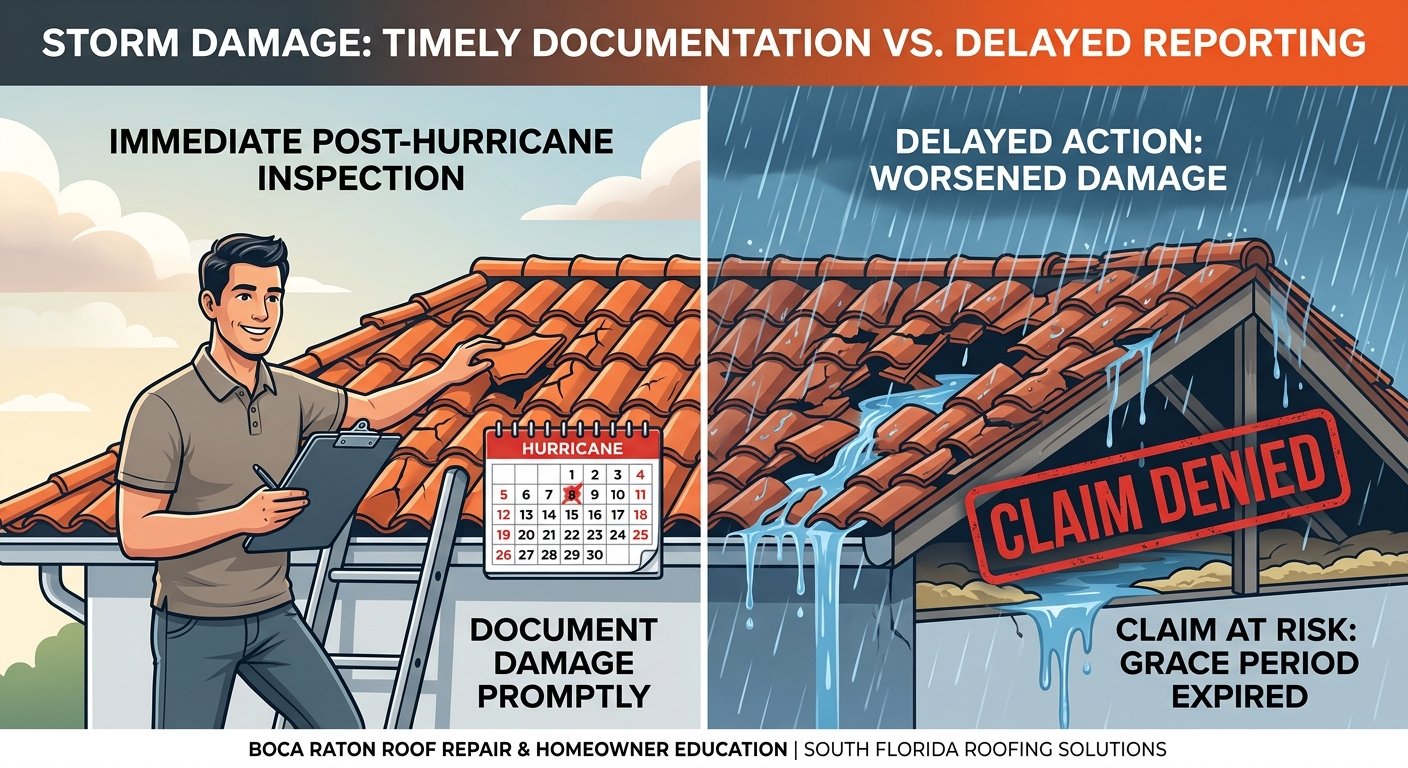
Florida insurance law requires homeowners to document and report hurricane roof damage repair needs within specific timeframes. Miss your window, and your claim could be denied. More importantly, what looks like minor damage today can become catastrophic leaks during the next rain event.
The tile roofs common throughout Boca Raton, Palm Beach Gardens, and Wellington don’t always show obvious damage. A displaced tile might look fine from the ground but exposes underlayment to UV degradation. A lifted valley metal might not leak immediately but will fail during the next heavy rain. Professional residential roof inspection within 24-48 hours after a hurricane protects both your property and your insurance rights.
Exterior Inspection: What to Check From the Ground
Never climb on your roof after a hurricane. Structural integrity may be compromised, tiles may be loose, and wet surfaces are dangerously slippery. Your ground-level inspection focuses on visible indicators that require professional emergency roofing contractor attention.
Missing or Displaced Roofing Materials
Walk your property’s perimeter with your smartphone, photographing each elevation. Look for:
- Missing tiles or shingles: Gaps in your roof surface expose underlayment to immediate water intrusion
- Tiles lifted but not removed: Wind can break the adhesive seal without completely displacing tiles, creating future wind uplift vulnerability
- Debris accumulation: Branches, leaves, or neighboring property materials on your roof indicate impact points
- Granule loss on shingles: Asphalt shingles showing black substrate have lost protective granules and need replacement
In Mediterranean-style homes common to Palm Beach County, barrel tiles and S-tiles can shift position without falling. These displaced tiles compromise the overlap system that keeps water out, even though the roof appears complete from a distance.
Metal Component Damage
Your roof’s metal components—valleys, drip edges, flashing around chimneys and vents—are particularly vulnerable to hurricane winds. Check for:
- Lifted valley metals: Valleys channel massive water volume; any compromise leads to immediate leaks
- Damaged flashing: Metal flashing around chimneys, skylights, and wall intersections should lie flat; lifted edges indicate seal failure
- Missing drip edge: The metal edge along roof perimeters prevents water intrusion into fascia boards
- Bent or separated gutters: While not roof components, damaged gutters allow water to cascade along walls and foundation
Mike McGilvary Roofing frequently responds to emergency roof repair Boca Raton calls where homeowners didn’t realize their valley metals had lifted during a storm. The first heavy rain after repairs should have been made results in interior water damage that costs exponentially more to remediate.
Soffit, Fascia, and Trim Inspection
Your roof’s edges tell important stories about what happened during the hurricane:
- Water staining: Dark streaks on soffits or fascia indicate water penetrated the roof edge
- Separated trim boards: Wind can pry trim away from roof edges, exposing vulnerable wood decking
- Visible daylight through soffits: Any light visible through soffit ventilation beyond normal vent openings suggests structural separation
Interior Inspection: Identifying Hidden Damage
Some of the most critical storm damage roof repair needs aren’t visible from outside. Your attic and interior ceilings provide essential diagnostic information.
Attic Investigation
If you can safely access your attic space, conduct this inspection during daylight hours:
- Daylight penetration: Any visible daylight through your roof deck indicates displaced materials
- Water stains on decking: Fresh water stains appear darker than surrounding wood; active dripping requires immediate emergency roofing contractor response
- Wet insulation: Compressed or darkened insulation indicates water intrusion
- Truss or rafter damage: Look for cracked, split, or separated structural members
Don’t assume that because you see no active water during your inspection, no damage occurred. Hurricanes often involve wind-driven rain from directions your roof doesn’t normally face. Water may have entered and since evaporated, but the pathway remains open for future intrusion.
Interior Ceiling and Wall Inspection
Document these interior warning signs with photographs for your insurance claim:
- New ceiling stains: Brown or yellow discoloration indicates water penetration
- Bubbling or peeling paint: Paint failure on ceilings or upper walls suggests moisture intrusion
- Sagging ceiling areas: Drywall or plaster that has absorbed water may sag before visible staining appears
- Mold or mildew odor: Musty smells in upper-floor rooms indicate hidden moisture
Special Considerations for Tile Roofs
Concrete and clay tile roofs represent over 75% of residential roofing in upscale Palm Beach County communities like Boca Raton, Delray Beach, and Palm Beach Gardens. These roofs require specialized hurricane damage assessment.
Tile roofs have a dirty secret that most homeowners don’t understand: the tiles themselves often outlast the underlayment beneath them by decades. A 25-year-old tile roof may have perfectly sound tiles but completely deteriorated underlayment. Hurricane winds can displace tiles temporarily—they fall back into place—but the wind-driven rain that entered during displacement saturates already-compromised underlayment.
This is where Mike McGilvary Roofing’s repair-first philosophy becomes essential. You don’t need a $50,000 complete roof replacement when the tiles are sound. You need a strategic roof rebuild addressing the actual damage: replace compromised underlayment sections, reset and secure tiles to current wind codes, and replace damaged valley metals and flashing.
Think of it like your car: you don’t replace the entire vehicle when you hit 30,000 miles. You replace the tires, change the oil, and address what actually needs attention. Your tile roof works the same way.
Documentation: Building Your Insurance Case
Professional residential roof inspection by a licensed contractor is essential, but your immediate documentation strengthens your claim:
- Timestamp everything: Photo metadata proves when damage was discovered
- Photograph from multiple angles: Capture each damaged area from at least two perspectives
- Include reference points: Show damaged areas in context with recognizable features
- Document interior and exterior: Connect exterior damage points with interior water intrusion
- Save weather data: Download National Weather Service reports documenting wind speeds and rainfall for your specific location
Contact your insurance company immediately, but understand that their adjuster works for the insurance company—not for you. Having an independent assessment from a contractor with Florida Contractor License CCC1331721 and BBB A+ accreditation provides objective documentation of actual damage.
Common Hurricane Damage Patterns in South Florida
Palm Beach County’s hurricane impacts create predictable damage patterns based on wind direction and exposure:
East-facing exposures: Oceanfront properties from Palm Beach to Delray Beach experience maximum wind uplift on east and southeast roof sections. These areas show the first signs of tile displacement and flashing failure.
West-facing exposures: Properties in western communities like Wellington and Royal Palm Beach often sustain different damage patterns as storms move through. Prevailing winds typically come from the east, meaning west-facing roof sections may experience unusual wind-driven rain intrusion through areas that normally remain dry.
Valley concentration: Every roof’s valleys channel tremendous water volume. Hurricane rainfall rates can exceed valley capacity, causing water backup under roofing materials. This is why valley metal replacement represents one of the most common post-hurricane repairs Mike McGilvary Roofing performs.
When to Call for Emergency Roof Repair
Some situations require immediate professional response rather than waiting for standard business hours:
- Active water intrusion into living spaces
- Large sections of missing roofing materials exposing underlayment
- Structural damage visible from ground level
- Compromised roof areas above electrical panels or critical equipment
- Damage that threatens to worsen with predicted additional rainfall
Mike McGilvary Roofing maintains 24/7 emergency availability specifically for these situations. Emergency tarping and temporary weatherproofing prevent minor hurricane damage from becoming major insurance claims. We’ve been responding to emergency roof repair Boca Raton calls and throughout Palm Beach County, built on a McGilvary family legacy of licensed roofing dating to 1974—we understand that roof emergencies don’t wait for convenient scheduling.
The Honest Assessment Difference
Here’s the roofing industry reality that most contractors won’t tell you: they make far more profit selling $50,000 complete replacements than $4,000 targeted repairs. This creates enormous incentive to push unnecessary replacements on homeowners whose roofs simply need hurricane roof damage repair addressing specific compromised components.
Mike McGilvary personally inspects every project and provides honest assessments of what actually needs repair versus replacement. With a BuildZoom score of 107 (94th percentile, above 94% of 191,428 Florida contractors) and 5.0 stars across hundreds of Google reviews, our reputation is built on telling homeowners the truth—even when it means a smaller invoice.
Many of our post-hurricane inspections result in repair recommendations of $2,000-$8,000 for targeted fixes rather than $40,000+ complete replacements other contractors quote. We pioneered the roof rebuild approach: strategically replacing only damaged components while preserving sound materials.
Florida’s Insurance Reality
Palm Beach County homeowners face unique insurance pressures that make storm damage roof repair decisions more complex. Many carriers now require roofs under 15 years for new policies, and roof age has become the primary factor in coverage availability and pricing.
This is where strategic rebuilds become invaluable: A targeted repair with a 5-year roof certification can satisfy insurance requirements at 20-40% the cost of full replacement. Mike McGilvary Roofing offers free roof inspections and 5-year certifications that help homeowners document their roof’s condition for insurance review without unnecessary complete replacements.
Your Next Steps After Hurricane Damage
Post-hurricane roof assessment requires professional expertise, proper safety equipment, and understanding of both roofing systems and Florida’s insurance requirements. Your immediate priorities are:
- Conduct safe ground-level and interior documentation
- Contact your insurance company to initiate a claim
- Schedule professional residential roof inspection from a licensed, insured contractor
- Address emergency repairs to prevent additional damage
- Obtain detailed repair estimates before accepting insurance settlement
Mike McGilvary Roofing provides free hurricane damage inspections throughout Palm Beach County communities including Boca Raton, Delray Beach, West Palm Beach, Wellington, Palm Beach Gardens, Jupiter, Boynton Beach, and Lake Worth. We document damage thoroughly, work directly with insurance adjusters, and provide honest assessments of repair versus replacement needs.
Don’t let another storm season pass with unrepaired damage. Contact Mike McGilvary Roofing at your convenience for a comprehensive post-hurricane roof assessment. With over 50 years serving South Florida and an A+ BBB rating, we’re the emergency roofing contractor Palm Beach County homeowners trust when it matters most.
Remember: you don’t need a new roof just because you experienced hurricane damage. You need an honest contractor who repairs what’s broken while preserving what’s sound—and that’s exactly what we’ve been doing, carrying forward a McGilvary family roofing legacy licensed since 1974.
Related from Mike McGilvary Roofing