
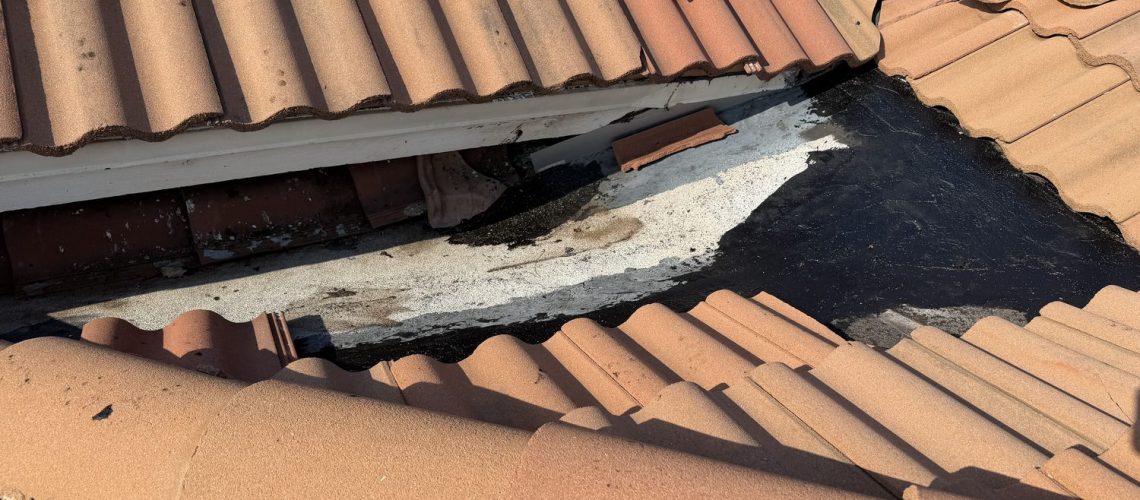
If water finds a way into your Palm Beach County home, chances are exceptional it’s entering through a roof valley. These diagonal channels where two roof planes meet handle more water flow than any other part of your roofing system—and in South Florida’s intense rainfall events, that means valleys take a beating that flat roof sections never experience.
After five decades of roofing work across Palm Beach County, I’ve seen the same pattern hundreds of times: homeowners discover leaks in their 15-20 year old tile roofs, panic when they receive $50,000+ replacement quotes, then find relief when we explain their actual problem. The tiles themselves remain perfectly sound. The valley metals underneath have simply reached the end of their service life—a $3,000-$6,000 repair, not a complete replacement.
Understanding why valleys fail first helps homeowners make informed decisions about roof valley repair instead of unnecessary full replacements.
The Physics Behind Valley Failure
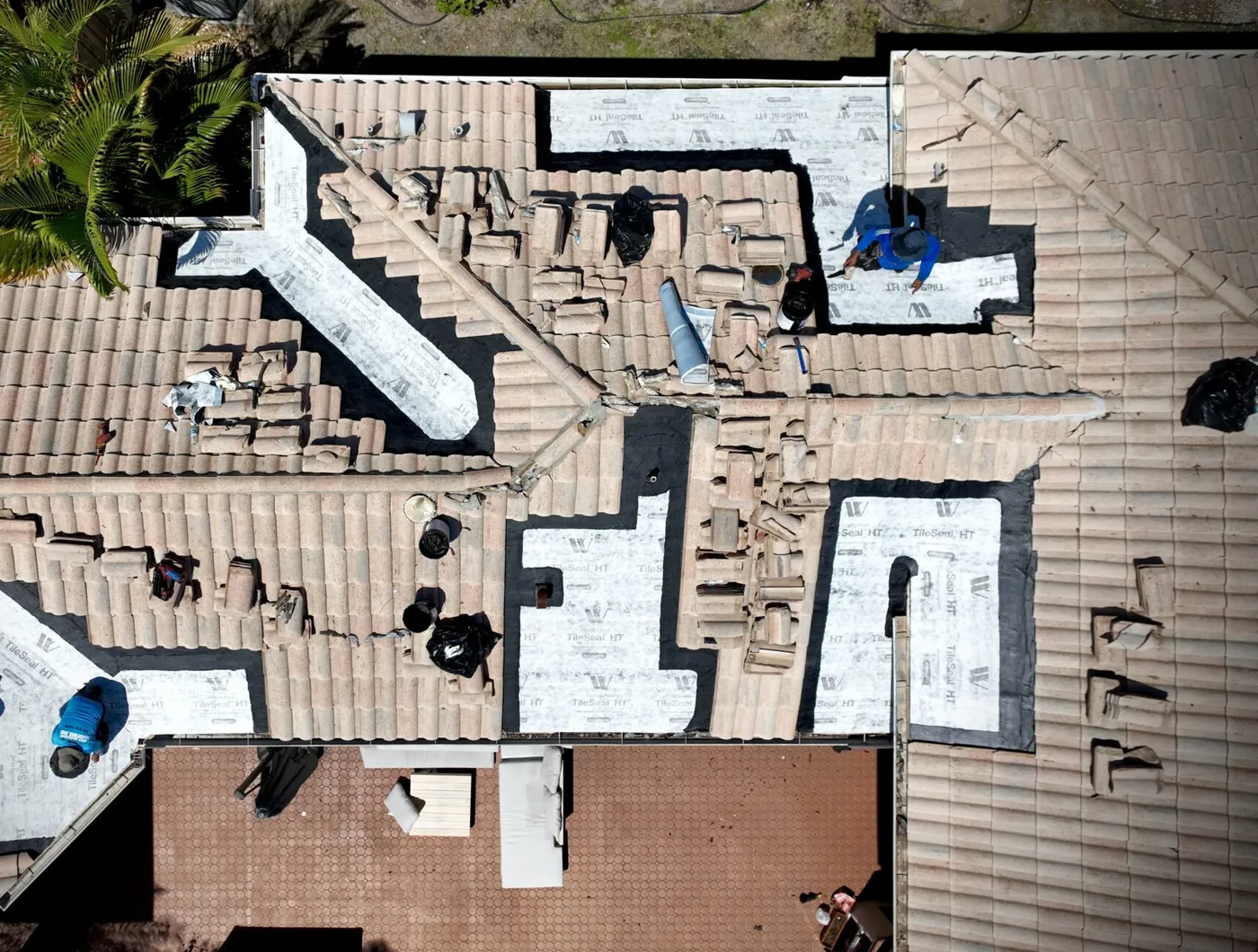
Roof valleys concentrate water flow in ways that flat roof sections never experience. Think of your roof as a watershed system—every square foot of roofing drains toward the valleys, which become rushing channels during South Florida’s afternoon thunderstorms.
Water Volume Concentration
A typical 30-foot valley on a Palm Beach County home might collect runoff from 800-1,200 square feet of roof surface. During a standard 2-inch rainfall event, that valley channels approximately 1,000 gallons of water. Our intense summer storms can drop that volume in under an hour, creating powerful water flow that tests every seam, fastener, and lap joint in the valley system.
Flat roof sections spread this water load across their entire surface. Valleys concentrate it into narrow channels measured in inches, creating dramatically higher stress on materials.
Heat and UV Exposure
South Florida’s subtropical climate accelerates valley deterioration through constant thermal cycling. Valley metals expand and contract daily as temperatures swing from cool mornings to afternoon heat that can push metal surface temperatures above 160°F. This expansion-contraction cycle works fasteners loose, opens seams, and eventually cracks sealants that initially provided waterproof protection.
UV radiation compounds this damage, degrading the protective coatings on galvanized steel and painted metal valleys. Once these coatings fail, oxidation begins—the rust you see bleeding down from valleys during roof inspections.
Common Valley Materials and Their Lifespans
Understanding valley material limitations helps homeowners anticipate roof valley problems before emergency leaks develop.
Galvanized Steel Valleys (15-20 Year Lifespan)
Many tile roofs installed in Palm Beach County between 2000-2015 used galvanized steel valley metals. These perform adequately in moderate climates but struggle with Florida’s combination of heat, UV exposure, and slightly corrosive salt air near coastal areas. The zinc coating that protects the steel gradually degrades, leading to rust formation that weakens the metal and creates leak points.
Homeowners in Gulf Stream, Manalapan, and oceanfront properties see accelerated galvanized steel failure due to salt air exposure—sometimes reaching failure points in just 12-15 years despite tile roofs rated for 50+ year lifespans.
Painted Metal Valleys (20-25 Year Lifespan)
Upgraded painted metal valleys with baked-on finishes offer better UV resistance and longer service life. However, the same thermal cycling and water volume issues eventually create failure points. Paint deterioration typically appears first, followed by substrate corrosion where the protective coating has broken down.
Copper Valleys (50+ Year Lifespan)
High-end properties in Palm Beach, Jupiter Island, and estate communities sometimes feature copper valley systems. While expensive initially, copper valleys can outlast the tiles themselves—developing protective patina that actually enhances corrosion resistance over time. For historic properties and luxury homes, copper valleys represent genuine long-term value.
Synthetic Valley Underlayments
Modern installations increasingly use advanced synthetic underlayments in valley applications, sometimes eliminating separate metal valleys entirely on lower-slope roofs. These materials offer 25-30 year performance when properly installed, though they require different installation techniques than traditional metal valleys.
How to Identify Valley Problems Early
Catching valley deterioration before roof valley leak issues develop saves homeowners thousands in water damage remediation costs. Regular inspection reveals warning signs months or years before interior damage appears.
Visual Inspection Signs
From ground level with binoculars, homeowners can identify several valley distress indicators:
- Rust staining: Orange or brown discoloration bleeding from valley channels onto surrounding tiles signals metal corrosion underneath
- Lifted or displaced tiles: Tiles along valley edges that appear raised or shifted often indicate underlying metal deterioration causing substrate movement
- Visible gaps: Daylight showing through valley channels from ground observation points suggests serious structural compromise
- Debris accumulation: Organic material building up in valleys creates moisture retention that accelerates metal failure
- Granule accumulation: For shingle roofs, excessive granules washing into valleys and gutters indicates advanced shingle deterioration in these high-stress areas
Interior Warning Signs
Valley failures often announce themselves through interior symptoms before visible roof damage becomes obvious:
- Ceiling stains near valley locations: Water stains appearing along the interior ceiling line where roof planes meet typically trace directly to valley problems
- Musty odors in attic spaces:Moisture infiltration through failing valleys creates humid conditions ideal for mold development
- Visible water entry during rain: Active leaks during rainfall events that trace to valley areas require immediate valley flashing repair
- Insulation compression: Wet insulation in attic spaces near valley locations indicates chronic moisture infiltration
The Valley Repair vs. Replacement Decision
Most Palm Beach County homeowners facing valley problems don’t need complete roof replacements—they need strategic valley rebuilds that address the actual failure point while preserving sound roofing materials.
When Valley Repair Makes Sense
Valley-focused repairs deliver excellent value when:
- Tiles or shingles remain in good condition with 15+ years of remaining service life
- Roof decking shows no significant water damage or structural compromise
- Failure is clearly isolated to valley metals and immediately adjacent areas
- The home requires a 5-year roof certification for insurance purposes but the roof is otherwise sound
- HOA architectural requirements make matching existing tiles essential
A typical valley repair in Boca Raton or West Palm Beach involves carefully removing tiles along the valley channel, replacing deteriorated metal with upgraded materials (often copper or heavy-gauge painted metal), installing new underlayment in the valley area, then resetting the original tiles with proper fastening. Total cost: $2,500-$5,000 per valley depending on length and complexity.
Compare this to a $45,000-$65,000 complete roof replacement when the only actual problem involves valleys that have reached their design lifespan.
When Broader Repair Is Needed
Sometimes valley inspection reveals problems extending beyond the valley itself:
- Underlayment deterioration in sections adjacent to valleys requiring section-specific replacement
- Decking damage from chronic water infiltration necessitating plywood replacement
- Multiple valleys failing simultaneously on roofs approaching 25+ years of age
- Flashing problems at valley-to-wall intersections requiring comprehensive reconstruction
Even in these scenarios, targeted roof rebuilds addressing specific problem areas typically cost $8,000-$15,000—still a fraction of complete replacement costs while delivering another 15-20 years of reliable performance.
Valley Protection Strategies That Actually Work
Preventing roof valley problems through proactive maintenance delivers better return on investment than any other roofing expenditure. These strategies prevent roof leaks before emergency situations develop.
Regular Professional Inspection
Annual roof inspections identify valley deterioration in early stages when repairs remain simple and inexpensive. During inspections, qualified contractors check:
- Metal condition and coating integrity
- Fastener security and proper spacing
- Sealant condition at all lap joints
- Proper tile placement and overlap at valley edges
- Debris accumulation requiring removal
- Underlayment visibility indicating tile displacement
Mike McGilvary Roofing provides free roof inspections for Palm Beach County homeowners, including detailed photo documentation of valley conditions and honest assessments of remaining service life.
Debris Management
Organic debris—leaves, palm fronds, seed pods—accumulates in valleys and retains moisture against metal surfaces. This constant moisture exposure accelerates corrosion and deterioration. Simple debris removal during seasonal maintenance extends valley life by years.
Properties with significant tree canopy, particularly in established neighborhoods throughout Delray Beach and Lake Worth, benefit from twice-yearly debris clearing focused on valley channels.
Upgraded Materials During Initial Installation
New construction and complete replacement projects offer opportunities to specify premium valley materials that outlast standard options:
- Copper valleys adding $1,500-$3,000 to initial project cost but eliminating valley replacement for 50+ years
- Heavy-gauge painted metals (26-gauge vs. 29-gauge) offering significantly better durability
- Ice-and-water shield underlayments in valley applications providing secondary waterproofing
- Proper valley width specifications (18″ minimum vs. 12″ standard) reducing water velocity and splash-out
The Insurance Certification Advantage
Florida’s property insurance crisis makes valley repairs strategically valuable beyond simple leak prevention. Many insurance carriers now require 5-year roof certifications for policy renewal or new coverage—but certification requirements focus on waterproof integrity, not roof age.
A 22-year-old tile roof with new valley metals, updated flashing, and verified waterproof integrity can receive a 5-year certification satisfying insurance requirements. This approach costs $4,000-$8,000 versus $50,000+ for complete replacement that delivers no additional insurance value.
For homeowners in Wellington, Palm Beach Gardens, and throughout Palm Beach County facing insurance renewal challenges, strategic valley repair with professional certification often provides the most cost-effective solution.
Why Most Contractors Push Replacement Over Repair
The roofing industry’s business model creates inherent conflicts of interest. A complete roof replacement generates $45,000-$75,000 in revenue with proportionally higher profit margins than a $4,000 valley repair. This economic reality incentivizes contractors to recommend replacement even when targeted repairs would serve homeowners perfectly well.
You don’t buy a new car when you need new tires. You shouldn’t replace a roof when you need new valleys. The tiles themselves—the visible, weather-resistant component of your roof system—commonly last 50+ years. The underlayment and valley metals underneath have shorter design lifespans. Replacing these components while preserving sound tiles represents intelligent maintenance, not cost-cutting.
Drawing on a McGilvary family legacy of licensed roofing since 1974, Mike McGilvary Roofing has built our reputation on honest assessments that prioritize homeowner value over maximum project revenue. Our hundreds of five-star Google reviews and A+ BBB rating reflect this commitment to transparency.
Take Action Before Emergency Leaks Develop
Valley problems worsen progressively—small rust spots become holes, minor leaks become ceiling damage, isolated problems spread to adjacent areas. Early intervention through valley flashing repair when problems first appear costs a fraction of emergency repairs after water damage develops.
If your Palm Beach County roof is 15+ years old, schedule a professional inspection focusing specifically on valley condition. This single preventive step protects your home from water damage while potentially saving tens of thousands in unnecessary replacement costs.
Mike McGilvary Roofing provides free, no-obligation roof inspections throughout Palm Beach County with same-day photo documentation and honest assessment of your valley condition. We’re available 24/7 for emergency situations, and our 50+ years of local experience means we understand exactly how South Florida’s climate affects roof valley systems.
Call us today for your free inspection. We’ll tell you exactly what your roof needs—nothing more, nothing less. Because after five decades in business, we’ve learned that honest service builds lasting relationships while generating the referrals that sustain our family business.
Contact Mike McGilvary Roofing Inc. at your convenience. Florida Contractor License CCC1331721. A McGilvary Family Legacy of Licensed Roofing in Palm Beach County Since 1974.