
At 2 AM during a thunderstorm, you hear it—that unmistakable sound of water dripping where it shouldn’t be. Your first thought isn’t about choosing contractors or comparing estimates. You need someone to stop the leak immediately, and the question burning in your mind is: “How much is this emergency going to cost me?”
Emergency roof repair costs in 2026 range from $450 to $2,500 for most urgent interventions, with the national average emergency service call sitting at approximately $850-$1,200. However, these figures tell only part of the story. Understanding what drives emergency roofing prices—and knowing when you’re getting honest service versus being taken advantage of in a vulnerable moment—can save you thousands of dollars.
Breaking Down Emergency Roof Repair Cost Components
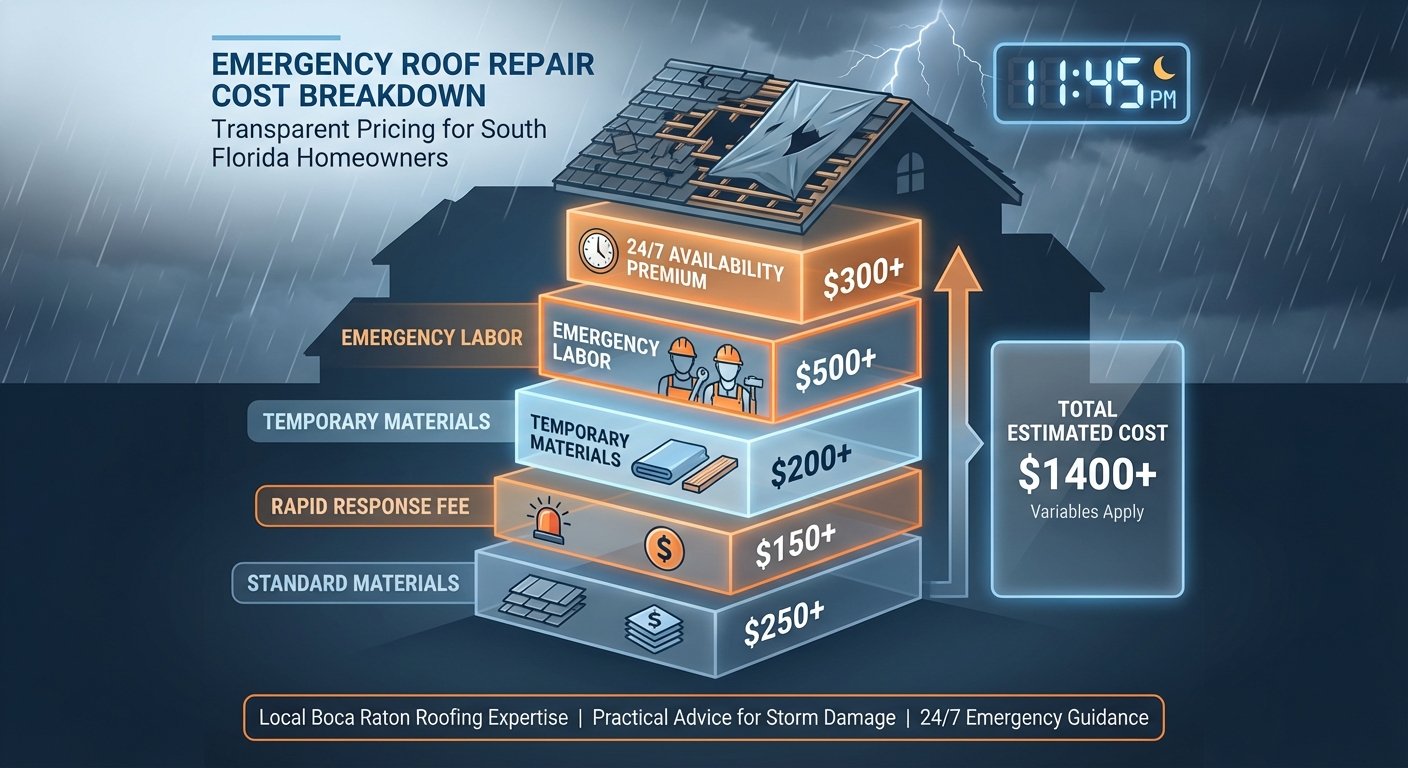
Emergency roof repair pricing differs fundamentally from standard repair work. You’re not just paying for materials and labor—you’re paying for immediate availability, after-hours response, and the expertise to implement temporary solutions that prevent further damage while planning permanent repairs.
The After-Hours Premium
Most legitimate roofing contractors charge 50-100% more for genuine emergency calls outside normal business hours (typically weekends, holidays, or between 6 PM and 7 AM on weekdays). At Mike McGilvary Roofing, we maintain 24/7 emergency availability across Palm Beach County because roof leaks don’t wait for convenient scheduling.
A repair that would cost $600 during regular hours might run $900-$1,200 as an emergency call. This premium covers:
- Immediate dispatcher availability and crew mobilization
- Technicians on-call rotation rather than scheduled work
- Materials pulled from emergency inventory
- Work performed in challenging conditions (darkness, rain, high winds)
- Interruption of personal time for skilled tradespeople
This premium is reasonable and industry-standard. However, contractors charging 200-300% premiums or quoting $5,000+ for basic emergency tarping are exploiting your crisis.
Service Call vs. Actual Repair Costs
Understanding the difference between emergency service fees and repair costs prevents confusion when reviewing invoices:
Emergency Service Call Fee ($150-$350): Covers dispatch, travel, initial assessment, and diagnosis. This fee typically applies toward repair costs if you proceed with the contractor. We don’t charge separate inspection fees—if we’re coming to your property for emergency service, the assessment is included in addressing your problem.
Temporary Emergency Intervention ($300-$1,500): Immediate actions to stop active damage, including emergency tarping, temporary flashing installation, quick sealant application, or water diversion measures.
Permanent Repair ($500-$15,000+): Addressing the underlying issue, scheduled after the emergency is stabilized. This might happen immediately if conditions allow, or within days after the emergency response.
Common Emergency Scenarios and Real 2026 Costs
Let’s examine actual emergency situations Palm Beach County homeowners face, with honest pricing for each scenario:
Active Leak During Storm (Most Common)
Scenario: Water entering through compromised flashing, lifted tiles, or failed valley during active rainfall.
Emergency Response Cost: $650-$1,400
This includes emergency service dispatch, tarping or temporary waterproofing, interior water diversion setup, and initial damage assessment. The temporary solution typically lasts 30-90 days while permanent repairs are scheduled.
Follow-up Permanent Repair: $800-$4,500 depending on whether the issue requires flashing replacement, tile reset, valley reconstruction, or underlayment repair in the affected section.
Wind-Damaged Tiles After Hurricane or Severe Weather
Scenario: Tropical storm winds lift or displace multiple tiles, exposing underlayment to elements.
Emergency Response Cost: $850-$1,800
Includes securing loose tiles, emergency tarping of exposed areas, and temporary fastening to prevent further displacement. During peak hurricane season, response times may extend to 24-48 hours as contractors work through neighborhood-wide damage.
Permanent Repair: $1,200-$6,500 for tile replacement, underlayment assessment and repair if water infiltration occurred, and proper fastening to current wind code standards. Tile matching can add complexity—Mediterranean and barrel tiles in discontinued colors may require sourcing from specialty suppliers.
Flashing Failure at Chimney or Skylight
Scenario: Water pouring in around chimney, skylight, or roof penetration due to failed flashing.
Emergency Response Cost: $500-$1,200
Temporary sealant application, diversion flashing installation, or emergency waterproof membrane to stop active infiltration.
Permanent Repair: $650-$2,800 for complete flashing reconstruction with proper counter-flashing, step-flashing, and integration with surrounding roofing material. Skylight flashing repairs often cost more due to the precision required to maintain both waterproofing and the skylight’s operational integrity.
Structural Emergency (Fallen Tree, Major Impact Damage)
Scenario: Tree limb punctures roof during storm, or severe impact creates immediate structural concern.
Emergency Response Cost: $1,200-$3,500
This emergency requires immediate structural assessment for safety, emergency tarping of large compromised areas, temporary bracing if structural integrity is questioned, and coordination with your insurance adjuster for documentation.
Permanent Repair: $3,500-$25,000+ depending on extent of decking damage, truss or rafter impact, interior water damage, and scope of reconstruction required. These situations almost always involve insurance claims.
Geographic Pricing: Emergency Roof Leak Repair Across Palm Beach County
Emergency roof repair costs vary across South Florida markets based on property types, material prevalence, and service area accessibility.
Urgent Roof Repair Boca Raton and Delray Beach
These established markets feature predominantly tile roofs on Mediterranean-style homes, many within HOA-governed communities. Emergency calls average $900-$1,600 due to tile complexity and architectural standards requiring careful material matching.
Barrel tile and clay tile repairs cost 20-30% more than concrete tile work due to material fragility and replacement sourcing challenges. Historic districts in Delray Beach sometimes require Landmarks Commission approval even for emergency repairs, though life-safety interventions proceed immediately with retroactive documentation.
Wellington and Western Communities
Larger roof spans on equestrian properties and estate homes mean emergency tarping requires more material and labor. Emergency calls average $850-$1,800 depending on roof size and accessibility. These areas also see more architectural shingle roofs, which generally cost less for emergency intervention than tile systems.
Coastal Properties (Palm Beach, Manalapan, Gulf Stream)
Salt air exposure accelerates flashing deterioration, making penetration failures more common. Emergency pricing runs $1,000-$2,200 due to premium property service expectations, parking and access challenges in dense coastal areas, and the prevalence of high-end roofing materials requiring specialized expertise.
The Insurance Question: What Emergency Costs Get Covered?
Understanding insurance coverage for emergency roof repairs prevents surprise out-of-pocket expenses.
Typically Covered: Emergency repairs directly resulting from covered perils (wind, hail, falling objects). This includes tarping, temporary waterproofing, and reasonable emergency service fees to prevent further damage.
Typically NOT Covered: Emergencies resulting from deferred maintenance, gradual deterioration, or roof systems beyond their expected lifespan. A 30-year-old roof that starts leaking during rain likely won’t generate insurance reimbursement.
Documentation is Critical: Photograph everything before, during, and after emergency intervention. Detailed invoices separating emergency response from permanent repairs help adjusters process claims efficiently. We provide comprehensive documentation with every emergency call specifically for insurance submission.
Your deductible applies to the total claim, not just emergency costs. If your deductible is $2,500 and emergency tarping costs $800, you’ll pay that $800 out-of-pocket, with the deductible balance applied to permanent repairs if they’re covered and exceed the remaining deductible amount.
Red Flags: When Emergency Pricing Becomes Price Gouging
Vulnerable homeowners facing active roof damage are prime targets for unscrupulous contractors. These warning signs indicate you’re being exploited:
- Pressure to sign contracts immediately: Legitimate emergency intervention doesn’t require signing a $40,000 replacement contract at 11 PM while water is dripping into your living room.
- Quotes for full replacement during emergency call: Emergency response focuses on stopping damage, not selling major projects. Comprehensive replacement estimates require daylight assessment and proper measurement.
- Cash-only pricing or requests for upfront payment: Professional contractors carry business insurance and accept standard payment methods. Emergency work may require a deposit, but full payment before work completion is unusual.
- Prices 3-4x normal rates: A reasonable after-hours premium is 50-100%. Charging $3,000 to install a tarp that costs $200 during regular hours is exploitation.
- No license verification: Florida law requires contractor licenses for roofing work. Our license (CCC1331721) is continuously active and verifiable through the state database.
Preventing Emergency Costs Through Proactive Maintenance
Most emergency roof repairs stem from small issues that escalated because they went unaddressed. An annual roof inspection costs $0-$200 (we provide them free) and identifies problems when they’re $300 repairs rather than $3,000 emergencies.
Common issues caught during inspections before they become emergencies:
- Failing flashing boots around plumbing vents ($150-$400 to replace vs. $1,200+ emergency call when they fail during a storm)
- Loose or slipped tiles ($50-$150 per tile to reset vs. $850+ emergency response when they blow off and expose underlayment)
- Deteriorating valley metal ($2,000-$4,000 planned replacement vs. emergency tarping plus water damage when valleys fail during heavy rain)
- Compromised penetration seals ($200-$600 to reseal vs. emergency intervention when water pours through)
The insurance industry is increasingly requiring regular maintenance documentation. Some carriers offer premium discounts for properties with annual professional inspections, and the 5-year roof certifications we provide help maintain coverage on older roofs that still have serviceable life remaining.
Why Mike McGilvary Roofing Approaches Emergency Repairs Differently
Since 1974, we’ve responded to thousands of emergency calls across Palm Beach County. Our approach differs from typical emergency roofing services in several ways:
We don’t use emergencies as sales opportunities. When you call at 3 AM with water coming through your ceiling, our focus is stopping the damage—not selling you a $50,000 roof replacement. Emergency assessment and temporary intervention happen first. Comprehensive evaluation and permanent repair options are discussed once the crisis is stabilized.
Transparent emergency pricing. Before dispatching, we explain our emergency service structure and typical cost ranges for your described situation. No surprises when the invoice arrives.
Permanent solutions, not repeated bandaids. While our emergency response stops immediate damage, our follow-up recommendations address root causes. If your emergency resulted from a valley that’s reached end-of-life, we’ll explain why replacing that valley (rather than repeatedly patching it) prevents future emergencies.
Insurance advocacy. We’ve worked with every major carrier operating in Florida. Our documentation supports your claim without inflating scope or costs—we describe what actually happened and what’s genuinely necessary for proper repair.
When to Call for Emergency Service vs. Scheduling Urgent Repair
Not every concerning roof issue requires middle-of-the-night emergency dispatch. Understanding the difference saves money and ensures resources are available for genuine emergencies:
Call Emergency Services Immediately:
- Active water infiltration during or immediately after weather events
- Structural damage or safety concerns (sagging, visible compromised support)
- Large exposed areas from blown-off roofing materials
- Major impact damage from fallen trees or objects
Schedule Urgent Same-Day or Next-Day Service:
- Damp spots or stains discovered when it’s not raining
- Missing tiles or shingles noticed after weather has cleared
- Flashing concerns or visible deterioration without active leaking
- Suspected damage requiring assessment but not causing immediate harm
Our urgent service response (within 4-24 hours) costs significantly less than true after-hours emergency dispatch while still addressing your concerns before minor issues become major problems.
Taking the Next Step When You Need Emergency Roof Repair
Roof emergencies create stress, but knowing who to call and what to expect reduces anxiety during an already challenging situation. Whether you’re facing an active leak at 2 AM or discovered concerning damage that needs immediate attention, Mike McGilvary Roofing provides the honest, professional emergency response Palm Beach County homeowners have trusted for over 50 years.
Our 24/7 emergency line connects you directly to dispatch, not an answering service. We maintain emergency crews on-call rotation every night, providing genuine after-hours availability rather than “emergency service” that returns calls the next business day.
For emergency roof repair in Boca Raton, West Palm Beach, Delray Beach, Wellington, or anywhere across Palm Beach County, contact Mike McGilvary Roofing at the first sign of trouble. Our A+ BBB rating, 5.0-star Google reviews from 400+ customers, and active Florida contractor license (CCC1331721) reflect decades of treating homeowners fairly—especially during vulnerable moments when roof emergencies strike.
Call us for 24/7 emergency response, or schedule a free roof inspection to catch problems before they become midnight crises requiring emergency intervention and premium pricing.