
Most Palm Beach County homeowners wait until they spot a ceiling stain or missing tiles before calling a roofing contractor. By that point, a $500 repair has often escalated into a $5,000 problem. Understanding proper roof inspection frequency can save you thousands of dollars and extend your roof’s lifespan by decades.
The standard recommendation is to have your roof professionally inspected twice per year—once before hurricane season (April-May) and once after (November-December). However, your specific inspection schedule should factor in your roof’s age, material type, recent storm exposure, and insurance requirements. In South Florida, these factors create unique timing considerations that differ significantly from national roofing guidelines.
Understanding Roof Inspection Frequency Standards

The National Roofing Contractors Association recommends inspecting roofs at least twice annually. For South Florida properties, this baseline schedule needs adjustment based on our subtropical climate and hurricane exposure.
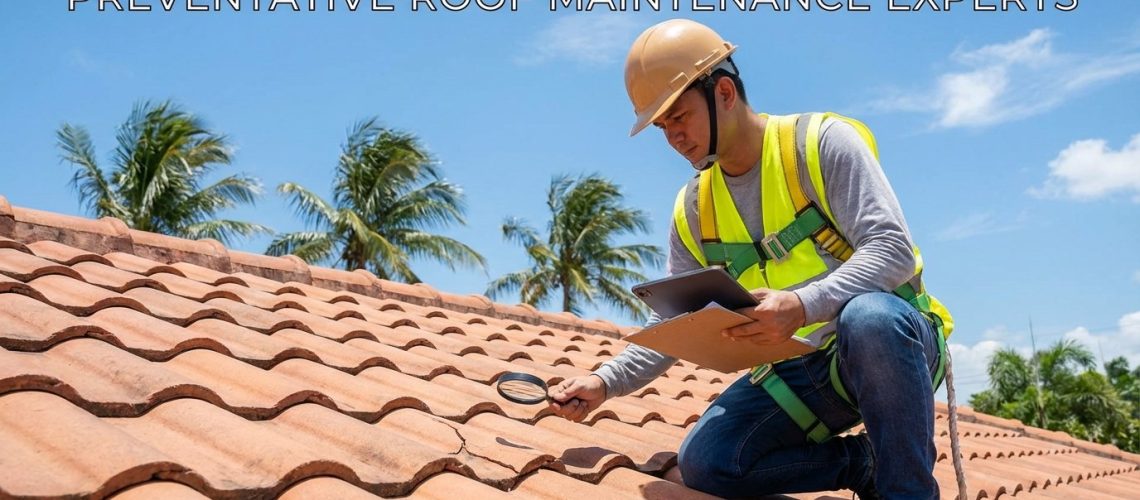
A roof inspection involves examining all components of your roofing system—not just the surface tiles or shingles. Professional inspectors evaluate underlayment integrity, flashing condition, valley metal, penetration seals, fascia boards, and attic ventilation. They look for early warning signs like granule loss, cracked tiles, deteriorated sealants, and moisture intrusion that homeowners typically can’t spot from ground level.
At MM Roof Repair, we use drone photography to document roof conditions during every inspection. This gives homeowners clear visual evidence of problem areas and helps track deterioration over time. You’re not relying on a contractor’s word alone—you see exactly what we’re seeing.
Age-Based Inspection Schedules
Your roof’s age dramatically impacts how frequently you should schedule inspections:
- 0-5 years old: Annual inspections are typically sufficient unless you’ve experienced severe storm damage. New roofs should be holding up well, but installation defects sometimes emerge during this period.
- 6-15 years old: Twice-yearly inspections become important. This is when underlayment begins showing wear in high-stress areas like valleys and around penetrations.
- 16-25 years old: Every six months minimum, with post-storm inspections after any major weather event. Tile roofs in this range often need strategic rebuilds—replacing underlayment sections while preserving perfectly good tiles.
- 25+ years old: Quarterly inspections help you stay ahead of accelerating deterioration. Many contractors will tell you to replace a 25-year-old roof immediately. That’s not always necessary. We’ve extended tile roofs well into their fourth decade with targeted rebuilds.
Florida-Specific Inspection Timing Requirements

South Florida’s insurance market has created additional inspection requirements that homeowners need to understand. Many insurance carriers now require roof certifications every five years for roofs over 15 years old. Some won’t insure properties with roofs older than 15-20 years without significant premium increases or coverage restrictions.
This is where strategic inspection timing becomes crucial. Schedule your professional inspection several months before your insurance renewal date. If the inspection reveals issues, you’ll have time to address them and obtain a certification before your policy comes up for renewal. Waiting until the last minute can leave you scrambling to make repairs or facing coverage loss.
Hurricane Season Considerations
Atlantic hurricane season runs June 1 through November 30. Smart homeowners schedule a pre-season inspection in April or May to identify and repair vulnerabilities before storm threats arrive. A loose tile that costs $75 to replace in May can allow water intrusion during a July thunderstorm, causing $3,000 in ceiling and insulation damage.
Post-season inspections in November or December catch damage that might not be immediately visible. Wind-driven rain can compromise underlayment or flashing without creating obvious leaks right away. Identifying these issues before the dry season allows repairs to be completed under optimal conditions.
Material-Specific Inspection Intervals
Different roofing materials have different inspection needs in our climate.
Concrete and clay tile roofs should be inspected twice yearly. The tiles themselves can last 50+ years, but the underlayment beneath them deteriorates much faster in South Florida’s heat and humidity. We regularly see 20-year-old tile roofs where the tiles look perfect but the underlayment has failed in valleys or around penetrations. A $6,000 valley rebuild preserves decades of remaining roof life—far better than a $50,000 replacement.
Asphalt shingle roofs need more frequent attention in our intense UV environment. Twice-yearly inspections are minimum, with careful attention to granule loss and curling. Shingles rated for 25-year lifespans in northern climates often fail at 15-18 years in Palm Beach County due to thermal stress and UV degradation.
Flat and low-slope roofs on commercial properties require quarterly inspections. Standing water, membrane deterioration, and flashing failures develop quickly. Commercial property owners often overlook roof maintenance until leaks damage inventory or equipment. Preventive inspections cost a few hundred dollars; emergency repairs and business interruption cost thousands.
Event-Based Inspection Triggers
Beyond scheduled inspections, certain events should trigger immediate roof evaluations:
- After any named storm or hurricane: Even if you see no obvious damage, have a professional inspection within two weeks. Insurance claims for storm damage typically must be filed within specific timeframes.
- Following severe thunderstorms with hail: Hail damage may not create immediate leaks but can compromise shingle integrity or crack tiles.
- When purchasing a property: Never skip the roof inspection during home buying. A seller’s disclosure doesn’t replace professional evaluation.
- Before listing a property for sale: Identifying and addressing roof issues before listing prevents deals from falling apart during buyer inspections.
- After nearby construction or tree work: Vibrations and debris can dislodge tiles or damage flashing.
- When you notice interior signs: Ceiling stains, musty odors, or increased cooling costs warrant immediate inspection.
The True Cost of Skipping Inspections
A professional roof inspection from MM Roof Repair typically costs $200-400 depending on roof size and complexity. Some homeowners view this as an unnecessary expense when nothing appears wrong. This thinking proves expensive.
Consider a common scenario: A small section of deteriorated underlayment around a valley goes unnoticed for two years. During that time, moisture slowly penetrates the decking. What started as an $800 underlayment repair becomes a $3,500 project involving decking replacement, insulation replacement, and interior ceiling repair. The $400 you saved by skipping inspections cost you $3,100.
Regular inspections also provide documentation for insurance purposes. If you file a claim after a storm, having recent inspection reports showing your roof was properly maintained strengthens your position. Insurance adjusters look more favorably on homeowners who demonstrate responsible property maintenance.
What a Professional Inspection Includes
When our team conducts a roof inspection, we’re doing far more than looking for obvious damage. We examine:
- Overall roof structure and sagging
- Tile or shingle condition (cracks, displacement, wear patterns)
- Underlayment integrity in accessible areas
- Valley metal condition and proper water channeling
- Flashing around chimneys, vents, skylights, and penetrations
- Boot seals at pipe penetrations
- Fascia, soffit, and gutter attachment
- Attic ventilation and moisture signs
- Interior ceiling conditions for leak evidence
- Decking condition where visible
We document everything with drone photography and provide a detailed written report. You receive the same imagery and information we use to develop repair recommendations. No guesswork, no trust issues—just transparent documentation of your roof’s actual condition.
DIY Inspection Limitations
Homeowners can perform basic visual checks from the ground using binoculars, looking for obvious issues like missing tiles, sagging areas, or debris accumulation. However, DIY inspection has serious limitations and risks.
You can’t safely access most roof areas, and many critical problems aren’t visible from ground level. Underlayment deterioration, subtle flashing failures, and early moisture intrusion require professional training and equipment to identify. Additionally, walking on tile roofs without proper knowledge and equipment can crack tiles and create new problems.
We’ve responded to emergency calls from homeowners who went up on their roofs, stepped in the wrong place, and cracked multiple tiles or fell through deteriorated decking. These incidents turn inspection efforts into expensive repairs and potential medical emergencies.
Frequently Asked Questions
How often should a roof be inspected?
Roofs should be professionally inspected at least twice per year—ideally before and after hurricane season in South Florida. Roofs over 15 years old benefit from more frequent inspections, while insurance requirements may mandate specific inspection schedules for coverage eligibility.
What is the new roof law in Florida?
Florida’s recent insurance reforms allow carriers to require roof replacements or impose coverage restrictions based on roof age. Many insurers now require roofs older than 15 years to pass certified inspections for policy renewal or new coverage. Some carriers won’t insure roofs over 20 years regardless of condition. These policies vary by carrier, making regular inspections and proper documentation increasingly important for maintaining insurance coverage.
What is the minimum schedule for preventive roof inspections?
The minimum preventive schedule is two professional inspections annually. However, this baseline should increase based on roof age, material type, and storm exposure. Roofs over 20 years old should be inspected quarterly, and any property should receive post-storm inspections after significant weather events regardless of the regular schedule.
How often should I service my roof?
Roof servicing depends on findings from regular inspections. Minor maintenance like clearing debris, resealing penetrations, and replacing individual tiles should happen as needed, often annually. More significant servicing like valley rebuilds or section-specific underlayment replacement typically occurs every 10-20 years depending on material quality and climate exposure. The key is addressing small issues promptly rather than waiting for complete system failure.
Making Inspection Schedules Work for Your Budget
Some homeowners worry about inspection costs, but proper scheduling actually saves money. By catching small problems early, you avoid emergency repairs that cost three to five times more than planned maintenance.
At MM Roof Repair, we work with homeowners to develop realistic maintenance schedules that fit their budgets while protecting their investments. Sometimes that means prioritizing critical repairs now and scheduling less urgent work for later. We’re not trying to sell you what you don’t need—we’re helping you make informed decisions about your property.
Think of roof inspections like oil changes for your car. You don’t skip them because everything seems fine. You do them because preventive maintenance is always cheaper than catastrophic failure. A roof that receives proper inspection and maintenance can last twice as long as one that’s neglected.
Schedule Your Inspection Today
When was your last professional roof inspection? If you can’t remember, you’re overdue. Don’t wait for a ceiling stain or the next storm warning to think about your roof’s condition.
Mike McGilvary Roofing has been keeping Palm Beach County roofs in top condition since 1974. We provide honest, transparent inspections with detailed drone photography and straightforward recommendations. If your roof needs work, we’ll tell you exactly what’s required and what can wait. If it’s in good shape, we’ll document that and send you on your way.
Call us at anytime for a free professional inspection. We’re available 24/7 for emergencies, and we typically schedule routine inspections within one week of your call. Let’s make sure your roof is ready for whatever South Florida weather brings next.