Tile Roof Repair Specialists in Palm Beach County - Clay & Concrete Tile Experts Since 1974
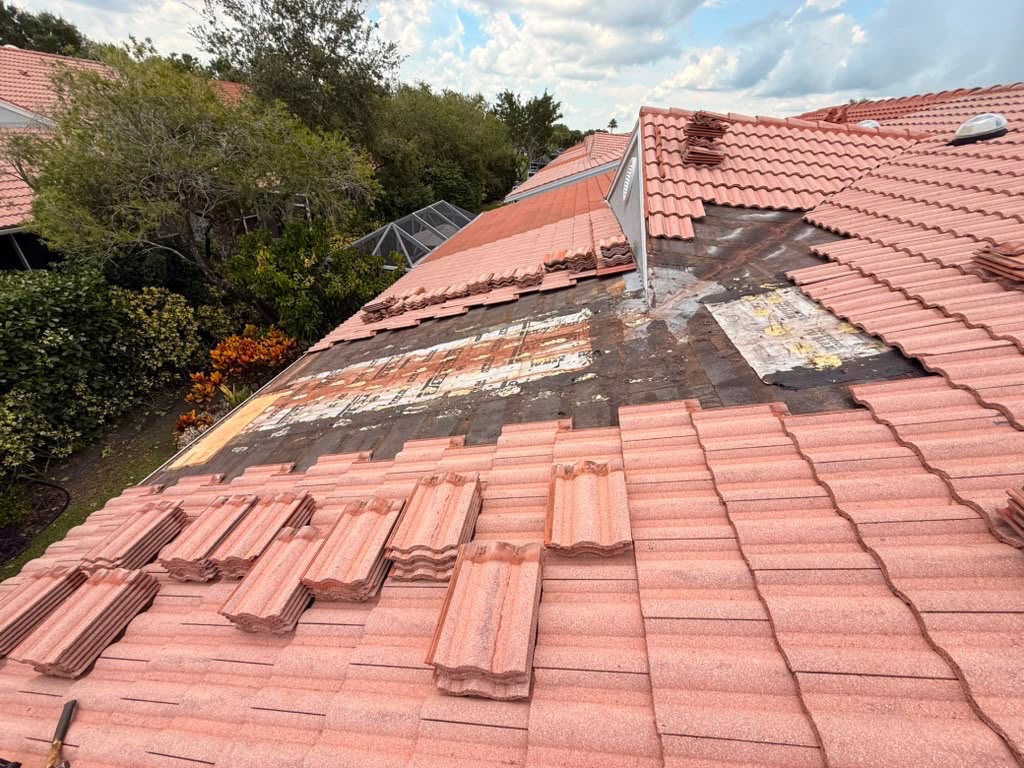
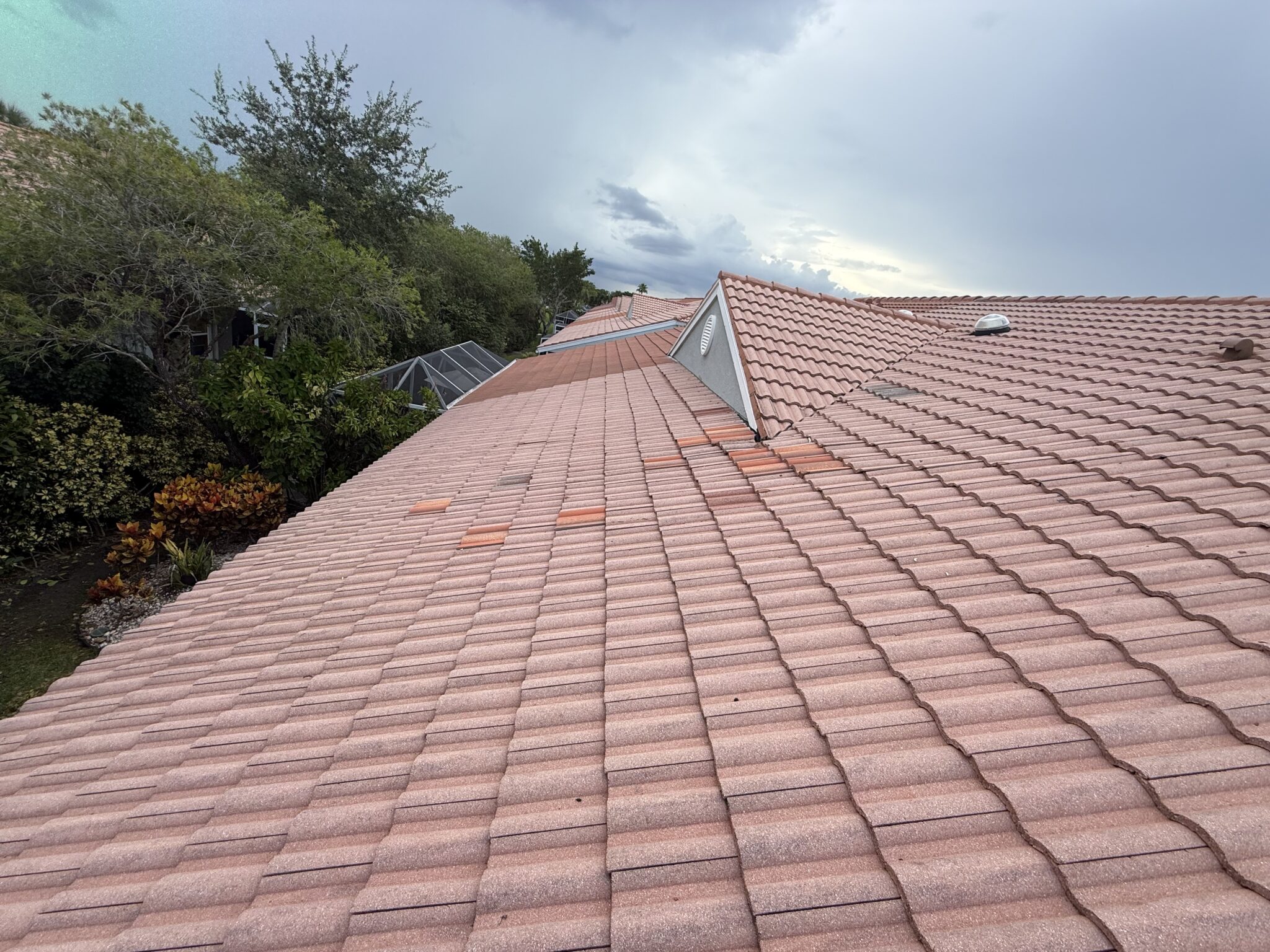
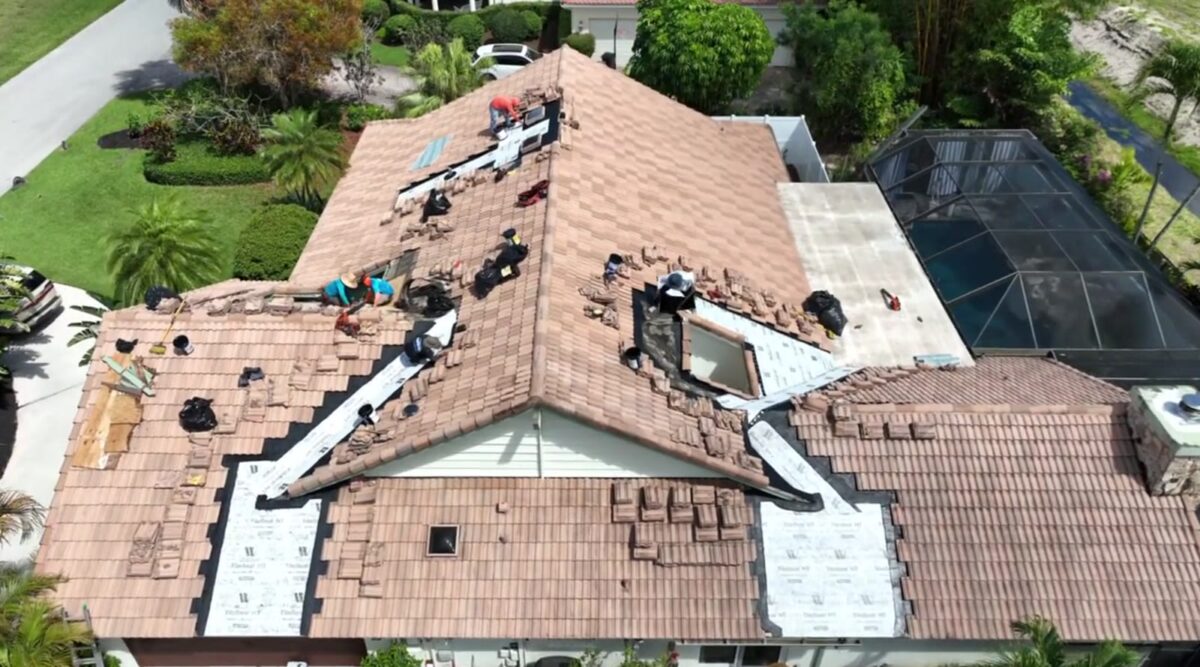
Most tile roofs don’t need expensive replacement—they need expert underlayment replacement and tile matching services. MM Roof Repair specializes in preserving your tile investment while addressing failed underlayment, sourcing discontinued tiles, and rebuilding damaged sections. Save $20,000-$50,000 compared to an unnecessary full replacement. Licensed CCC1331721 with a 5.0-star rating serving all Palm Beach County homes.
24/7 Emergency Roof Repair
Not an emergency? Schedule your FREE
Roof Inspection/Estimate Today!
Expert Roof Leak Detection & Repair in Palm Beach County
Roof leaks rarely appear where water actually enters—water travels horizontally through underlayment, follows roof rafters, and emerges as ceiling stains 10-20 feet from the actual penetration point. Finding the real leak source requires thermal imaging technology and expertise, not guesswork and patching random spots hoping to get lucky.
Mike McGilvary Roofing has been finding and fixing elusive roof leaks throughout Palm Beach County since 1974—using thermal imaging cameras detecting temperature differentials from hidden moisture, moisture meters measuring saturation levels in underlayment and decking, and 55+ years of experience understanding how water travels through different roofing systems. We don't waste your money patching visible stains. We find the actual entry point using diagnostic technology, fix the real problem permanently, and verify repairs eliminated moisture intrusion—saving homeowners thousands in unnecessary exploratory work and failed repair attempts.
💧 Why Amateur Leak Repairs Fail (And Cost More in the Long Run)
Most homeowners and handymen see a ceiling stain, go on the roof above that spot, find something that looks like it might leak (cracked caulk, lifted shingle, gap in flashing), patch it, and hope for the best. Two problems: First, water traveled horizontally before appearing inside—the actual leak is often 10-20 feet away from the stain. Second, Florida roofs have multiple potential leak sources—patching one spot doesn't mean you found THE leak. Our thermal imaging eliminates guesswork by showing exactly where moisture exists in your roof system, allowing targeted repairs that actually work the first time.
Where Roofs Leak Most: Common Entry Points
Valley Leaks (The #1 Problem Area)
Roof valleys where two slopes meet are the most common leak source in Palm Beach County homes. Water concentrates in valleys—think of them as rivers on your roof directing thousands of gallons during storms. Valley metal liners corrode in Florida's salt air and UV exposure, valley flashing deteriorates from thermal cycling, and improperly installed valley shingles allow water penetration at critical junctions.
Valley leak symptoms: Stains appear in rooms below valleys (often first or second floor ceiling corners), leaks occur during heavy rain or wind-driven rain (not light rain), water stains follow linear patterns matching valley direction, and multiple leak points cluster near valley locations. Valley repairs require complete metal liner replacement ($800-$2,500 per valley)—coating or caulking fails because metal has structurally corroded. We use corrosion-resistant materials for coastal properties (stainless steel or copper vs. galvanized) lasting 2-3x longer.
Wall Flashing Failures
Where roof meets wall—the second most common leak location. Chimneys, walls, dormers, and roof-to-wall transitions require specialized step flashing and counterflashing systems keeping water out. Florida's extreme temperature swings (70-degree roof surface temperature changes between night and day) cause expansion/contraction breaking sealant bonds. Wall flashings deteriorate from UV exposure, sealants fail after 10-15 years, and improperly installed flashings allow water behind exterior walls.
Flashing leak patterns: Water stains appear on interior walls below roof-wall intersections, leaks worsen during wind-driven rain (water pushed up under flashings), dampness or mold develops along wall base near flashing locations, and paint bubbling or peeling occurs on exterior walls near roof line. Proper flashing repair requires removing wall siding in flashing area, installing new step flashing under each course of roofing material, installing counterflashing embedded in wall or using termination bars, and sealing with products rated for Florida UV exposure (not standard caulk that fails in 2-3 years).
Penetration Leaks (Vents, Pipes, Skylights)
Every roof penetration is a potential leak source. Plumbing vents, electrical masts, HVAC vents, exhaust fans, and skylights penetrate the waterproof roof membrane creating leak-prone areas. Boot-style vent flashings deteriorate from UV exposure—rubber becomes brittle and cracks after 15-20 years in Florida sun. Skylight flashings fail from improper installation or aged sealants. Penetration leaks are often misidentified—homeowners see ceiling stain near bathroom and assume it's plumbing, but it's actually failed vent boot above.
Diagnostic approach: We inspect all roof penetrations during leak investigation, use thermal imaging identifying temperature differentials around penetrations indicating moisture, test water flow patterns during controlled water testing, and verify penetration flashings are properly integrated with underlayment. Repair approach varies: vent boot replacement ($150-$350 per boot), skylight flashing rebuild ($800-$2,500), or complete penetration re-flashing for complex installations. Simply caulking around penetrations is temporary fix failing within months—proper repairs require removing roofing material around penetration and installing new flashing systems.
Hidden Underlayment Damage
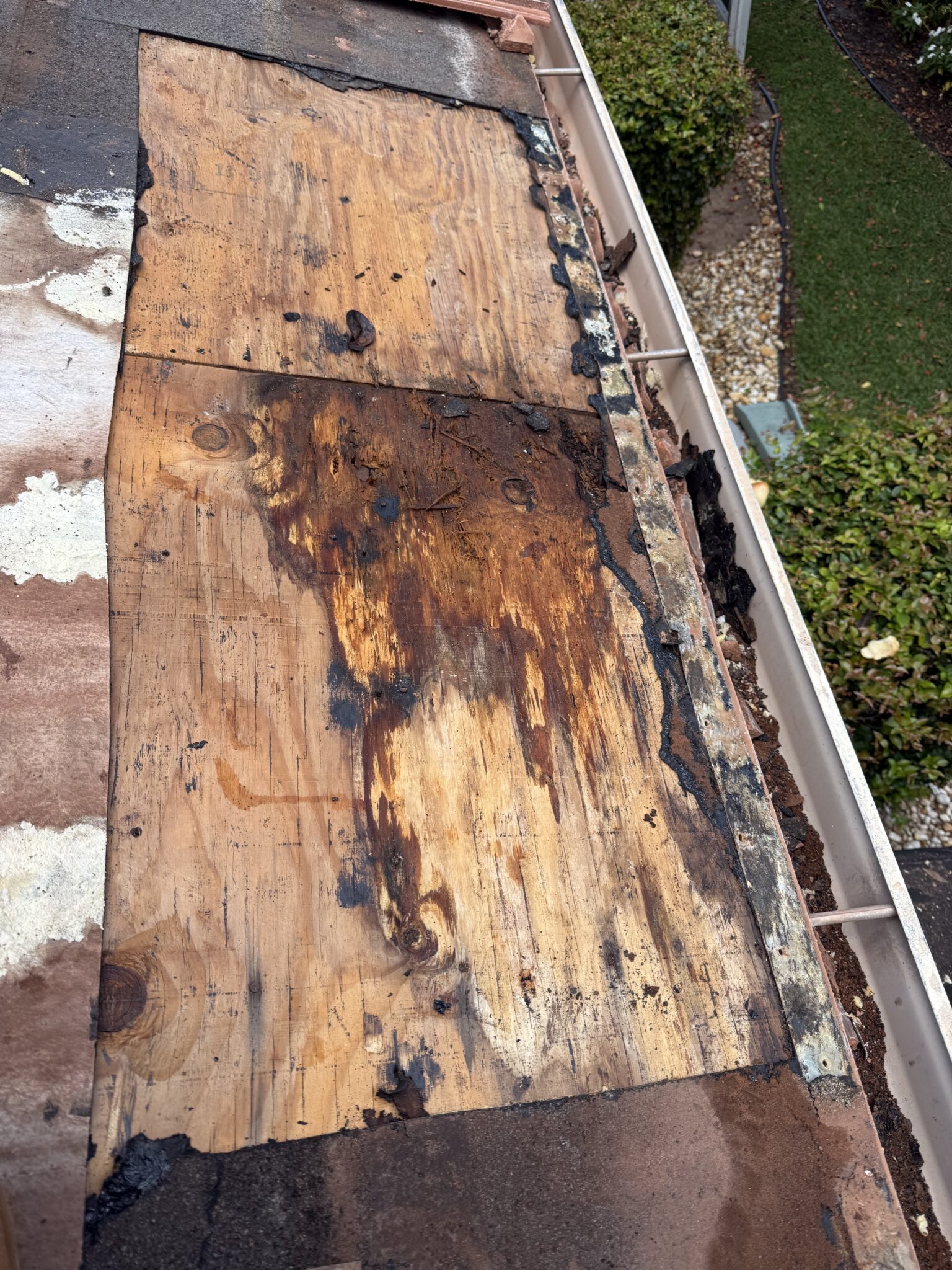
The most difficult leaks to find—moisture in underlayment without obvious entry point. Underlayment beneath roofing materials (felt paper or synthetic membrane) deteriorates over time from heat, trapped moisture, and age. Small holes or tears in underlayment allow water through even when surface roofing appears intact. Water then travels horizontally through underlayment before dripping into attic—making leak source nearly impossible to identify visually.
Why thermal imaging is essential: Traditional leak detection involves spraying water on suspected areas while someone watches from attic—time-consuming, expensive, and often inconclusive because you're guessing where to spray. Our thermal imaging camera shows temperature differentials created by moisture in underlayment—we see exactly where water has saturated materials even without active leak. This allows targeted repairs replacing only affected underlayment sections ($1,500-$4,500) rather than guessing and potentially missing actual leak source. For widespread underlayment deterioration, we recommend roof rebuilds addressing comprehensive underlayment failure while preserving functional roofing materials.
Complete Roof Leak Detection & Repair Services
We find and fix roof leaks in all roofing systems throughout Palm Beach County—from tile and shingle to flat roofs—using advanced diagnostic technology:
- Thermal imaging leak detection - Identify hidden moisture without destructive testing
- Moisture meter testing - Measure saturation levels in underlayment and decking
- Controlled water testing - Isolate leak sources through systematic testing
- Valley leak repairs - Metal liner replacement, proper flashing integration
- Flashing repairs - Walls, chimneys, penetrations, step and counterflashing
- Penetration re-flashing - Vents, pipes, skylights, proper boot installation
- Emergency leak response - Temporary protection, tarping, 24/7 availability
- Insurance documentation - Photography, moisture mapping, detailed reports
Stop chasing leaks and get permanent solutions using diagnostic technology.
Advanced Leak Detection Technology
Finding roof leaks requires more than visual inspection—modern diagnostic tools eliminate guesswork:
Thermal Imaging Cameras
See moisture invisible to the naked eye. Our thermal imaging cameras detect temperature differentials as small as 0.1°F—moisture-saturated materials appear cooler than dry materials due to evaporative cooling. We scan roof systems from attic side identifying wet underlayment, saturated insulation, and moisture-damaged decking without removing any roofing materials.
When thermal imaging is most valuable: Elusive leaks that have stumped other contractors, intermittent leaks occurring only during specific weather conditions, multiple potential leak sources requiring prioritization, suspected underlayment deterioration without visible surface damage, and insurance documentation requiring proof of moisture extent. Thermal imaging costs $200-$400 as standalone service but typically included in comprehensive leak inspection—investment pays for itself by eliminating unnecessary exploratory repairs and false starts.
Moisture Meters
Measure exact moisture content in building materials. Pin-type moisture meters penetrate materials measuring electrical resistance (wet materials conduct electricity better than dry). Non-invasive meters detect moisture through materials without penetration. We measure moisture levels in underlayment, roof decking, insulation, and ceiling materials—documenting saturation extent for repair scoping and insurance claims.
Moisture readings interpretation: 0-15% moisture content is normal, 15-20% indicates developing problem requiring monitoring, 20-30% requires immediate attention to prevent structural damage, and 30%+ indicates active leak with potential mold growth and decking deterioration. We provide detailed moisture mapping showing affected areas—this documentation is critical for insurance claims proving damage extent and for homeowners understanding whether localized repair or comprehensive roof rebuild makes better sense.
Controlled Water Testing
Systematic water application isolating leak sources. When thermal imaging and moisture meters narrow potential leak locations, controlled water testing confirms exact entry point. We use garden hoses applying water in controlled patterns while monitoring from attic—starting low on roof and working upward isolating specific flashing, penetration, or valley causing leak.
Water testing methodology: Test one area at time (prevents confusion from multiple water sources), apply water for 5-10 minutes per area (leaks don't appear instantly), document exact application location when leak appears (pinpoints repair area), and photograph leak manifestation and application location (insurance documentation). Water testing is labor-intensive (2-4 hours typical) but provides definitive answers when other methods narrow possibilities but don't confirm exact source. For complex leaks or leaks occurring only during specific conditions (wind-driven rain), we may need multiple testing sessions replicating different weather scenarios.
Drone Roof Inspection
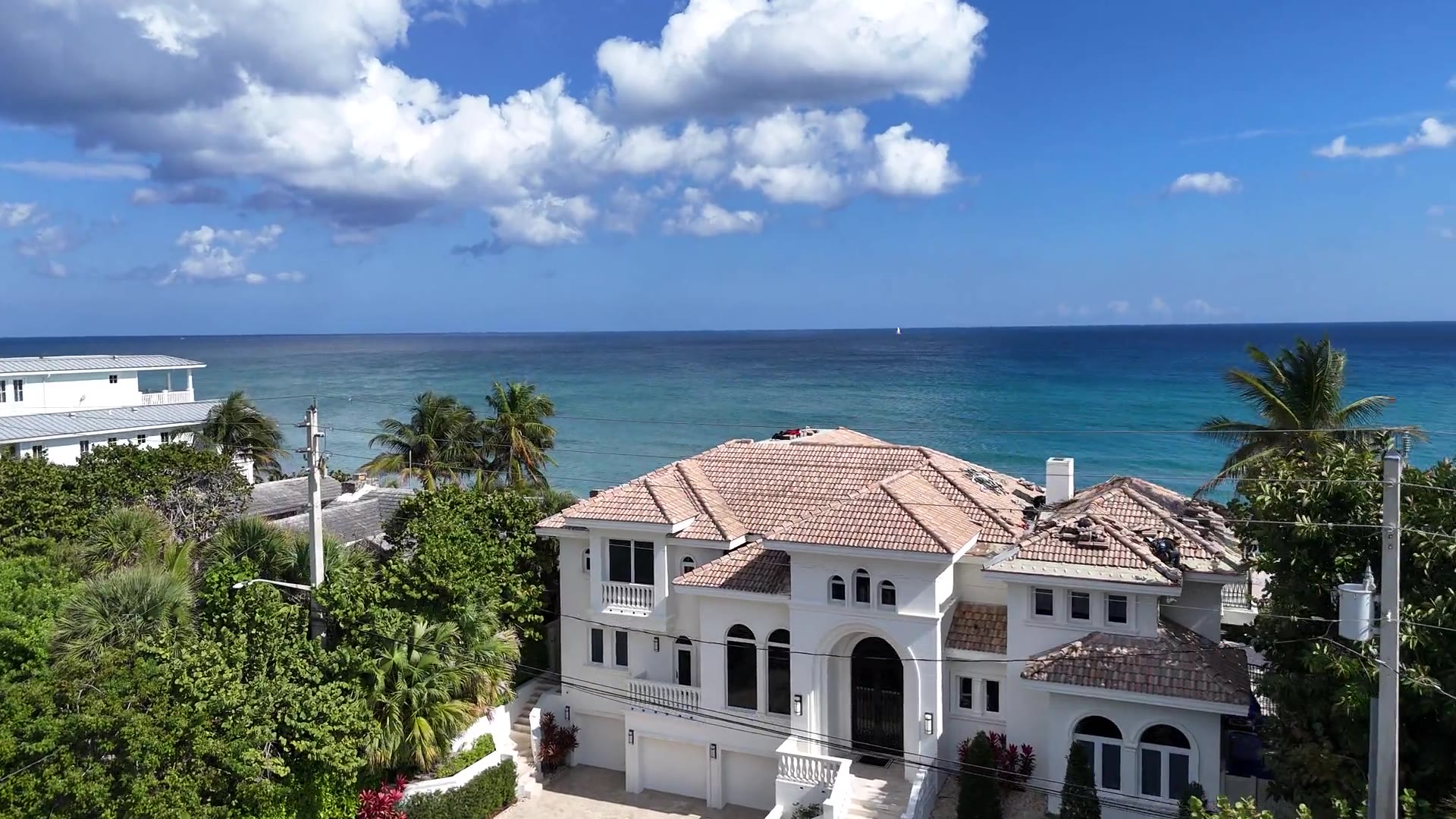
Safe, comprehensive roof surface documentation. Our drone photography captures high-resolution images of entire roof surface—safer than walking steep or damaged roofs and more comprehensive than ground-level inspection. Drone inspection identifies visible problems (missing shingles, lifted tiles, damaged valleys, deteriorated flashings) directing where to focus detailed investigation.
Drone inspection advantages: Document hard-to-access areas (steep slopes, high elevations) without safety risks, capture entire roof in minutes vs. hours for manual inspection, create permanent photographic record for insurance claims or future comparison, identify storm damage patterns (wind direction, concentration of damage), and inspect without disturbing fragile or damaged roofing materials. Drone inspection supplements but doesn't replace hands-on investigation—we still need to physically access roof for detailed flashing inspection, moisture testing, and repair work.
Dye Testing
Trace water paths through complex roof systems. For particularly elusive leaks, we inject fluorescent dye into suspected leak area, apply water, and use UV light from attic identifying exact water travel path and entry point. Dye testing is especially valuable for flat roofs where water travels horizontally through membrane systems before penetrating.
When dye testing is needed: Leaks occurring only during specific conditions (wind direction, rain intensity), multiple potential leak sources in same area, complex roof systems with multiple layers or extensive repairs, suspected flashing failures where visual inspection inconclusive, and insurance disputes requiring definitive proof of leak source and path. Dye testing adds $150-$300 to inspection cost but provides conclusive evidence eliminating doubt about repair scope and location.
Electronic Leak Detection
Low-voltage electrical scanning for flat roof membrane leaks. For flat roofs with intact membranes but suspected breaches, we apply low-voltage electrical current to wet roof surface—electricity flows through breaches in membrane. Scanner identifies exact breach location within inches. Most effective on EPDM, TPO, and PVC membrane systems.
Electronic detection limitations: Requires membrane to be wet (we may need to saturate roof), doesn't work on gravel-surfaced roofs (aggregate blocks electrical contact), requires membrane to be intact enough to hold water (not torn or severely damaged), and requires access to both roof surface and area below for ground connection. For appropriate applications, electronic leak detection pinpoints exact leak location preventing unnecessary membrane replacement—we repair only the specific breach area identified rather than replacing entire sections based on guesswork.
Related Roofing Services
Comprehensive roofing services for Palm Beach County properties beyond leak detection and repair:
Our Comprehensive Leak Detection & Repair Process
Finding and fixing roof leaks permanently requires systematic diagnostic approach eliminating guesswork:
Detailed Leak History & Symptom Analysis
We start by understanding your leak's behavior: When did it first appear (recent or long-term problem)? Does it leak during all rain or only heavy/wind-driven rain? Do leaks appear in multiple locations or single spot? Has leak worsened over time or remained consistent? Have previous repair attempts been made (and where)? Are there visible ceiling stains, wall damage, or attic moisture? Understanding leak patterns helps us narrow potential sources—wind-driven rain leaks suggest flashing issues, consistent heavy-rain leaks suggest valley or penetration problems, intermittent leaks suggest small breaches in specific locations. We photograph all visible interior damage and document leak history for insurance purposes when applicable.
Attic Inspection & Thermal Imaging
Before accessing roof, we inspect from attic using thermal imaging camera identifying moisture patterns in underlayment, roof decking, and insulation. We look for water stains on rafters showing travel direction (water follows lowest points before dripping), check for active moisture using moisture meters documenting saturation levels, inspect underlayment visible from attic for tears or deterioration, photograph thermal images and moisture readings for documentation, and identify areas requiring focused roof-surface investigation. Attic inspection reveals 60-70% of leak information before we ever step on roof—we see where water ends up and often trace it back toward source. This targeting makes roof surface inspection more efficient and focused.
Roof Surface Investigation
Armed with attic findings, we conduct systematic roof surface inspection: Examine all valleys in suspect areas for corrosion, separation, or improper installation. Inspect all flashings (walls, chimneys, penetrations) for separation, deteriorated sealants, or missing components. Check all penetrations (vents, pipes, skylights) for boot deterioration or flashing failures. Look for damaged roofing materials (cracked tiles, missing shingles, membrane tears) allowing water penetration. Document all potential leak sources with photography showing problems and their relationship to interior leak locations. For tile roofs, we may need to lift tiles checking underlayment condition—for flat roofs, we probe suspicious areas checking for soft spots indicating moisture.
Leak Source Confirmation & Repair Proposal
Based on inspection findings, we provide detailed repair proposal: Likely leak sources ranked by probability based on evidence (thermal imaging, moisture readings, roof condition). Recommended repairs addressing most probable sources first—we don't recommend fixing everything at once if targeted repairs can resolve leak. Cost estimates separating diagnostic work, emergency temporary repairs, and permanent solutions. Timeline expectations for repair completion and leak resolution verification. Warranty coverage including our 2-year workmanship warranty and what happens if initial repairs don't resolve leak (we return and continue investigation at no additional diagnostic cost). For complex multi-source leaks or uncertain situations, we may recommend phased approach: fix most likely source, test with next rain, then proceed to secondary repairs if needed. This saves money compared to overhauling entire roof when targeted repair might suffice.
Expert Leak Repair & Verification
Permanent leak repairs address root causes, not symptoms: Valley repairs replace corroded metal liners completely—coating or patching fails. Flashing repairs install new step flashing and counterflashing using proper materials—sealant-only repairs fail within months. Penetration repairs replace deteriorated boots or rebuild complete flashing systems—caulking around vents is temporary at best. Underlayment repairs replace water-damaged sections with new synthetic underlayment—spot patching allows continued deterioration. After repairs, we verify with moisture meter readings confirming dry conditions and, when possible, controlled water testing confirming leak elimination. We provide before/after photography, detailed documentation of all work performed, 2-year workmanship warranty on repairs, and clear expectations for monitoring during next rain events. If leak recurs, we return investigating whether initial repair failed or secondary leak source emerged—continuing until leak is permanently resolved.
Roof Leak Repair Cost Guide: What to Expect
Leak repair costs vary dramatically based on leak source complexity and extent of moisture damage:
| Service Type | Scope of Work | Typical Cost Range | Timeline |
|---|---|---|---|
| Leak Detection Only | Inspection, thermal imaging, moisture testing, source identification | $300 - $800 | 2-4 hours |
| Simple Leak Repair | Single penetration boot, minor flashing, small area - source obvious | $350 - $1,200 | 2-6 hours |
| Valley Leak Repair | Metal liner replacement, adjacent materials, proper integration | $800 - $2,500 | 1 day |
| Complex Flashing Repair | Chimney/wall flashing, step and counterflashing, siding removal | $1,200 - $3,500 | 1-2 days |
| Multiple Source Repairs | Several leak points, extensive investigation, phased approach | $1,800 - $5,000 | 2-3 days |
| Underlayment Section | Replace water-damaged underlayment, remove/reinstall roofing | $2,500 - $6,500 | 1-3 days |
Why leak detection fees are worth it: $500 diagnostic inspection finding exact leak source prevents $2,000-$5,000 in failed repair attempts patching wrong locations. We've seen homeowners spend $3,000-$8,000 with other contractors chasing leaks—replacing skylights that weren't leaking, re-roofing sections that were fine, coating valleys that weren't the problem—because contractors guessed instead of using diagnostic technology. Our thermal imaging and systematic approach finds leaks the first time.
⏰ The Compounding Cost of Delayed Leak Repairs
A $600 valley leak repair seems expensive until you consider the alternative. Ignoring the leak for 6-12 months allows water to saturate roof decking ($2,000-$4,000 structural repair), damage attic insulation ($800-$1,500 replacement), create mold requiring professional remediation ($1,500-$4,000), and ruin interior ceilings and walls ($2,000-$5,000 drywall/painting). That $600 repair becomes $8,000-$15,000 in total damage.
More critical for Florida homeowners: insurance companies increasingly deny leak damage claims when they discover homeowners knew about leaks (visible ceiling stains) but failed to repair promptly. Your "procrastination" becomes "maintenance neglect" voiding coverage—forcing you to pay $10,000-$20,000 in damages out-of-pocket that insurance would have covered if you'd acted immediately. Every day you delay leak repair increases total cost exponentially.
Emergency Leak Response Throughout Palm Beach County
From our Lake Worth base, we provide 24/7 emergency leak response throughout Palm Beach County with typical response times of 30-90 minutes depending on your location and time of day. Roof leaks don't wait for business hours—neither do we.
Cities We Serve:
Emergency Response for Active Leaks
When your roof is actively leaking during a storm, immediate response minimizes interior damage. Our 24/7 emergency service provides: Rapid response assessment (30-90 minutes in most areas), professional tarping systems protecting from additional water intrusion, emergency temporary repairs when safe to access roof during weather, interior protection guidance (buckets, plastic sheeting, moving valuables), and scheduling permanent repair once weather permits. We answer our phones 24/7—no answering services, no callbacks tomorrow. When you're dealing with water pouring into your home at 2am, you need immediate help, not voicemail.
Leak Investigation for All Roof Types
Our leak detection expertise covers all roofing systems common in Palm Beach County: Tile roofs where leaks often result from underlayment failure beneath intact tiles requiring thermal imaging identification. Shingle roofs with valley, flashing, and penetration leaks requiring systematic testing. Flat roofs where membrane breaches cause leaks requiring electronic detection or dye testing. We understand how water behaves in each system type, common failure modes, and most effective diagnostic approaches for each roofing material.
Why MM Roof Repair for Your Roof Leak Problems
🔬 Advanced Diagnostic Technology
We invest in professional leak detection equipment most roofing contractors don't have: $8,000+ thermal imaging cameras detecting 0.1°F temperature differentials, professional-grade moisture meters measuring exact saturation levels, drone systems for comprehensive roof documentation, and controlled water testing equipment for systematic source isolation. This technology eliminates guesswork—we show you exactly where moisture exists and prove leak sources before making repairs. Our 55+ years experience interpreting diagnostic results ensures accurate identification even in complex multi-source situations. Technology without expertise fails—handymen with $200 thermal cameras miss what professionals see because they don't understand building science and water behavior.
✅ "Find It and Fix It" Guarantee
When we commit to finding and fixing your leak, we stand behind that commitment. If our initial repair doesn't resolve leak, we return investigating secondary sources at no additional diagnostic charge—we continue until leak is permanently eliminated. Our 2-year workmanship warranty (double industry standard 1-year) covers all leak repair work. Unlike contractors who disappear after collecting payment, we take ownership of leak resolution. We've been serving Palm Beach County since 1974—our reputation depends on actually solving problems, not just collecting diagnostic fees and making guesses. If we can't find leak source with reasonable investigation, we tell you honestly rather than charging for ineffective repairs.
📞 True 24/7 Emergency Response
When your roof leaks at midnight during a storm, you need immediate help—not an answering service promising callbacks tomorrow. We answer our phones 24/7/365 and dispatch immediately for genuine emergencies. Mike McGilvary personally oversees emergency response ensuring you get experienced professional, not random on-call contractor. Our response times: 30-60 minutes during business hours for most Palm Beach County locations, 60-90 minutes after-hours and weekends, 90-120 minutes during active severe weather (when safe to respond). We arrive with professional tarping systems, emergency repair materials, and thermal imaging equipment providing comprehensive assessment even during ongoing storms.
🏆 Licensed, Insured & Proven
Florida Licensed Contractor CCC1331721 (continuously active since 1974), BBB A+ Accredited Business, BuildZoom Score 103/100 (top 10% of Florida contractors), 5.0 star rating with 400+ Google reviews, comprehensive liability and workers' compensation insurance, and NRCA professional membership. We provide detailed documentation for insurance claims including thermal images, moisture readings, photographic evidence, and professional assessments of damage cause and extent. Our 55+ years experience with Florida insurance adjusters and storm damage claims helps homeowners navigate complex claims processes and obtain fair settlements. We understand what documentation insurance companies require and provide it proactively.
Our Leak Detection & Repair Guarantee
Every leak investigation and repair includes:
- Thermal Imaging Technology: Professional-grade cameras identifying hidden moisture patterns
- Comprehensive Documentation: Photography, moisture readings, thermal images for insurance
- Source Confirmation: We prove leak source before recommending repairs—no guesswork
- 2-Year Workmanship Warranty: Double industry standard coverage on all repair work
- Continued Investigation: If initial repair doesn't resolve leak, we return at no additional diagnostic cost
- 24/7 Emergency Availability: True around-the-clock response for active leaks
Roof Leak Repair FAQs: Palm Beach County Homeowners
How much does roof leak detection and repair cost?
Roof leak costs vary by complexity and leak source: Leak detection only (inspection, thermal imaging, moisture testing, source identification) costs $300-$800—investment that prevents wasting thousands on wrong repairs. Simple leak repair (single penetration boot, minor flashing where source is obvious) runs $350-$1,200. Valley leak repair including metal liner replacement costs $800-$2,500. Complex flashing repair (chimney, wall flashings requiring siding removal and complete step/counterflashing installation) runs $1,200-$3,500. Multiple source repairs addressing several leak points costs $1,800-$5,000. Underlayment section replacement removing roofing materials and replacing water-damaged underlayment runs $2,500-$6,500. The diagnostic fee ($300-$800) is usually credited toward repair cost if you proceed with recommended work—small investment ensuring repairs actually fix the problem rather than guessing and wasting money on ineffective patches.
Why is it so hard to find roof leaks?
Roof leaks are difficult to find because water rarely appears where it enters—water travels horizontally through underlayment, follows roof rafters and decking joints, and emerges as ceiling stains 10-20 feet from actual penetration point. Florida's layered roof systems (tiles or shingles over underlayment over decking) create multiple paths for water travel making visual identification nearly impossible. Additional challenges include: Leaks that only occur during specific conditions (wind-driven rain from particular directions, heavy sustained rainfall but not light rain), multiple small breaches creating combined leak effect, failed underlayment beneath intact surface roofing materials, and prior amateur repairs creating confusion about original leak source. This is why thermal imaging technology is critical—it shows temperature differentials from moisture in building materials revealing leak paths and sources invisible to naked eye. Without thermal imaging, contractors guess based on visible clues—resulting in 40-60% failure rate on first repair attempt because they patched wrong location.
Can I find and fix roof leaks myself?
While DIY leak detection seems straightforward—go on roof above leak, find something wrong, patch it—reality is far more complex. Homeowners typically achieve 20-30% success rate with DIY leak repairs because they patch visible problems (cracked caulk, lifted shingle, gap in flashing) that aren't actually causing leak—the real source is 10-20 feet away from ceiling stain. Professional leak detection costs $300-$800 but prevents wasting $500-$2,000 on wrong DIY repairs plus potential roof damage from improper repair attempts. Safety is another concern—roof access during or after rain (when investigating active leaks) is dangerous, especially on steep or wet surfaces. For minor obvious issues (visible cracked boot, obviously missing shingle), DIY may work. For anything else—intermittent leaks, unclear sources, leaks after previous repairs—professional diagnosis with thermal imaging saves money and ensures effective solution. Even if you identify likely source yourself, having professional verify with thermal imaging before investing in repairs ($300-$500 diagnostic) prevents expensive mistakes.
How quickly can you find and fix my roof leak?
Timeline depends on leak complexity and weather: Emergency response: 30-90 minutes for tarping and temporary protection during active leaks. Diagnostic inspection: 2-4 hours for thermal imaging, moisture testing, roof surface investigation identifying leak source. Simple repairs: Same day or next day for obvious single-source leaks (penetration boots, minor flashings)—typically 2-6 hours work. Complex repairs: 1-3 days for valley replacements, extensive flashings, or multiple leak sources requiring sequential repair and testing. Weather-dependent repairs: Some work requires dry conditions—we provide temporary protection and schedule permanent repairs when weather permits. Leak verification: Ideally we want to test repairs during next rain event confirming leak elimination—this may extend overall timeline but ensures effective solution. For urgent situations, we prioritize stopping active water intrusion immediately, then complete permanent repairs as quickly as conditions and material availability allow. We schedule repairs around your needs—weekends, after business hours if necessary.
What if the leak continues after repairs?
Our "find it and fix it" guarantee means if leak continues after our repairs, we return investigating why—at no additional diagnostic charge. Possible scenarios: Secondary leak source: Original repair was correct but separate leak exists—we continue investigation addressing additional sources until leak is eliminated. Incomplete repair: Leak source was correctly identified but repair scope was insufficient—we expand repair at fair additional cost (not full price since investigation already complete). New leak development: Completely different leak source developed after original repair—we diagnose and quote separately but typically offer discount since we're already familiar with your roof. Our 2-year workmanship warranty covers repair failure from improper installation—we fix at no charge. What we don't cover: New damage from subsequent storms unrelated to original leak, owner-caused damage, or normal wear requiring maintenance beyond original repair scope. However, our track record is strong—95%+ of leak repairs are successful on first attempt because we use diagnostic technology rather than guessing. For the 5% requiring follow-up, we take ownership and continue until resolved.
Do you provide emergency leak response during storms?
Yes, we provide true 24/7 emergency leak response throughout Palm Beach County—including during active storms when safe to respond. Our emergency service includes: Immediate phone answering (no answering service delays), rapid dispatch (30-90 minutes typical for urgent situations), professional tarping systems providing immediate protection from water intrusion, emergency temporary repairs when safe to access roof, interior damage mitigation guidance (buckets, plastic sheeting, emergency water extraction recommendations), and scheduling permanent repairs once weather permits safe work. During active severe weather (tropical storms, hurricanes), we respond when conditions allow—typically within 2-4 hours of storm passing. For safety, we don't access roofs during lightning storms or sustained winds over 30-40 mph, but we'll arrive, assess from ground/attic, and provide temporary interior protection until conditions improve for roof access. Our emergency service is real—owner Mike McGilvary personally manages dispatch ensuring you get experienced professional, not random on-call worker. Call (561) 856-5060 anytime 24/7/365.
Will insurance cover roof leak detection and repairs?
Insurance coverage for leak detection and repair depends on damage cause: Typically covered: Sudden unexpected damage (falling trees, debris impact, hurricane/windstorm damage causing leaks), covered storm damage requiring leak investigation, water damage resulting from covered events, and emergency tarping/temporary protection during storms. Typically not covered: Leak detection fees themselves (considered diagnostic, not damage repair), gradual deterioration or age-related failures, maintenance neglect or deferred repairs, pre-existing conditions documented in prior inspections, and leaks from normal wear and tear. However, we provide comprehensive documentation supporting insurance claims: Thermal images proving moisture extent, moisture meter readings documenting saturation levels, photographic evidence of damage and causation, professional assessment reports explaining leak source and required repairs, and detailed scope of work with itemized pricing. Many insurance adjusters are unfamiliar with thermal imaging—we explain our findings in ways adjusters understand and accept. For storm damage claims, our documentation often makes difference between claim approval and denial. We work directly with insurance adjusters when helpful, providing expert opinion and evidence supporting your claim while maintaining independence (we represent you, not insurance company).
Stop Chasing Leaks - Get Thermal Imaging Diagnosis
Roof leaks don't fix themselves—they get worse. Our thermal imaging technology finds leak sources the first time, eliminating guesswork and wasted repairs. Get permanent solutions from leak detection specialists serving Palm Beach County since 1974.
☎ Call (561) 856-5060 - 24/7 Schedule Leak Detection Service24/7 Emergency Response • Thermal Imaging Technology • 2-Year Warranty • 55+ Years Experience • Licensed CCC1331721